How to Fix Clear Coat Peeling on a Car: DIY or Pro by Severity
Clear coat peeling is the glossy top layer of your paint lifting off the colored layer underneath. A single small patch can be repaired at home with sandpaper and a clear coat spray, but the repair only holds if you sand back to a sound edge, spray within the product maker’s limits and protect your lungs from what is in the can. Peeling that has spread across a panel is usually a repaint. This guide shows which is which, with a severity table, the real numbers from two clear coat data sheets, and the safety limits that most guides skip.
Identifying Clear Coat Peeling
Best 2K Clear Coat Spot-Repair Pick
|
SprayMax 2K Glamour High Gloss Clear Coat (11.8 oz, $28.84 today) A two-component aerosol clear for small repairs, where you activate the can and spray. SprayMax’s data sheet lists 10 to 15 minutes between coats, a 20-minute dust-dry and a 48-hour pot life after activation.
|
As an Amazon Associate we earn from qualifying purchases. Spec-based pick from the maker’s data sheet, not a hands-on test.
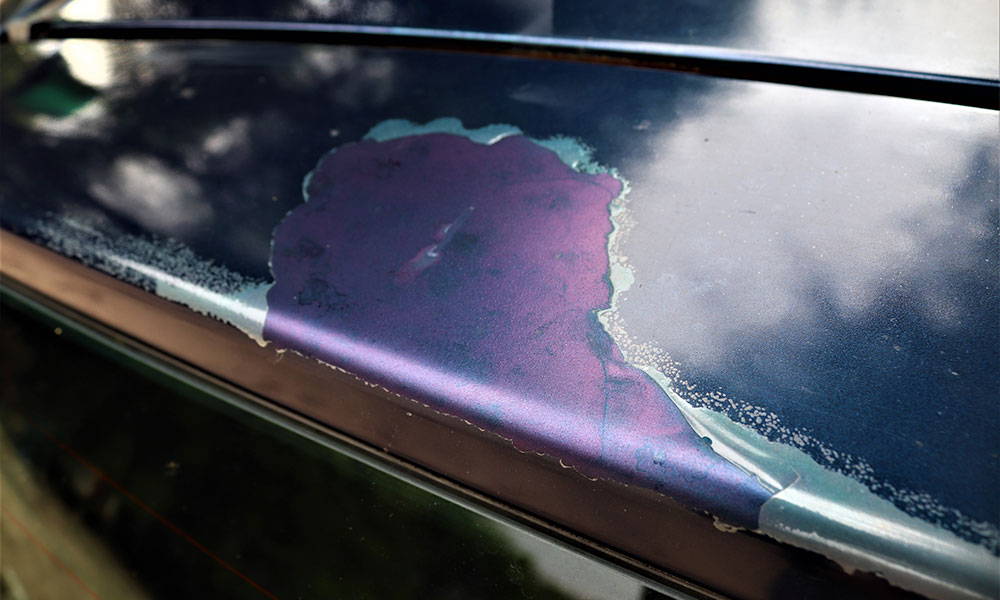
Clear coat is the transparent top layer of a car’s paint. When it fails you may see white or gray patches, a rough dull surface, flaking edges, small bubbles or cracks, and sometimes a sheet of clear lifting away to show the dull color coat below. Long sun exposure, age and a poor earlier paint job are the usual suspects, but a cause does not change the repair: loose clear has to come off before anything new goes on.
A quick sorting test saves money. Run a clean fingertip across the area. If the clear is still bonded but looks hazy, you may be looking at oxidation, which polishing can improve (see our cut and buff guide). If edges catch your finger, flake off or lift, the layer has failed and needs sanding and recoating. If you can see primer, bare metal or orange rust, skip to the professional help section below.
Peeling Severity: DIY Fix or Professional Repaint?
| Severity | What you see | Fix | DIY or pro |
|---|---|---|---|
| 1. Small spot | One patch smaller than your palm, color coat underneath looks intact | Sand loose edge, feather, clean, spray clear in thin coats | DIY is realistic, with PPE |
| 2. One panel | Hood, roof or trunk lid peeling in sheets, color dull or chalky | Re-clear the whole panel to its edges so the repair has no visible line | Pro recommended; DIY only on a low-value car with modest expectations |
| 3. Several panels | Roof, hood and trunk all affected | Panels are sanded and re-cleared or repainted together to match | Pro |
| 4. Down to primer, metal or rust | Gray primer, bare steel or orange rust showing in the bare area | Rust repair and primer first, then color and clear; see our rust repair guide | Pro, or advanced DIY only |
| 5. Bubbling or peeling over a repaint | Blisters or large sheets lifting from older repair work | The failed repaint layer has to come off to a sound surface | Pro |
Safety First: Isocyanates, Lead Dust and Fire
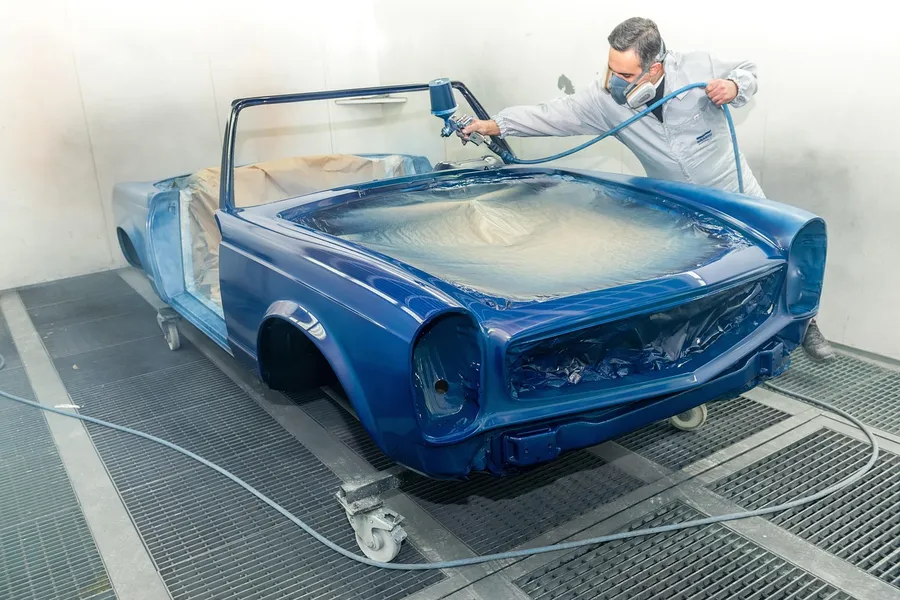
Two safety facts change how you should buy a clear coat. First, SprayMax’s 2K clear uses an activator containing aliphatic isocyanates, and its data sheet tells users to wear a respiratory mask, gloves and goggles and says it is for professional use only. If you cannot get and properly fit an appropriate respirator, do not use a 2K product: choose a one-component clear instead and use it outdoors.
Second, sanding old paint can release lead dust. Rust-Oleum’s Auto Body Clear data sheet warns that scraping or sanding old paint may release lead, calls for a NIOSH-approved respirator, and says to clean up with a HEPA vacuum and a wet mop, not a broom. The same sheet lists a flash point of -4 degrees F for its clear, which means vapors ignite very easily, so keep flames, pilot lights and sparks away and use it outdoors or in a well ventilated area such as an open garage.
- Eyes and skin: goggles and gloves, as the SprayMax sheet directs.
- Lungs: respirator for 2K clear; NIOSH-approved respirator when sanding paint that may contain lead.
- Ventilation: outdoors or an open garage, away from ignition sources.
- Stop and call a shop if you feel dizzy, get headaches or a cough while spraying, or if you cannot ventilate the space.
Preparing and Cleaning the Area
Both data sheets start with the surface. Rust-Oleum says to clean with a mild ammonia-based cleaner and warm water, rinse, dry with a lint-free cloth, remove loose paint, then wipe with its wax and tar remover to take off grease and wax. SprayMax lists previously painted surfaces as suitable only when they have been cleaned and sanded. After sanding, Rust-Oleum calls for a tack cloth to remove dust, and for masking the surrounding area against overspray.
Sanding The Clear Coat
Many guides give a ladder of 800, 1200 and 1500 grit. Neither data sheet read for this guide gives one. The only grit either sheet names is Rust-Oleum’s: scuff-sand and feather the edge of the whole surface with 1,000 grit sandpaper or a Scotch-Brite pad. The earlier grit sequence on this page was not backed by a maker, so we removed it.
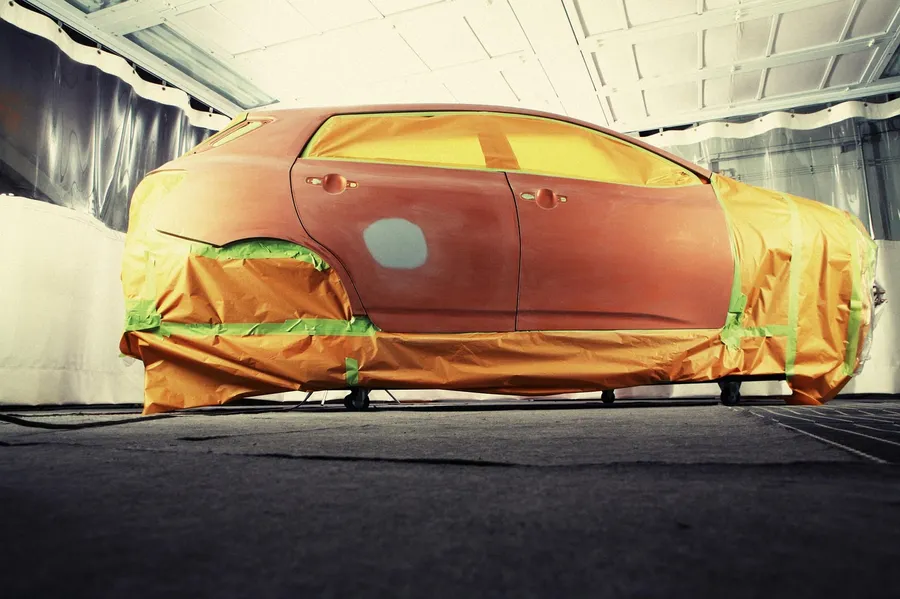
- Remove everything that is loose. Sand or pick off peeling clear until the edge is firmly bonded. New clear needs sound paint to grip.
- Feather the edge. Taper from the bare area to intact clear so the repair edge is not a step.
- Scuff the surrounding clear with 1,000 grit or a gray scuff pad (Rust-Oleum).
- Wet-sanding limit: clear coat is thin and cannot be replaced once cut through. If you see color on the paper, or primer or metal appears, stop; that is no longer a clear coat job. Our cut and buff guide shows how fast a clear coat budget is used up.
Applying New Clear Coat
The two data sheets disagree on almost every number, which is why one generic “10 minutes between coats” rule can go wrong. These are the figures as printed by each maker.
| SprayMax 2K Glamour Clear | Rust-Oleum Automotive Auto Body Clear (ATO-42) | |
|---|---|---|
| Type | Two-component acrylic, activator contains aliphatic isocyanates | Acrylic lacquer, one component |
| Coats | Dry film 1.6 mil (40 micron) in about 1 to 2 spray coats | 2 to 4 coats |
| Time between coats | About 10 to 15 minutes | 5 to 10 minutes |
| Best conditions | 64 to 77 F, 40 to 60 percent humidity | 50 to 90 F, humidity below 85 percent |
| Drying | Dust dry 20 minutes; dry to touch 250 minutes | Touch 30 minutes; fully dry 1 hour |
| Recoat | Flash time only is given | Anytime, no recoat limit |
| Before polishing or handling | Ready for assembling in 8 to 24 hours; sheet lists very good polishability | Sheet says it can be buffed |
| Protective gear on the sheet | Respirator, gloves, goggles; professional use only | Well ventilated area; NIOSH respirator for lead dust when sanding old paint |
Using a Spray Can
Follow the can. For SprayMax 2K the sheet gives this order: shake for 2 minutes after you hear the mixing balls, remove the red button, turn the can 180 degrees, fit the button onto the pin, stand the can upside down on a firm surface and press the button with your palm until it clicks, shake again for 2 minutes, then test spray. Spray from 6 to 8 inches away. When finished, turn the can upside down and spray the valve until it is empty. The sheet gives a pot life of about 48 hours at 68 F after activation, so an activated can cannot be saved for a later job.
With the Rust-Oleum sheet, apply when the temperature is 50 to 90 F and humidity is below 85 percent, and apply the clear after any color coat has dried completely. Its sheet lists a spray-gun pressure of 30 to 40 psi, so for a spray can follow the directions on the can itself.
After the Clear Cures
Wait for the maker’s polish-ready time, then see our cut and buff guide for compound and pad choices. Wash timing is covered in how long to wait before washing after paint, and waxing a car covers protection once it is safe to apply. Preparing a panel from scratch is in how to sand and prime a car.
When To Seek Professional Help
- Peeling covers a panel or more. A visible repair line is hard to avoid on a large flat panel.
- You see primer, bare metal or rust. The problem is bigger than clear coat. Rust repair comes first: see how to fix rust on a car.
- The paint was resprayed before and is bubbling or lifting in sheets; the weak layer is under the clear.
- You cannot protect your lungs. Do not spray 2K clear without a respirator, and do not sand suspected lead paint without one.
- You need an exact color and gloss blend across several panels.
If you decide to strip the failed layer rather than spot repair it, our guide to removing peeling clear coat covers the removal side, and applying clear coat for a flawless finish covers spraying a prepared panel.
Small chips are a different, simpler job; see fixing rock chips on car paint and restoring old car paint if the base color has faded.
Preventing Future Peeling
Preventing a repeat comes down to protecting the finish: wash regularly, keep a coat of wax or sealant on the paint, and park in shade or under cover when you can. Fix chips and scratches early, because a break in the clear is where lifting usually starts. See repairing sun damaged car paint for the next step up from prevention.
Frequently Asked Questions
Can You Fix Peeling Clear Coat On A Car?
Yes, when the peeling is a small spot and the color coat underneath is intact. Remove all the loose clear, scuff and feather the edge, clean the area and spray new clear within the maker’s temperature limits. Peeling across a whole panel, or down to primer, bare metal or rust, is a body shop repair.
Can You Spot Repair Clear Coat?
Yes, for a small area. Both data sheets read for this guide call for cleaning, sanding or scuffing and feathering the edge before spraying, then thin coats with a flash time between them. The hard part is blending the new clear into the old so the edge disappears, which is why larger spots are best left to a shop.
How To Fix Messed Up Clear Coat On Car?
Work out the damage first. Dull or hazy clear that is still bonded can often be improved by polishing (see our cut and buff guide). Clear that is flaking, cracking or lifting has failed and must be sanded back to a sound edge and re-sprayed. Never spray over loose clear.
Can Clear Coat Be Touched Up?
Small chips and tiny spots can be touched up. Clean the spot, scuff the edge, apply clear in thin coats and let it cure before polishing. Rust-Oleum’s Auto Body Clear sheet lists touch in 30 minutes and no recoat limit, while SprayMax’s 2K sheet lists 8 to 24 hours before the part is ready for assembling.
Is It Worth Fixing Peeling Clear Coat?
Usually yes, because exposed color coat has lost its protective layer and the damage tends to spread outward from the edge. A spot caught early is a small DIY job, while a repaint is a much bigger one. If the car has more peeling than you can sensibly sand, a quote from a body shop is the right next step.
Can You Spray Clear Coat Over Old Peeling Clear Coat?
No. Rust-Oleum’s data sheet says to remove loose paint and scuff-sand and feather the edge, and SprayMax’s lists old paint as a substrate only when cleaned and sanded. New clear sprayed over loose, flaking clear has nothing sound to grip.
Conclusion
A small peeling spot on otherwise healthy paint is a reasonable DIY repair when you sand to a sound edge, follow the maker’s flash and dry times and protect your lungs. Larger peeling, anything down to primer or rust, or a repaint that is failing underneath belongs with a body shop. When in doubt, a quote costs nothing and the data sheet on your can has the final word.
Products related to this article
Sponsored / affiliate links. As an Amazon Associate I earn from qualifying purchases. I may earn additional commission from eligible campaigns.