How Do Cars Reproduce in the Cars Universe? Theory & Facts
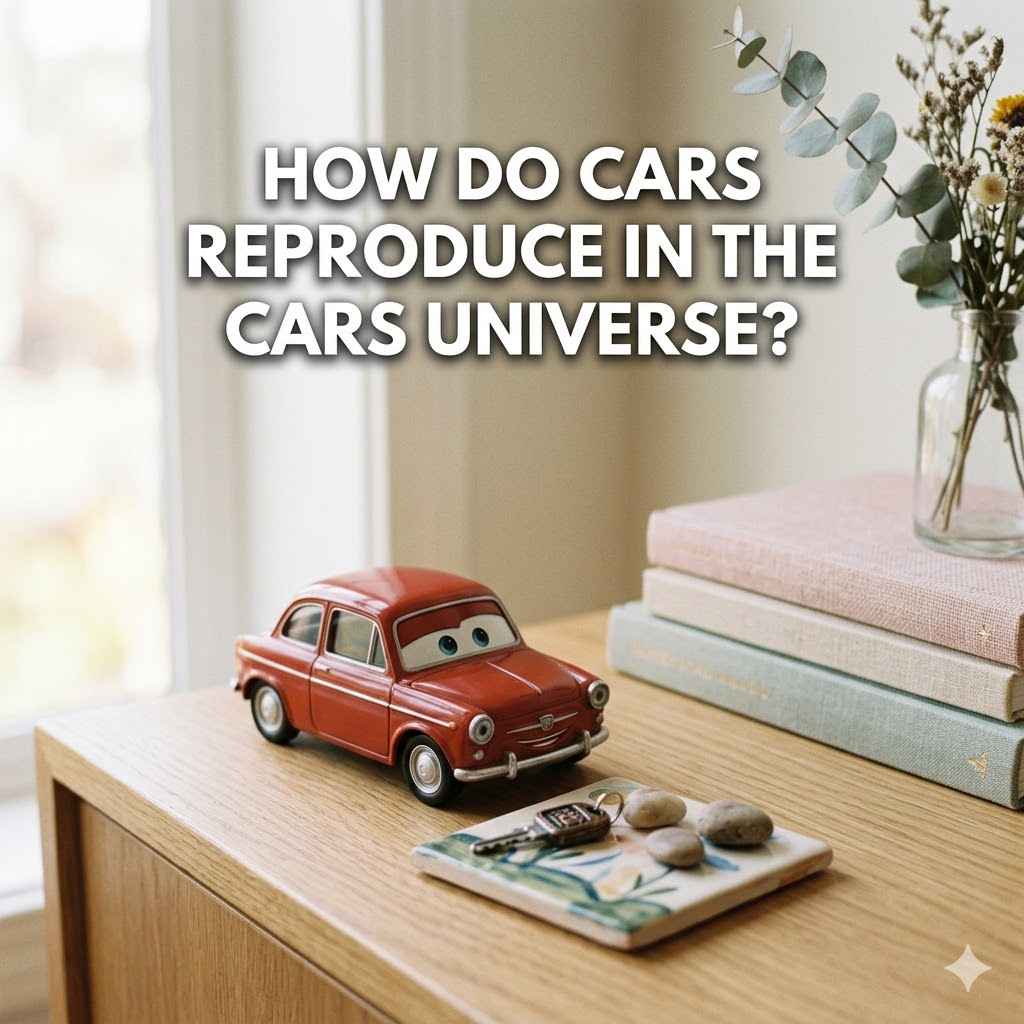
Many fans wonder, How Do Cars Reproduce in the Cars Universe? Theory & Facts. It can seem like a tricky question because we don’t see car babies being born like animals.
This topic might feel confusing at first, but don’t worry! We’ll break it down simply, step by step. Get ready to learn all about how new cars come into being in this amazing world.
The Mystery Of Cars And Reproduction Explained
This section tackles the core question of how cars in the Cars universe come into existence. It explores the common theories and any official or semi-official “facts” presented in the films, shorts, and related media. Understanding this is key to appreciating the world Pixar created.
We will look at the ideas fans have and what the creators have hinted at.
Fan Theories on Car Reproduction
Fans have come up with many creative ideas about how cars reproduce. These theories try to fill the gaps left by the movies. They often borrow concepts from biology or industrial processes.
Some think cars are built, while others believe in a more organic, magical birth.
The Factory Birth Theory: This is perhaps the most straightforward idea. It suggests that new cars are manufactured in large factories, similar to how real cars are made. These factories would have specialized machinery and processes to assemble brand-new vehicles. The idea is that old cars might be decommissioned and their parts recycled to build new ones, or that there are always new designs being produced.
This theory aligns with our real-world understanding of car manufacturing. In the Cars universe, we see vast landscapes and advanced infrastructure that could easily support large-scale production facilities. It’s a logical extension of how we know cars are made today.
The Assembly Line Creation: Similar to the factory birth, this theory focuses on the idea of a conveyor belt system where components are brought together. Imagine raw materials or chassis being fed into a system, and then engines, wheels, and bodies are added sequentially. This process would result in a fully formed car ready to drive.
This concept is appealing because it mirrors the assembly lines seen in the real world, making it relatable. It suggests a systematic and efficient way for new cars to enter the population without needing parents in the biological sense.
The Spark of Life Concept: Some theories propose that cars possess a unique kind of life force or “spark.” This spark, when combined with the right conditions or elements, could lead to the creation of a new car. This idea leans more into a mystical or fantastical explanation, fitting the whimsical nature of the Cars world.
This theory is more abstract and less grounded in reality. It implies that there’s a special energy or magic that brings cars to life, rather than a purely mechanical process. It’s a way to explain the independent consciousness of the cars.
Creator Hints and Semi-Official Explanations
The creators of Cars have offered bits of information over the years, though they’ve often preferred to keep the exact method somewhat mysterious. This ambiguity allows viewers to imagine and discuss. Some interviews or behind-the-scenes materials have touched upon how new cars might appear.
One idea presented is that new cars are “born” in a more abstract sense, perhaps emerging from specialized areas or through advanced technological processes. It’s not like a car giving birth to another car in the way animals do. Instead, it’s more about how new models are introduced into the world.
These hints often lean towards a production-based origin rather than a biological one. However, the exact mechanics are usually left to the imagination. This keeps the focus on the characters and their adventures.
The Manufacturing Process of New Cars
This section delves into the practical aspects of car creation within the Cars universe, drawing parallels to real-world manufacturing. It will explore the idea of factories, assembly lines, and the sourcing of parts. We’ll consider what components would be necessary and how they might be put together to form a new car.
The Role of Factories and Assembly Lines
If new cars are manufactured, then factories must be central to their existence. These would be massive facilities, perhaps located in remote or industrial areas, where raw materials are transformed into finished vehicles. The process would likely involve complex machinery, robots, and skilled mechanics.
Assembly lines would be crucial for efficiency. Imagine a continuous flow of car chassis moving along a track. At each station, different parts are added: the engine is installed, the body is painted, wheels are attached, and interiors are fitted.
This systematic approach ensures consistency and speed in production.
The scale of these factories would need to be immense to supply all the cars seen in the movies. Think of sprawling complexes with dedicated areas for metal stamping, welding, painting, and final assembly. This would require a highly organized system.
Specialized Manufacturing Hubs: It’s probable that different regions or countries within the Cars world specialize in producing certain types of vehicles. For example, one area might be known for its sports car factories, while another focuses on trucks or tractors. This division of labor would streamline production.
This specialization would allow for the development of unique expertise and technology for each type of vehicle. It also explains the diverse range of car models and brands we see.
The Technology of Creation: The manufacturing process would rely on advanced technology. This might include sophisticated robotics for precision work, advanced welding techniques, and automated painting systems. The goal would be to create durable, high-quality vehicles consistently.
The existence of advanced AI and automation in the Cars universe suggests that manufacturing could be highly sophisticated and efficient. Robots could perform tasks that require extreme precision and strength, ensuring every car is built to exacting standards.
Resource Management and Supply Chains: For factories to operate, they would need a constant supply of raw materials. This could include metals, plastics, rubber, and other components. A robust supply chain would be essential, involving mining operations, material processing plants, and logistics networks to deliver these resources to the factories.
The efficient management of these resources is vital. It ensures that production is never halted due to a lack of essential materials. It also implies a well-developed industrial economy supporting the car population.
The Role of Parts and Materials
Where do the parts for new cars come from? This is a key question in the manufacturing theory.
Raw materials like steel for chassis and bodies, rubber for tires, and various chemicals for paints and fluids would be sourced from mines and specialized processing plants. These would then be shipped to the car factories.
Another possibility is that older cars are recycled. When a car is no longer functional, its usable parts could be salvaged and repurposed. This “car salvage” industry would be a vital source of components, promoting sustainability within the Cars universe.
Metal for Bodies and Chassis: Steel, aluminum, and other metals would be smelted and shaped into car frames and body panels. This process involves intense heat and heavy machinery. The quality of these metals directly impacts the durability of the finished car.
The strength and flexibility of the metals used are critical for safety and performance. Advanced metallurgical techniques would be employed to create materials that can withstand stress and impact.
Rubber for Tires: Tires are essential for any vehicle. They are made from natural and synthetic rubber, along with various additives. The production of tires requires specialized factories that can mold and cure the rubber compounds into durable, high-traction tires.
Tire technology is constantly evolving in the real world, and it’s reasonable to assume the same for the Cars universe. Different tread patterns and rubber compounds would be developed for various terrains and driving conditions.
Engine Components and Electronics: The heart of any car is its engine, along with its electronic systems. These components would be manufactured in specialized factories that focus on precision engineering. This includes pistons, crankshafts, spark plugs, sensors, and computer chips.
The intricacy of these parts requires extremely high precision manufacturing. Miniaturization and advanced materials science would play a significant role in creating efficient and reliable engine and electronic systems.
The “Life Spark” or Sentient Creation Theory
This section explores more fantastical theories about how cars gain their sentience and come into being. It moves beyond simple manufacturing to consider the unique nature of consciousness in the Cars universe.
While the manufacturing theory explains the physical creation, it doesn’t fully address the consciousness of the cars. How do they become alive, with personalities, emotions, and thoughts? This theory proposes that there’s a special element or event that imbues them with life.
This concept is less about a biological birth and more about a metaphysical or technological awakening. It allows for the idea that cars are not just machines but beings.
The Concept of a “Spark” of Life
In the Cars universe, vehicles are clearly sentient. They talk, feel, and have individual personalities. This implies more than just advanced programming; it suggests a genuine “spark of life.”
This “spark” could be a unique energy, a magical essence, or a highly advanced form of artificial intelligence that goes beyond mere computation. When this spark is combined with a perfectly assembled car body, consciousness emerges.
Imagine a special process at the end of the assembly line where this spark is introduced. It could be a flash of light, a surge of energy, or a moment of awakening. This is what distinguishes a car from a mere object.
The “Awakening” Ceremony: Perhaps there’s a hidden ceremony or a specific location where new cars undergo this awakening. This could involve unique atmospheric conditions, powerful energy sources, or even a mystical ritual. This is where the physical form gains its spirit.
This idea adds a layer of wonder and mystery to the Cars world. It suggests that creation is not purely mechanical but also involves a profound, almost spiritual, event.
AI Integration and Sentience: In a more scientific, albeit speculative, vein, the “spark” could refer to the integration of an extremely advanced form of Artificial Intelligence. This AI wouldn’t just run the car; it would be the car’s consciousness, its personality, its very being.
This AI would be designed from the ground up to possess empathy, self-awareness, and the capacity for complex thought and emotion. It’s a leap beyond current AI capabilities, but fits the fantastical nature of the universe.
The Influence of Radiator Springs: Some fans speculate that the unique atmosphere or energy of places like Radiator Springs might play a role. Perhaps specific geological formations, magical elements, or even the collective spirit of the existing car population influences the birth of new ones.
This theory links the creation of cars to their environment and community. It suggests that life isn’t just manufactured but also nurtured and influenced by the world around it.
Possible Biological Analogies
While cars aren’t biological, some theories try to find parallels with organic life cycles. This helps in conceptualizing their origins.
Instead of parents, maybe there are “parent machines” or “creator units” in factories. These units could be responsible for designing and initiating the creation of new cars. They don’t reproduce directly but initiate the process.
This analogy is loose, but it helps bridge the gap between our understanding of life and the unique existence of sentient cars. It keeps the idea of a lineage or origin alive.
“Egg” or “Seed” Concepts: Could there be a stage before a full car, like an “egg” or “seed” that contains the potential for a car? These could be manufactured components that are then “incubated” or “planted” to grow into full vehicles.
This imagery evokes a sense of natural growth, even if it’s technologically driven. It implies a dormant state that is activated under the right conditions.
Technological Gestation: The process could be akin to a technological gestation period. A car’s consciousness and form are developed and nurtured within a specialized system before being “born” into the world. This system would provide all the necessary elements for development.
This idea blends the concept of manufacturing with a developmental process. It suggests that a car’s existence is carefully cultivated rather than instantaneously created.
Collective Consciousness Contribution: Perhaps the creation of a new car draws upon a collective consciousness. Existing cars contribute their experiences, knowledge, or “life essence” to imbue a new vehicle with personality and awareness from its very inception.
This is a more abstract and profound idea, suggesting that the car community itself plays a role in bringing new members into existence. It highlights the interconnectedness of the characters.
Comparing Production vs. “Life Spark” Theories
This section compares the two main ideas about car reproduction: the industrial/manufacturing approach and the more mystical “life spark” approach. It highlights the strengths and weaknesses of each.
The manufacturing theory is logical and fits our understanding of the real world. It explains how a physical car comes to be. The “life spark” theory, however, better addresses the sentience and personality of the cars.
Ultimately, the truth likely lies in a combination of both, or in a concept that blends the two seamlessly. The magic of the Cars universe often comes from this blend of the familiar and the fantastic.
| Theory Type | Focus | Strengths | Challenges |
|---|---|---|---|
| Manufacturing | Physical Creation | Explains how cars are built. Aligns with real-world processes. | Doesn’t fully explain sentience or personality. |
| Life Spark/Sentience | Consciousness and Being | Explains why cars are alive and have personalities. Fits the magical tone. | Less clear on the physical creation process. Can be abstract. |
The table above shows how these two major theories approach the question differently. The manufacturing theory provides a solid foundation for the physical existence of cars.
The “life spark” theory, on the other hand, attempts to explain the intangible aspect of car consciousness. It’s the “why” behind their independent lives.
Many fans find that a blend of both theories offers the most satisfying explanation. It acknowledges the industrial nature of cars while respecting their unique, animated existence.
Real-Life Examples and Scenarios
While we can’t point to real-life car reproduction, we can look at how similar concepts are handled in other fictional worlds or how real-world processes inform our ideas.
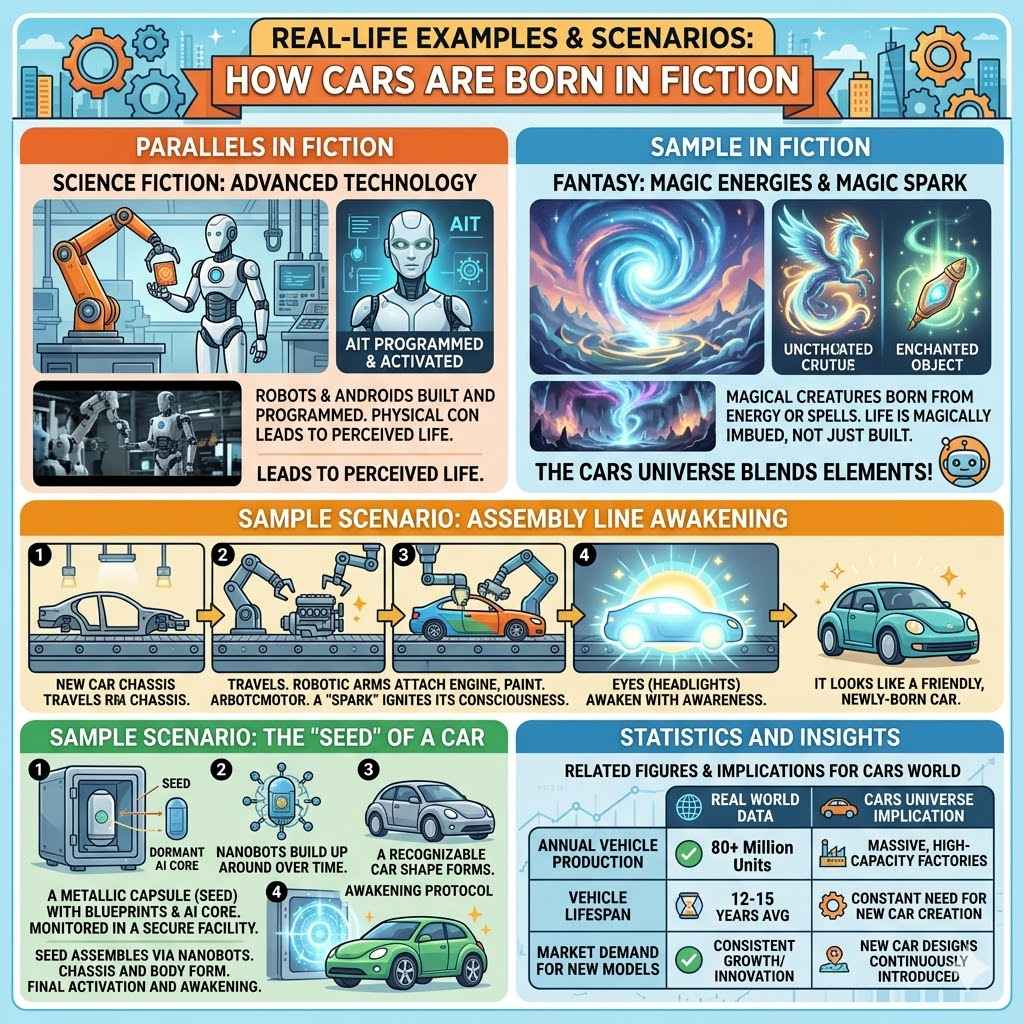
In science fiction, artificial life forms are often created through advanced technology. Robots, androids, and sentient AI are built, programmed, and sometimes “activated.” This provides a parallel to the manufacturing theory.
The idea of a “spark” of life is also common in fantasy, where magical energies or divine interventions bring beings into existence. The Cars universe seems to blend these elements.
The Creation of Robots in Science Fiction: Many sci-fi stories feature robots being built in factories. These robots might then be programmed with AI and “activated” to become sentient. This is a direct parallel to the manufacturing and AI integration theories for cars.
For instance, in films like “I, Robot,” sophisticated robots are manufactured and then programmed with advanced AI that allows them to think and act independently, sometimes developing their own forms of consciousness. This shows how physical construction and programming can lead to perceived life.
The Birth of Magic Creatures in Fantasy: Fantasy novels and films often depict magical creatures being born from magical energies, enchanted objects, or divine blessings. This is akin to the “life spark” theory, where life isn’t just built but magically imbued.
Think about how certain mythical creatures are said to form from elemental forces or are brought into existence by powerful spells. This mirrors the idea of a special process creating life.
Sample Scenario: A New Car Rolls Off the Assembly Line
Imagine a gleaming new car chassis moving along a state-of-the-art assembly line. Robotic arms meticulously attach its engine, transmission, and suspension. Its body is expertly painted in a vibrant color.
As it reaches the final station, a soft glow emanates from within. A subtle hum fills the air, and the car’s headlights flicker on, not with programmed instruction, but with a sense of awareness. Its eyes, the headlights, blink, taking in the world for the first time.
This is the moment of awakening, the “spark” igniting its consciousness within its meticulously crafted body.
Sample Scenario: The “Seed” of a Car
In a highly secure, climate-controlled facility, a small, metallic capsule rests. This capsule, the “seed,” contains the foundational blueprints and dormant AI core for a new vehicle. Specialized machines monitor and nurture this seed.
Over time, the seed begins to grow, assembling itself with nanobots and drawing energy from a unique power source. Gradually, a chassis forms, then the body, and finally, the interior. The final stage involves the “awakening” protocol, where the core AI fully activates, and the car becomes a sentient being, ready to join the world.
Statistics and Insights
While direct statistics on car reproduction in the Cars universe are unavailable, we can consider related figures that highlight the importance of production and population growth in such a world.
The automotive industry globally produces over 80 million vehicles annually. This immense scale of production gives us an idea of the industrial capacity required to sustain a world populated by cars.
Market research often shows that the average lifespan of a car is around 12-15 years. This implies a continuous need for new vehicle production to replace older ones and to support population growth.
In the Cars universe, if we extrapolate, a similar cycle would likely exist. To maintain their vibrant society, new cars must be created at a significant rate.
| Statistic Category | Approximate Global Data (Real World) | Implication for Cars Universe |
|---|---|---|
| Annual Vehicle Production | 80+ Million Units | Suggests massive, high-capacity factories are essential. |
| Vehicle Lifespan | 12-15 Years (Average) | Indicates a constant need for new car creation to replace aging vehicles. |
| Market Demand for New Models | Consistent Growth/Innovation | Implies new car designs and models are continuously introduced. |
Frequently Asked Questions
Question: How do cars have babies in the Cars movies?
Answer: The movies don’t show cars having biological babies. Instead, they are likely created through advanced manufacturing processes or a special “awakening” that gives them life and consciousness.
Question: Are cars born or built in the Cars universe?
Answer: It’s believed they are built in factories, similar to how real cars are made. However, a special process or energy likely gives them their sentience.
Question: What are the main theories about car reproduction?
Answer: The main theories involve either advanced manufacturing in factories or a mystical “spark of life” that imbues them with consciousness.
Question: Does Pixar ever explain how cars reproduce?
Answer: Pixar has offered hints but prefers to keep the exact method a mystery, allowing for fan imagination and focus on the characters’ lives.
Question: Can one car make another car?
Answer: The movies do not depict cars directly creating other cars in a parental sense. It is more about industrial production or a unique creation event.
Conclusion
So, how do cars reproduce in the Cars universe? It’s a mix of advanced building and a special awakening. Cars are likely made in big factories, like real ones.
But a unique “spark” or energy gives them their life and personality. This blend of industry and mystery creates the magical world we love. You can imagine them being built and then coming alive.