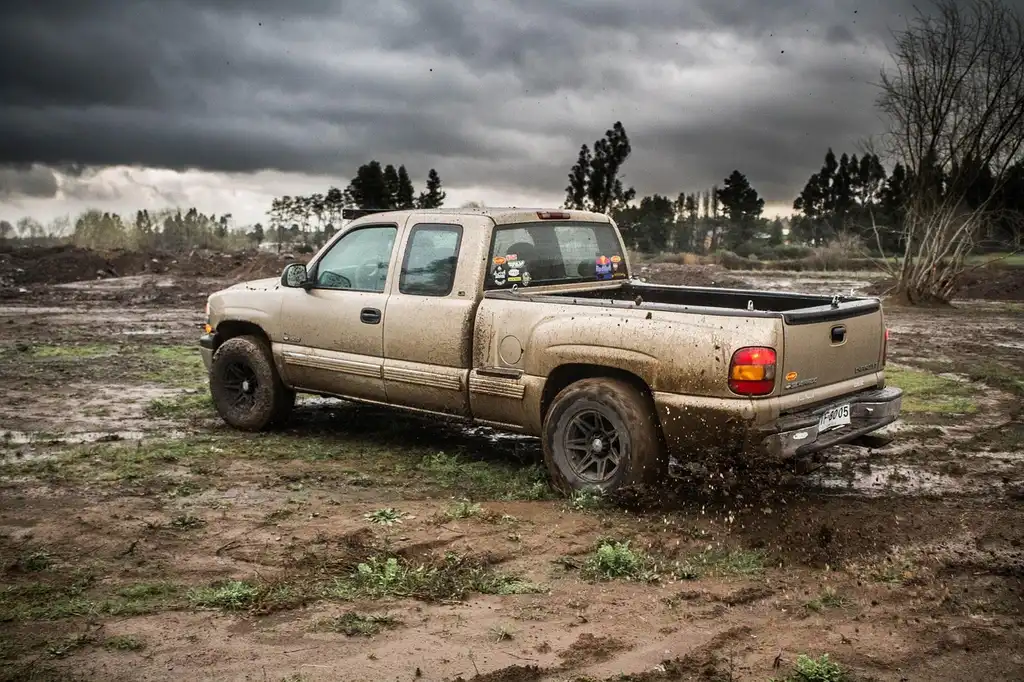
How Fast Can You Go in 4 High Chevy Silverado? Safe Speed
Many Chevy Silverado 4-High systems are meant for low-traction roads and are often limited to around that speed; stay at or below the limit in your owner’s manual if one is listed. Use 4-High on dry pavement or above the limit, and the driveline can bind, while steering and tires take the hit. This guide covers the safe speed rule, when 4-High helps, and when you should switch back to 2WD.
The answer is not one top speed. In 4HI, safe speed depends on surface grip, tire condition, load, and how the truck reacts when you brake or steer. On a loose or slippery road, you may be able to travel at normal road speeds if the vehicle stays stable and the manual allows it. On high-grip pavement, that same speed can be the wrong speed.
How fast can you go in 4 High on a Chevy Silverado?
What 4-High does in a Silverado
4-High is a part-time 4WD mode. The transfer case couples the front and rear axles so torque reaches all four wheels at once. That helps when the road surface cannot give 2WD enough traction, such as snow, ice, gravel, or mud.
Part-time 4WD feels different from 2WD because the front axle is now part of the driveline load path. Steering can feel heavier, the truck may push more in turns, and tire slip can build fast if the surface has more grip than the system expects.
When 4-High is the right mode
4-High is meant for low-traction surfaces, not for higher speed. It helps when you need better forward motion, better line control, or less rear-wheel spin on slick ground. The best use cases are snow, packed snow, ice, gravel, and mud.
Wet pavement is different. Light rain does not always call for 4HI, but mixed traction can make it useful if roads are patchy with standing water, slush, or thin snow cover. Even then, drive for grip and stopping room, not speed.
What 4-High does in a Silverado
4-High changes how the Silverado sends power, not how fast the engine can turn the truck. The transfer case links the axles so the truck has more drive traction, but it does not add braking grip or steering grip. Those limits still come from the road and the tires.
That is why 4HI can feel fine at moderate speed on a snowy road yet still be a poor choice on dry asphalt. The driveline may tolerate the speed, but the surface is asking the front and rear axles to turn at slightly different rates through a system that is not built to absorb that difference on high-traction pavement.
Why part-time 4WD feels different from 2WD
In 2WD, the front axle rolls freely. In 4HI, the transfer case couples both axles together. On loose surfaces, that coupling helps. On dry pavement, it can create a tugging or hopping feel in tight turns because the tires cannot slip enough to release the built-up tension.
A common first-time mistake is to think “it drives fine, so it must be fine.” A Silverado can move in 4HI on dry pavement for a short distance and still be loading the drivetrain, scrubbing the tires, and reducing steering consistency.
When 4-High is the right mode
4-High is the right mode when traction is the problem. If the surface is loose, slick, or uneven, 4HI can help the truck move and track better. If the surface is firm and grippy, 2WD is usually the better choice.
Think of 4HI as a traction tool. It is not a speed setting.
Snow and packed snow
Snow and packed snow are classic 4HI conditions. The surface lets the tires slip a little, which is exactly what part-time 4WD wants. Even then, stopping distance can stay long, so speed should remain well below what dry pavement would allow.
Ice, gravel, and mud
Ice, gravel, and mud also fit the 4HI use case. Ice cuts friction, gravel allows some tire slip, and mud can pack the tread fast and drop grip. In each case, the issue is the same: the truck may move forward more confidently, but it still cannot stop, corner, or change direction like it can on dry pavement.
Wet pavement and mixed traction
Wet pavement is a judgment call, not a default 4HI condition. If the road is only damp, 2WD is often enough. If there is slush, packed snow, or patchy traction, 4HI may help. The deciding factor is whether the surface is still low-grip enough to justify axle coupling.
Can you use 4 High on dry pavement?

No, dry pavement is generally the wrong surface for part-time 4HI in a Silverado. The truck can feel normal for a while, but the transfer case is coupling the axles on a surface that does not allow the small speed differences between them. That can create driveline bind, tire scrub, and poor steering feel.
Dry pavement gives the tires too much grip for part-time 4WD to work as intended. The result can be hopping in turns, a tight or stubborn steering feel, and extra stress on driveline parts. If the road is dry and clean, 2WD is the right mode unless the owner’s manual gives a specific exception.
What drivetrain bind is
Drivetrain bind happens when the front and rear axles cannot rotate at the small different rates they need during turns. On low-traction ground, the tires can slip just enough to relieve the tension. On dry pavement, they cannot, so the stress builds in the transfer case, driveshafts, and tires.
What can happen when grip is too high
When grip is too high for 4HI, you can get wheel hop, harsh shudder, or a truck that feels reluctant to turn. Braking room also shrinks because the tires are already busy dealing with driveline load. The truck may still be moving, but it is not behaving the way a safe road vehicle should.
Picture a Silverado in a parking lot on dry concrete. The driver turns sharply in 4HI and feels the front end tug and release. That is not extra traction working well. It is the driveline fighting the surface.
Proof table: surface, speed, and when to switch back to 2WD
This table gives practical guidance, not a universal rule. The manual for your Silverado matters more than any single number here. If the surface, load, or tire setup changes, reevaluate before you keep driving in 4HI.
| Surface | Typical use case | Recommended mode | Rough speed guidance | Shift back to 2WD when… |
|---|---|---|---|---|
| Dry pavement | Normal street or highway driving | 2WD | Do not use 4HI | The road is dry and grip is high |
| Wet pavement | Rain, puddles, light slush | 2WD, or 4HI only if traction is clearly poor | Drive for conditions; slower is better | Standing water or slush clears and the road grips normally |
| Packed snow | Snow-covered streets, plowed lanes, rural roads | 4HI | Often up to the manual limit; 55 mph is a common cap | When the surface becomes mostly dry or hard-gripping |
| Ice | Black ice, glare ice, shaded roads | 4HI | Usually well below the limit; braking room matters most | When ice is gone and the road returns to normal grip |
| Gravel | Loose county roads, work sites, trails | 4HI if traction is loose or uneven | Moderate speeds only; avoid abrupt inputs | When the road firms up and loose slip is no longer needed |
| Mud | Soft, rutted, slick ground | 4HI at low to moderate speed | Slow enough to keep steering and tire bite predictable | When you reach a firm road or hard-packed surface |
| Towing | Hauling on snow, gravel, or mixed traction | Follow the manual; often 4HI only on low-traction surfaces | Use the lower of the road limit or manual limit | As soon as the route returns to dry pavement |
| Unloaded driving | Empty bed, normal commute | 2WD unless conditions are slippery | 4HI is not a speed upgrade | When traction no longer calls for 4HI |
What changes the safe speed in 4-High?
Several Silverado-specific factors can change how 4HI behaves. Tire size, tire pressure, tread wear, payload, towing weight, axle ratio, trim, and transfer case calibration all matter. That is why the owner’s manual is more useful than a universal top-speed answer.
Tire size, pressure, and wear
Larger or mismatched tires can change effective gearing and alter how the driveline loads up in 4HI. Low tire pressure can make handling vague and increase tire flex, while overinflation can reduce grip on loose surfaces. A tire pressure gauge is a smart pre-drive check before snow, gravel, or mixed-surface trips.
Worn tread also cuts usable traction. A truck on worn all-season tires will need a lower safe speed than the same truck on proper winter tires in the same snow. The drivetrain does not change, but the road contact patch does.
Towing, payload, and axle ratio
Towing and heavy payload increase stopping distance and can make weight transfer more abrupt. That means the practical safe speed in 4HI drops even if the transfer case itself is fine. Axle ratio and gearing can also change how quickly the truck reacts to throttle input, which affects control on loose surfaces.
Trim and drivetrain differences
Chevy Silverado 4WD setups vary by trim, engine, transmission, and option package. Some combinations use different transfer case controls, different axle ratios, or different tire sizes from the factory. Those differences can change what the manual allows and how the truck feels in 4HI, so model-specific guidance matters.
What happens if you drive too fast in 4 High?
Driving too fast in 4HI can cut traction margin long before the engine runs out of power. The main risks are longer stopping distance, less stable steering, tire scrub, and driveline bind on surfaces with too much grip. The truck may still feel controllable until a sudden correction is needed.
On slippery ground, too much speed can also trigger wheel hop or a slide that is harder to catch because all four wheels are already trying to manage propulsion. On dry pavement, the same speed can feel worse in a tighter turn because the axles are being forced to work against each other.
Why highway speed can still be the wrong choice on the wrong surface
Highway speed is not automatically safe in 4HI. On packed snow or light gravel, a Silverado may travel at relatively normal road speeds if the manual permits it and the driver leaves a large margin. On ice, deep slush, or any surface with poor stopping grip, the right speed can be much lower.
Speed is limited by traction and braking before engine power matters. That is the key difference most quick answers miss.
When should you shift back to 2WD?
Shift back to 2WD as soon as the road surface no longer needs 4HI. If the pavement dries out, the gravel firms up, or the snow coverage disappears, 2WD is usually the safer and cleaner choice. Do not wait for the truck to start binding before you change modes.
The simple rule is this: use 4HI only while the surface is still low-grip. The moment the road begins to act like normal pavement, return to 2WD unless the owner’s manual says otherwise.
A simple grip-based decision rule
- Check the surface before you move off.
- If the road is dry and firm, stay in 2WD.
- If the road is slippery, loose, or uneven, 4HI may be the right choice.
- Keep speed conservative and avoid sudden throttle or steering inputs.
- When grip improves, shift back to 2WD.
What to do before the surface dries out or firms up
Suppose a Silverado starts a trip on slushy back roads and then reaches dry highway. The correct move is to shift back to 2WD before the last stretch of clean pavement, not after the truck begins to tug in a turn. That keeps the transfer case out of a bind-prone situation.
When in doubt, slow down, check the manual, and choose the mode that matches the current surface. 4HI is for traction problems, not for normal-road speed.
Frequently asked questions
How fast can you drive in 4 high in a Chevy Silverado?
There is no single safe number for every Silverado. Many part-time 4WD systems have a factory speed limit in roughly that range, but the surface matters more than the number. On snow or gravel, that limit may be acceptable. On dry pavement, 4HI is the wrong mode regardless of speed.
Is it safe to drive at highway speed in 4HI?
Highway speed can be safe only on low-traction surfaces where the manual allows it and the truck stays stable. On packed snow or similar conditions, it may be fine within the listed limit. On dry pavement, highway speed in 4HI is not the right choice because bind and tire scrub become a concern.
What speed should you stay under in 4 wheel drive high?
Use the speed limit in your Silverado owner’s manual as the first rule. For many part-time 4WD systems, that is commonly 55 mph, but trim and drivetrain details can change the guidance. Even below that number, the road surface and braking room still decide whether 4HI is appropriate.
Can you use 4 high on dry pavement?
No, not in normal part-time 4WD use. Dry pavement gives the tires too much grip, which can cause transfer-case bind, steering push, tire scrub, and wheel hop in tight turns. If the surface is dry and clean, switch to 2WD unless the manual says your setup is different.
Does speed change by Silverado trim or drivetrain?
Yes. Silverado trim, tire size, axle ratio, transmission, and transfer case setup can all change how the truck behaves in 4HI. That is why a manual-specific limit matters more than a generic answer. Two trucks with the same badge can still have different allowed speeds and different feel.
Does towing or tire size change the safe speed in 4 high?
Yes. Towing and payload raise braking demands, which lowers the practical safe speed. Tire size, pressure, and tread depth also change grip and driveline behavior. If the truck is loaded or towing on snow, gravel, or mud, be more conservative than the listed maximum and return to 2WD sooner.
Products related to this article
Sponsored / affiliate links. As an Amazon Associate I earn from qualifying purchases. I may earn additional commission from eligible campaigns.