How Is Interest Calculated on a Car Loan? The Exact Math, Explained
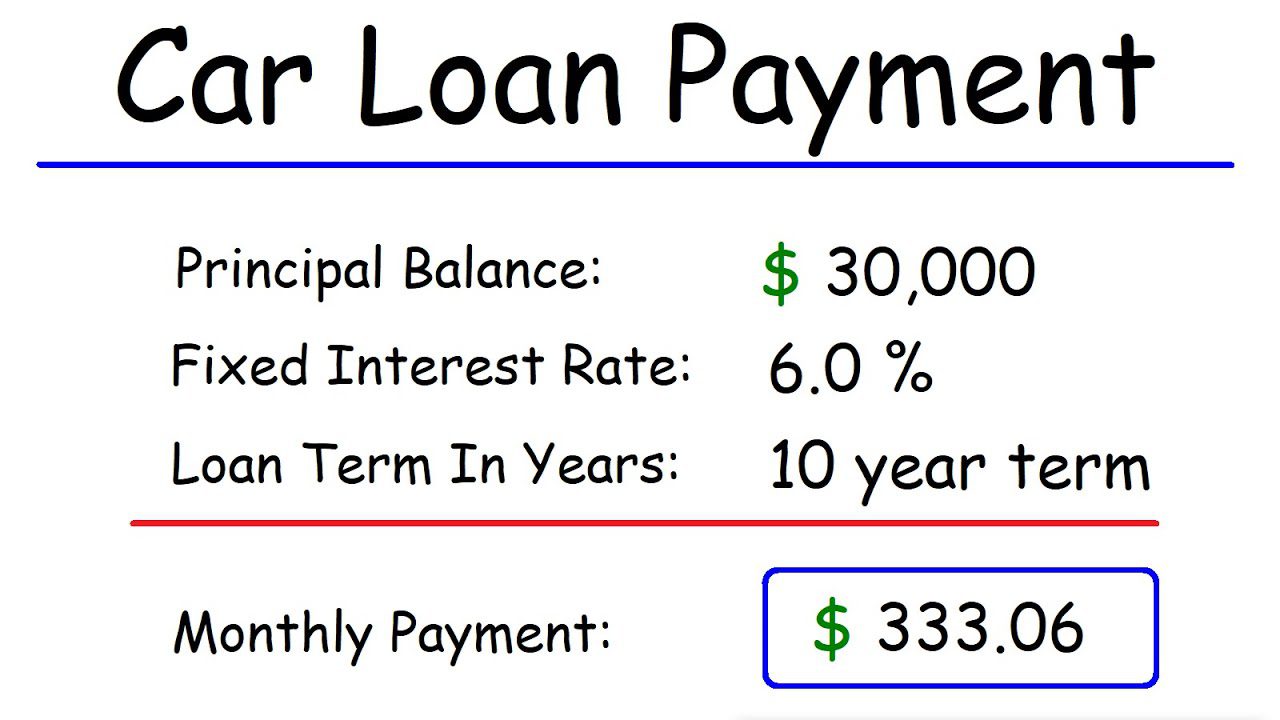
Car loan interest isn’t a flat fee tacked onto the sticker price. It’s a percentage that accrues on your remaining balance, which means the amount you pay in interest changes every single month. Most people sign loan paperwork without understanding how the math works, and that’s exactly how lenders end up earning thousands more than they need to.
This guide breaks down the calculation into plain English, shows you a real dollar example, and reveals the traps that inflate your total interest cost. You’ll walk away knowing exactly how to compute your own interest, read an amortization schedule, and decide whether a 0% APR offer actually beats a cash rebate.

Boondoggle Studios
Car Loan Calculator Free
- Calculate car loan costs quickly and easily
- Include costs of sales and insurance
- Figure costs for other large loans
If you want to skip the manual math, a car loan calculator app like Car Loan Calculator Free can do the heavy lifting in seconds, including sales tax and insurance costs. But you’ll still need the knowledge below to understand what the numbers mean and how to use them to your advantage.
How Car Loan Interest Works (Simple vs. Amortized)
Car loans use simple interest, not compound interest. That means interest is calculated only on the principal balance you still owe, not on previously accrued interest. Simple interest is good news for you—it’s the cheapest form of borrowing.
But here’s where it gets tricky: the interest accrues daily, even though you make monthly payments. Your lender calculates your daily interest rate by dividing your annual percentage rate (APR) by 365. Then they multiply that daily rate by your current principal balance to find the daily interest charge.
For example, if your APR is 6% and your remaining balance is $20,000, your daily interest is:
0.06 ÷ 365 = 0.0001644
0.0001644 × $20,000 = $3.29 per day
That $3.29 gets added to your interest total each day until you make a payment. When you pay, the lender first collects all the accrued interest, and the rest of your payment goes toward reducing the principal. This is called amortization.
Amortization means your early payments are mostly interest, and your later payments are mostly principal. The split shifts gradually over the life of the loan. It’s not a penalty—it’s just math. The interest is higher early on because the principal is higher.
One important detail: because interest accrues daily, the exact day you make your payment matters. If you pay 10 days early, you save those 10 days of interest. If you pay 10 days late, you pay more interest. This is why setting up automatic payments on the due date (or a few days before) can save you money over the long run.
The Exact Formula to Calculate Your Interest
You don’t need a finance degree to calculate car loan interest. The basic formula is:
Interest = Principal × Rate × Time
For a single month, the formula becomes:
Monthly Interest = (APR ÷ 12) × Current Principal Balance
Your APR is your annual rate, so dividing by 12 gives you the monthly rate. Multiply that by your current balance to get the interest portion of your next payment.
Step-by-Step Worked Example
Let’s use a real scenario. You’re buying a car for $25,000. You make a $5,000 down payment, so your loan amount (principal) is $20,000. Your APR is 5%, and your loan term is 60 months.
First, find your monthly interest rate:
5% ÷ 12 = 0.4167% (or 0.004167 as a decimal)
First month’s interest:
0.004167 × $20,000 = $83.33
Now, let’s find your monthly payment. The standard formula for a fixed-rate amortized loan is:
Payment = P × [r(1+r)^n] / [(1+r)^n – 1]
Where P is principal, r is monthly interest rate, and n is number of payments.
For our example:
Payment = $20,000 × [0.004167(1.004167)^60] / [(1.004167)^60 – 1]
Payment = $20,000 × [0.004167 × 1.28336] / [1.28336 – 1]
Payment = $20,000 × [0.005347] / [0.28336]
Payment = $20,000 × 0.01887
Payment = $377.42 per month
In your first payment, $83.33 goes to interest, and the remaining $294.09 reduces the principal. Your new balance is $19,705.91.
For the second month, you repeat the calculation with the new balance:
0.004167 × $19,705.91 = $82.11 interest
Your payment stays $377.42, so $295.31 goes to principal. The interest portion drops by about $1.22 each month, and the principal portion rises by the same amount.
Over 60 months, you’ll pay a total of $2,645.48 in interest on this loan. That’s the cost of borrowing $20,000 at 5% for five years.
How to Read Your Amortization Schedule
An amortization schedule is a table that shows every payment, split into interest and principal, plus your remaining balance after each payment. Lenders are required to provide one, but most people never look at it.
Here’s what the first few rows of our example look like:
| Month | Payment | Interest | Principal | Balance |
|---|---|---|---|---|
| 1 | $377.42 | $83.33 | $294.09 | $19,705.91 |
| 2 | $377.42 | $82.11 | $295.31 | $19,410.60 |
| 3 | $377.42 | $80.88 | $296.54 | $19,114.06 |
| 12 | $377.42 | $68.33 | $309.09 | $16,080.43 |
| 24 | $377.42 | $50.62 | $326.80 | $11,814.69 |
| 36 | $377.42 | $31.91 | $345.51 | $7,324.45 |
| 48 | $377.42 | $12.15 | $365.27 | $2,602.27 |
| 60 | $377.42 | $0.00 | $377.42 | $0.00 |
Notice how the interest column shrinks over time. At month 48, you’re paying only $12.15 in interest, even though your payment is the same. This is the amortization curve in action.
The schedule also reveals something surprising: at the halfway point (month 30), you’ve paid about $1,800 in interest, but you still owe more than $9,000 in principal. That’s because the first half of your payments mostly went to interest. It’s not a scam—it’s just how amortized loans work.
If you want to see your own schedule, any manual interest calculation method will give you the same numbers. Or you can use a spreadsheet formula like =PMT(rate, nper, pv) to get the payment, then build the schedule row by row.
The Hidden Factors That Change Your Rate
Your APR isn’t just a random number the dealer picks. It’s determined by several factors, some of which you can control and some you can’t.
Credit Score, Loan Term, and New vs. Used
Your credit score is the biggest factor. A score of 720 or higher typically gets the best rates—often 3-5% for new cars. A score below 600 might see rates of 10-15% or higher. The difference between a 4% and a 12% rate on a $25,000, 60-month loan is about $3,000 in extra interest.
Your loan term matters too. Longer terms (72 or 84 months) have lower monthly payments but higher total interest because you’re paying for a longer period. A 72-month loan at 5% on $20,000 costs $3,184 in interest, compared to $2,645 for 60 months. The monthly payment drops by about $50, but you pay $539 more in interest.
New vs. used also affects your rate. New cars get lower rates because they have higher resale value and are less risky for lenders. Used cars, especially those older than 5 years, carry higher rates. The difference is typically 1-3 percentage points.
One factor people overlook is loan-to-value ratio—the amount you’re borrowing compared to the car’s value. If you’re financing more than the car is worth (negative equity from a previous loan, for example), lenders see that as risky and bump up your rate.
The 0% APR vs. Cash Rebate Dilemma
Dealers love to advertise 0% APR. It sounds like free money, but it’s often a trap. Here’s the reality: you can’t always get both 0% APR and a cash rebate. You have to choose one.
Let’s compare two scenarios on a $30,000 car.
Option A: 0% APR for 60 months
Monthly payment: $500
Total interest: $0
Total cost: $30,000
Option B: $3,000 cash rebate, 5% APR for 60 months
Loan amount: $27,000
Monthly payment: $509.52
Total interest: $3,571.20
Total cost: $30,571.20
Option A wins by $571.20. But what if the rebate is larger or your credit score qualifies for a lower rate?
Option C: $5,000 cash rebate, 6% APR for 60 months
Loan amount: $25,000
Monthly payment: $483.32
Total interest: $3,999.20
Total cost: $28,999.20
Option C beats Option A by $1,000. The rebate wins because it reduces the principal, and the interest on that smaller principal is less than the rebate itself.
The rule of thumb: if the rebate is larger than the total interest you’d pay on the non-0% loan, take the rebate. If the rebate is small (like $500), the 0% APR is usually better.
You can’t just compare the monthly payment—you have to compare the total cost. A lower payment might mean a longer term, which means more interest overall. Always calculate the total of all payments (including any fees) before you sign.
5 Strategies to Pay Less Interest
You’re not stuck with the first loan offer you get. Here are five proven ways to reduce the total interest you pay.
Bi-Weekly Payments and Rounding Up
Instead of one monthly payment of $377.42, pay half every two weeks: $188.71. Over a year, that’s 26 half-payments, which equals 13 full payments instead of 12. That extra payment goes straight to principal, reducing your balance faster and cutting your total interest.
On our $20,000 loan at 5%, bi-weekly payments would save about $250 in interest and shorten the loan term by 4 months. Not bad for a simple scheduling change.
Rounding up your payment to the nearest $50 also helps. Paying $400 instead of $377.42 each month saves about $400 in interest on the same loan and pays it off 5 months early. The extra $22.58 per month is painless, but the savings add up.
Refinancing and Negotiating Tactics
Refinancing means replacing your current loan with a new one at a lower rate. It’s most effective when interest rates have dropped since you bought the car, or when your credit score has improved. Refinancing a $20,000 loan from 8% to 5% with 36 months left saves about $900 in interest.
But refinancing isn’t free. You might pay an origination fee or title transfer fee, so calculate the break-even point. If the fees are $300 and you save $900, you’re still ahead by $600.
When negotiating at the dealership, separate the price of the car from the financing. Dealers often use a four-square tactic—a worksheet that combines price, trade-in, down payment, and monthly payment into one negotiation. This lets them hide a higher interest rate by extending the loan term.
Instead, negotiate the price first, then discuss financing. Ask for the interest rate in writing, and compare it to offers from your bank or credit union. A car loan interest guide can help you understand what rate you should expect based on your credit.
Also consider direct lending—getting prequalified from a bank or credit union before you visit the dealership. This gives you a baseline rate and leverage. If the dealer can’t beat it, you walk away with your own financing.
Finally, don’t forget the trade-in value. If you owe more on your current car than it’s worth (negative equity), that difference gets rolled into your new loan, increasing your principal and your interest. Paying down negative equity before trading in can save you more than any rate negotiation.
Frequently Asked Questions
Is car loan interest calculated daily or monthly?
Most car loans use simple interest that accrues daily. Your lender calculates your daily interest rate (APR ÷ 365) and multiplies it by your current principal balance each day. The total accrued interest is added to your balance until you make a payment. This means the exact day you pay matters—paying early saves interest, paying late costs more.
Can I pay off a car loan early to save interest?
Yes, but check for a prepayment penalty first. Most car loans don’t have one, but some subprime lenders do. If there’s no penalty, paying extra toward principal reduces your balance faster, which lowers the interest you pay in subsequent months. Even a small extra payment each month can save hundreds of dollars.
What’s the difference between APR and interest rate?
The interest rate is the cost of borrowing the principal, expressed as a percentage. APR (annual percentage rate) includes the interest rate plus any lender fees, like origination charges or document fees. APR gives you a more accurate picture of the total cost, so always compare APRs when shopping for a loan.
How much interest will I pay on a $25,000 car loan?
It depends on your rate and term. At 5% for 60 months, you’ll pay about $3,306 in interest. At 8%, that jumps to $5,412. At 12%, it’s $8,413. The rate matters more than the term—cutting your rate from 8% to 5% saves over $2,000.
Is it better to get financing from the dealer or a bank?
It depends. Dealers often have access to special rates from the manufacturer, especially on new cars. But they also mark up rates to earn a commission. Banks and credit unions usually offer lower rates for used cars and for buyers with less-than-perfect credit. Get a preapproval from your bank first, then let the dealer try to beat it.
Bottom Line
The math behind car loan interest isn’t complicated, but it’s easy to ignore until you’re signing the paperwork. Here’s what to remember:
- Car loans use simple interest, calculated daily on your remaining principal—not compound interest.
- Your monthly payment is fixed, but the interest-to-principal split changes every month, with interest highest at the start.
- Use the formula Interest = Principal × Rate × Time to estimate your monthly interest charge.
- Read your amortization schedule to see exactly where your money goes and how much you’ll pay in total interest.
- Compare 0% APR offers against cash rebates by calculating the total cost of each—the lower total wins, not the lower payment.
- Pay bi-weekly or round up your payment to shave months off your term and hundreds off your interest.
- Negotiate the car price separately from the financing, and get preapproved from your bank to use as leverage.
Now that you know how the calculation works, you can walk into any dealership with confidence. The numbers don’t lie—and neither should the lender.
Products related to this article
Sponsored / affiliate links. As an Amazon Associate I earn from qualifying purchases. I may earn additional commission from eligible campaigns.