Where Are Lotus Cars Manufactured? (2026 Hethel Update)
Lotus cars are built at two factories: Hethel, Norfolk — used since 1966 — and Wuhan, China, opened after Geely took a 51% stake in 2017. Hethel builds petrol and hybrid sports cars like the Emira; Wuhan builds electric models like the Eletre and Emeya. In 2026, Geely is reviewing Hethel’s future, weighing new hybrid production against reports of a possible closure. This guide covers the full history and what’s happening at Hethel right now.
Quick Answer
Lotus cars are built at two factories: Hethel, Norfolk, England (petrol and hybrid sports cars like the Emira, Lotus’s home since 1966) and Wuhan, China (electric models like the Eletre and Emeya, built since Geely took a 51% stake in 2017). Geely is reviewing Hethel’s future in 2026, but the UK plant remains open for now.
The Heart of Lotus: Manufacturing in the United Kingdom
For most of Lotus’s history, the UK has been the beating heart of the brand. The first Lotus cars rolled off a production line in London, but it was the move to Hethel, Norfolk, that defined what Lotus would become — a place where racing heritage meets lightweight engineering.
Legendary models like the Elan, Esprit, and Elise were all born in Norfolk, and much of Lotus’s research, development, and high-performance production still happens at Hethel today. It’s where founder Colin Chapman’s guiding principle — “simplify, then add lightness” — is still put into practice, and where the brand’s engineers keep the identity of a Lotus intact: light, agile, and connected to the road.
A Bit of History: From Small Beginnings to Global Ambitions
Colin Chapman built his first car in 1948, in a small garage behind the Railway Hotel in Hornsey, north London, using a modified Austin Seven. He formally established Lotus Engineering Ltd. in 1952, and by 1959 the growing company had moved into a purpose-built factory in Cheshunt, Hertfordshire.
The real turning point came in 1966, when Lotus moved to Hethel — a former World War II Royal Air Force airfield near Wymondham, Norfolk. Lotus still uses sections of the old runway as its test track today. Hethel gave the company room to build and test cars in the same place, and decades of work there on aerodynamics, suspension, and composite materials turned Lotus into a genuine authority on lightweight sports car design — even through the ownership changes and financial struggles that followed.
Best Lotus Collector’s Pick

Colin Chapman Wayward Genius Paperback – July 1, 2012
The definitive biography of the founder whose “add lightness” philosophy still shapes every car built at Hethel today.
- Best for: readers who want the full founder’s story behind Lotus’s UK manufacturing heritage
- Why we picked it: goes deeper into Chapman’s engineering philosophy than any single article can
- Main drawback: focused on Chapman’s life and racing career, not a technical manufacturing manual
Compare more Lotus history & collector picks
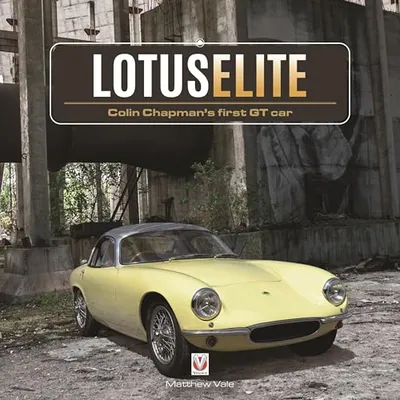
 Option 1 Lotus Elite: Colin Chapman’s first GT Car
|
 Option 2 Hot Wheels ’67 Lotus Type 49 F1 Diecast
|
 Option 3 Mini GT 1:64 Lotus Esprit Turbo
|
As an Amazon Associate we earn from qualifying purchases.
The Influence of Global Ownership: Expansion and New Horizons
Lotus’s ownership has changed hands several times, but the most consequential shift came in 2017, when Chinese automaker Geely Holding Group took a controlling stake in the company. Geely’s capital didn’t just keep Lotus afloat — it funded an entirely new manufacturing plant in Wuhan, China, built to produce Lotus’s first wave of electric vehicles for the world’s largest car market and to grow the brand’s electric vehicle lineup.
The Exact Geely Deal: Dates, Price, and the Other 49% Owner
The acquisition wasn’t a vague “changed hands” moment — it happened on a specific date. On May 24, 2017, Geely announced it was buying a 51% controlling stake in Lotus from Malaysian carmaker Proton for roughly £51 million ($66 million), as part of a wider deal that also saw Geely take a 49.9% stake in Proton itself. The remaining 49% of Lotus isn’t held by Geely at all — it belongs to Etika Automotive, a company tied to Proton’s parent group, DRB-Hicom, which exited the sports car business entirely by selling its share. Lotus’s ownership structure isn’t unusual for a small, historic sports car brand — BMW is similarly still majority-controlled by a single family, decades after being taken over.
None of this replaced the UK operation. Hethel remains where Lotus’s specialized, high-performance sports cars are engineered and built, while Wuhan focuses on higher-volume electric models designed with Geely’s backing. It’s a split that lets Lotus protect its heritage while competing in a much bigger, faster-moving part of the car market — not unlike how Porsche balances its own national identity against a much larger parent group.
Lotus Manufacturing: Key Locations at a Glance
United Kingdom:
- Hethel, Norfolk: The historic and main manufacturing base since 1966. This is where the current Emira and low-volume Evija are built. It’s also the center for R&D and motorsport-derived engineering.
- Original Garage, Hornsey (London): The very first location where Colin Chapman began building cars in 1948.
- Cheshunt, Hertfordshire: A purpose-built factory used from 1959 until the move to Hethel.
China:
- Wuhan: A modern plant established under Geely, with capacity for around 150,000 vehicles a year. It builds the electric Eletre and Emeya for China and export markets, including the US and Europe.
2026 Update: Will Lotus Close the Hethel Factory?
In 2026, Geely ordered a strategic review of the Hethel plant as part of a push to get Lotus to profitability, and reports from the Financial Times and BBC suggested the historic factory could eventually close. Lotus pushed back directly: “Lotus Cars is continuing normal operations, and there are no plans to close the factory,” the company told the BBC, while acknowledging it is “actively exploring strategic options to enhance efficiency and ensure global competitiveness.”
Why the Review Started
The trigger was money, not politics. A 25% US tariff on imported cars introduced in 2025 made exporting the Emira from Hethel to America — its biggest market — unprofitable, and Lotus paused Emira production and cut roughly 550 UK jobs, about 40% of its Hethel workforce, that summer. A later UK-US trade deal cut the tariff on British-built cars to 10%, easing the pressure, but by then Geely had already begun weighing the plant’s long-term future.
What Comes Next for Hethel
As of mid-2026, Lotus is leaning toward keeping Hethel running rather than closing it. CEO Feng Qinfeng has said the site is the “best location” to build two upcoming models: the Type 135, a V8 hybrid supercar due in 2028, and a hybrid successor to the Emira expected around 2030. Reporting indicates Geely wants the factory to grow rather than shrink, even as feasibility studies for the new models continue.
📊 Geely has invested more than £1 billion in Hethel’s transformation since 2017, and the plant currently builds around 2,000 cars a year against a maximum capacity of roughly 10,000. — Source: Autocar, 2026
“We definitely want to keep the factory going and we definitely want to be better — to grow.”
Could Lotus Move Production to the US Instead?
A separate option under review is building Lotus cars in America. Geely already owns a 2.3-million-square-foot Volvo factory in Ridgeville, South Carolina, and Lotus has confirmed it’s exploring assembling the Emira and its electric models there. Producing in the US would let Lotus avoid import tariffs altogether, rather than pay even the reduced 10% UK rate — a move that mirrors how other Geely-linked, Chinese-owned brands are working around US import barriers. No decision has been announced, and any US assembly would likely supplement Hethel rather than replace it.
The Models and Their Manufacturing Homes
Lotus’s manufacturing footprint splits cleanly along model lines. The current Emira, along with the previous-generation Elise and Exige, is built entirely at Hethel — these are the cars built around Lotus’s traditional lightweight, driver-focused engineering. The all-electric Evija hypercar is also a Hethel product, hand-built in extremely limited numbers.
The higher-volume electric models are a different story. The Eletre SUV and Emeya sports sedan are both built at the Wuhan plant in China, where Geely’s manufacturing scale makes it possible to produce EVs at a volume Hethel was never designed for. So a traditional Lotus sports car is almost always UK-built; a newer, high-volume electric model almost always isn’t.
Lotus Car Types and Their Likely Origins
Traditional Sports Cars
Examples: Lotus Emira, Lotus Elise (previous generations), Lotus Exige (previous generations), Lotus Evija
Manufacturing Location: United Kingdom (Hethel, Norfolk)
High-Volume Electric Vehicles (EVs)
Examples: Lotus Eletre, Lotus Emeya
Manufacturing Location: China (Wuhan)
The UK Manufacturing Experience: Craftsmanship and Heritage
Hethel doesn’t run like a typical high-volume car plant, and that’s deliberate. Production lines are shorter and far more hands-on than at a mass-market factory, because Lotus builds around a specific goal: a lightweight, connected driving experience rather than raw output.
That shows up in how the cars are actually built. Technicians work extensively with composite materials — fiberglass historically, carbon fiber increasingly — because reducing weight is central to Lotus’s engineering philosophy, not just a marketing line. Engineers stay closely involved through assembly rather than handing off to a separate production team, and the brand’s Formula 1 heritage still shapes how road cars are tuned and finished.
For many owners, a car built at Hethel carries real weight: it’s a direct link to Colin Chapman’s original “simplify, then add lightness” philosophy, built by a small, specialized workforce rather than an assembly line.
What Makes UK-Made Lotus Special?
Heritage & Legacy
Built on decades of British racing success and Colin Chapman’s original engineering principles.
Lightweight Construction
Expert use of composite materials like carbon fiber for superior agility.
Driver Focus
Engineering and assembly prioritize a pure, connected driving experience.
Skilled Craftsmanship
Meticulous assembly by a small, highly trained technician workforce.
The China Manufacturing Advantage: Scale and Electric Mobility
Wuhan gives Lotus something Hethel physically can’t: scale. China is both the world’s largest car market and a leader in EV manufacturing, so building there lets Lotus produce electric models at the volumes needed to fund further R&D, while tapping into Geely’s existing supply chain and manufacturing expertise.
The plant handles the technical complexity that comes with EV production: battery integration, powertrain assembly, and a much higher degree of automation than Hethel’s hands-on lines. It’s a straightforward trade — Hethel protects Lotus’s sports car identity, Wuhan gives the brand a real shot at competing in the EV market at the scale that requires.
Why China for Lotus Production?
- Market Access: Directly serves the world’s largest automotive market.
- EV Leadership: Capitalizes on China’s advanced EV technology and infrastructure.
- Production Scale: Enables manufacturing of high-volume electric models efficiently, with capacity for around 150,000 vehicles a year.
- Cost Optimization: Strategic location for managing production expenses.
- Geely Synergy: Benefits from the parent company’s manufacturing expertise and supply network.
What This Means for You as a Car Enthusiast
Knowing where a Lotus is actually built adds context to what you’re buying. A Hethel-built Emira connects you to a specific lineage of hand-assembled British sports cars going back to the Elan and Esprit — cars built in comparatively tiny numbers by a specialized workforce.
A Wuhan-built Eletre or Emeya represents the other half of the story: Lotus’s attempt to survive and grow as an EV maker, backed by Geely’s manufacturing scale. Both are real Lotus cars, held to the same engineering philosophy — they just come from very different production models, and 2026’s Hethel review means that split could look different again within a few years.
Frequently Asked Questions About Lotus Manufacturing
Where is the main Lotus factory located?
Lotus’s main and historic factory is in Hethel, Norfolk, England — a former World War II Royal Air Force airfield the company has used since 1966. It remains home to Lotus’s research, development, and sports car production, including the current Emira.
Does Lotus still manufacture cars in the UK?
Yes. Hethel currently builds the Emira sports car and the low-volume Evija hypercar. Production paused briefly in 2025 after new US tariffs made exports unprofitable, but resumed once a UK-US trade deal cut the tariff on British-built cars from 25% to 10%.
Who owns Lotus Cars?
Chinese automaker Geely Holding Group has owned a controlling 51% stake in Lotus since May 24, 2017, when it bought the shares from Malaysia’s Proton for roughly £51 million. The remaining 49% is held by Etika Automotive, a company tied to Proton’s parent group.
Will Lotus close the Hethel factory in 2026?
Lotus has publicly denied it, stating it has “no plans to close the factory.” Geely ordered a strategic review of Hethel in 2026 after reports from the BBC and Financial Times raised closure concerns, but Lotus says it is exploring how to keep the plant competitive — including building the upcoming Type 135 hybrid supercar and a hybrid Emira successor there.
Could Lotus start building cars in the United States?
It’s under consideration but not confirmed. Lotus CEO Feng Qinfeng has said the company is looking at assembling cars, including the Emira, at Geely-owned Volvo’s factory in Ridgeville, South Carolina, which would let Lotus avoid import tariffs entirely rather than pay the reduced 10% UK rate.
Are all Lotus cars made in the UK?
No. Traditional sports cars are built in Hethel, England, while newer electric models — the Eletre SUV and Emeya sedan — are built at Geely’s Wuhan, China plant. For a shorter, factory-by-factory breakdown of exactly which model comes from where, see our companion guide: Where Are Lotus Cars Made?
Did Colin Chapman build cars in China?
No. Chapman, who founded Lotus, built his first car in a garage in Hornsey, north London, in 1948 and never manufactured in China. The Wuhan factory was established decades after his death in 1982, following Geely’s 2017 acquisition of the company.
Conclusion: A Global Brand with Deep Roots
Where Lotus cars are made has never had a simple one-factory answer, and in 2026 it’s more in flux than usual. Hethel, Norfolk remains the historic and spiritual home of the brand — the place Colin Chapman’s “add lightness” philosophy still shapes every car built there — while Wuhan, China gives Lotus the manufacturing scale it needs to compete as an EV maker.
Geely’s ownership is what makes both possible, and its 2026 review of Hethel’s future — weighing new hybrid models against the possibility of shifting some production to the US — will likely decide what Lotus manufacturing looks like for the next decade. For now, Lotus says Hethel isn’t going anywhere.
Products related to this article
Sponsored / affiliate links. As an Amazon Associate I earn from qualifying purchases. I may earn additional commission from eligible campaigns.