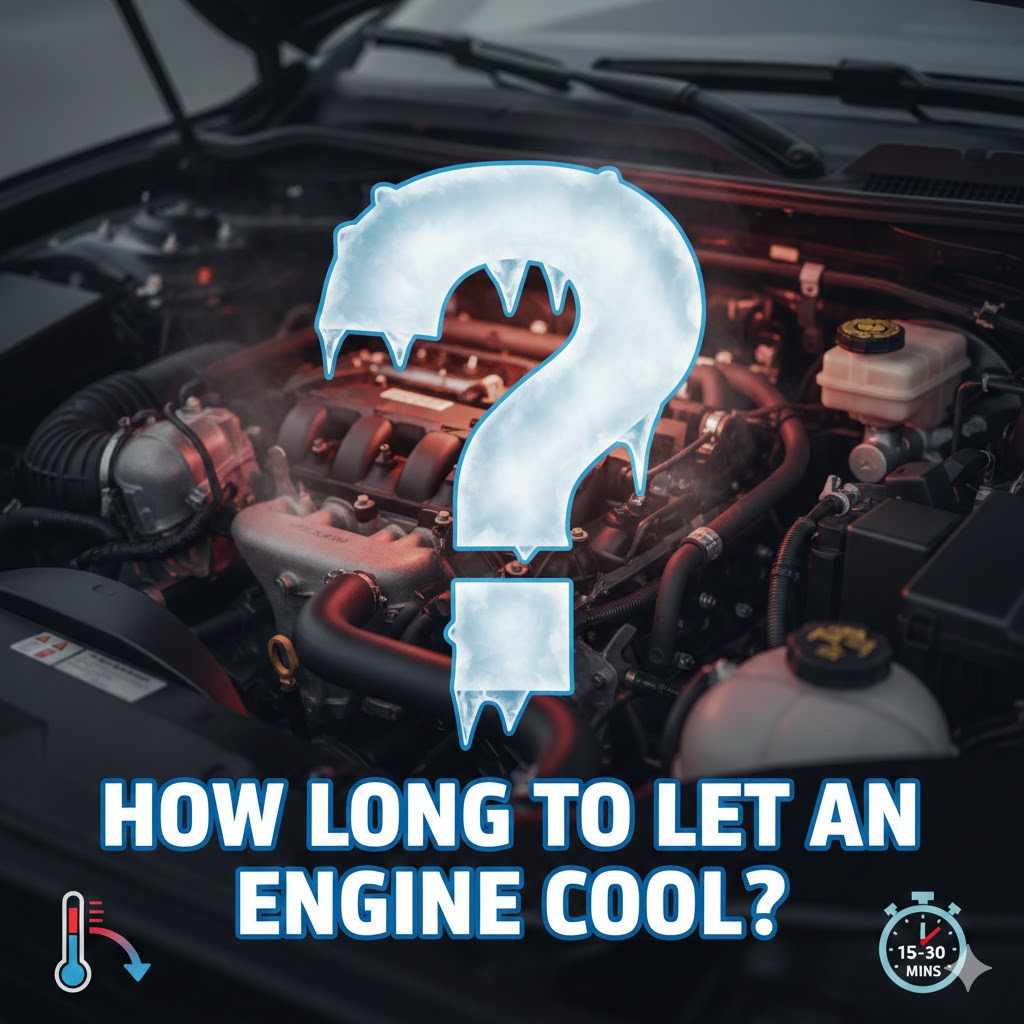
How Long to Let an Engine Cool
Many car owners wonder How Long to Let an Engine Cool Before Adding Coolant. It’s a common question, especially for those new to car maintenance. Getting it wrong can cause damage, which is why people worry.
But don’t stress! This guide will show you the simple steps to do it safely. We’ll make sure your car stays in great shape with easy-to-follow advice.
When Is It Safe To Add Coolant
Knowing when it’s safe to add coolant is super important for your car’s engine health. Adding coolant to a hot engine can cause a big problem called thermal shock. This happens when cold liquid hits very hot metal, and it can crack parts of your engine.
This section explains why waiting is necessary and what to look out for.
Understanding Engine Heat And Coolant
Your car’s engine gets extremely hot when it’s running. Think about how hot a stove gets. The engine works hard, and parts move very fast, creating a lot of heat.
Coolant, also called antifreeze, is like the engine’s air conditioner. It flows through the engine to absorb heat and then carries it to the radiator, where it cools down.
When the engine is running, the coolant inside is also very hot, under a lot of pressure. The cooling system is a closed loop, meaning it’s sealed. This pressure helps keep the coolant from boiling.
If you open the system when it’s hot and pressurized, that hot liquid can spray out suddenly, causing serious burns.
This is why waiting for the engine to cool down is not just a suggestion; it’s a safety rule. The cooling system needs time to lower both its temperature and its pressure to a safe level before you can safely open the radiator cap or the coolant reservoir.
The Dangers of Opening a Hot Cooling System
Opening the cooling system when the engine is hot is a recipe for disaster. The coolant can be as hot as 250 degrees Fahrenheit (121 degrees Celsius). At this temperature, it’s under significant pressure, usually around 15 pounds per square inch (psi) or more.
If you twist that radiator cap, you’re essentially releasing a steam bomb.
This hot, pressurized coolant can erupt out of the opening, spraying onto your hands, face, and other parts of the engine bay. The steam alone can cause severe burns. Metal parts under extreme heat can also be damaged if suddenly exposed to a much cooler liquid.
This sudden temperature change, known as thermal shock, can lead to cracks in the radiator, engine block, or cylinder head.
Think of it like taking a very hot glass dish out of the oven and immediately pouring ice water into it. The glass would likely shatter. The engine’s metal components are designed to handle heat, but not such rapid, drastic temperature shifts.
Safety comes first when dealing with any part of a car’s engine.
Signs Your Engine Has Cooled Down
You can tell your engine has cooled down enough by a few simple signs. First, the engine temperature gauge on your dashboard should be back to the “cold” or “normal” position. This is usually in the lower half of the gauge’s range.
If the gauge is in the middle or higher, the engine is still too hot.
Another sign is that the radiator fan, which often comes on when the engine is hot, should not be running. You can also touch the hood of the car. If it’s too hot to keep your hand on it for more than a few seconds, the engine is still too warm.
The coolant reservoir tank might also feel cool or only slightly warm to the touch.
The best way is to wait for a significant amount of time. For most cars, waiting at least 30 minutes after turning the engine off is a good starting point. If the engine was running for a long time or under heavy load, like driving uphill, it might need even longer to cool down, possibly an hour or more.
How Long to Let an Engine Cool Before Adding Coolant
This is the big question. The general rule of thumb is to wait until the engine is cool enough that you can comfortably touch the hood without burning yourself. However, “comfortably touch” is subjective.
A more precise answer involves time and temperature. Most mechanics and car experts recommend waiting at least 30 minutes after the engine has been turned off.
For a safer bet, especially if the car was driven hard or in very hot weather, waiting an hour is even better. This allows the coolant and engine components to lose enough heat. The cooling system’s pressure will also drop to a safe level.
If you are unsure, always wait longer rather than shorter. It is better to take a little extra time than to risk a serious injury or costly engine damage.
Think of this waiting period as a moment to relax and gather your supplies. Have your new coolant ready, check the owner’s manual for the correct type of coolant, and prepare your tools. This safety buffer ensures you can perform the task without putting yourself or your car at risk.
The Waiting Game Time Estimates
When estimating how long to wait, consider how long the car was running and how it was driven. A quick trip around town might mean the engine cools down faster, perhaps within 30 minutes. However, a long highway drive or towing a trailer puts more stress on the engine, generating more heat.
In these cases, an hour or even longer might be necessary.
Some cars have fans that continue to run after the engine is turned off to help cool it down. If you hear the fan still running, the engine is still quite warm. Also, the ambient temperature plays a role.
On a hot summer day, your car will retain heat longer than on a cool autumn evening. Always err on the side of caution.
For example, if you drove for two hours on a highway on a 90-degree day, allow at least 60-90 minutes for the engine to cool sufficiently. If you only drove for 15 minutes to the store and back on a mild day, 30-45 minutes might be enough. The goal is for the main engine components and the coolant to reach a temperature where pressure is no longer a significant concern.
Checking The Coolant Level Safely
Once you believe the engine has cooled down sufficiently, you can check the coolant level. Never open the radiator cap directly unless the engine is completely cold and has been sitting for at least an hour. Instead, most modern cars have a translucent coolant reservoir tank, often located near the radiator.
This tank has markings for “full” and “low” or “min” and “max.”
Visually inspect the coolant level in this reservoir. If it’s between the min and max lines, the coolant level is likely fine. If it’s below the “min” line, you’ll need to add coolant.
If the reservoir is empty or very low, it could indicate a leak or that the system needs topping off.
If you must open the radiator cap to check the level (only do this when the engine is completely cold), use a thick rag or gloves. Turn the cap slowly counter-clockwise. You might hear a slight hiss as any residual pressure escapes.
If you hear a strong rush of air or see steam, close the cap immediately and wait longer. The engine is still too hot.
What Type of Coolant To Use
Using the correct type of coolant is just as important as the waiting time. Cars use different types of coolant, often referred to by color or by their chemical composition (like IAT, OAT, HOAT). The wrong type of coolant can cause corrosion and damage to your cooling system over time, or it might not mix properly.
The best place to find out which coolant your car needs is in your owner’s manual. It will specify the correct type and often the recommended brand. If you don’t have the manual, you can usually find this information online by searching for your car’s make, model, and year.
Auto parts stores can also help you find the right coolant.
When adding coolant, it’s usually a 50/50 mix of antifreeze and distilled water. Some coolants come pre-mixed, which is convenient. Always use distilled water, not tap water, because tap water contains minerals that can clog up your cooling system.
Adding Coolant To A Cool Engine
Once the engine has cooled down, you can proceed with adding coolant. This process involves opening the correct part of the cooling system and adding the fluid slowly. It’s important to do this step carefully to avoid spilling and to ensure the coolant is distributed properly throughout the system.
We will walk through this step by step.
Locating The Coolant Reservoir
As mentioned before, most modern cars have a coolant reservoir tank. This is typically a semi-transparent plastic tank connected by a hose to the radiator or engine. It usually has a screw-on or pop-off cap.
This is the easiest and safest place to add coolant if the level is low.
Find this tank. It’s often on the side of the engine bay, sometimes near the firewall or the front of the car. It will have markings indicating the correct fill level.
If the coolant is below the “MIN” or “LOW” mark, it needs more coolant. Make sure the engine is fully cool before opening this cap.
If your car is older or doesn’t have a reservoir, you might need to add coolant directly into the radiator. Again, only do this when the engine is stone cold. The radiator cap is usually a round metal cap with notches or a lever.
Never force it open. If it seems stuck, wait longer or consult your owner’s manual.
Filling The Reservoir
If you’re adding coolant to the reservoir, slowly pour the correct mixture of coolant and distilled water into the tank until it reaches the “MAX” or “FULL” line. Do not overfill. Overfilling can cause the system to push out excess coolant when it heats up, leading to waste and a mess.
If you are using concentrated antifreeze and mixing it with water, do it in a separate clean container first. A common mixture is 50/50 antifreeze and distilled water. Check your owner’s manual for the exact ratio recommended for your vehicle and climate.
In very cold regions, a higher concentration of antifreeze might be needed.
After filling the reservoir, securely replace the cap. Make sure it’s snug but don’t overtighten it if it’s a plastic cap, as you could crack it. Now, start the engine and let it run for a few minutes.
Keep an eye on the coolant level in the reservoir. It might drop slightly as the coolant circulates and fills the entire system.
Filling The Radiator Directly
If you need to add coolant directly to the radiator, ensure the engine is completely cold. Use a thick rag or gloves to grip the radiator cap. Turn it slowly counter-clockwise until you feel it release pressure.
If you hear a hiss or see steam, stop and wait longer. Once all pressure is released, lift the cap straight up and set it aside safely.
Slowly pour the coolant mixture into the radiator opening until it’s about an inch from the top. Then, replace the radiator cap securely. Start the engine and let it run.
As the engine warms up, the thermostat will open, and the coolant will circulate. You may need to add more coolant to the reservoir as the level drops.
Some vehicles have a bleeding screw on the cooling system. If yours does, you might need to open this screw slightly while adding coolant to let air out of the system. Check your owner’s manual for specific instructions on bleeding the air from your cooling system.
Trapped air can cause overheating.
Checking For Leaks
After adding coolant and running the engine for a bit, it’s crucial to check for any leaks. Look under the car for any drips or puddles. Also, inspect the hoses, radiator, and around the water pump for any signs of wetness or coolant residue.
Coolant is often brightly colored, like green, orange, or pink, making leaks easier to spot.
If you find a leak, it needs to be addressed promptly. Even a small leak can turn into a big problem and cause the engine to overheat. You might need to tighten a hose clamp, replace a damaged hose, or have a professional inspect for more serious issues like a faulty radiator or water pump.
Keep an eye on the coolant level in the reservoir over the next few days. If it drops significantly without any visible leaks, you might have a slow leak that is harder to detect, or perhaps coolant is being burned in the engine. Any unexplained coolant loss warrants further investigation by a mechanic.
Common Mistakes To Avoid
When dealing with engine coolant, it’s easy to make mistakes, especially if you’re new to car maintenance. Some errors can be minor inconveniences, while others can lead to significant damage. Being aware of these common pitfalls can save you time, money, and a lot of headaches.
We’ll cover the most frequent issues people run into.
Using The Wrong Type Of Coolant
One of the most critical mistakes is using the wrong type of coolant. Different vehicles require specific coolant formulations. These formulations have different chemical additives that protect the cooling system components from corrosion and degradation.
Mixing incompatible coolants or using the wrong color can lead to reduced cooling efficiency, sludge formation, and severe internal damage to the radiator, water pump, and engine block.
For example, using a conventional green coolant in a car designed for a long-life orange or pink coolant can cause premature corrosion. Similarly, using a universal coolant without checking compatibility can be risky. Always refer to your car’s owner’s manual for the exact type and specification of coolant recommended.
If in doubt, consult a trusted mechanic.
A case study from a repair shop found that a customer’s newer vehicle experienced rapid radiator corrosion after a DIY coolant top-off using a generic “all makes” coolant. The additives in the universal coolant were not compatible with the specialized materials in the vehicle’s cooling system, leading to expensive repairs. This highlights the importance of using the manufacturer’s specified coolant.
Not Letting The Engine Cool Enough
As we’ve stressed, not allowing the engine to cool sufficiently is a major safety hazard and can cause damage. Opening a hot cooling system can result in severe burns from the scalding hot, pressurized coolant. Beyond the immediate danger, the thermal shock from introducing cold liquid to hot engine parts can cause them to crack.
This includes components like the radiator, thermostat housing, and even the engine block itself.
Imagine a scenario where a driver is in a hurry. They notice the coolant is low and, without waiting, quickly twist the radiator cap. A geyser of boiling coolant erupts, severely burning their hand.
The car is now in the shop, not only needing a coolant top-off but also treatment for burns and potentially repairs to cracked engine components due to the thermal shock. The extra 30-60 minutes of waiting would have prevented all of this.
Here’s a simple rule: if you can’t comfortably rest your hand on the hood of the car for 10 seconds, the engine is still too hot to safely open the cooling system. Always prioritize safety and give your car adequate time to cool down.
Overfilling The Coolant Reservoir
Another common mistake is overfilling the coolant reservoir. The coolant level in the reservoir is designed to fluctuate as the engine heats up and cools down. When the engine is hot, the coolant expands and rises in the reservoir.
When it cools, it contracts and the level drops.
If you fill the reservoir to the “MAX” line when the engine is cold, and then the engine heats up significantly, the expanded coolant will have nowhere to go. The system will force this excess coolant out through the overflow or vent. This not only wastes coolant but can also create a slippery mess under the car, which can be hazardous.
The correct way is to fill the reservoir to the “COLD” or “MIN” line when the engine is cold. As the engine runs and reaches operating temperature, the level should rise to around the “HOT” or “MAX” line. If it goes much higher, or if it consistently pushes coolant out, there might be an issue with the system’s venting or pressure regulation.
For example, if you top off the reservoir to the very top when cold, and then drive for a long time, you might find a significant amount of coolant spilled out onto the ground once it cools down.
Ignoring Coolant Leaks
Some car owners might notice a small coolant leak but decide to ignore it, thinking they can just top off the coolant periodically. This is a dangerous approach. A leak, no matter how small, is a sign that something is wrong with the cooling system.
Over time, a small leak can worsen, leading to a sudden loss of coolant and potentially severe engine overheating.
Constant topping off can also mask other problems. It might be a sign of a failing water pump seal, a cracked hose, a faulty radiator cap, or even a more serious issue like a blown head gasket. Ignoring these symptoms can turn a relatively minor repair into a very expensive one, potentially requiring engine rebuilding or replacement.
For instance, a common leak point is the hose clamp. If it’s loose, it might weep coolant. A simple tightening might fix it.
However, if a hose is old and brittle, it could split open completely while driving, leading to rapid coolant loss and engine damage. Regular inspection of hoses, connections, and the radiator is key to preventing this.
How Often Should You Check Coolant Levels
Regularly checking your car’s coolant level is a fundamental part of preventative maintenance. It’s a simple task that can save you from much larger, more costly problems down the road. Making it a habit ensures your engine stays protected from overheating and freezing.
Monthly Checks For Peace Of Mind
It’s a good practice to check your coolant level at least once a month. This is especially true if your car is older or if you live in an area with extreme temperatures. A monthly check is easy to incorporate into your routine, like when you check your tire pressure or fill up your gas tank.
This frequency allows you to catch any potential issues early on.
When you check, make sure the engine is completely cool. Look at the coolant reservoir and note the level. If it’s consistently between the “min” and “max” marks, you’re likely in good shape.
If you notice the level is lower than usual, it’s time to investigate. Look for any visible leaks around hoses, the radiator, or the reservoir itself.
If the level is low, top it off with the correct coolant mixture as described in previous sections. If you find yourself topping it off frequently, this indicates a leak or another problem that needs professional attention. A car that loses coolant regularly is a car at risk of severe overheating.
Before Long Road Trips
Before embarking on any long road trip, it’s highly recommended to perform a thorough check of your coolant level. Long drives put more stress on your engine, generating more heat, and any weakness in the cooling system can be exposed. This is not the time for surprises.
In addition to checking the level in the reservoir, take a moment to inspect hoses for any signs of wear, cracking, or swelling. Ensure radiator caps are securely in place. If your car has been sitting for a while, or if you’ve noticed the temperature gauge creeping up slightly on your usual drives, a pre-trip check is even more critical.
This proactive step can prevent a breakdown in a remote location.
Imagine planning a family vacation, only to have your car overheat on the highway miles from the nearest town. This scenario can be avoided with a simple check before you leave. A quick glance at the coolant level and a visual inspection of the cooling system components can give you the confidence that your car is ready for the journey.
Seasonal Coolant Flushes
Coolant doesn’t last forever. Over time, the additives in the coolant break down, reducing its effectiveness. This is why coolant flushes are recommended at specific intervals.
Your car’s owner’s manual will specify the recommended mileage or time intervals for a coolant flush and replacement. These are typically every 30,000 to 100,000 miles, depending on the type of coolant used.
A coolant flush involves draining the old coolant from the entire system, including the radiator and engine block, flushing the system with water or a cleaning solution, and then refilling it with fresh coolant. This process removes rust, sediment, and old coolant, ensuring optimal performance and protection for your cooling system.
For example, using the original coolant for too long can lead to its anti-corrosive properties failing. This can cause internal rust and sediment to build up in the radiator and engine passages. This buildup restricts coolant flow, making the engine run hotter and potentially causing damage over time.
Following the manufacturer’s recommended flush schedule is crucial for the long-term health of your cooling system.
Frequently Asked Questions
Question: What happens if I add coolant to a hot engine?
Answer: Adding coolant to a hot engine can cause severe burns from the hot, pressurized liquid that can spray out. It can also damage engine parts due to thermal shock, leading to cracks in the radiator or engine block.
Question: Can I use tap water instead of distilled water with antifreeze?
Answer: No, you should always use distilled water. Tap water contains minerals that can build up in your cooling system, causing clogs and reducing its efficiency over time.
Question: How do I know if my car is overheating?
Answer: Signs of overheating include the temperature gauge climbing into the red zone, steam coming from under the hood, a sweet smell, or the engine losing power.
Question: How much coolant do I need to add?
Answer: Add coolant until the level reaches the “MIN” or “COLD” mark on the reservoir when the engine is cool. Do not overfill. If you are doing a full flush, you will need several gallons.
Question: Can I mix different colors of coolant?
Answer: It is generally not recommended to mix different colors or types of coolant, as they may have different chemical compositions that can react negatively and cause damage.
Summary
Knowing how long to let an engine cool before adding coolant is vital. Wait at least 30 minutes, or an hour if the car was driven hard. Always use the correct type of coolant mixed with distilled water.
Check the reservoir when the engine is cold and only add coolant if it’s below the minimum line. Avoid common mistakes like overfilling or using the wrong coolant. Regular checks will keep your engine running smoothly.