What Is the A-Frame on a Car? (Suspension A-Arm vs. Chassis Explained)
The “A-frame” on a car most commonly refers to the A-arm (also called a control arm) — a triangular suspension component that connects the wheel hub to the vehicle’s chassis. It gets its name from its shape. When someone says “my mechanic mentioned the A-frame,” they’re almost certainly talking about this suspension part, not the overall car chassis, although the two terms are sometimes confused.
Confusing the A-arm with the vehicle frame leads to misdiagnosis: the repair costs, symptoms, and fixes are completely different. This guide covers both — how the A-arm works as a suspension component, signs it’s failing, what it costs to replace, and how the car’s structural chassis relates to the term.
Quick Answer
The A-frame on a car is the control arm (A-arm) — a triangular metal suspension component that connects the wheel hub to the car’s chassis. It allows the wheel to move up and down over bumps while keeping it properly aligned. Each wheel typically has one or two A-arms (upper and lower). Replacement costs $300–$900 per side including labor.

What Is the A-Frame (A-Arm) on a Car?
Recommended: A-Frame & Suspension Repair Tools

Control Arm Replacement Kit
Complete A-arm with bushings & ball joint pre-installed
View on Amazon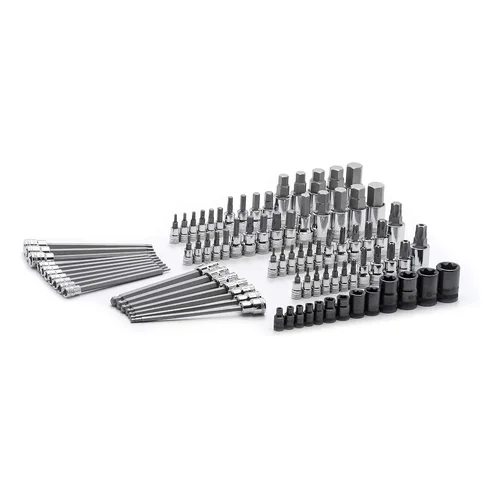
Socket Wrench Set
Metric & SAE for control arm bolts and bushing nuts
View on Amazon
Floor Jack + Jack Stand Set
Required for safe under-car access during frame inspection
View on Amazon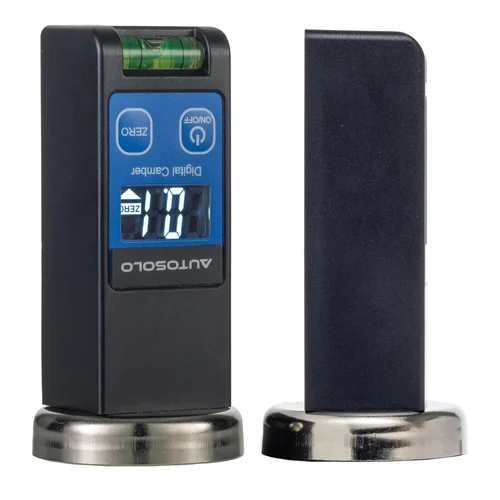
Wheel Alignment Tool
DIY camber/caster gauge for post-repair alignment check
View on AmazonThe A-arm, or control arm, is one of the most important parts of your car’s suspension system. It’s a triangular or wishbone-shaped metal piece — shaped like the letter “A” — that has two attachment points to the vehicle’s frame or subframe, and one attachment point at the wheel’s knuckle or hub. This triangle of metal is what allows your wheel to travel up and down over bumps while staying pointed in the right direction for steering.
Each wheel typically connects to the chassis via one or two A-arms:
| Configuration | How Many A-Arms | Common On |
|---|---|---|
| MacPherson strut (most common) | 1 lower A-arm per wheel | Most passenger cars, front wheels |
| Double wishbone | 1 upper + 1 lower per wheel | Sports cars, SUVs, rear-wheel-drive cars |
| Multi-link suspension | 2–5 links per wheel | Luxury cars, performance vehicles |
At the outer end of the A-arm, a ball joint allows the wheel to pivot for steering. At the inner end, rubber bushings cushion the attachment to the chassis. Either of these can wear out independently — meaning a bad bushing doesn’t always require a full A-arm replacement, and vice versa.
Signs of a Bad A-Frame (Control Arm) on Your Car
A worn or damaged A-arm doesn’t always fail suddenly — it usually deteriorates gradually through its bushings or ball joint. Here’s what to watch for:
| Symptom | Likely Cause | Urgency |
|---|---|---|
| Clunking or knocking noise over bumps | Worn bushings or ball joint | High — address soon |
| Car pulls to one side while driving | A-arm affecting wheel alignment | High |
| Uneven or rapid tire wear | Toe/camber change from worn A-arm | Medium — check alignment |
| Vibration through steering wheel | Loose ball joint or bushing | High if severe |
| Wandering or vague steering feel | Excessive play in ball joint | High — safety risk |
| Visible cracking or tearing on rubber bushings | Age, heat, road salt damage | Replace soon |
A completely failed ball joint — the pivot at the outer end of the A-arm — can cause the wheel to separate from the car while driving. This is rare but catastrophic. If you hear a loud clunk when turning at low speed or feel the steering wheel shimmy at highway speeds, have it inspected immediately.
A-Frame Replacement Cost: What to Expect
Control arm replacement costs depend on whether you’re replacing just the arm, just the bushings, or the complete assembly including ball joint:
| What’s Being Replaced | Parts Cost | Labor | Total (Per Side) |
|---|---|---|---|
| Bushing only | $20–$80 | $100–$150 | $120–$230 |
| Ball joint only | $40–$120 | $80–$200 | $120–$320 |
| Complete control arm (arm + bushing + ball joint) | $220–$530 | $150–$200 | $300–$900 |
| Both sides (recommended if mileage is high) | $440–$1,060 | $250–$350 | $600–$1,500 |
An alignment is always required after control arm replacement — the arm’s geometry directly affects camber and toe angles. Factor in another $80–$120 for a 4-wheel alignment. See our guide on when your car needs alignment for more detail.
The “A-Arm” vs. The “A-Frame” Chassis
The term “A-frame” can refer to two different things on a car, which causes significant confusion:
1. The A-arm (suspension control arm) — The triangular suspension component described above. This is what mechanics and most automotive contexts mean when they say “A-frame.” It connects the wheel to the chassis and is part of the suspension system.
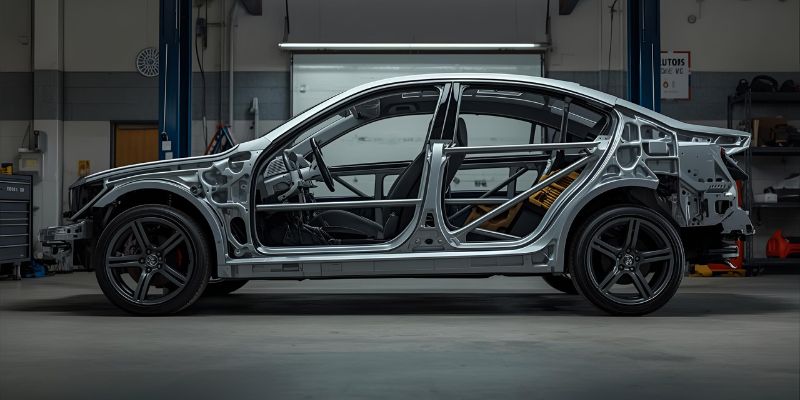
2. The vehicle chassis/frame — The structural skeleton of the entire car. This is the main load-bearing structure that supports the engine, body, and suspension. When a car is described as having “frame damage,” this refers to the chassis, not the suspension A-arm.
The A-arm is a component attached to the chassis — they are not the same thing. Understanding what wheel bearings do alongside the A-arm helps paint a complete picture of how your suspension works as a system.
Understanding Your Car’s Structural Backbone (Chassis)
When we talk about the vehicle’s “frame” or chassis, we mean the fundamental skeleton — the sturdy foundation upon which the engine, transmission, suspension, and body are built. This underlying structure is designed to withstand tremendous forces, from the weight of the engine and passengers to the stresses of everyday driving, braking, and cornering.
The integrity of your car’s chassis directly impacts safety, structural integrity, performance, and longevity. A compromised frame can severely reduce crash protection — for more on vehicle safety structures, the National Highway Traffic Safety Administration (NHTSA) offers detailed information.
Types of Car Frames
Modern cars use one of two main construction methods:
1. Body-on-Frame Construction
A separate, rigid frame is built first, and the car’s body is bolted onto it. Common in trucks, body-on-frame SUVs, and heavy-duty vehicles. Pros: excellent for towing and off-road use, easier frame repair. Cons: heavier, less refined ride, higher center of gravity.
2. Unibody (Monocoque) Construction
The dominant method for modern passenger cars, crossovers, and most SUVs. The body and frame are integrated into a single unified structure. Pros: lighter weight, better fuel economy, improved crash energy absorption. Cons: more complex and expensive to repair after significant damage.
Inspecting Your Car’s Frame (Chassis)
While you don’t need to be a mechanic to perform a basic visual inspection, checking your car’s frame periodically can help you catch potential problems early. Never get under a car supported only by a jack — always use jack stands.
What to Look For:
- Corrosion and Rust: Check the underside, particularly around frame rails, crossmembers, and suspension mounting points. Look for bubbling paint, deep pitting, or flaking metal — especially if you live where road salt is used.
- Bends or Dents: Examine frame rails for any kinks or bends indicating impact from accidents or severe bottoming out.
- Cracks: Look for visible cracks in the metal, particularly around welds or stress points.
- Loose or Missing Parts: Ensure brackets and suspension mounting bolts are securely fastened.
How to Inspect:
- Park on a Level Surface — Ensure your car is on flat, stable ground.
- Engage Parking Brake & Chock Wheels — Apply the parking brake and place wheel chocks behind the opposite wheels.
- Jack Up the Vehicle — Lift at the manufacturer-specified jacking points.
- Secure with Jack Stands — Place jack stands at the frame’s support points before going underneath.
- Visual Inspection — Use a flashlight to inspect front to back. Focus on frame rails, crossmembers, and suspension mounting areas.
- Address Rust — Minor surface rust: wire brush + rust converter + protective coating. Rust that has eaten through metal needs professional repair.
- Lower the Vehicle Safely — Jack up slightly, remove stands, lower slowly.
Common Frame Damage and Issues
Frame damage occurs from accidents (even minor fender benders can twist a unibody), road hazards (potholes, curbs at speed), corrosion, and improper jacking. Signs include the car pulling to one side even after alignment, uneven tire wear, doors or hood not aligning properly, and vibrations at certain speeds.
Can Frame Damage Be Repaired?
Yes, but cost and feasibility depend on severity. For body-on-frame vehicles, minor repairs involve straightening or welding. For unibody vehicles, specialized hydraulic frame-straightening machines pull the structure back to factory specifications — a service offered by body shops certified by organizations like I-CAR. Frame straightening typically costs $750–$1,500+ for unibody vehicles. Severe frame damage (twisted, collapsed, or rusted through) may render the vehicle uneconomical or unsafe to repair.
Maintaining Your Car’s Frame
Preventing frame and A-arm damage comes down to driving carefully (avoiding potholes and speed bumps at high speed), addressing rust spots immediately with rust converter and undercoating, using the correct jacking points from your owner’s manual, and having suspension components checked annually. If you hear clunking over bumps, don’t ignore it — a worn A-arm bushing is cheap to fix before it becomes a worn ball joint, and a worn ball joint is cheap to fix before the wheel separates.
Frequently Asked Questions
Is the “A-frame” the same as the chassis?
No — despite common usage, they’re different. The A-frame (A-arm or control arm) is a suspension component that connects the wheel to the chassis. The chassis is the car’s overall structural skeleton. The A-arm is attached to the chassis, not synonymous with it.
What are the symptoms of a bad A-arm on a car?
The most common symptoms are clunking or knocking noises over bumps (worn bushings), the car pulling to one side, uneven tire wear, and vague or wandering steering feel. A completely failed ball joint — part of the A-arm assembly — can cause the wheel to detach from the car, making it a safety-critical part to inspect.
How do I know if my car’s frame is damaged?
Signs include the car pulling to one side even after alignment, uneven tire wear, doors or hood not fitting properly, or visible bends and rust on the underside. If your car was in a collision, have a body shop inspect the frame with their measurement system — visual inspection alone can miss bent unibody rails.
Can I drive my car with a damaged A-arm?
It depends on the severity. A worn bushing may be driveable short-term with reduced handling. A worn or cracked ball joint is dangerous and should not be driven — ball joint failure at speed can cause loss of control. A bent A-arm should be replaced before driving. When in doubt, have it inspected.
How much does it cost to repair a car frame?
Frame straightening typically costs $750–$1,500 for a unibody vehicle, depending on severity and location. Replacing a section of frame rail (sectioning) is more expensive — $2,000–$4,000+ at a professional body shop. Minor rust treatment is much cheaper: $200–$600 depending on extent and whether undercoating is applied.
What causes frame damage in a car?
Frame damage typically results from accidents (even moderate rear-end or side impacts), hitting large potholes or road debris at speed, severe corrosion from road salt and moisture over many years, or improper jacking that deforms the sill area of a unibody vehicle.
How often should I inspect my car’s frame?
At least once or twice a year — more often in areas with harsh winters or heavy road salt use. Also inspect after any significant impact, hitting a deep pothole, or bottoming out on a steep driveway. Pair the frame inspection with a check of the A-arm bushings and ball joints while you’re underneath. After suspension repairs, check your alignment too — see our guide on when alignment is needed.
Does a car with frame damage affect its insurance?
Yes. If damage resulted from a claimed accident, insurance typically covers frame repair. However, a car with prior “frame damage” on its vehicle history report has significantly lower resale value and may be harder or more expensive to insure. Always check a used car’s CARFAX or AutoCheck report for structural damage flags before buying.
For related suspension guides, see what wheel bearings do on a car and our guide to fixing squeaky brakes.
Products related to this article
Sponsored / affiliate links. As an Amazon Associate I earn from qualifying purchases. I may earn additional commission from eligible campaigns.