How Many Oxygen Sensors on a 1989 Safari V6
Figuring out how many oxygen sensors your 1989 GMC Safari V6 has might seem tricky at first. This is a common question for people who are new to working on their vehicle. You want to make sure you get the right parts and know what you’re looking for under the car.
This guide will make it super simple. We’ll break down exactly where to find them and how many there are, step by step. Get ready to get your Safari running smoothly!
Locating Oxygen Sensors on Your 1989 GMC Safari V6
Understanding the location of oxygen sensors is key to any vehicle maintenance. These sensors play a vital role in your engine’s performance and emissions control. For a 1989 GMC Safari V6, knowing where to look can save you time and frustration. This section will guide you through the typical spots where these sensors are found. We will explain their purpose in simple terms.
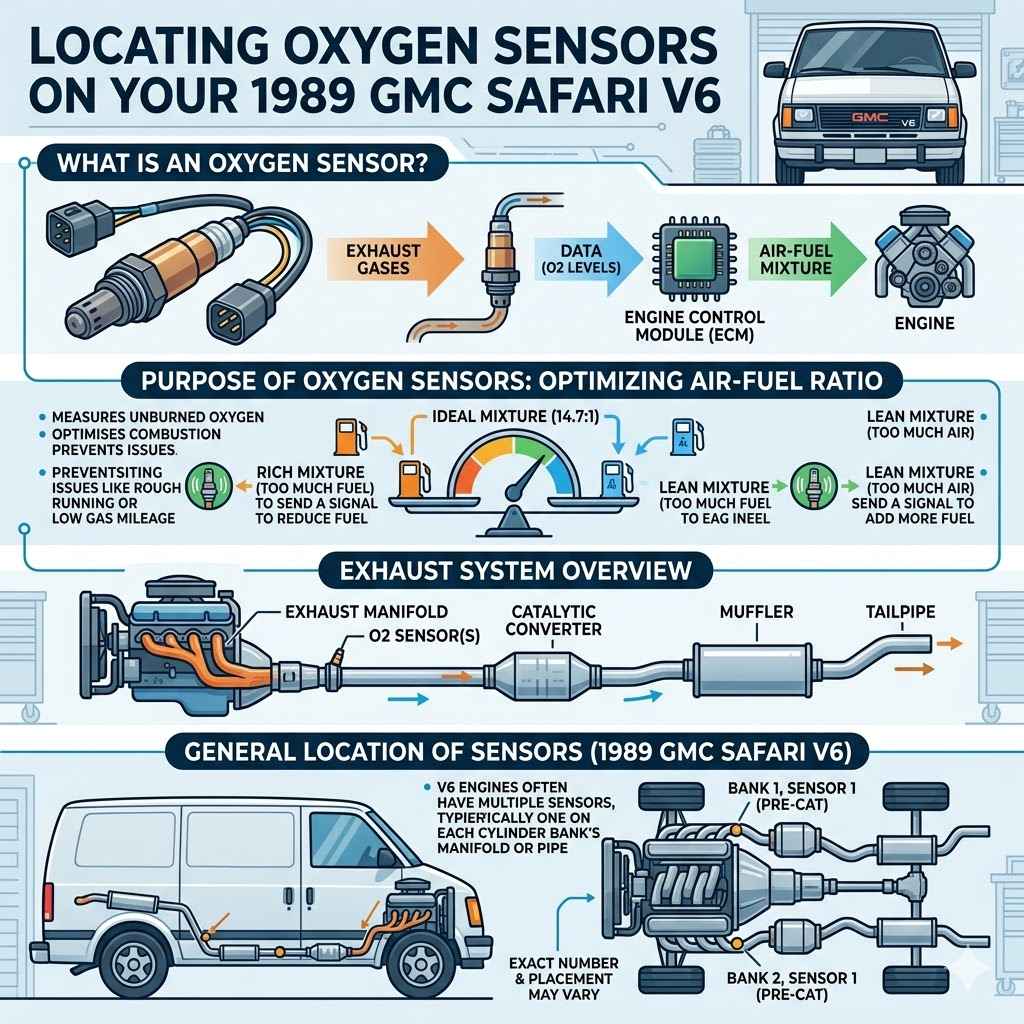
What is an Oxygen Sensor?
An oxygen sensor, often called an O2 sensor, is a critical component in your vehicle’s exhaust system. Its main job is to measure the amount of unburned oxygen in the exhaust gases. This information is then sent to your car’s computer, the Engine Control Module (ECM). The ECM uses this data to adjust the air-fuel mixture going into the engine. This helps ensure optimal combustion, which means better fuel efficiency and lower emissions. Without properly functioning oxygen sensors, your engine might run rough, your check engine light could come on, and you might notice a decrease in gas mileage.
The oxygen sensor is typically located in the exhaust manifold or in the exhaust pipe, often before the catalytic converter. Some vehicles may have more than one sensor, depending on the engine configuration and emissions standards of the time. For a V6 engine, it’s common to find sensors related to each bank of cylinders.
Purpose of Oxygen Sensors
The primary purpose of oxygen sensors is to help the engine computer maintain the ideal air-fuel ratio. This ratio is crucial for efficient burning of fuel. When the mixture is too rich (too much fuel, not enough air), the sensor detects low oxygen and tells the computer to reduce fuel. When the mixture is too lean (too much air, not enough fuel), the sensor detects high oxygen and tells the computer to add more fuel. This constant feedback loop ensures your engine runs as efficiently as possible, reducing pollution and saving you money on gas.
Exhaust System Overview
Your vehicle’s exhaust system is designed to carry harmful gases away from the engine and out of the vehicle. It includes several parts like the exhaust manifold, catalytic converter, muffler, and tailpipe. The oxygen sensors are strategically placed within this system to monitor the exhaust gases at different points. Knowing this general layout helps in pinpointing the sensor locations.
General Location of Sensors
Oxygen sensors are usually screwed into the exhaust pipe or manifold. They have wires that connect them to the ECM. For a 1989 GMC Safari V6, you will typically find one or more sensors in the exhaust system. The exact number can vary based on the specific configuration of the V6 engine and the emissions controls installed for that model year.
Determining the Number of Oxygen Sensors for a 1989 GMC Safari V6
When you’re looking to fix or maintain your 1989 GMC Safari V6, knowing the exact number of oxygen sensors is essential. This can sometimes be a bit confusing because different engine setups can have different numbers of sensors. We will walk you through how to figure this out for your specific vehicle. This will help you prepare for any repairs or replacements.
V6 Engine Configurations
A V6 engine has six cylinders arranged in a V shape. This arrangement typically means there are two banks of cylinders. Each bank might have its own set of sensors to monitor its exhaust. For a 1989 GMC Safari V6, the engine configuration is a key factor in determining the number of oxygen sensors.
How Many Oxygen Sensors Are in a 1989 GMC Safari V6?
For most 1989 GMC Safari V6 models, you will typically find two oxygen sensors. One sensor is usually located on the exhaust pipe for the front bank of cylinders, and another is located on the exhaust pipe for the rear bank of cylinders. These are often referred to as upstream oxygen sensors.
Some vehicles, especially those with more advanced emissions systems for their time, might have additional downstream oxygen sensors located after the catalytic converter. However, for the 1989 model year and this specific vehicle, the most common setup involves two upstream sensors. Always visually inspect your exhaust system to be absolutely sure.
Factors Influencing Sensor Count
The number of oxygen sensors can be influenced by several factors. These include the specific engine option, the emission control systems mandated by the government in the region where the vehicle was sold, and the manufacturer’s design choices for that particular model. While two is the most common number for a 1989 GMC Safari V6, regional variations or optional equipment could, in rare cases, lead to a different count.
Tips for Identification
The easiest way to confirm the number of sensors on your specific 1989 GMC Safari V6 is to get under the vehicle or look under the hood. Trace your exhaust pipes from the engine. You will see metal components screwed into the pipes with wires coming out of them. These are your oxygen sensors. Count them carefully to get an accurate number.
Understanding Oxygen Sensor Functionality and Maintenance
Once you know how many oxygen sensors your 1989 GMC Safari V6 has, it’s good to know what they do and how to keep them working well. Proper maintenance can prevent problems and keep your engine running smoothly. We will cover how these sensors work and what signs might indicate an issue.
Role in Emissions Control
Oxygen sensors are a cornerstone of modern emissions control systems. They provide the real-time data needed for the Engine Control Module (ECM) to precisely manage the combustion process. By ensuring the air-fuel ratio is kept close to the stoichiometric ideal (around 14.7 parts air to 1 part fuel), the catalytic converter can function most effectively. The catalytic converter then converts harmful pollutants like carbon monoxide, unburned hydrocarbons, and nitrogen oxides into less harmful substances like water vapor, carbon dioxide, and nitrogen.
A faulty oxygen sensor can significantly disrupt this delicate balance. If a sensor is reading incorrectly, the ECM might inject too much or too little fuel, leading to incomplete combustion. This not only wastes fuel but also increases the output of pollutants. In some cases, it can even damage the catalytic converter over time due to excessive heat from unburned fuel.
Signs of a Failing Oxygen Sensor
Several symptoms can indicate that one or more oxygen sensors on your 1989 GMC Safari V6 might be failing. These signs can range from subtle to quite noticeable.
Check Engine Light: This is often the first indicator. The ECM detects abnormal readings from the sensor and illuminates the check engine light on your dashboard.
Poor Fuel Economy: If your gas mileage suddenly drops, a faulty O2 sensor could be the culprit. It might be telling the ECM to add more fuel than necessary.
Rough Idling or Engine Hesitation: An incorrect air-fuel mixture can cause the engine to run unevenly, leading to rough idling, misfires, or hesitation when you accelerate.
Failed Emissions Test: If your vehicle fails an emissions test, worn-out oxygen sensors are a common reason, as they directly impact the engine’s ability to control emissions.
Sulfur or Rotten Egg Smell: A rich fuel mixture that isn’t being burned properly can sometimes result in a sulfurous smell coming from your exhaust.
It is important to address these symptoms promptly to prevent further damage to your engine and emissions system.
Lifespan and Replacement
Oxygen sensors do not last forever. Over time, they become coated with carbon deposits and other exhaust byproducts, which degrades their performance. The typical lifespan of an oxygen sensor is between 60,000 and 100,000 miles, though this can vary based on driving conditions and fuel quality.
Replacing a faulty oxygen sensor is a common maintenance task. If you notice any of the symptoms mentioned above, it’s wise to have your sensors checked. A mechanic can diagnose which sensor is failing and recommend replacement. For a 1989 GMC Safari V6, replacing both upstream sensors at the same time is often recommended, even if only one is initially showing signs of failure. This is because they are subjected to similar operating conditions and wear rates.
DIY Replacement Tips
If you are comfortable working on your vehicle, replacing oxygen sensors can be a DIY project. You will need a specialized oxygen sensor socket wrench, which has a slot for the sensor’s wire. Safety is paramount; always ensure the exhaust system has cooled down completely before starting.
1. Locate the faulty sensor(s) as described previously.
2. Disconnect the electrical connector from the sensor.
3. Use the oxygen sensor socket to carefully unscrew the old sensor.
4. Apply a small amount of anti-seize lubricant to the threads of the new sensor (check manufacturer recommendations, some new sensors come pre-coated).
5. Screw in the new sensor by hand first to avoid cross-threading, then tighten with the socket wrench.
6. Reconnect the electrical connector.
7. Clear any diagnostic trouble codes with an OBD-II scanner if your check engine light was on.
Practical Examples and Scenarios
To better illustrate the importance and function of oxygen sensors, let’s look at some real-world examples and scenarios related to a 1989 GMC Safari V6. These examples will highlight common issues and how addressing them can lead to positive outcomes.
Case Study 1 Poor Fuel Economy Resolution
A owner of a 1989 GMC Safari V6 noticed a significant drop in their fuel efficiency. They were getting almost 5 miles per gallon less than usual. The check engine light was also intermittently coming on. After taking it to a mechanic, it was diagnosed that the upstream oxygen sensor on the driver’s side bank was faulty. The sensor was sending incorrect data, causing the engine computer to over-fuel the engine.
After replacing the faulty oxygen sensor with a new one, the owner reported an immediate improvement. Their fuel economy returned to normal levels, and the check engine light stayed off. This case shows how a single failing sensor can directly impact your wallet through increased fuel costs.
Scenario 1 The Intermittent Check Engine Light
Imagine you are driving your 1989 GMC Safari V6, and the check engine light flashes on and then disappears after a few miles. This intermittent nature can be tricky to diagnose. It might indicate that an oxygen sensor is starting to fail but is still working intermittently.
In this scenario, it’s best to get the vehicle scanned for diagnostic trouble codes (DTCs) as soon as possible. The codes can help pinpoint which sensor is giving erratic readings. Addressing this early can prevent the sensor from failing completely and causing more significant driveability issues or potential damage to other components like the catalytic converter.
Case Study 2 Emissions Test Failure
A owner of a 1989 GMC Safari V6 failed their state’s emissions test. The report showed high levels of hydrocarbons (HC) and carbon monoxide (CO). The technician suspected issues with the engine’s air-fuel mixture control. A thorough inspection revealed that both upstream oxygen sensors were old and had become sluggish in their response.
Upon replacing both oxygen sensors, the Safari was retested and passed with flying colors. This highlights the direct link between oxygen sensor health and the vehicle’s ability to meet emissions standards. For a vehicle from this era, proactive replacement of both sensors can be a good preventative measure before an emissions test.
Scenario 2 Diagnosing a Rough Idle
Your 1989 GMC Safari V6 starts to idle roughly, and you feel a slight shudder when stopped at a red light. You’ve also noticed a slight decrease in power when accelerating. While several things could cause a rough idle, a failing oxygen sensor is a common culprit.
If the sensor is not accurately reporting oxygen levels, the air-fuel mixture will be off. This imbalance directly affects the smoothness of the engine’s operation at idle and during acceleration. Checking the diagnostic codes and inspecting the oxygen sensors would be a logical next step in diagnosing this issue.
Comparison of Oxygen Sensor Types (If Applicable for Model Year)
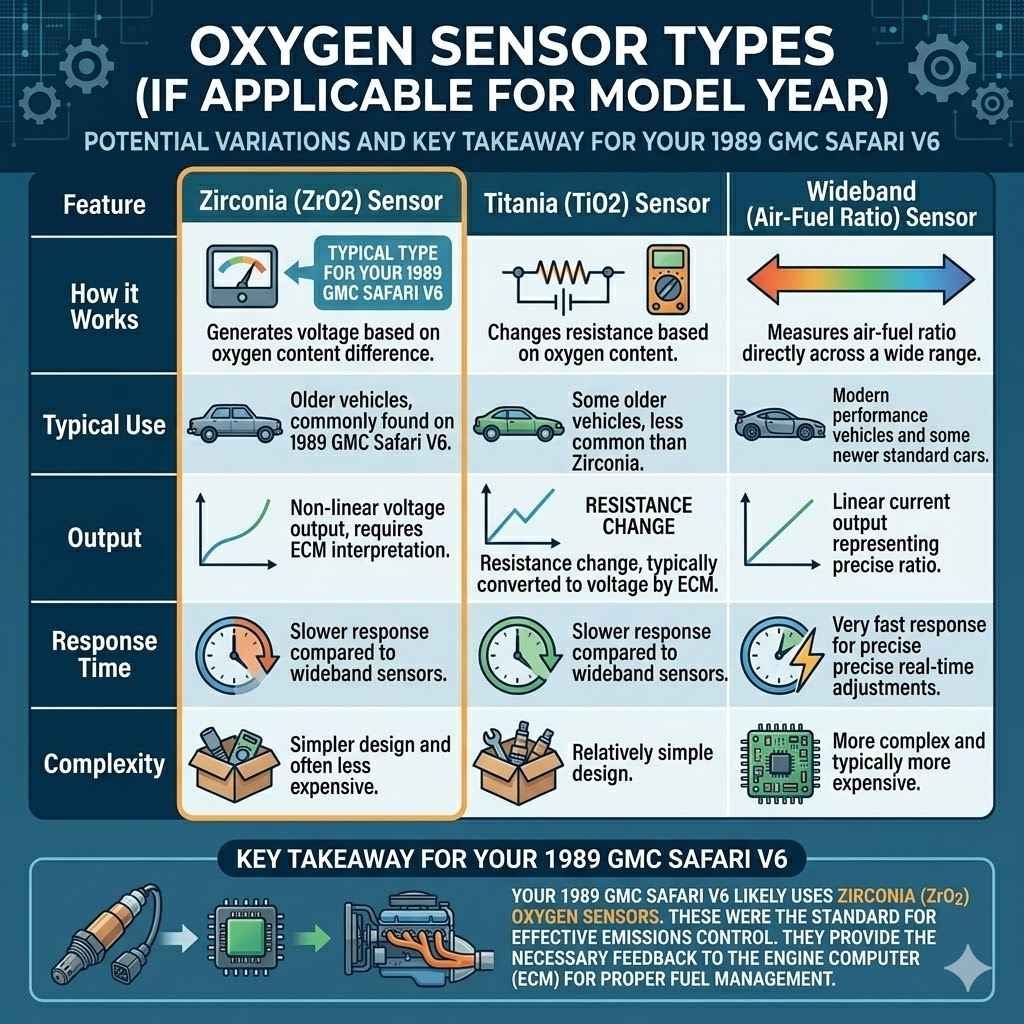
While for a 1989 GMC Safari V6, the primary focus is on the number and function of oxygen sensors, it’s worth noting that different types of sensors exist. For this specific model year, the most common type would be a Zirconia (ZrO2) sensor. However, understanding potential variations can be helpful for future reference or if dealing with aftermarket parts.
| Feature | Zirconia (ZrO2) Sensor | Titania (TiO2) Sensor | Wideband (Air-Fuel Ratio) Sensor |
|---|---|---|---|
| How it Works | Generates voltage based on oxygen content difference. | Changes resistance based on oxygen content. | Measures air-fuel ratio directly across a wide range. |
| Typical Use | Older vehicles, commonly found on 1989 GMC Safari V6. | Some older vehicles, less common than Zirconia. | Modern performance vehicles and some newer standard cars. |
| Output | Non-linear voltage output, requires ECM interpretation. | Resistance change, typically converted to voltage by ECM. | Linear current output representing precise ratio. |
| Response Time | Slower response compared to wideband sensors. | Slower response compared to wideband sensors. | Very fast response for precise real-time adjustments. |
| Complexity | Simpler design and often less expensive. | Relatively simple design. | More complex and typically more expensive. |
For your 1989 GMC Safari V6, you are most likely dealing with Zirconia oxygen sensors. These were the standard for effective emissions control during that era. The key takeaway is that they provide the necessary feedback to the engine computer for proper fuel management.
Frequently Asked Questions
Question: How do I know if my 1989 GMC Safari V6 needs new oxygen sensors?
Answer: You will typically see a check engine light come on. Other signs include poor fuel economy, rough engine idling, a noticeable loss of power, or failing an emissions test. If you notice any of these symptoms, it’s a good idea to have your oxygen sensors checked.
Question: Can I drive my 1989 GMC Safari V6 with bad oxygen sensors?
Answer: You can often drive with bad oxygen sensors, but it’s not recommended for long periods. Your fuel economy will likely suffer significantly, and you risk damaging your catalytic converter. It will also cause your vehicle to pollute more.
Question: Where are the oxygen sensors located on my 1989 GMC Safari V6?
Answer: For a 1989 GMC Safari V6, you will most commonly find two oxygen sensors. One is usually in the exhaust pipe connected to the front bank of cylinders, and the other is in the exhaust pipe for the rear bank of cylinders. They are screwed into the exhaust system.
Question: Are all oxygen sensors the same for a 1989 GMC Safari V6?
Answer: While they perform the same function, it’s important to get the correct part number for your specific vehicle and engine. Sensors can differ in their wire length and connector type. Always verify compatibility with your vehicle’s make, model, and year.
Question: How long do oxygen sensors typically last on a 1989 GMC Safari V6?
Answer: Oxygen sensors on vehicles like the 1989 GMC Safari V6 typically last between 60,000 and 100,000 miles. However, this can vary depending on driving habits, fuel quality, and other engine conditions. Regular maintenance can help them last longer.
Summary
For your 1989 GMC Safari V6, you’ll most commonly find two oxygen sensors. These critical components monitor exhaust gases to help your engine run efficiently and reduce pollution. Signs of failure include a check engine light, poor gas mileage, and rough idling. Replacing them when needed keeps your Safari performing well.