Does Turning Your Car off at Red Lights Save Gas?
Yes — if a stop lasts longer than about 10 seconds, turning your engine off almost always uses less fuel than leaving it running. That 10-second figure isn’t a guess; it comes from Department of Energy and EPA testing on modern fuel-injected engines, which use only a few seconds’ worth of fuel to restart.
The catch is that “save gas” and “free of any tradeoffs” are not the same thing. A car idling at a red light is burning fuel for zero miles traveled, but manually keying the engine off and on at every single light, in a car that was never designed for it, is a different situation than a factory auto start-stop system doing the same job automatically. Below is what the actual fuel-burn numbers look like, what the 10-second rule is really based on, and whether repeated restarts genuinely wear out a starter or battery.
Quick Answer
A stopped engine burns roughly 0.2–0.5 gallons of gas per hour idling, so any wait past about 10 seconds costs more fuel than the small burst used to restart. Modern starters and batteries handle occasional manual restarts fine; the real wear-and-tear difference shows up only if you do it at nearly every light without a battery rated for that duty cycle.
The 10-Second Rule: Where It Actually Comes From
Battery Upgrade for Start-Stop Cars
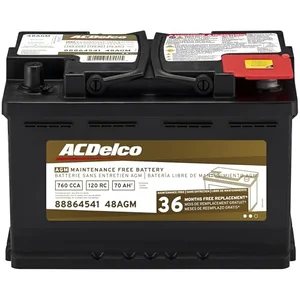 |
ACDelco Gold 48AGM (BCI Group 48) – $182.99 If your car has factory auto start-stop, its battery has to be AGM — a standard flooded battery can’t handle that many deep-cycle restarts and will fail early.
|
The “10 seconds” benchmark traces back to Department of Energy and EPA anti-idling guidance for fuel-injected engines. Restarting a modern engine burns roughly the same amount of fuel as 10 seconds of idling — so idling any longer than that at a stop costs more gas than shutting the engine off and starting it back up. Older, carbureted engines don’t follow this rule; they can use noticeably more fuel to restart and are harder on the starter, which is part of why this guidance is aimed specifically at modern vehicles.
This is also the exact logic factory auto start-stop systems are built around. They shut the engine off automatically the moment you come to a stop and restart it the instant you lift off the brake, because that idle time is almost always longer than the 10-second break-even point.
How Much Fuel Does Idling Actually Burn?
The exact rate depends on engine size, but EPA estimates put idling fuel use in a fairly narrow range for most passenger vehicles:
| Vehicle Type | Idling Fuel Use (gal/hr) | Approx. Cost Per Hour Idling* |
|---|---|---|
| Small 4-cylinder car | ~0.2–0.3 | ~$0.70–$1.05 |
| Mid-size sedan / crossover | ~0.3–0.4 | ~$1.05–$1.40 |
| Large SUV / pickup truck | ~0.4–0.6 | ~$1.40–$2.10 |
*Estimated at a $3.50/gallon national average; your local price will change the number, not the underlying gallons-per-hour rate.
A single 60-second red light only burns a fraction of a cent’s worth of extra fuel by itself. The reason the habit adds up is frequency — a daily commute with a dozen long lights, multiplied across a year, is where idling actually shows up on your fuel bill and on your real-world gas mileage, not any single stop on its own.
Manual Engine-Off vs. Factory Auto Start-Stop: Why They Aren’t the Same
This is the distinction most fuel-saving advice skips. A factory start-stop system is engineered as a complete package: a heavier-duty starter with brushes rated for hundreds of thousands of cycles, an AGM (or EFB) battery built for constant deep discharging, and software that only shuts the engine off when it’s already warm and easy to restart. Manufacturer testing on these systems shows the components handling well over 300,000 restart cycles without added wear, because nearly all of a starter’s brush wear happens during the coast-down after a start, and the gear ratio in these systems is specifically tuned to minimize that.
Manually turning your key off and on at every red light uses a completely ordinary starter and battery that were never designed around that duty cycle. Doing this occasionally, on long waits, isn’t a problem for a healthy modern car. Doing it dozens of times a day, every day, on a car with a standard flooded battery, is the scenario most likely to shorten a starter or battery’s service life — which is exactly why aftermarket start-stop kits and AGM battery upgrades exist for drivers who want the fuel savings without the extra wear risk on the stock components.
When It Actually Makes Sense to Turn Off Your Engine
- Under 10 seconds: leave it running — restarting uses about as much fuel as you’d save.
- A long red light, train crossing, or drawbridge: shut it off. This is squarely inside the range where idling costs more than restarting.
- Stopped in a drive-through or waiting to pick someone up: shut it off if the wait is genuinely open-ended.
- Stopped in fast-moving traffic where you may need to move within seconds: leave it running for safety, even if the wait might exceed 10 seconds.
- Car has factory auto start-stop: let the system do it automatically; don’t fight it by pre-emptively shutting the engine off yourself.
Turning off the engine is one piece of a larger picture. Smoother acceleration, combining short errands into one trip, and keeping up with basic maintenance all move the needle more than idling habits alone — see our guide on the best ways to improve fuel efficiency for the full picture.
Frequently Asked Questions
Does Turning Off Your Car at Red Lights Save Gas?
Yes, for any stop longer than about 10 seconds. A modern fuel-injected engine uses roughly 10 seconds’ worth of idling fuel to restart, so a longer wait means idling burns more gas than shutting the engine off and starting it again.
What Is the 10-Second Rule for Idling?
It’s Department of Energy and EPA guidance stating that if you expect to be stopped for more than 10 seconds, it uses less fuel to turn the engine off and restart it than to keep idling. It applies to modern fuel-injected vehicles; older carbureted engines can use more fuel and wear per restart, so the same rule doesn’t apply as cleanly to them.
How Much Fuel Does Idling Waste in an Hour?
A typical passenger car burns about 0.2 to 0.5 gallons of gas per hour at idle, depending on engine size, with larger SUVs and trucks toward the higher end. At a national average fuel price, that works out to roughly $0.70 to $2 per hour of pure idling.
Does Manually Turning Off Your Engine Wear Out the Starter?
Occasionally, no — a healthy modern starter and battery handle infrequent manual restarts without measurable extra wear. Doing it at nearly every red light, every day, is the scenario that can shorten the life of a standard starter and battery, because those parts were not engineered for that duty cycle the way a factory auto start-stop system’s components are.
Is Auto Start-Stop Bad for Your Car?
No. Factory auto start-stop systems use a reinforced starter and an AGM or EFB battery specifically built for repeated restarts, and manufacturer testing shows these components handling well over 300,000 cycles without added wear. It reduces fuel use and emissions with no meaningful downside on a properly maintained modern vehicle.
Should I Manually Shut Off My Auto Start-Stop System?
There’s generally no need to. The system is engineered to only shut off the engine when conditions are safe for a quick, reliable restart, and disabling it just means burning more fuel at every stop for no real benefit to the car.
Conclusion
Turning off your engine at a stop light saves gas whenever the wait passes roughly 10 seconds — that’s not a rule of thumb someone made up, it’s the actual break-even point Department of Energy and EPA testing found for modern fuel-injected engines. The fuel savings are real but modest per stop; the bigger question is durability, and there the honest answer is that occasional manual restarts are fine, while doing it constantly is really a job for a factory-engineered start-stop system or an AGM-battery-equipped setup built to handle that cycle count.
Products related to this article
Sponsored / affiliate links. As an Amazon Associate I earn from qualifying purchases. I may earn additional commission from eligible campaigns.