
How to Check Fuel Mileage 2020 Silverado Truck
Figuring out how much gas your truck uses can seem tricky at first. Many folks wonder How to Check Fuel Mileage on 2020 Silverado, especially when they are new to driving this model. It is not as hard as it sounds!
We will walk you through it step-by-step so you can easily track your gas usage. Get ready to learn the simple way to keep tabs on your truck’s efficiency.
Finding Your 2020 Silverado Fuel Economy Data
This section is all about where you can find the information your truck provides about its fuel economy. Your 2020 Silverado has built-in systems to help you see how many miles you are getting per gallon. We will explore the dashboard displays and menu options that show you this important data.
Understanding these features helps you know your truck’s performance better and plan your fuel stops more effectively.
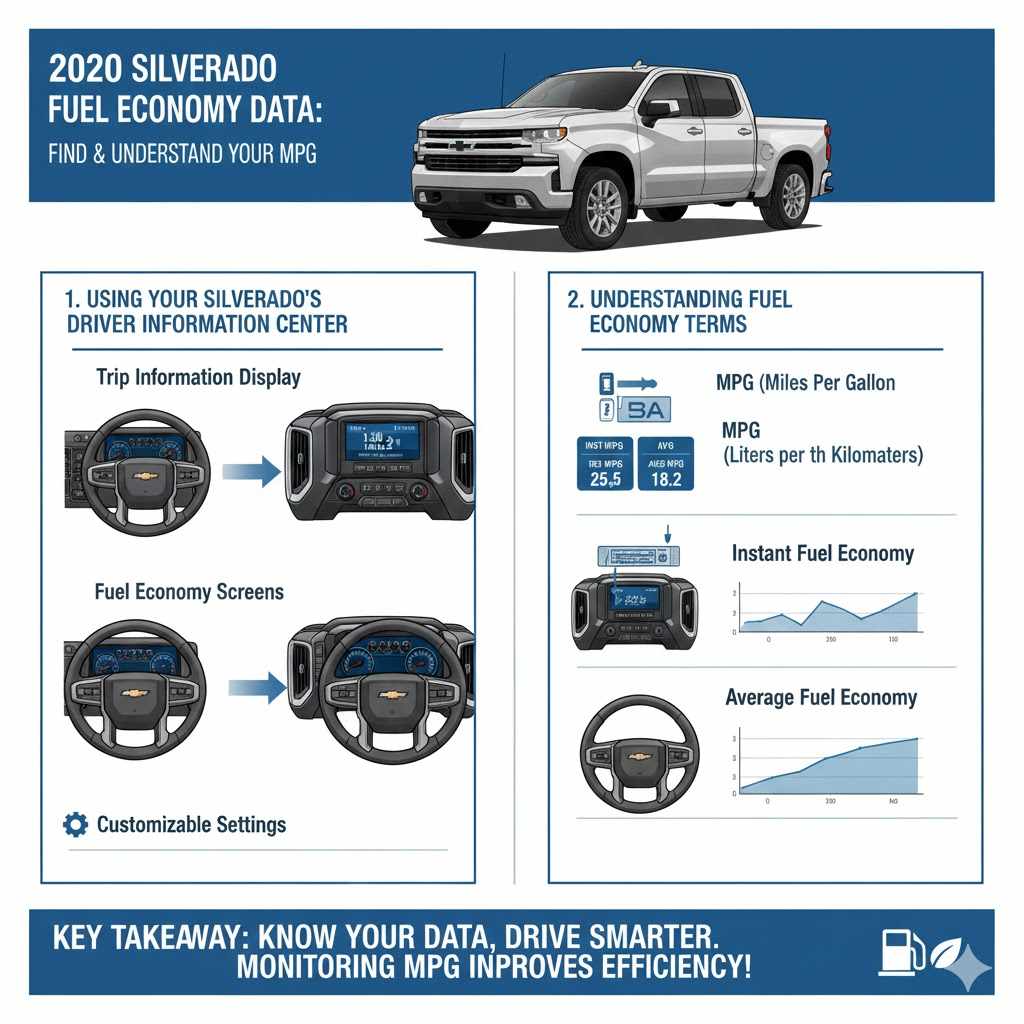
Using Your Silverado’s Driver Information Center
Your truck has a screen between the speedometer and tachometer. This is the Driver Information Center (DIC). It shows you all sorts of useful stuff about your truck.
You can scroll through different screens to find fuel economy details.
-
Trip Information DisplayThis screen shows you how far you have driven on a specific trip and how much fuel you have used. It is a great way to see your mileage for a single drive. You can reset it each time you fill up your tank to get accurate readings for that tank of gas.
This helps you monitor your driving habits and how they affect your gas mileage.
- Fuel Economy ScreensYour DIC has dedicated screens for fuel economy. You will see instant fuel economy, which shows you how much gas you are using right now as you drive. There is also average fuel economy, which gives you the miles per gallon over a longer period, like a whole trip or since you last reset it.
- Customizable SettingsYou can often customize what information appears on your DIC. This means you can choose to see your fuel economy data more often if it is important to you. Explore the settings menu through your steering wheel controls to see what options you have for displaying fuel information.
Understanding Fuel Economy Terms
When you look at your truck’s display, you will see terms like MPG. This stands for Miles Per Gallon. It tells you how many miles your truck can travel using just one gallon of fuel.
A higher MPG number means your truck is more fuel-efficient.
Another term you might see is L/100km, which is used in some countries. This means Liters per 100 Kilometers. It shows how many liters of fuel your truck uses to travel 100 kilometers.
A lower L/100km number means better fuel efficiency.
Your truck also shows “instant fuel economy.” This changes all the time as you drive. It is useful for seeing how your driving style affects fuel use. For example, accelerating quickly will lower your instant MPG.
The “average fuel economy” is a running total. It gives you a better idea of your overall gas mileage. You can reset this average whenever you want.
Many people reset it after filling up their gas tank. This gives them a clear picture of how efficiently they drove that particular tank of gas.
Manual Methods for Checking Fuel Mileage
While your truck’s computer is very helpful, you can also check your fuel mileage the old-fashioned way. This manual method can be very accurate. It also helps you understand exactly how the MPG is calculated.
Doing it yourself can give you a good baseline to compare with your truck’s display.
Step-by-Step Manual Fuel Economy Check
This process involves a few simple steps that you can do every time you fill up your gas tank. It is a reliable way to track your truck’s performance over time.
- Fill your gas tank completely until the pump clicks off. Do not try to overfill it.
- Note the odometer reading. This is the total number of miles your truck has driven. You can write it down or take a picture.
- Drive your truck normally until the fuel tank is about half empty or until you need to refuel again.
- When you go to refuel, fill the tank completely again, just like you did the first time.
- Note the new odometer reading. Subtract the first odometer reading from this new one. This gives you the total miles driven since your last fill-up.
- Note the number of gallons you just put into the tank. This is shown on the gas pump.
- Divide the total miles driven by the number of gallons used. This gives you your miles per gallon (MPG). For example, if you drove 300 miles and used 15 gallons, your MPG is 300 / 15 = 20 MPG.
Why This Manual Method Works Well
This manual method is a direct calculation. It measures exactly how much fuel you put in and how far you drove between fill-ups. This can sometimes be more accurate than the truck’s computer.
Vehicle computers rely on sensors that can sometimes have small errors.
By doing this yourself, you also get a feel for your truck’s actual performance. You can see how different driving conditions or loads affect your mileage. It gives you a hands-on understanding of your fuel consumption.
Tracking this manually over several fill-ups can reveal trends. You might notice your MPG is lower in the winter due to colder temperatures affecting fuel. Or you might see it drops when towing a trailer.
This information is very valuable for planning and maintenance.
Factors Affecting Your 2020 Silverado’s Mileage
Many things can influence how many miles per gallon your 2020 Silverado gets. It is not just about how you drive. The conditions you drive in and even the maintenance of your truck play a big role.
Understanding these factors can help you improve your gas mileage.
Driving Habits and Techniques
How you drive has a huge impact on fuel economy. Aggressive driving, like rapid acceleration and hard braking, uses much more fuel. Gentle acceleration and smooth braking are key to better MPG.
Maintaining a steady speed is also important. Using cruise control on highways can help you maintain a consistent speed and improve fuel efficiency. Avoiding excessive idling is another good habit.
If you are stopped for more than a minute, it is often more fuel-efficient to turn off your engine.
Speed plays a role too. Driving at higher speeds on the highway uses more fuel. Generally, fuel economy decreases significantly above 50-60 miles per hour.
Keeping your speed reasonable can save a lot of gas.
-
Smooth AccelerationPressing the gas pedal gently and gradually is much better for fuel economy. Think of it as easing into your speed rather than jumping into it. This allows the engine to use fuel more efficiently.
Sudden bursts of acceleration waste fuel because the engine needs to work harder and burn more gas to reach the desired speed quickly.
-
Anticipate Traffic FlowLook ahead and anticipate what the traffic is doing. If you see a red light ahead, lift your foot off the gas pedal early and let your truck coast to a stop. This uses no fuel.
If you brake hard at the last second, you have wasted the fuel you used to get up to speed.
-
Minimize Idling TimeWhen your truck is running but not moving, it is using fuel for nothing. This is especially true in traffic jams or while waiting for someone. If you expect to be stopped for more than a minute, consider turning off the engine.
Modern truck engines restart easily and efficiently.
Vehicle Maintenance and Condition
A well-maintained truck runs more efficiently. Regular maintenance ensures all parts are working as they should. This directly impacts your fuel economy.
Things like keeping your tires properly inflated are very important. Underinflated tires create more friction with the road. This makes your engine work harder to move the truck, using more fuel.
Regular oil changes and keeping up with scheduled service ensure the engine runs smoothly. A clean air filter allows the engine to breathe better, improving combustion. Worn spark plugs can also reduce engine efficiency.
-
Tire Pressure ChecksMake sure your tires are inflated to the recommended pressure. This is usually found on a sticker in the driver’s side doorjamb. Properly inflated tires reduce rolling resistance, meaning your truck needs less power to move forward.
This directly translates to better fuel economy. Check your tire pressure at least once a month, and especially before long trips.
-
Air Filter ReplacementThe air filter in your truck cleans the air that goes into the engine. A clogged air filter can restrict airflow. This makes the engine less efficient and can decrease your MPG.
Replacing your air filter as recommended in your owner’s manual is a simple maintenance task that pays off in fuel savings.
-
Regular Oil ChangesClean oil is essential for lubricating engine parts. It reduces friction and wear. Following your truck’s recommended oil change schedule helps keep the engine running smoothly and efficiently.
Using the correct type of oil specified by the manufacturer is also important.
Environmental and Load Factors
External conditions also affect your truck’s fuel mileage. The weather and the weight you carry both make a difference.
Cold weather can reduce fuel economy because the engine takes longer to warm up. Also, winter fuel blends might be less efficient. Driving in windy conditions, especially headwinds, makes the engine work harder.
Carrying heavy loads or towing trailers significantly increases fuel consumption.
| Factor | Impact on Fuel Mileage | Explanation |
|---|---|---|
| Cold Weather | Decreases MPG | Engines are less efficient when cold. Winter fuel blends may also reduce MPG. |
| Headwinds | Decreases MPG | The engine must work harder to push the truck through the air. |
| Heavy Loads | Decreases MPG | More weight requires more power to move, leading to higher fuel consumption. |
| Towing | Significantly Decreases MPG | Increased weight and aerodynamic drag create a substantial demand for fuel. |
Real-World Fuel Economy Scenarios
Let’s look at a couple of situations. Imagine driving your 2020 Silverado on a long road trip. You are driving on a flat highway with light traffic, maintaining a steady 65 mph.
You are not carrying a heavy load. In this case, you will likely see a good MPG, perhaps in the high teens or low twenties depending on your engine and drivetrain.
Now, consider driving your truck in a city with lots of stop-and-go traffic, frequent red lights, and steep hills. You are also hauling a trailer with some equipment. Your MPG will be much lower in this scenario.
You might see single-digit MPG values during heavy acceleration and braking cycles.
Another example is driving during a very cold winter day. The engine is cold for the first 15-20 minutes of your drive. You will notice that your instant MPG is lower during this warm-up period compared to when the engine is at its normal operating temperature.
Maximizing Fuel Efficiency for Your Silverado
Now that you know how to check your fuel mileage and what affects it, you can take steps to get the most out of every gallon. Making small adjustments to your driving habits and keeping up with maintenance can lead to significant savings over time. Your goal is to make your truck as efficient as possible.
Practical Tips for Better MPG
Here are some actionable tips you can start using today. They are simple to implement and can make a real difference in your fuel costs.
-
Plan Your RoutesTry to combine errands so you make fewer trips. This reduces the number of times you start a cold engine. Also, try to avoid peak traffic hours whenever possible.
Driving during less congested times means less stopping and starting, which is better for your MPG. Mapping out your route beforehand can also help you find the most efficient path.
-
Reduce Aerodynamic DragKeep windows up at higher speeds on the highway. Open windows create drag, making your truck less aerodynamic and using more fuel. If you have a roof rack or cargo carrier that you are not using, remove it.
These also add drag. For trucks with tonneau covers, keeping it closed can improve aerodynamics.
- Use Higher Octane Fuel Only If RecommendedYour 2020 Silverado owner’s manual will tell you if it requires or recommends a specific octane fuel. Using a higher octane fuel than recommended generally does not improve MPG and costs more. Stick to the recommended octane for the best balance of performance and economy.
When to Service Your Truck for Efficiency
Sometimes, even with good driving habits, your MPG can drop. This is often a sign that your truck needs servicing. Pay attention to your truck’s performance.
If you notice a sudden drop in MPG, it might be time to check your spark plugs, oxygen sensors, or catalytic converter. These parts can wear out over time and affect engine performance. Your owner’s manual provides a schedule for routine maintenance.
Following it closely is the best way to keep your truck running at its best.
Also, listen for any unusual noises or check for warning lights on your dashboard. These can indicate issues that are impacting your fuel economy. A professional mechanic can diagnose and fix these problems.
Frequently Asked Questions
Question: How do I find the average MPG on my 2020 Silverado?
Answer: You can find the average MPG on your 2020 Silverado by using the Driver Information Center (DIC) display. Navigate through the menus on your steering wheel controls until you find the fuel economy screens. The average MPG is usually displayed there and can often be reset after filling your tank.
Question: Is it better to check fuel mileage manually or use the truck’s display?
Answer: Both methods are useful. The truck’s display gives you quick, real-time information. The manual method provides a direct calculation based on actual fuel used and miles driven, which can sometimes be more precise and helps you understand the process better.
Question: How much does tire pressure affect my gas mileage?
Answer: Tire pressure has a significant impact. Underinflated tires increase rolling resistance, making your engine work harder and use more fuel. Keeping tires properly inflated can improve your MPG noticeably.
Question: Should I use premium gas to get better mileage?
Answer: You should only use premium gas if your 2020 Silverado owner’s manual specifically recommends it. For most trucks, using regular gasoline is sufficient and recommended. Higher octane fuels do not necessarily improve MPG if not required by the engine.
Question: How often should I check my fuel mileage?
Answer: It’s a good practice to check your fuel mileage every time you fill up your gas tank, whether you use the truck’s display or the manual method. This allows you to monitor trends and spot any significant changes in performance over time.
Summary
You now have a clear understanding of How to Check Fuel Mileage on 2020 Silverado. By using your truck’s display and the manual method, you can accurately track your gas usage. Remember that driving habits, vehicle maintenance, and external factors all play a role.
Making small adjustments can help you get better MPG and save money on fuel.