How to Disable HondaLink Tracking: Vehicle, App & Online Steps
📊 82% of connected-car drivers say they’re unaware of the full extent of data their vehicle collects, and 57-64% who do know say they’re concerned about how it’s shared — not just HondaLink, but connected systems across the industry. Source: rates.ca connected car privacy survey.
Understanding The Risks
Disable HondaLink tracking with these simple steps. Protect your privacy and avoid potential risks associated with constant tracking of your Honda vehicle.
Data collection and privacy concerns:
- HondaLink’s tracking feature gathers vast amounts of personal data, raising concerns about privacy and data protection.
- The tracking feature collects information about vehicle usage, including location, speed, and driving behavior.
- This data is often stored and transmitted to Honda’s servers, potentially making it susceptible to unauthorized access or hacking.
Potential for misuse of personal information:
- The extensive collection of personal information through HondaLink tracking poses a risk of misuse by both Honda and third parties.
- Data breaches or unauthorized access may result in the exploitation of personal information for nefarious purposes.
- Personal information obtained through HondaLink tracking can be sold to advertisers, compromising the user’s privacy and security.
Impact on personal security:
- The continuous tracking of vehicles through HondaLink can provide unauthorized individuals with valuable information about the owner’s whereabouts.
- Hackers or criminals could exploit this information for stalking, theft, or other malicious activities.
- The risk of personal security breaches raises concerns among users who prioritize their safety and the safety of their loved ones.
It is essential to understand the risks associated with HondaLink tracking to make an informed decision about disabling this feature. The potential for data collection and privacy concerns, including the potential misuse of personal information, and the impact on personal security are all critical factors to consider.
By disabling HondaLink tracking, individuals can regain control over their personal information and protect their privacy and security.
Note: Always consult the vehicle’s user manual or contact Honda directly for accurate instructions on disabling HondaLink tracking.
“All 25 car brands we researched earned our *Privacy Not Included warning label, making cars the worst product category we have ever reviewed for privacy.”
— Mozilla Foundation, *Privacy Not Included research project
How HondaLink Tracking Works
HondaLink Tracking is a feature that allows users to track their Honda vehicles using GPS technology. If you want to know how to disable HondaLink Tracking, follow these simple steps for added privacy and control.
Explaining The Technology Behind HondaLink Tracking
HondaLink Tracking is an innovative technology designed by Honda to provide drivers with various features and services for an enhanced driving experience. This includes functions such as vehicle diagnostics, maintenance alerts, emergency assistance, and even the ability to locate a stolen vehicle.
However, it’s important to understand how HondaLink Tracking works and the data it collects to make an informed decision about whether to enable or disable it. In this section, we will delve into the technology behind HondaLink Tracking.
The Types Of Data Collected
HondaLink Tracking collects various types of data to provide its services efficiently. These data points can include:
- Vehicle diagnostics: Information regarding the vehicle’s performance, such as engine health, mileage, and battery status. This data helps with maintenance and identifying potential issues.
- Location tracking: The system gathers data on the vehicle’s location, allowing features like stolen vehicle recovery and remote lock/unlock.
- Driving behavior: HondaLink Tracking monitors driving patterns, such as speed, acceleration, and braking habits. It aids in providing personalized alerts and recommendations for safer driving.
- Connectivity log: Data related to the vehicle’s connection to the Honda servers, including timestamps and duration of sessions.
How Data Is Transmitted And Stored
To ensure seamless functionality, the data collected by HondaLink Tracking is transmitted and stored securely. Here’s an overview of the process:
- Communication protocols: The system employs various communication protocols, such as cellular networks or satellite communication, to transfer data between the vehicle and Honda’s servers.
- Data encryption: All data transmitted is encrypted to maintain privacy and prevent unauthorized access.
- Secure storage: Once the data reaches the servers, it is stored securely in accordance with industry standards. This ensures that the information remains safe and protected from potential breaches or misuse.
- Data retention: Honda retains the collected data for a limited period, usually as required by legal obligations or for the duration of the vehicle’s ownership.
Overall, HondaLink Tracking offers an array of features and services by leveraging data collected from the vehicle. Understanding how the technology operates, the types of data it collects, and how that data is transmitted and stored empowers you to make an informed choice about enabling or disabling HondaLink Tracking.
Method 1: Adjusting Privacy Settings
Adjusting the privacy settings is a simple method to disable HondaLink tracking on your device, allowing you to maintain your privacy and control over your personal information. Follow these steps to customize your settings and protect your data.
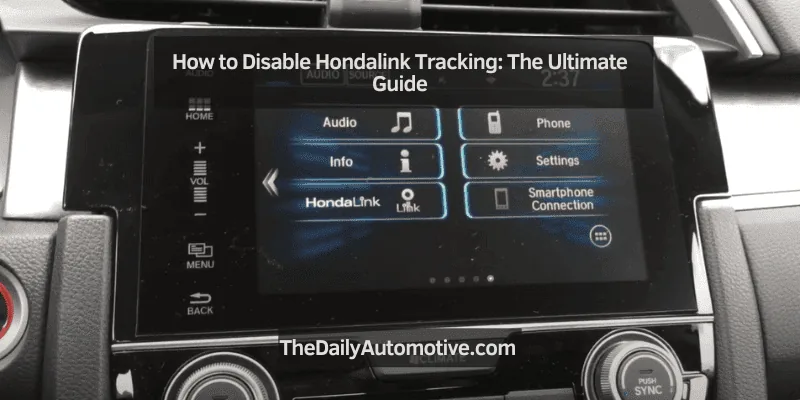
The Exact Menu Path: Home → Settings → HondaLink → Diagnostics & Location Data
On most HondaLink-equipped models, the in-vehicle path is the same:
- Press Home on the touchscreen.
- Select Settings.
- Tap Info (some models label this Clock/Info).
- Open the HondaLink tab.
- Choose Diagnostics & Location Data and select Disable.
- Restart the vehicle so the change takes effect.
Menu wording can shift slightly by model year and trim — if you don’t see this exact label, check your owner’s manual or the HondaLink app’s in-app help, since the setting is present on every HondaLink-connected Honda even when the wording differs.
Adjusting The Settings To Disable Tracking
Once you have accessed the HondaLink settings, you can make the necessary adjustments to disable tracking and safeguard your personal information. Take advantage of the following privacy settings:
- Disable location tracking: By turning off location tracking, you prevent HondaLink from collecting and storing your location data.
- Opt out of data sharing: You can choose to opt out of data sharing with HondaLink. This enables you to retain full control over your personal information and ensures that it is not shared with third parties.
- Turn off diagnostic information sharing: Another important privacy setting is the option to disable diagnostic information sharing. By doing so, you can prevent HondaLink from accessing and transmitting your vehicle’s diagnostic information.
- Uninstall the HondaLink mobile app: Removing the app from your phone and avoiding connecting the vehicle to Wi-Fi networks stops it from uploading additional data to Honda’s servers.
Understanding The Limitations Of This Method
While adjusting the privacy settings on your vehicle’s dashboard is a crucial step in disabling HondaLink tracking, it’s important to understand the limitations of this method. Keep the following points in mind:
- Limited functionality: Disabling tracking may limit certain HondaLink features and services that rely on location and diagnostic data.
- Connectivity requirements: Some HondaLink features may require an active internet connection to function properly. Disabling tracking may limit these features.
- Software updates: Future software updates may affect the privacy settings on your dashboard. Stay informed and periodically review your settings to ensure continued privacy protection.
Remember that adjusting the privacy settings on your vehicle’s dashboard is just one step towards protecting your privacy. To further enhance your privacy, consider additional measures such as reviewing and understanding Honda’s privacy policy and using GPS-blocking devices when required.
By taking control of your privacy settings, you can enjoy the convenience of HondaLink while ensuring that your personal information remains secure.
Method 2: Disconnecting The Telematics Unit
To disable HondaLink tracking, Method 2 involves disconnecting the Telematics Unit. This process ensures your privacy and security by disabling the tracking capabilities of the HondaLink system.
To completely disable HondaLink tracking, you can choose to disconnect the telematics unit in your vehicle. Here’s what you need to know:
Locating The Telematics Unit In Your Vehicle:
- The telematics unit is typically located in the trunk or under the dashboard of your Honda vehicle.
- It is a small box-like device that is connected to your vehicle’s internal systems and responsible for transmitting data to HondaLink.
Disconnecting The Unit To Disable Tracking:
- Turn off your vehicle and make sure the ignition is in the off position.
- Locate the telematics unit according to your vehicle’s specific model and year.
- Once you find the unit, carefully detach its wiring harness connectors.
- Remove any screws or fasteners holding the unit in place and delicately take it out of its compartment.
Potential Implications And Considerations:
- Disabling the telematics unit may affect other vehicle functionalities dependent on its connection. Keep in mind that disconnecting it could lead to the loss of certain features or services.
- Disabling HondaLink tracking may nullify your eligibility for certain warranties or services provided by Honda.
- Always refer to your vehicle’s manual or reach out to a professional technician to ensure you disconnect the correct unit and to address any concerns or questions you may have.
Safety note: the telematics module often shares wiring or connectors with airbag/SRS and emergency-call (E-Call/Automatic Crash Notification) circuits on many Honda models. Physically disconnecting it can silence those safety systems along with the tracking, and doing it yourself risks damaging unrelated wiring. This is why Honda and most independent technicians recommend using the software opt-out in Method 1 or Method 4 first, and treating physical disconnection as a last resort handled by a professional.
Remember, disconnecting the telematics unit is an irreversible action, and it should only be undertaken after thorough consideration of its potential impact on your vehicle and any associated services.
Method 3: Using Third-Party Devices Or Apps
Learn how to disable HondaLink tracking in just a few simple steps by using third-party devices or apps. Safeguard your privacy and take control of your data with this easy method.
Exploring Third-Party Devices Or Apps That Can Disable Tracking
There are several third-party devices and apps available that can help you disable HondaLink tracking. These solutions provide an alternative way to safeguard your privacy and prevent your vehicle from tracking your every move. Whether you prefer a physical device or an app, there are options to suit your needs.
Here are the key points to consider:
- GPS or cellular signal jammers are illegal to operate in the US: Under federal law (47 U.S.C. § 333), it’s illegal to use a device that intentionally interferes with authorized radio communications, including GPS and cellular signals. The FCC has issued fines as high as $16,000 per violation for using jammers, and they can also block emergency calls and other drivers’ signals nearby. Skip these regardless of what a listing claims.
- OBD-II “blockers” don’t reliably work on modern telematics: Most HondaLink connectivity runs through an embedded cellular modem wired directly into the vehicle, not through the OBD-II port, so plug-in OBD devices marketed as tracking blockers generally can’t reach or disable it.
- There’s no legitimate third-party app that can remotely disable an automaker’s embedded telematics: Any app claiming to do this from your phone, without touching the vehicle’s own settings, should be treated as unreliable at best.
In practice, the manufacturer-provided opt-outs in Method 1 and Method 4 below are the only reliable ways to stop HondaLink data collection — there isn’t a legal shortcut hardware or app solution that replaces them.
Method 4: Opt Out Online at MyGarage or by Phone
If you don’t want to dig through the touchscreen menu, Honda also lets you manage data-sharing preferences without sitting in the vehicle:
- Online: Go to mygarage.honda.com/s/vehicle-data-privacy-settings, sign in or look up your vehicle, and opt out of diagnostic, location, and trip-log data sharing directly from the portal.
- By phone: Call Honda customer service at 1-888-528-7876 to have a representative deactivate specific Connected Vehicle Technologies and Services on your account.
What still gets collected even after you opt out: Honda’s own privacy disclosures note that some limited data keeps flowing regardless of your settings, so the vehicle can continue receiving remote software updates and so safety features like automatic crash notification and stolen-vehicle recovery still work. Opting out stops the broader diagnostic, location, and trip-log sharing — it doesn’t put the vehicle fully off-grid.
Regularly Clearing Vehicle Data
To disable HondaLink tracking and regularly clear vehicle data, follow these simple steps for added privacy and peace of mind. Safeguard your information effortlessly with these effective methods.
How To Clear Stored Data In Your Vehicle
Regularly clearing the stored data in your vehicle is an important task to maintain your privacy and security. By doing so, you can prevent unauthorized access to your personal information and ensure that your driving habits remain private. However, it’s crucial to keep in mind that clearing the data might have its own challenges and limitations.
Let’s explore how to clear stored data in your vehicle and the importance of regularly performing this task:
The Importance Of Regularly Performing This Task
Regularly clearing the stored data in your vehicle offers several benefits and safeguards your privacy. Consider the following reasons why it is essential to make this a routine practice:
- Protecting Personal Information: When you clear the data stored in your vehicle, you eliminate sensitive information, such as addresses, call history, and recent destinations, thus reducing the risk of this data falling into the wrong hands.
- Preventing Tracking: By clearing the stored data, you can disable HondaLink tracking features, ensuring that your driving habits and locations remain private, and safeguarding your personal security.
- Maintaining Vehicle Performance: Over time, accumulated data can affect your vehicle’s performance. By regularly clearing it, you help maintain optimal functioning, ensuring smooth and efficient operation.
Potential Challenges Or Limitations
While clearing stored data in your vehicle is crucial, there are some potential challenges and limitations to be aware of:
- Learning the Process: Different vehicle models may have distinct procedures for clearing stored data. Familiarizing yourself with the specific steps for your vehicle is essential to ensure you are effectively removing stored data.
- Loss of Personal Settings: Clearing the data in your vehicle may also result in the loss of personal settings such as preferred radio stations, climate control settings, or customized display preferences. Take note of your preferred settings before clearing the data to restore them later.
- Data Stored in External Devices: Clearing the data within the vehicle’s onboard system may not remove data stored in external devices or connected smartphones. Ensure you manually clear data from these devices as well if necessary.
Regularly clearing the stored data in your vehicle is essential for maintaining your privacy and security. By disabling HondaLink tracking and removing accumulated data, you can protect your personal information and prevent unauthorized tracking. Despite potential challenges, regularly performing this task ensures optimal vehicle performance and preserves your privacy.
Stay proactive and safeguard your information by incorporating this practice into your routine maintenance.
Educating Yourself On Privacy Laws
Learn how to disable HondaLink tracking and educate yourself about privacy laws to protect your personal information effectively. Stay informed and take control of your online privacy.
Familiarizing Yourself With Privacy Laws Relevant To Your Region
- Privacy laws vary from region to region, so it’s crucial to understand the specific regulations that apply to your area. By familiarizing yourself with these laws, you can make informed decisions regarding your vehicle’s privacy and data.
- Some key points to consider include:
- Research the privacy laws and regulations specific to your country or state.
- Understand how these laws apply to vehicle tracking and data collection systems like HondaLink.
- Stay updated on any changes or updates in the privacy legislation.
Understanding Your Rights As A Vehicle Owner
As a vehicle owner, you have certain rights when it comes to the privacy of your data. It’s important to understand and assert these rights to protect your personal information.
Here are some aspects to keep in mind:
- You have the right to know how your data is being collected, used, and shared by Honda or any other connected services.
- You should have the ability to control the collection and sharing of your data, including the option to opt-out if desired.
- Ensure that you have the right to access, modify, or delete your personal data collected through HondaLink or similar systems.
How To Seek Legal Guidance Or Support If Needed
In case you encounter any privacy concerns or issues with HondaLink tracking, it may be necessary to seek legal guidance or support. Knowing how to approach these situations can help protect your rights and ensure appropriate action is taken.
Consider the following steps:
- Consult a lawyer or legal professional familiar with privacy laws to understand the specific options available to you.
- Keep records of any privacy violations or breaches, including dates, times, and details of the incident.
- Report any concerns or issues to the appropriate authorities or regulatory bodies responsible for privacy enforcement.
- Consider joining or supporting advocacy groups focused on privacy rights to stay informed about developments in the field.
Remember, staying informed about privacy laws, understanding your rights, and seeking legal guidance if needed are crucial steps to protect your privacy and ensure your control over the data collected through HondaLink or any other tracking system.
Seeking Professional Assistance
Looking to disable HondaLink tracking? Seek professional assistance for an effective solution to protect your privacy and regain control over your tracking preferences. With expert guidance, you can ensure that your Honda vehicle’s tracking features are disabled efficiently and securely.
When it comes to disabling HondaLink tracking, seeking professional assistance can be a viable option. Here are some key points to consider when deciding whether to consult a professional technician or mechanic:
Consulting a professional technician or mechanic for assistance:
- They have expertise in dealing with car technology and can provide accurate guidance on disabling HondaLink tracking.
- They are familiar with the specific procedures and steps required to disable the tracking system.
Evaluating the cost and feasibility of professional solutions:
- Professional assistance might involve costs, but it is important to assess whether the benefits outweigh the expenses.
- Consider the complexity of the task and decide if it requires professional intervention or if it can be done independently.
Understanding the potential benefits of professional help:
- Professionals can offer peace of mind by ensuring that the Honda link tracking system is effectively disabled.
- They can help troubleshoot any issues that may arise during the process, reducing the risk of damage to the car’s electronics.
Seeking professional assistance when disabling HondaLink tracking can provide a reliable and efficient solution. Consider the expertise, cost, and potential benefits to determine if professional help is the right choice for you.
Staying Updated On HondaLink Tracking Developments
Honda’s data-privacy policies and the exact menu wording have changed more than once in recent years (the MyGarage portal itself is a relatively recent addition). Before relying on any specific menu path, check Honda’s own Vehicle Data Privacy Notice, your owner’s manual, or the HondaLink app’s help section, since those are updated directly by Honda when settings change.
Taking Proactive Measures To Protect Your Privacy
Disabling HondaLink tracking is an essential proactive measure to safeguard your privacy and personal information. By taking this step, you can protect yourself from unnecessary monitoring and ensure your online activities remain private.
In an increasingly connected world, taking proactive measures to protect your privacy is crucial. This is especially true when it comes to your vehicle, considering the amount of personal data that can be collected and stored by modern car systems like HondaLink.
By implementing additional security measures, regularly reviewing and updating privacy settings, and being vigilant about potential data breaches or security risks, you can safeguard your personal information. Here are some actions you can take to protect your privacy:
Implementing Additional Security Measures In Your Vehicle:
- Install a trusted antivirus program: Protect your vehicle’s systems from malware and other cyber threats by installing an antivirus program specifically designed for cars.
- Create a strong PIN/password: Set up a strong and unique PIN or password for your infotainment system to prevent unauthorized access.
- Disable unnecessary features: Disable any features, such as remote access or voice control, that you don’t actively use to minimize potential vulnerabilities.
Regularly Reviewing And Updating Privacy Settings:
- Familiarize yourself with privacy options: Take the time to understand the available privacy settings specific to your vehicle and the HondaLink system.
- Opt-out of data collection: Go through the privacy settings and opt out of any data collection or sharing options that you’re uncomfortable with.
- Keep software up to date: Regularly update your vehicle’s software to benefit from the latest security enhancements and privacy features.
Being Vigilant About Potential Data Breaches Or Security Risks:
- Monitor for suspicious activity: Keep an eye out for any unusual behavior or unfamiliar connections to your vehicle’s systems.
- Stay informed about possible vulnerabilities: Stay updated on security advisories or recalls related to your vehicle’s make and model.
- Report any concerns: If you suspect a data breach or encounter any security issues, promptly report them to Honda or the relevant authorities.
By following these proactive measures, you can significantly reduce the risk of your personal data being compromised through HondaLink or any other connected car system. Protecting your privacy is an ongoing process, so remember to stay informed and remain vigilant about potential threats to ensure a safe and secure driving experience.
Frequently Asked Questions For How To Disable HondaLink Tracking
Can you disable HondaLink tracking?
Yes. Go to Home → Settings → Info (or Clock/Info) → HondaLink → Diagnostics & Location Data → Disable, then restart the vehicle. You can also opt out at mygarage.honda.com or by calling Honda at 1-888-528-7876.
How do I disable GPS tracking on my Honda?
Use the in-vehicle Diagnostics & Location Data setting described above, or the MyGarage online portal. There isn’t a separate standalone “GPS device” to unplug — the location data is collected by the same embedded telematics module that runs HondaLink.
Does HondaLink have GPS tracking?
Yes. HondaLink uses GPS for navigation, remote lock/unlock, stolen-vehicle recovery, and location-based diagnostics, and this same location data can be shared with Honda unless you opt out.
Is it legal to use a GPS or cellular jammer to stop tracking?
No. Operating a GPS or cellular jammer is illegal under federal law (47 U.S.C. § 333) and can carry FCC fines of up to $16,000 per violation. Use the manufacturer opt-out settings instead.
Does opting out of HondaLink data sharing disable safety features?
Not entirely. Even after you opt out of diagnostic, location, and trip-log sharing, Honda still collects a limited amount of data to keep remote software updates and safety features like automatic crash notification working.
Conclusion
Disabling HondaLink tracking can offer peace of mind and privacy protection for Honda vehicle owners. By following the simple steps outlined in this blog post, you can take back control over your personal information and ensure that your driving habits remain private.
Remember to check your vehicle model and consult the owner’s manual for specific instructions on disabling HondaLink tracking. Regularly reviewing and revoking any unnecessary access permissions is also crucial to safeguarding your data. Prioritizing your privacy does not have to mean sacrificing convenience, as there are alternative navigation and entertainment options available.
Taking these proactive measures empowers you to make informed decisions about your personal data, putting you in the driver’s seat of your own privacy. So why wait? Take action now and enjoy a more secure and private driving experience.
To disable HondaLink tracking, go to Settings in the HondaLink app and select Privacy. Then, toggle off the “Location Sharing” option.
Welcome to our guide on how to disable HondaLink tracking. Many Honda owners may be concerned about their privacy and want to disable the tracking feature of HondaLink. We will provide you with a step-by-step guide on how to turn off HondaLink tracking.
By disabling this feature, you can ensure that your location information is not being shared with Honda or any third parties. So, let’s get started and protect your privacy while using HondaLink.
Quick Answer
The most reliable way to disable HondaLink tracking is in the vehicle itself: go to Home → Settings → Info (or Clock/Info) → HondaLink tab → Diagnostics & Location Data → Disable, then restart the car. You can also opt out online at mygarage.honda.com or by calling Honda at 1-888-528-7876. Even after opting out, Honda still collects a limited amount of data to keep safety features like automatic crash notification and remote software updates working.
📊 82% of connected-car drivers say they’re unaware of the full extent of data their vehicle collects, and 57-64% who do know say they’re concerned about how it’s shared — not just HondaLink, but connected systems across the industry. Source: rates.ca connected car privacy survey.
Understanding The Risks
Disable HondaLink tracking with these simple steps. Protect your privacy and avoid potential risks associated with constant tracking of your Honda vehicle.
Data collection and privacy concerns:
- HondaLink’s tracking feature gathers vast amounts of personal data, raising concerns about privacy and data protection.
- The tracking feature collects information about vehicle usage, including location, speed, and driving behavior.
- This data is often stored and transmitted to Honda’s servers, potentially making it susceptible to unauthorized access or hacking.
Potential for misuse of personal information:
- The extensive collection of personal information through HondaLink tracking poses a risk of misuse by both Honda and third parties.
- Data breaches or unauthorized access may result in the exploitation of personal information for nefarious purposes.
- Personal information obtained through HondaLink tracking can be sold to advertisers, compromising the user’s privacy and security.
Impact on personal security:
- The continuous tracking of vehicles through HondaLink can provide unauthorized individuals with valuable information about the owner’s whereabouts.
- Hackers or criminals could exploit this information for stalking, theft, or other malicious activities.
- The risk of personal security breaches raises concerns among users who prioritize their safety and the safety of their loved ones.
It is essential to understand the risks associated with HondaLink tracking to make an informed decision about disabling this feature. The potential for data collection and privacy concerns, including the potential misuse of personal information, and the impact on personal security are all critical factors to consider.
By disabling HondaLink tracking, individuals can regain control over their personal information and protect their privacy and security.
Note: Always consult the vehicle’s user manual or contact Honda directly for accurate instructions on disabling HondaLink tracking.
“All 25 car brands we researched earned our *Privacy Not Included warning label, making cars the worst product category we have ever reviewed for privacy.”
— Mozilla Foundation, *Privacy Not Included research project
How HondaLink Tracking Works
HondaLink Tracking is a feature that allows users to track their Honda vehicles using GPS technology. If you want to know how to disable HondaLink Tracking, follow these simple steps for added privacy and control.
Explaining The Technology Behind HondaLink Tracking
HondaLink Tracking is an innovative technology designed by Honda to provide drivers with various features and services for an enhanced driving experience. This includes functions such as vehicle diagnostics, maintenance alerts, emergency assistance, and even the ability to locate a stolen vehicle.
However, it’s important to understand how HondaLink Tracking works and the data it collects to make an informed decision about whether to enable or disable it. In this section, we will delve into the technology behind HondaLink Tracking.
The Types Of Data Collected
HondaLink Tracking collects various types of data to provide its services efficiently. These data points can include:
- Vehicle diagnostics: Information regarding the vehicle’s performance, such as engine health, mileage, and battery status. This data helps with maintenance and identifying potential issues.
- Location tracking: The system gathers data on the vehicle’s location, allowing features like stolen vehicle recovery and remote lock/unlock.
- Driving behavior: HondaLink Tracking monitors driving patterns, such as speed, acceleration, and braking habits. It aids in providing personalized alerts and recommendations for safer driving.
- Connectivity log: Data related to the vehicle’s connection to the Honda servers, including timestamps and duration of sessions.
How Data Is Transmitted And Stored
To ensure seamless functionality, the data collected by HondaLink Tracking is transmitted and stored securely. Here’s an overview of the process:
- Communication protocols: The system employs various communication protocols, such as cellular networks or satellite communication, to transfer data between the vehicle and Honda’s servers.
- Data encryption: All data transmitted is encrypted to maintain privacy and prevent unauthorized access.
- Secure storage: Once the data reaches the servers, it is stored securely in accordance with industry standards. This ensures that the information remains safe and protected from potential breaches or misuse.
- Data retention: Honda retains the collected data for a limited period, usually as required by legal obligations or for the duration of the vehicle’s ownership.
Overall, HondaLink Tracking offers an array of features and services by leveraging data collected from the vehicle. Understanding how the technology operates, the types of data it collects, and how that data is transmitted and stored empowers you to make an informed choice about enabling or disabling HondaLink Tracking.
Method 1: Adjusting Privacy Settings
Adjusting the privacy settings is a simple method to disable HondaLink tracking on your device, allowing you to maintain your privacy and control over your personal information. Follow these steps to customize your settings and protect your data.
The Exact Menu Path: Home → Settings → HondaLink → Diagnostics & Location Data
On most HondaLink-equipped models, the in-vehicle path is the same:
- Press Home on the touchscreen.
- Select Settings.
- Tap Info (some models label this Clock/Info).
- Open the HondaLink tab.
- Choose Diagnostics & Location Data and select Disable.
- Restart the vehicle so the change takes effect.
Menu wording can shift slightly by model year and trim — if you don’t see this exact label, check your owner’s manual or the HondaLink app’s in-app help, since the setting is present on every HondaLink-connected Honda even when the wording differs.
Adjusting The Settings To Disable Tracking
Once you have accessed the HondaLink settings, you can make the necessary adjustments to disable tracking and safeguard your personal information. Take advantage of the following privacy settings:
- Disable location tracking: By turning off location tracking, you prevent HondaLink from collecting and storing your location data.
- Opt out of data sharing: You can choose to opt out of data sharing with HondaLink. This enables you to retain full control over your personal information and ensures that it is not shared with third parties.
- Turn off diagnostic information sharing: Another important privacy setting is the option to disable diagnostic information sharing. By doing so, you can prevent HondaLink from accessing and transmitting your vehicle’s diagnostic information.
- Uninstall the HondaLink mobile app: Removing the app from your phone and avoiding connecting the vehicle to Wi-Fi networks stops it from uploading additional data to Honda’s servers.
Understanding The Limitations Of This Method
While adjusting the privacy settings on your vehicle’s dashboard is a crucial step in disabling HondaLink tracking, it’s important to understand the limitations of this method. Keep the following points in mind:
- Limited functionality: Disabling tracking may limit certain HondaLink features and services that rely on location and diagnostic data.
- Connectivity requirements: Some HondaLink features may require an active internet connection to function properly. Disabling tracking may limit these features.
- Software updates: Future software updates may affect the privacy settings on your dashboard. Stay informed and periodically review your settings to ensure continued privacy protection.
Remember that adjusting the privacy settings on your vehicle’s dashboard is just one step towards protecting your privacy. To further enhance your privacy, consider additional measures such as reviewing and understanding Honda’s privacy policy and using GPS-blocking devices when required.
By taking control of your privacy settings, you can enjoy the convenience of HondaLink while ensuring that your personal information remains secure.
Method 2: Disconnecting The Telematics Unit
To disable HondaLink tracking, Method 2 involves disconnecting the Telematics Unit. This process ensures your privacy and security by disabling the tracking capabilities of the HondaLink system.
To completely disable HondaLink tracking, you can choose to disconnect the telematics unit in your vehicle. Here’s what you need to know:
Locating The Telematics Unit In Your Vehicle:
- The telematics unit is typically located in the trunk or under the dashboard of your Honda vehicle.
- It is a small box-like device that is connected to your vehicle’s internal systems and responsible for transmitting data to HondaLink.
Disconnecting The Unit To Disable Tracking:
- Turn off your vehicle and make sure the ignition is in the off position.
- Locate the telematics unit according to your vehicle’s specific model and year.
- Once you find the unit, carefully detach its wiring harness connectors.
- Remove any screws or fasteners holding the unit in place and delicately take it out of its compartment.
Potential Implications And Considerations:
- Disabling the telematics unit may affect other vehicle functionalities dependent on its connection. Keep in mind that disconnecting it could lead to the loss of certain features or services.
- Disabling HondaLink tracking may nullify your eligibility for certain warranties or services provided by Honda.
- Always refer to your vehicle’s manual or reach out to a professional technician to ensure you disconnect the correct unit and to address any concerns or questions you may have.
Safety note: the telematics module often shares wiring or connectors with airbag/SRS and emergency-call (E-Call/Automatic Crash Notification) circuits on many Honda models. Physically disconnecting it can silence those safety systems along with the tracking, and doing it yourself risks damaging unrelated wiring. This is why Honda and most independent technicians recommend using the software opt-out in Method 1 or Method 4 first, and treating physical disconnection as a last resort handled by a professional.
Remember, disconnecting the telematics unit is an irreversible action, and it should only be undertaken after thorough consideration of its potential impact on your vehicle and any associated services.
Method 3: Using Third-Party Devices Or Apps
Learn how to disable HondaLink tracking in just a few simple steps by using third-party devices or apps. Safeguard your privacy and take control of your data with this easy method.
Exploring Third-Party Devices Or Apps That Can Disable Tracking
There are several third-party devices and apps available that can help you disable HondaLink tracking. These solutions provide an alternative way to safeguard your privacy and prevent your vehicle from tracking your every move. Whether you prefer a physical device or an app, there are options to suit your needs.
Here are the key points to consider:
- GPS or cellular signal jammers are illegal to operate in the US: Under federal law (47 U.S.C. § 333), it’s illegal to use a device that intentionally interferes with authorized radio communications, including GPS and cellular signals. The FCC has issued fines as high as $16,000 per violation for using jammers, and they can also block emergency calls and other drivers’ signals nearby. Skip these regardless of what a listing claims.
- OBD-II “blockers” don’t reliably work on modern telematics: Most HondaLink connectivity runs through an embedded cellular modem wired directly into the vehicle, not through the OBD-II port, so plug-in OBD devices marketed as tracking blockers generally can’t reach or disable it.
- There’s no legitimate third-party app that can remotely disable an automaker’s embedded telematics: Any app claiming to do this from your phone, without touching the vehicle’s own settings, should be treated as unreliable at best.
In practice, the manufacturer-provided opt-outs in Method 1 and Method 4 below are the only reliable ways to stop HondaLink data collection — there isn’t a legal shortcut hardware or app solution that replaces them.
Method 4: Opt Out Online at MyGarage or by Phone
If you don’t want to dig through the touchscreen menu, Honda also lets you manage data-sharing preferences without sitting in the vehicle:
- Online: Go to mygarage.honda.com/s/vehicle-data-privacy-settings, sign in or look up your vehicle, and opt out of diagnostic, location, and trip-log data sharing directly from the portal.
- By phone: Call Honda customer service at 1-888-528-7876 to have a representative deactivate specific Connected Vehicle Technologies and Services on your account.
What still gets collected even after you opt out: Honda’s own privacy disclosures note that some limited data keeps flowing regardless of your settings, so the vehicle can continue receiving remote software updates and so safety features like automatic crash notification and stolen-vehicle recovery still work. Opting out stops the broader diagnostic, location, and trip-log sharing — it doesn’t put the vehicle fully off-grid.
Regularly Clearing Vehicle Data
To disable HondaLink tracking and regularly clear vehicle data, follow these simple steps for added privacy and peace of mind. Safeguard your information effortlessly with these effective methods.
How To Clear Stored Data In Your Vehicle
Regularly clearing the stored data in your vehicle is an important task to maintain your privacy and security. By doing so, you can prevent unauthorized access to your personal information and ensure that your driving habits remain private. However, it’s crucial to keep in mind that clearing the data might have its own challenges and limitations.
Let’s explore how to clear stored data in your vehicle and the importance of regularly performing this task:
The Importance Of Regularly Performing This Task
Regularly clearing the stored data in your vehicle offers several benefits and safeguards your privacy. Consider the following reasons why it is essential to make this a routine practice:
- Protecting Personal Information: When you clear the data stored in your vehicle, you eliminate sensitive information, such as addresses, call history, and recent destinations, thus reducing the risk of this data falling into the wrong hands.
- Preventing Tracking: By clearing the stored data, you can disable HondaLink tracking features, ensuring that your driving habits and locations remain private, and safeguarding your personal security.
- Maintaining Vehicle Performance: Over time, accumulated data can affect your vehicle’s performance. By regularly clearing it, you help maintain optimal functioning, ensuring smooth and efficient operation.
Potential Challenges Or Limitations
While clearing stored data in your vehicle is crucial, there are some potential challenges and limitations to be aware of:
- Learning the Process: Different vehicle models may have distinct procedures for clearing stored data. Familiarizing yourself with the specific steps for your vehicle is essential to ensure you are effectively removing stored data.
- Loss of Personal Settings: Clearing the data in your vehicle may also result in the loss of personal settings such as preferred radio stations, climate control settings, or customized display preferences. Take note of your preferred settings before clearing the data to restore them later.
- Data Stored in External Devices: Clearing the data within the vehicle’s onboard system may not remove data stored in external devices or connected smartphones. Ensure you manually clear data from these devices as well if necessary.
Regularly clearing the stored data in your vehicle is essential for maintaining your privacy and security. By disabling HondaLink tracking and removing accumulated data, you can protect your personal information and prevent unauthorized tracking. Despite potential challenges, regularly performing this task ensures optimal vehicle performance and preserves your privacy.
Stay proactive and safeguard your information by incorporating this practice into your routine maintenance.
Educating Yourself On Privacy Laws
Learn how to disable HondaLink tracking and educate yourself about privacy laws to protect your personal information effectively. Stay informed and take control of your online privacy.
Familiarizing Yourself With Privacy Laws Relevant To Your Region
- Privacy laws vary from region to region, so it’s crucial to understand the specific regulations that apply to your area. By familiarizing yourself with these laws, you can make informed decisions regarding your vehicle’s privacy and data.
- Some key points to consider include:
- Research the privacy laws and regulations specific to your country or state.
- Understand how these laws apply to vehicle tracking and data collection systems like HondaLink.
- Stay updated on any changes or updates in the privacy legislation.
Understanding Your Rights As A Vehicle Owner
As a vehicle owner, you have certain rights when it comes to the privacy of your data. It’s important to understand and assert these rights to protect your personal information.
Here are some aspects to keep in mind:
- You have the right to know how your data is being collected, used, and shared by Honda or any other connected services.
- You should have the ability to control the collection and sharing of your data, including the option to opt-out if desired.
- Ensure that you have the right to access, modify, or delete your personal data collected through HondaLink or similar systems.
How To Seek Legal Guidance Or Support If Needed
In case you encounter any privacy concerns or issues with HondaLink tracking, it may be necessary to seek legal guidance or support. Knowing how to approach these situations can help protect your rights and ensure appropriate action is taken.
Consider the following steps:
- Consult a lawyer or legal professional familiar with privacy laws to understand the specific options available to you.
- Keep records of any privacy violations or breaches, including dates, times, and details of the incident.
- Report any concerns or issues to the appropriate authorities or regulatory bodies responsible for privacy enforcement.
- Consider joining or supporting advocacy groups focused on privacy rights to stay informed about developments in the field.
Remember, staying informed about privacy laws, understanding your rights, and seeking legal guidance if needed are crucial steps to protect your privacy and ensure your control over the data collected through HondaLink or any other tracking system.
Seeking Professional Assistance
Looking to disable HondaLink tracking? Seek professional assistance for an effective solution to protect your privacy and regain control over your tracking preferences. With expert guidance, you can ensure that your Honda vehicle’s tracking features are disabled efficiently and securely.
When it comes to disabling HondaLink tracking, seeking professional assistance can be a viable option. Here are some key points to consider when deciding whether to consult a professional technician or mechanic:
Consulting a professional technician or mechanic for assistance:
- They have expertise in dealing with car technology and can provide accurate guidance on disabling HondaLink tracking.
- They are familiar with the specific procedures and steps required to disable the tracking system.
Evaluating the cost and feasibility of professional solutions:
- Professional assistance might involve costs, but it is important to assess whether the benefits outweigh the expenses.
- Consider the complexity of the task and decide if it requires professional intervention or if it can be done independently.
Understanding the potential benefits of professional help:
- Professionals can offer peace of mind by ensuring that the Honda link tracking system is effectively disabled.
- They can help troubleshoot any issues that may arise during the process, reducing the risk of damage to the car’s electronics.
Seeking professional assistance when disabling HondaLink tracking can provide a reliable and efficient solution. Consider the expertise, cost, and potential benefits to determine if professional help is the right choice for you.
Staying Updated On HondaLink Tracking Developments
Honda’s data-privacy policies and the exact menu wording have changed more than once in recent years (the MyGarage portal itself is a relatively recent addition). Before relying on any specific menu path, check Honda’s own Vehicle Data Privacy Notice, your owner’s manual, or the HondaLink app’s help section, since those are updated directly by Honda when settings change.
Taking Proactive Measures To Protect Your Privacy
Disabling HondaLink tracking is an essential proactive measure to safeguard your privacy and personal information. By taking this step, you can protect yourself from unnecessary monitoring and ensure your online activities remain private.
In an increasingly connected world, taking proactive measures to protect your privacy is crucial. This is especially true when it comes to your vehicle, considering the amount of personal data that can be collected and stored by modern car systems like HondaLink.
By implementing additional security measures, regularly reviewing and updating privacy settings, and being vigilant about potential data breaches or security risks, you can safeguard your personal information. Here are some actions you can take to protect your privacy:
Implementing Additional Security Measures In Your Vehicle:
- Install a trusted antivirus program: Protect your vehicle’s systems from malware and other cyber threats by installing an antivirus program specifically designed for cars.
- Create a strong PIN/password: Set up a strong and unique PIN or password for your infotainment system to prevent unauthorized access.
- Disable unnecessary features: Disable any features, such as remote access or voice control, that you don’t actively use to minimize potential vulnerabilities.
Regularly Reviewing And Updating Privacy Settings:
- Familiarize yourself with privacy options: Take the time to understand the available privacy settings specific to your vehicle and the HondaLink system.
- Opt-out of data collection: Go through the privacy settings and opt out of any data collection or sharing options that you’re uncomfortable with.
- Keep software up to date: Regularly update your vehicle’s software to benefit from the latest security enhancements and privacy features.
Being Vigilant About Potential Data Breaches Or Security Risks:
- Monitor for suspicious activity: Keep an eye out for any unusual behavior or unfamiliar connections to your vehicle’s systems.
- Stay informed about possible vulnerabilities: Stay updated on security advisories or recalls related to your vehicle’s make and model.
- Report any concerns: If you suspect a data breach or encounter any security issues, promptly report them to Honda or the relevant authorities.
By following these proactive measures, you can significantly reduce the risk of your personal data being compromised through HondaLink or any other connected car system. Protecting your privacy is an ongoing process, so remember to stay informed and remain vigilant about potential threats to ensure a safe and secure driving experience.
Frequently Asked Questions For How To Disable HondaLink Tracking
Can you disable HondaLink tracking?
Yes. Go to Home → Settings → Info (or Clock/Info) → HondaLink → Diagnostics & Location Data → Disable, then restart the vehicle. You can also opt out at mygarage.honda.com or by calling Honda at 1-888-528-7876.
How do I disable GPS tracking on my Honda?
Use the in-vehicle Diagnostics & Location Data setting described above, or the MyGarage online portal. There isn’t a separate standalone “GPS device” to unplug — the location data is collected by the same embedded telematics module that runs HondaLink.
Does HondaLink have GPS tracking?
Yes. HondaLink uses GPS for navigation, remote lock/unlock, stolen-vehicle recovery, and location-based diagnostics, and this same location data can be shared with Honda unless you opt out.
Is it legal to use a GPS or cellular jammer to stop tracking?
No. Operating a GPS or cellular jammer is illegal under federal law (47 U.S.C. § 333) and can carry FCC fines of up to $16,000 per violation. Use the manufacturer opt-out settings instead.
Does opting out of HondaLink data sharing disable safety features?
Not entirely. Even after you opt out of diagnostic, location, and trip-log sharing, Honda still collects a limited amount of data to keep remote software updates and safety features like automatic crash notification working.
Conclusion
Disabling HondaLink tracking can offer peace of mind and privacy protection for Honda vehicle owners. By following the simple steps outlined in this blog post, you can take back control over your personal information and ensure that your driving habits remain private.
Remember to check your vehicle model and consult the owner’s manual for specific instructions on disabling HondaLink tracking. Regularly reviewing and revoking any unnecessary access permissions is also crucial to safeguarding your data. Prioritizing your privacy does not have to mean sacrificing convenience, as there are alternative navigation and entertainment options available.
Taking these proactive measures empowers you to make informed decisions about your personal data, putting you in the driver’s seat of your own privacy. So why wait? Take action now and enjoy a more secure and private driving experience.
Products related to this article
Sponsored / affiliate links. As an Amazon Associate I earn from qualifying purchases. I may earn additional commission from eligible campaigns.