How to Dry Car Interior: Effortless Genius
Drying your car interior is simple! Remove standing water with towels, use fans and dehumidifiers for dampness, ensure good airflow by opening doors/windows (safely), and tackle stubborn moisture with a wet/dry vac. This guide makes it easy to get a dry, fresh-smelling car interior fast.
Spilled coffee, a leaky window, or a rainy day can leave your car’s interior feeling damp and smelling less than ideal. It’s a frustrating situation, but don’t worry! Getting that car interior dry and comfortable again is totally achievable, even if you’re new to car care. You don’t need fancy tools or a mechanic’s expertise. We’ll walk through each step, making it easy and stress-free. By the end of this guide, you’ll have a dry, fresh car you can be proud of.
Why Your Car Interior Gets Wet & Why It Matters
Several things can lead to a wet car interior. Accidents happen, like a spilled drink from your morning commute or a forgotten open window during a sudden downpour. Sometimes, issues like clogged sunroof drains or worn-out door seals can let water seep in unnoticed. Even humid weather can contribute to a damp feeling inside your car.
Moisture inside your car isn’t just uncomfortable; it can lead to bigger problems. The most common is that musty, unpleasant smell known as mold or mildew. These tiny spores thrive in damp, dark environments, and your car’s carpet and upholstery are perfect homes for them. Mold and mildew can damage your car’s interior materials, causing stains and even weakening fabrics over time. More importantly, mold spores can negatively impact your health, especially if you have allergies or asthma. So, tackling that dampness quickly is key to keeping your car healthy, smelling great, and preserving its value.

Essential Tools for a Dry Car Interior
Gathering the right tools makes the job much easier. Thankfully, you probably have most of these items already!
For Removing Standing Water:
- Microfiber Towels: These are super absorbent and won’t scratch surfaces. Have plenty on hand!
- Old Cotton Towels/Rags: Great for soaking up larger spills or wringing out.
- Squeegee: A car-specific squeegee can help push water towards towels or drains.
For Tackling Dampness and Odors:
- Wet/Dry Vacuum (Shop Vac): Invaluable for sucking up all types of moisture, from puddles to lingering dampness in carpets.
- Fans (Box Fan, Personal Fan): Essential for circulating air and speeding up evaporation.
- Dehumidifier: A small portable or home dehumidifier can magically pull moisture out of the air.
- Baking Soda or Activated Charcoal: Natural odor absorbers to help with any musty smells.
- Carpet/Upholstery Cleaner: To clean up any stains after drying.
- Optional: Spray bottle with diluted white vinegar or a specialized automotive mold remover: For deep cleaning if needed.
Step-by-Step: How to Dry Your Car Interior Like a Pro
Let’s get your car’s interior dry! Follow these steps for the best results.
Step 1: Assess and Remove the Water Source
First, figure out where the water came from. Open all the doors and take a good look around. If you see a spill, soak it up immediately. If water is coming in from a specific spot (like a leaky door seal), you’ll want to address that after you dry the interior, but be aware of it.
Step 2: Soak Up Standing Water
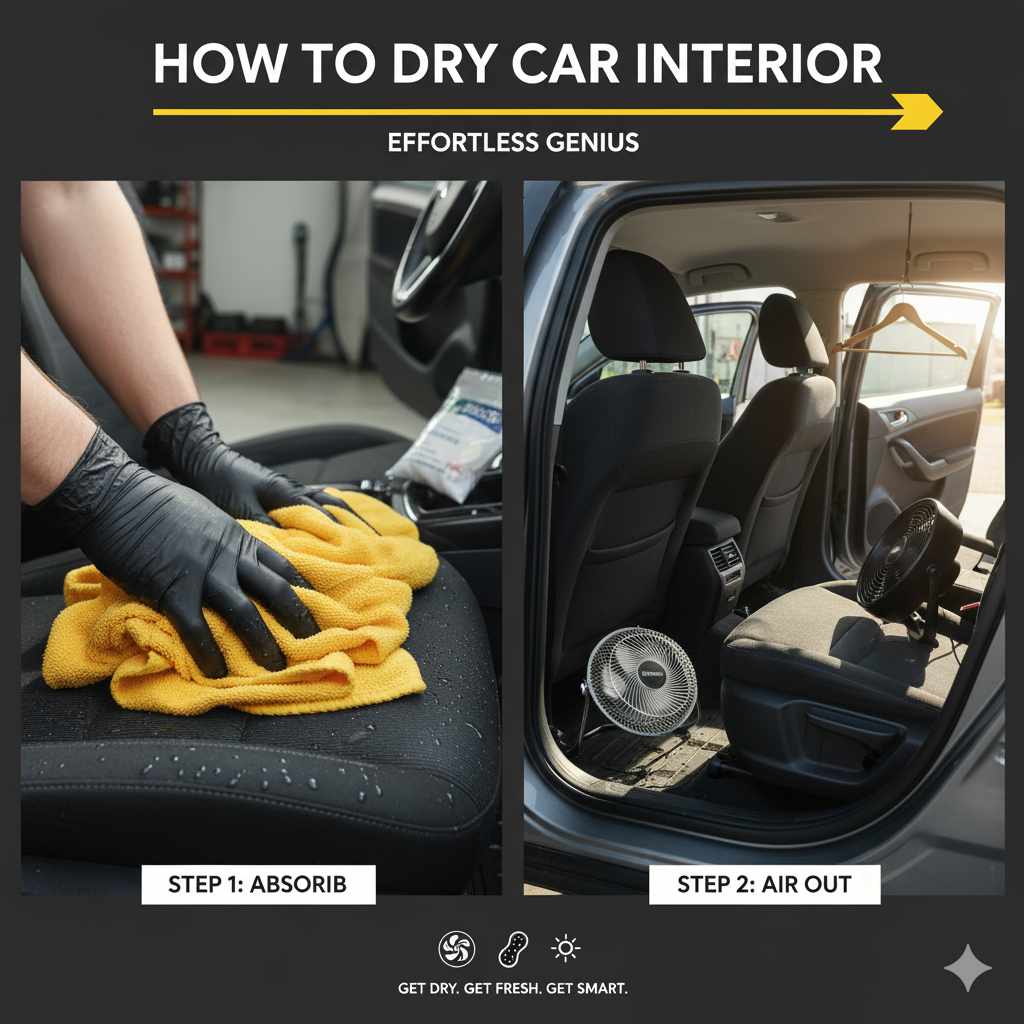
This is your first line of defense. Grab your microfiber towels and start blotting and wringing. Focus on all pooling water. For larger areas, use your old towels to absorb as much as you can. If you have a squeegee, use it to push water towards areas where you can easily towel it up. Don’t forget to check the floor mats – remove them and dry them separately.
Pro Tip: Wring out your towels frequently and keep using dry sections until no more water transfers to the towel. This might take several rounds!
Table: Towel Absorption Capacity (Approximate)
| Towel Type | Approximate Water Absorption per Towel | Best Use |
|---|---|---|
| Microfiber Towel (thick, plush) | 1-2 cups | Blotting spills, wiping down surfaces, final drying |
| Old Cotton Towel (bath towel) | 2-3 cups | Soaking up large spills, initial water removal |
| Terry Cloth Shop Rags | 0.5-1 cup | Wiping down harder surfaces, drying windows |
Step 3: Vacuum the Moisture
Once you’ve mopped up the bulk of the water, it’s time for your wet/dry vacuum. This is where the real magic happens in sucking out residual moisture that towels might miss, especially from deep within carpet fibers or under the mats.
If your vacuum has a wet setting, use that. Go over all wet areas of the carpet, seats, and even the trunk. Pay special attention to seams and edges where water loves to hide. You can also use the crevice tool to get into tight spots. This step is crucial before moving on to air drying.
For an authoritative guide on using wet/dry vacuums safely, check out resources from the Occupational Safety and Health Administration (OSHA). While this document focuses on industrial use, the principles of safe operation and power cord management are universally applicable.
Step 4: Air It Out – The Power of Airflow
Now that standing water is gone and most surface moisture is vacuumed, it’s time for evaporation. You need air circulation to speed this up. This is where fans and open doors come into play.
Using Fans: Place fans inside your car, aimed at the wet areas. A box fan can cover a large area, while smaller personal fans can be directed at specific spots. Run them for several hours, or even overnight if possible.
Ventilate Safely: If weather permits and it’s safe to do so (no rain, secure area), leave your car doors and windows open slightly. This allows moist air to escape and fresh air to circulate. You can prop the doors open a few inches with a towel or your hand to prevent them from closing entirely but still allow for airflow. However, never leave your car unattended with doors or windows wide open in an unsafe location.
Step 5: Deploy a Dehumidifier (Optional but Highly Effective)
If you have access to a dehumidifier, it can significantly speed up the drying process, especially in humid climates or when you can’t leave the car doors open for extended periods. Place the dehumidifier near the car and set it up to vent into the car interior. Some people will even place a small dehumidifier directly inside the car, ensuring they empty the water tank regularly or set up a continuous drain hose if the unit allows.
Using a dehumidifier creates a dry environment that actively pulls moisture from the air and surfaces. You can find great information on how dehumidifiers work from sources like the U.S. Department of Energy, which explains their efficiency and usage. Bringing this principle to your car interior can be a game-changer.
Step 6: Address Stubborn Moisture with a Wet/Dry Vac
Even after hours of air drying, some moisture might remain deeply embedded in your car’s carpets and padding. If the area still feels damp to the touch, bring out the wet/dry vacuum again. Go over the damp spots methodically.
For very stubborn dampness, you can try the “dry” function of your wet/dry vac, which is essentially a powerful blower. Aiming this directly at damp surfaces can help lift remaining moisture to the surface for easier evaporation or subsequent vacuuming. This is a great technique for getting those areas that just won’t seem to dry completely.
Step 7: Dry and Clean Floor Mats Separately
Don’t forget your floor mats! If they are soaked, remove them from the car. Shake out any loose dirt. You can hang them outside to dry in the sun, or if they’re rubber mats, wipe them down. Place them back in the car only when both the mats and the car interior are completely dry to prevent re-wetting.
Step 8: Deodorize and Leave a Final Check
Once everything is bone dry, you might still detect a faint musty smell. This is where odor absorbers come in handy.
- Baking Soda: Sprinkle a generous amount of baking soda over the carpets and upholstery. Let it sit for several hours or overnight, then vacuum it up thoroughly.
- Activated Charcoal: Place opened bags or containers of activated charcoal (available at pet stores or online) in the car. They are excellent at absorbing lingering odors.
- White Vinegar: For more persistent odors, you can place a shallow bowl of white vinegar in the car overnight. The vinegar smell will dissipate, taking other odors with it.
Finally, do a thorough check. Feel the carpets, check under the seats, and sniff the air. Ensure no dampness remains anywhere. Leave the doors slightly ajar for a little longer if you have any doubts. A perfectly dry interior should not feel cold or clammy and should smell fresh.
Factors Affecting Drying Time
The time it takes to dry your car interior can vary quite a bit based on a few factors:
Table: Drying Time Variables
| Factor | Impact on Drying Time | How to Mitigate |
|---|---|---|
| Amount of Water | More water means longer drying time. | Act fast to soak up spills; use a powerful wet/dry vac. |
| Humidity Level | High humidity slows evaporation. | Use a dehumidifier; ensure maximum ventilation. |
| Temperature | Warmer temperatures speed up evaporation. | Park in the sun (if safe and not too hot to damage interior); use fans to circulate air regardless of temp. |
| Airflow | Poor airflow significantly increases drying time. | Use multiple fans; open car windows/doors safely. |
| Car Ventilation System | Using AC with fresh air intake can help. | Run the AC on recirculate initially, then switch to fresh air after initial drying. |
| Carpet/Upholstery Material | Thicker, plusher materials hold more moisture. | Be extra thorough with vacuuming and air circulation. |
Preventing Future Interior Moisture Issues
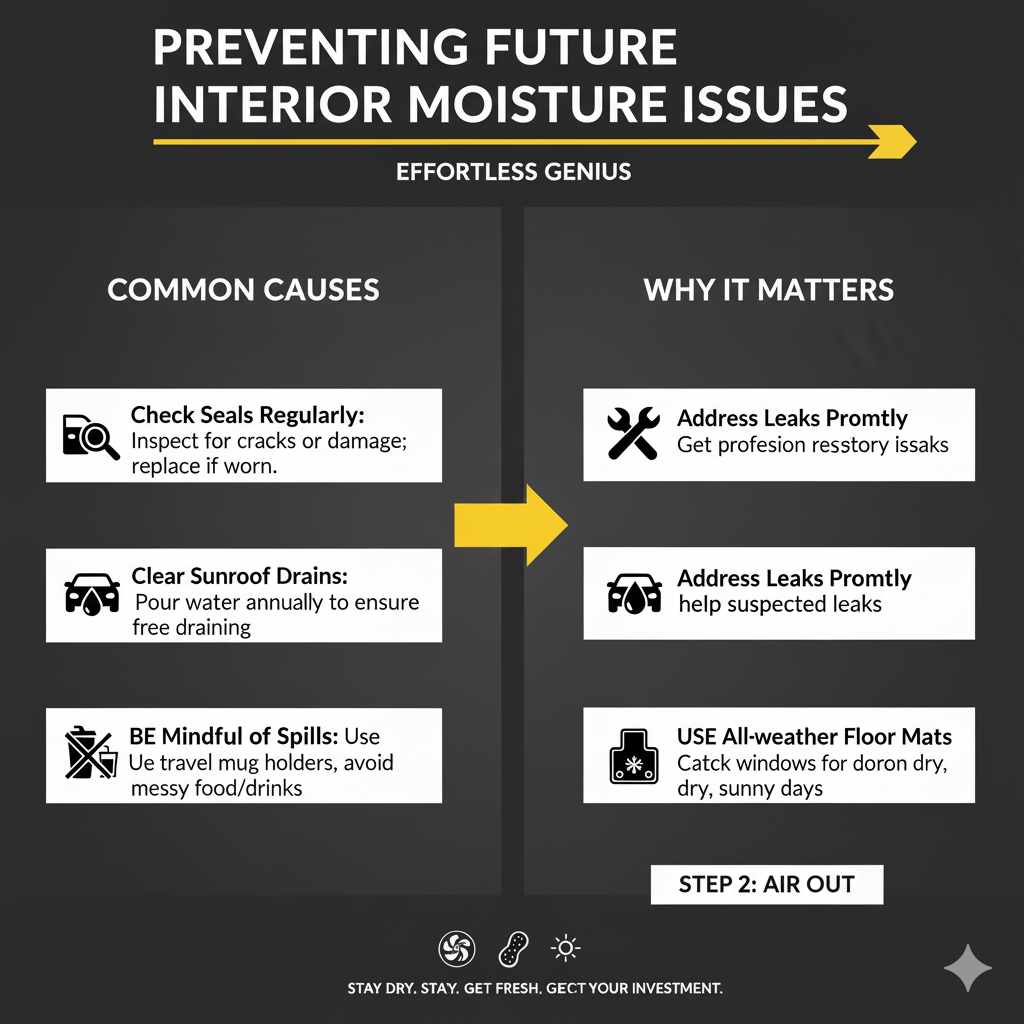
Once your car is dry, you’ll want to prevent it from getting wet again. Here are some smart tips:
- Check Seals Regularly: Inspect your door and window seals for cracks or damage. Replace them if they look worn out.
- Clear Sunroof Drains: If you have a sunroof, the drain tubes can get clogged. Periodically (annually is often good), pour a little water into the sunroof channels to ensure it drains freely out the bottom.
- Be Mindful of Spills: Use travel mug holders, and try to avoid eating or drinking messy things in the car.
- Address Leaks Promptly: If you suspect a leak, get it checked out by a professional. Small problems can turn into big, musty ones.
- Use All-Weather Floor Mats: These are excellent for catching snow, mud, and water, protecting your car’s original carpeting.
- Ventilate Periodically: On dry, sunny days, crack a window or two for a few minutes to let stale air out and fresh air in. Doing this regularly can prevent a musty smell from developing.
Frequently Asked Questions (FAQ)
Q1: How long does it take to dry a car interior?
A: Drying time varies greatly depending on the amount of water, humidity, temperature, and airflow. A small spill might dry in a few hours with fans, while a flooded interior could take a day or more, often requiring a combination of vacuuming, fans, and a dehumidifier.
Q2: Can I use a household vacuum to dry my car interior?
A: Standard household vacuums are not designed for water and using them on wet surfaces can damage the motor and pose an electrical hazard. Always use a wet/dry vacuum (shop vac) for water extraction.
Q3: How do I get rid of the musty smell in my car?
A: The musty smell is usually due to mold and mildew. Thoroughly drying the interior is step one. Then, use odor absorbers like baking soda or activated charcoal. For stubborn smells, consider a specialized automotive odor eliminator or a light cleaning with a diluted vinegar solution (test in an inconspicuous area first).
Q4: What if my car carpet is still damp after a few days?
A: If the carpet remains damp after several days of good airflow and attempts to dry, there might be deeper moisture. A powerful wet/dry vacuum is your best bet here. You may need to repeat the vacuuming and airflow steps. If water keeps reappearing, you may have an active leak that needs professional attention.
Q5: Is it safe to sleep in a car that is drying with fans and its doors open?
A: It’s generally not advisable to sleep in a car with doors open for security reasons. If you are drying the interior with fans, ensure the car is parked in a secure, private location. If using a dehumidifier inside, ensure it’s well-ventilated and not a fire hazard. Always prioritize safety.
Q6: Should I use a hairdryer to dry my car interior?
A: A hairdryer can work for very small, localized damp spots, but it’s generally not efficient or practical for drying entire carpets or seats. It can also potentially be a fire hazard if left unattended or if it overheats. Fans and wet/dry vacuums are much more effective and safer.
Conclusion
Dealing with a wet car interior might seem like a daunting task, but as you’ve seen, it’s entirely manageable with the right approach and tools. By systematically removing standing water, utilizing powerful suction from a wet/dry vacuum, and ensuring consistent airflow with fans and ventilation, you can effectively dry out your car. Don’t underestimate the speed-up a dehumidifier can provide, and remember the natural odor absorbers like baking soda to leave your car smelling fresh.
Taking these steps is not just about comfort; it’s about protecting your investment and maintaining a healthy environment for you and your passengers. Regularly checking seals, clearing drains, and acting quickly on spills will prevent future headaches. You’ve got the knowledge now to tackle moist messes head-on and keep your car’s interior in top shape. Enjoy your beautifully dry and fresh-smelling ride!