How to Find Your Stolen Car: Proven Bluetooth Guide
Can you find a stolen car using Bluetooth? Yes, modern cars often have built-in Bluetooth systems that can be detected by nearby devices, similar to how you connect your phone. This guide explains how to leverage Bluetooth technology to aid in recovering a stolen vehicle.
Losing your car is a deeply unsettling experience. It’s more than just losing a mode of transportation; it’s losing a piece of your freedom and security. The good news is that you’re not entirely helpless. Modern car technology, especially Bluetooth, can sometimes offer a surprising lifeline in recovering your stolen vehicle. You might be wondering, “How can I find my stolen car with Bluetooth?” This guide is designed to break down exactly that, using simple steps anyone can follow. We’ll demystify how your car’s own technology can become a tool for its recovery. Stick around, and you’ll learn how to turn a potentially frustrating situation into one where you have actionable steps to help bring your car back home.
Why Bluetooth Might Help You Find Your Stolen Car
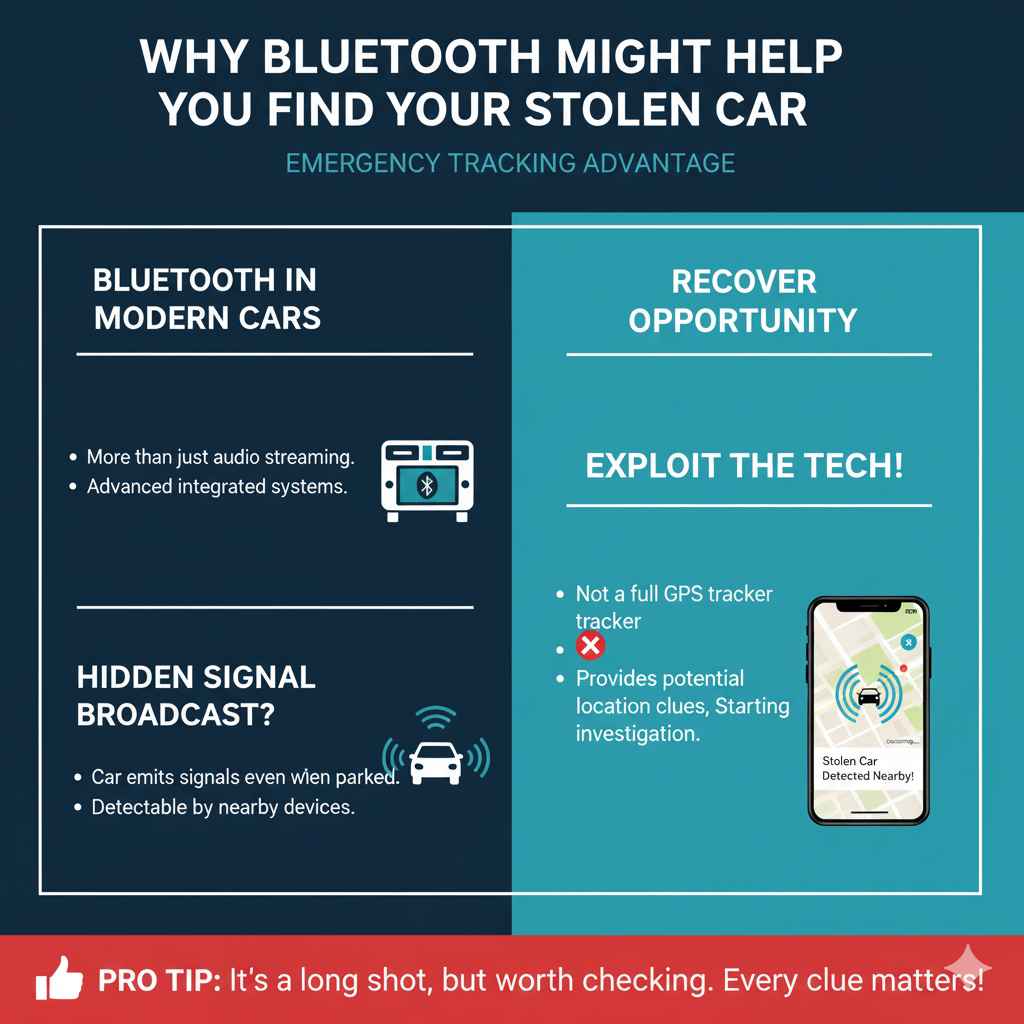
In today’s vehicles, Bluetooth isn’t just for hands-free calls or streaming music. Many car manufacturers have integrated more advanced systems that can broadcast a signal, even when the car is parked or seemingly “off” for regular use. This signal can potentially be detected by other devices around it. When your car is stolen, this often overlooked feature can become a surprising, albeit limited, tracking method. It’s not a replacement for professional tracking systems, but it’s a technological advantage you might be able to exploit.
Understanding Your Car’s Bluetooth System
Most cars equipped with Bluetooth systems have a module often referred to as the “infotainment system” or “hands-free calling module.” This module is a small computer that handles all Bluetooth-related tasks. When your phone or another device pairs with your car’s Bluetooth, it’s establishing a direct, short-range wireless connection. Intriguingly, some of these systems are designed to remain discoverable or broadcast a unique identifier for a period, even if the main vehicle power is turned off, or if it enters a low-power standby mode necessary for its internal functions. This persistent identifier is what we aim to detect.
How Bluetooth Works in Cars
At its core, Bluetooth is a wireless technology standard used for exchanging data over short distances. When you pair your smartphone with your car’s stereo system, you’re essentially creating a temporary, personal area network. Your car’s Bluetooth module broadcasts a name (like “MyFord,” “ChevyMyLink,” or “CarAudio”) and a unique hardware address (MAC address) that your phone sees. Some advanced vehicle systems might periodically broadcast this information, even when not actively playing music or taking calls, making them potentially detectable by nearby devices equipped with Bluetooth scanning capabilities.
Steps to Potentially Locate Your Stolen Car Using Bluetooth
Finding your stolen car with Bluetooth is about acting quickly and using the right tools. While it’s not a guaranteed method and relies heavily on proximity, it’s worth a shot, especially in the initial hours after the theft.
Step 1: Report the Theft to the Police (Crucial First Step)
This is the absolute first and most important step. As soon as you realize your car is stolen, contact your local police department immediately. Provide them with all details: make, model, color, license plate number, VIN (Vehicle Identification Number), and any distinguishing features. They will file an official report, which is necessary for any recovery efforts and insurance claims. Inform them about your car’s Bluetooth features; they might have protocols or resources that can assist. You can usually find your local police department’s non-emergency number on their official website or by dialing your local information line.
For example, if you live in the United States, you can typically find your local police department’s information by searching online for “[Your City/Town] Police Department.” They will guide you through filing a report. In the UK, you would contact the police via 101. Always remember, 999 (or your local emergency number) is for immediate dangers only.
Step 2: Gather Information About Your Car’s Bluetooth System
To use Bluetooth for recovery, you need to know what to look for. This involves understanding your car’s capabilities. Think about how you usually connect your phone. Did your car’s Bluetooth name ever appear on your phone when you weren’t actively trying to pair, or when the car was turned off?
What to Look For:
- Car’s Bluetooth Name: What does your car typically show up as on your phone’s Bluetooth list? Examples include “MyFord,” “CarAV,” “Uconnect,” “InfotainmentSystem,” or a model-specific name.
- Discoverability Status: Some car systems, especially higher-end models, may have settings that allow them to remain “discoverable” or broadcast their presence even when the ignition is off. Check your car’s manual if you still have access to it, or search online for your car’s make and model + “Bluetooth discoverable mode.”
- VIN-Based Information: In some rare cases, manufacturers might associate a unique Bluetooth identifier with your car’s VIN, though this is not a common consumer-facing feature.
Knowing your car’s specific Bluetooth system can help you know what signal name to search for, increasing your chances of spotting it.
Step 3: Utilize Bluetooth Scanning Apps or Devices
Once you have an idea of what you’re looking for, you can use technology to scan for nearby Bluetooth signals. This requires a device capable of detecting Bluetooth, typically a smartphone. There are specialized apps that can help you see all discoverable Bluetooth devices in your vicinity.
Recommended Tools and Apps:
- Smartphone: Your everyday smartphone is your primary tool. Ensure Bluetooth is turned on.
-
Bluetooth Scanner Apps: Many free and paid apps are available for both Android and iOS that can scan for and list all Bluetooth devices within range. These apps are invaluable. Some popular options include:
- Android: “Bluetooth Scanner” (by AppzTech), “BlueScanner.”
- iOS: “BlueScanner” (by Lightwing Technologies), “BTStack.”
- Dedicated Bluetooth Scanners: For more professional use, there are handheld Bluetooth scanner devices, but these are generally not necessary or practical for a typical car owner.
These apps work by broadcasting a request to devices around them and listing any that respond. The range is typically limited, usually between 30-100 feet (10-30 meters), depending on the Bluetooth version and environmental interference.
Step 4: Actively Scan in Areas Where the Car Was Last Seen
This is where the detective work begins. If you have any information about where your car might have been taken or its last known location, focus your scanning efforts there. This could be your driveway, street, a nearby parking lot, or an area suggested by police or witnesses.
Scanning Strategy:
- Prepare Your Device: Download and open your chosen Bluetooth scanner app on your smartphone. Make sure Bluetooth is enabled on your phone.
- Walk the Area: Move slowly and systematically through the area where you suspect the car might be. Try to scan at different times if possible, as the car’s system might broadcast intermittently.
- Observe and Record: Keep an eye on the app’s list of detected devices. Look for your car’s specific Bluetooth name or any generic name that matches your car’s system. Note down any device names you don’t recognize that appear consistently.
- Proximity Matters: The closer you are to the car, the stronger the Bluetooth signal will be. Apps often show signal strength (RSSI). A strong negative number (e.g., -30 dBm) indicates you are very close.
- Patience and Persistence: This process can be tedious and may not yield immediate results. The car might be out of Bluetooth range, its system might be turned off, or it might have been tampered with.
Important Note: Bluetooth signals are relatively short-range. If the car has been moved a significant distance or is inside a building or underground garage, this method is unlikely to work.
Step 5: Collaborate with Law Enforcement
If you detect a signal that you strongly believe is your car’s Bluetooth, do not attempt to retrieve the vehicle yourself. This can be dangerous. Your priority should be to contact the police immediately with this new information.
What to Tell the Police:
- Provide your current location and the location where you detected the signal.
- Describe the signal you detected (e.g., “I detected a device named ‘CarAudio’ broadcasting strongly at the corner of Elm and Main Street”).
- Mention if you have a Bluetooth scanner app and can show them the detected device and signal strength.
Law enforcement officers have the training and resources to handle such situations safely and professionally. They can use your information to triangulate the device’s location and proceed with recovery. They may also have more advanced equipment for detecting signals that are not readily visible to consumer-grade apps.
Limitations of Using Bluetooth for Stolen Car Recovery
It’s vital to understand that the Bluetooth method is not foolproof. It comes with significant limitations that can prevent successful recovery. Being aware of these helps manage expectations and focus on all available recovery avenues.
Factors Limiting Bluetooth Detection:
- Range: As mentioned, Bluetooth has a limited range, typically up to 100 feet (30 meters) in ideal conditions. Obstacles like walls, buildings, or even distance will severely weaken or block the signal.
- Power State: The car’s Bluetooth system needs to be powered on and discoverable. If the thief has disconnected the battery, disabled the infotainment system, or if the system is designed to shut down completely when the car is off, it won’t broadcast.
- Interference: Many other Bluetooth devices are constantly broadcasting signals. In crowded urban areas, your car’s signal can be lost in the noise. Similarly, other wireless signals can interfere.
- Tampering: A thief might intentionally disable or interfere with the Bluetooth system to prevent detection.
- System Design: Not all car Bluetooth systems maintain a broadcast when the car is off or in a low-power state. This varies greatly by manufacturer and model.
- No GPS: Bluetooth does not provide GPS location data. It only tells you if a device is nearby.
For a more reliable way to track your vehicle, consider after-market GPS tracking devices. These systems use GPS satellites to provide real-time location data, which is much more accurate and has a longer range than Bluetooth. Companies like Garmin offer various tracking solutions, though these would need to have been installed prior to the theft.
Table: Comparing Bluetooth Detection vs. GPS Tracking
To better understand the capabilities, here’s a comparison:
| Feature | Bluetooth Detection | GPS Tracking (Aftermarket) |
|---|---|---|
| Technology Used | Short-range radio waves for device-to-device communication. | Satellite-based system for precise location tracking. |
| Range | Limited (approx. 30-100 feet / 10-30 meters). | Global (requires cellular network for data transmission). |
| Requirement for Car | Onboard Bluetooth system must be powered and discoverable. | Requires a dedicated GPS tracker unit, often with a power source (battery or wired). |
| Accuracy | Indicates proximity, not precise location. Requires manual scanning. | Pinpoints location on a map with high accuracy. |
| Effectiveness After Theft | Possible if car is nearby and system is active; limited by range and interference. | Highly effective if device is active and transmitting its signal. |
| Ease of Use (Initial Setup) | Requires no setup if car has built-in, discoverable Bluetooth. | Requires installation and subscription to a tracking service. |
| Cost | Potentially free (using existing smartphone and apps). | Can range from under $100 for simple devices to several hundred dollars for advanced systems, plus monthly fees. |
Beyond Bluetooth: Other Recovery Avenues
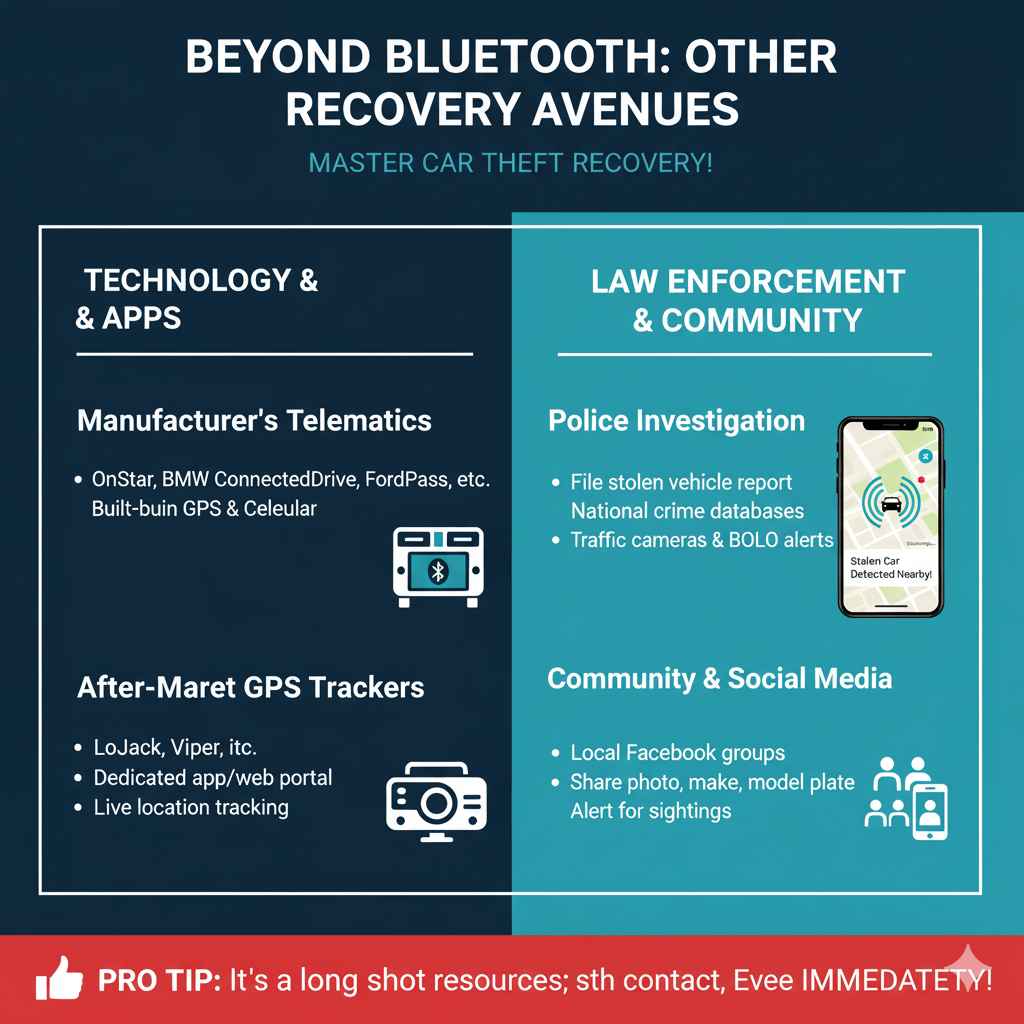
While this guide focuses on Bluetooth, remember it’s just one piece of the puzzle. If your car is stolen, a multi-faceted approach is best.
Manufacturer’s Telematics and Apps
Many modern cars come with built-in telematics systems that allow for tracking via a manufacturer-provided smartphone app. Examples include OnStar for GM vehicles, BMW ConnectedDrive, FordPass, and similar services from other brands. If your car has such a system, and it was active and subscribed to, this is often the most effective way to track your vehicle. The system uses GPS and a cellular connection to report the car’s location. Check your car’s manual or the manufacturer’s website to see if this feature is available for your model. You will likely need to log into your account associated with the car to see its location.
After-Market GPS Trackers (If Installed)
If you had an aftermarket GPS tracking device installed in your car (e.g., from brands like LoJack, Viper, or other security systems), this is your primary method of recovery. These devices are designed specifically for vehicle tracking and often have their own dedicated apps or web portals where you can view your car’s live location. If you have one, access its app or portal immediately and report the location to the police.
Police Investigations and Resources
Always rely on law enforcement. They have specialized resources and investigative techniques that you don’t. They can check traffic cameras, BOLO (Be On the Lookout) alerts, and work with other agencies. The information you provide, including any Bluetooth signal detection, can be valuable to their ongoing investigation. A stolen vehicle report filed with police is critical for entering the vehicle into national crime databases.
Community and Social Media
In some cases, sharing information about your stolen vehicle on local community social media groups (like Facebook neighborhood groups) can be helpful. Include a clear photo of the car, the make, model, color, license plate, VIN (if comfortable sharing publicly), and the last known location. While this won’t directly track the car, it can alert the community and potentially lead to sightings.
Frequently Asked Questions (FAQs)
Q1: Can I find my ANY stolen car using Bluetooth?
It depends. Not all cars have Bluetooth, and even if yours does, the system might not be programmed to broadcast its signal when the car is powered off or in standby. It’s more likely to work if the car is relatively new and has an advanced infotainment system.
Q2: How close do I need to be to detect my car’s Bluetooth signal?
Bluetooth has a limited range, typically up to 30 meters (about 100 feet) in open areas. Walls, buildings, and other obstructions can reduce this significantly. You’ll likely need to be within a few dozen feet to get a solid reading.
Q3: What if the thief turned off the car’s Bluetooth?
If the thief has intentionally disabled the Bluetooth system, turned off the infotainment system completely, or disconnected the car’s battery, you won’t be able to detect its Bluetooth signal. This is a common tactic to avoid detection.
Q4: Can I track my car’s location with Bluetooth?
No, Bluetooth itself does not provide location tracking like GPS. It only allows certain devices to communicate or be detected within a short range. You can’t see a map location; you can only tell if the car is physically nearby when you are scanning.
Q5: Should I approach the car if I detect the Bluetooth signal?
Absolutely not. Your safety is paramount. If you detect a signal that might be your car, contact the police immediately. Let them handle the approach and recovery. They have the training to do so safely.
Q6: Are there any other ways to track my car if it doesn’t have GPS?
If your car doesn’t have pre-installed GPS tracking, but does have integrated telematics (some modern cars do), you might be able to use a manufacturer’s app for locating it. Otherwise, consider after-market GPS trackers, though these must be installed before the car is stolen. For older vehicles without these features, recovery is typically reliant on police work, public appeals, and tracking security camera footage around the theft location.
Q7: How can I prevent my car from being stolen in the first place?
Several preventive measures can help: always lock your doors, park in well-lit areas, consider an anti-theft alarm or steering wheel lock, don’t leave your keys visible or unattended, and be mindful of where you park. Modern vehicle security features are your first line of defense.