How to Fix Car AC Leaking Water Inside Your Car
Seeing water drip inside your car from the AC can be a little worrying, right? It’s a common issue that many car owners face, and for beginners, figuring out How to Fix Car AC Leaking Water Inside Your Car can seem tricky. But don’t sweat it!
This guide breaks down the problem into simple, easy-to-follow steps. We’ll help you pinpoint the leak and get your car’s air conditioning running smoothly again. Let’s get started on making that drip disappear!
Understanding Why Your Car AC Leaks Water
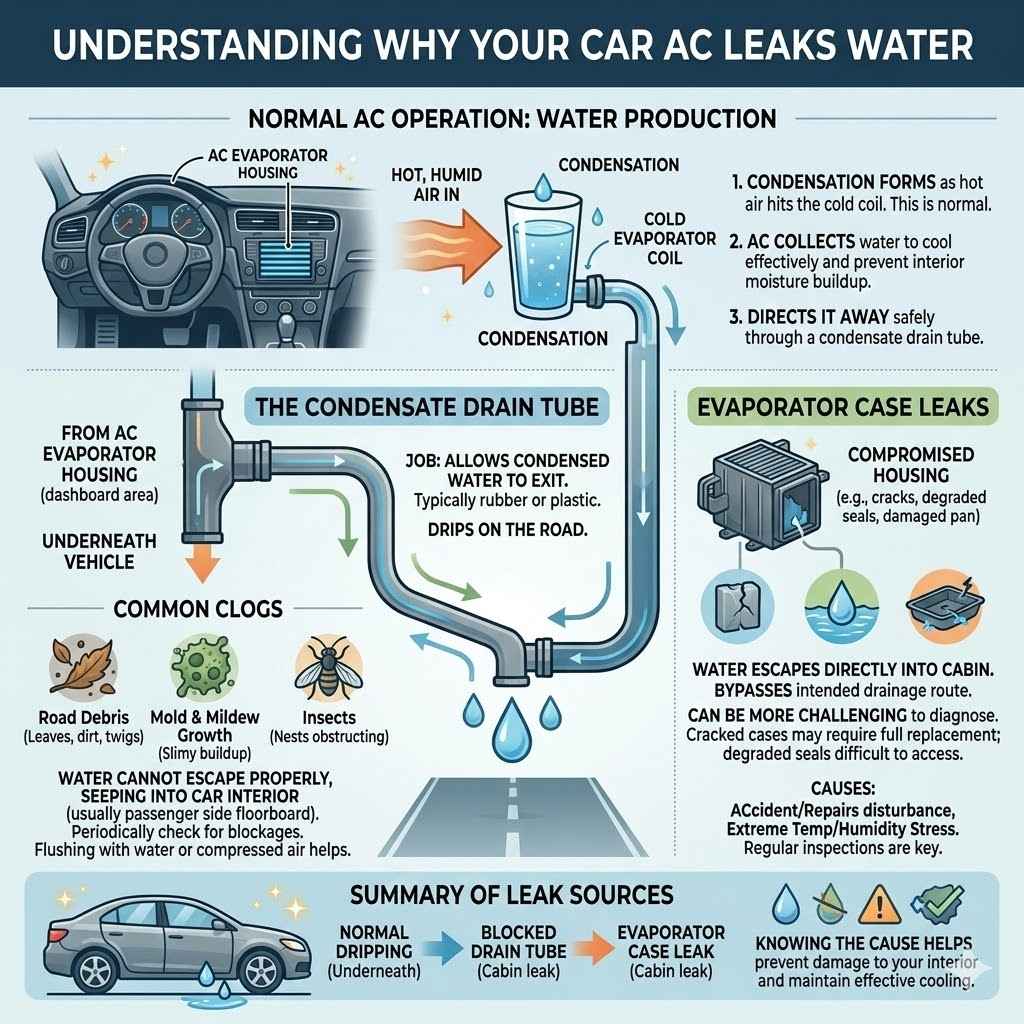
It’s normal for your car’s air conditioning system to produce water. This water is actually condensation, formed as the hot, humid air from outside passes over the cold evaporator coil inside your car’s AC unit. Think of it like a cold glass on a warm day; water beads up on the outside.
Your car’s AC system is designed to collect this water and drain it away safely, usually through a small tube called a condensate drain tube, which directs it out from under your vehicle. This process is essential for cooling your car effectively and preventing excess moisture buildup inside the cabin. Without this drainage, that water would have to go somewhere, and inside your car is often the path of least resistance.
The Condensate Drain Tube
The condensate drain tube is a vital component of your car’s air conditioning system. Its primary job is to allow the water that condenses on the evaporator coil to exit the vehicle. This tube is typically made of rubber or plastic and connects from the AC evaporator housing, usually located behind the dashboard, to the underside of your car.
When the AC runs, the collected water flows through this tube and drips onto the road. If this tube becomes clogged, damaged, or disconnected, the water cannot escape properly and will begin to accumulate within the AC system’s housing. This is one of the most frequent reasons for water to end up inside your car.
A blocked drain tube can be caused by various things. Road debris, such as leaves, dirt, and small twigs, can get pulled into the system and block the opening. Over time, mold and mildew can also grow within the damp environment of the AC system, creating a slimy buildup that restricts water flow.
Even small insects can build nests that obstruct the tube. When this happens, the water has nowhere to go except to overflow the collection pan beneath the evaporator. This overflow can then seep into your car’s interior, often appearing on the passenger side floorboard, but sometimes on the driver’s side or even the back seat.
Maintaining the condensate drain tube is a simple but important part of regular car care. Periodically checking it for blockages can prevent many AC water leak issues. You can often locate the drain tube under your car, usually on the passenger side, and try to clear any visible obstructions.
Some mechanics recommend flushing the tube with a bit of water or compressed air to ensure it’s clear and free-flowing. This proactive step can save you from the mess and potential damage that a water leak can cause to your car’s interior.
Evaporator Case Leaks
Sometimes, the problem isn’t just the drain tube itself but the housing that contains the evaporator coil and the collection pan. This is often referred to as the evaporator case. The evaporator case is designed to be a sealed unit, directing all the condensation into the drain pan.
However, over time, seals can degrade, cracks can develop in the plastic housing, or the drain pan itself might become damaged. When this happens, water can escape from the case directly into the passenger cabin, bypassing the intended drainage route.
These types of leaks can be more challenging to diagnose because they don’t always stem from a simple clog. A cracked evaporator case might require replacement of the entire housing, which can be a labor-intensive repair. Degraded seals can sometimes be replaced, but access to them is often difficult, requiring significant disassembly of dashboard components.
A compromised drain pan can also lead to water pooling and leaking. Identifying an evaporator case leak often involves a thorough inspection of the area around the AC unit, looking for water stains, evidence of corrosion, or physical damage to the case.
One common scenario for evaporator case leaks occurs after a car has been in an accident or undergone repairs that involved disturbing the dashboard. If the evaporator case was not reassembled correctly, or if its seals were damaged during the process, leaks can develop later. Another factor can be extreme temperature fluctuations or prolonged use in very humid conditions, which can put extra stress on the AC system’s components.
Regular inspections, especially after any significant automotive work, are key to catching these issues before they become major problems.
How to Fix Car AC Leaking Water Inside Your Car Step By Step
Now that we understand why your car’s AC might be leaking, let’s get to fixing it. The most common cause for water inside your car from the AC is a blocked or damaged condensate drain tube. This is usually the easiest and cheapest problem to solve.
We’ll walk through how to check and clear this first, as it resolves the majority of these issues. If clearing the drain tube doesn’t solve your problem, don’t worry, we’ll cover other potential causes and solutions.
Locating and Inspecting the Drain Tube
The first step in figuring out How to Fix Car AC Leaking Water Inside Your Car is to find that all-important drain tube. This tube typically exits the firewall of your car, somewhere under the passenger side of the vehicle. It’s usually a black rubber hose, about half an inch to an inch in diameter, and might have a protective boot or cap on the end to prevent debris from entering.
You might need to get under your car with a flashlight to see it clearly.
Once you’ve located it, inspect the end of the tube for any visible blockages. Are there leaves, dirt, or a collection of gunk? If you see something, try to gently remove it with your fingers or a small tool like a pair of pliers.
Be careful not to push the blockage further into the tube. You can also try to gently blow into the tube from the outside to see if air passes freely. If it feels blocked, this is very likely your problem.
If the end of the tube looks clear, the blockage might be further up inside. Sometimes, you can use a piece of stiff wire, like a coat hanger, to carefully probe into the tube and dislodge any obstructions. Again, be gentle.
You don’t want to puncture or damage the tube. If you can access the area where the tube connects to the AC system behind the dashboard, you might be able to get a better angle. However, for most people, focusing on the exterior end is the safest and easiest approach.
Clearing a Clogged Drain Tube
If you’ve found a blockage, it’s time to clear it out. A simple way to do this is to use a bit of compressed air. You can use a can of compressed air, like those used for cleaning electronics, or if you have an air compressor, use it at a low pressure.
Aim the air into the drain tube and give it a few short bursts. This can help blow out any debris that’s stuck inside.
Another effective method is to use a thin, flexible wire. A coat hanger straightened out works well, or you can buy flexible drain cleaning wires at an auto parts store. Gently insert the wire into the drain tube and push it in as far as you can without forcing it.
Wiggle it around to break up any clogs. Once you feel the obstruction loosen, slowly pull the wire out. You can then try flushing the tube with a small amount of water to ensure it’s clear.
If you’re hesitant to use tools or air, you can also try flushing the tube with water. You can use a garden hose on a low setting, or even a spray bottle filled with water. Aim the water into the drain tube and let it flow through.
This can help wash away any loose debris. After flushing, check under your car to see if water is now draining freely when the AC is running.
A common problem many DIYers encounter is that the drain tube is too high up or too hard to reach. In such cases, it might be easier to remove the tube if possible and clean it thoroughly outside the car. Some drain tubes have a connection point near the firewall that can be unscrewed or detached.
Once removed, you can clean it with a brush and water. Remember to reattach it securely to prevent new leaks.
Testing the AC System After Clearing
After you’ve cleared what you believe to be the blockage in the condensate drain tube, it’s crucial to test your AC system to see if the leak has stopped. Start your car and turn on the air conditioning. Set it to a cold temperature and let it run for at least 10-15 minutes.
This allows the system to cool down and produce condensation.
While the AC is running, carefully check the floor of your car, especially on the passenger side, for any signs of new water accumulation. You should also look under your car to confirm that water is now dripping from the end of the condensate drain tube. A healthy AC system will drip water while it’s running, so seeing some water dripping from the tube is a good sign.
If the floor remains dry and you see water dripping from the drain tube, you’ve likely fixed the problem.
If you still find water inside your car or no water dripping from the drain tube after running the AC for a significant period, the blockage might be more severe or located further up, or there could be another issue at play. In this case, you might need to try clearing the tube again, perhaps with a stronger method, or consider looking for other potential causes of the leak. Sometimes, repeated attempts are necessary to fully dislodge stubborn clogs.
When the Drain Tube Isn’t the Problem
If clearing the condensate drain tube doesn’t solve the water leak, it means the problem lies elsewhere within your car’s AC system. This could involve issues with the evaporator case itself, the AC drain pan, or even problems with the refrigerant levels that can indirectly cause excessive freezing and subsequent water issues. These are typically more complex repairs and may require the help of a professional mechanic.
However, understanding these potential causes can help you communicate effectively with your mechanic.
Issues with the Evaporator Case
The evaporator case is the sealed box that houses the evaporator core, where the refrigerant cools the air. It also contains a drain pan to collect the condensation. If this case develops cracks or if its seals become degraded, water can leak directly into the cabin.
This is a common problem as cars age. The plastic can become brittle, and the seals can dry out and crack over time.
Diagnosing a cracked evaporator case can be difficult because it’s located deep within the dashboard. You might notice water puddling in areas not typically associated with the drain tube, or you might see visible signs of leakage from seams in the dashboard or center console. Repairing a cracked case often involves removing the entire dashboard, which is a significant and costly job.
Replacing seals is also labor-intensive due to the difficult access.
If you suspect the evaporator case is the culprit, a mechanic will likely perform a pressure test on the AC system and inspect the case for any signs of damage or leaks. They may also use a borescope to look inside the case without fully disassembling the dashboard. If a crack is found, you’ll likely be presented with options for repair or
Frozen Evaporator Coil
Another less common but possible reason for water leaking inside your car is a frozen evaporator coil. The evaporator coil is where the refrigerant absorbs heat from the cabin air, causing it to cool and water to condense. If the coil gets too cold, moisture can freeze on its surface, forming ice.
As the AC system runs or when it’s turned off, this ice melts, and if the drain system can’t handle the sudden influx of water, it can overflow.
A frozen evaporator coil is often caused by a lack of refrigerant, a faulty blower motor that isn’t pushing enough air over the coil, or a problem with the temperature sensor that controls the cooling process. If your AC isn’t blowing cold air very well, or if you hear unusual noises from the AC system, this could be a sign of a frozen coil.
If you suspect a frozen evaporator coil, avoid running the AC continuously, as this can worsen the problem. The best course of action is to turn off the AC and run the fan on high heat for a while. This can help melt any ice.
Then, have your car checked by a mechanic. They will check the refrigerant levels, test the blower motor, and inspect the temperature sensor. Addressing the root cause will prevent the coil from freezing again.
The AC Drain Pan
Beneath the evaporator coil sits a drain pan. This pan catches the condensation that drips from the coil and channels it to the condensate drain tube. If the drain pan itself is damaged, cracked, or has corroded through, water can leak out of the pan and into the car.
This is more likely to happen in older vehicles where the pan material may have degraded due to rust or other environmental factors.
Identifying a damaged drain pan usually involves a visual inspection of the AC unit. This might require some disassembly of dashboard components to get a clear view. You’ll be looking for rust holes, cracks, or signs of water stains that originate from the pan itself.
If the pan is the source of the leak, it will likely need to be replaced. The replacement process can vary in difficulty depending on the car model and the pan’s location.
In some instances, minor rust holes in a metal drain pan can be temporarily patched using automotive sealants or epoxy. However, this is usually a short-term fix, and a replacement is the more durable solution. It’s important to ensure that any repair or replacement of the drain pan is done correctly to prevent future leaks.
A properly functioning drain pan is essential for directing water away from the car’s interior.
Preventative Maintenance for Your Car AC
Taking steps to prevent AC leaks is often easier and less costly than fixing them. Regular maintenance can help ensure your car’s air conditioning system runs smoothly and efficiently for years to come, saving you from unexpected water damage inside your vehicle. By paying attention to a few key areas, you can significantly reduce the chances of encountering this common problem.
Regularly Inspect the Condensate Drain Tube
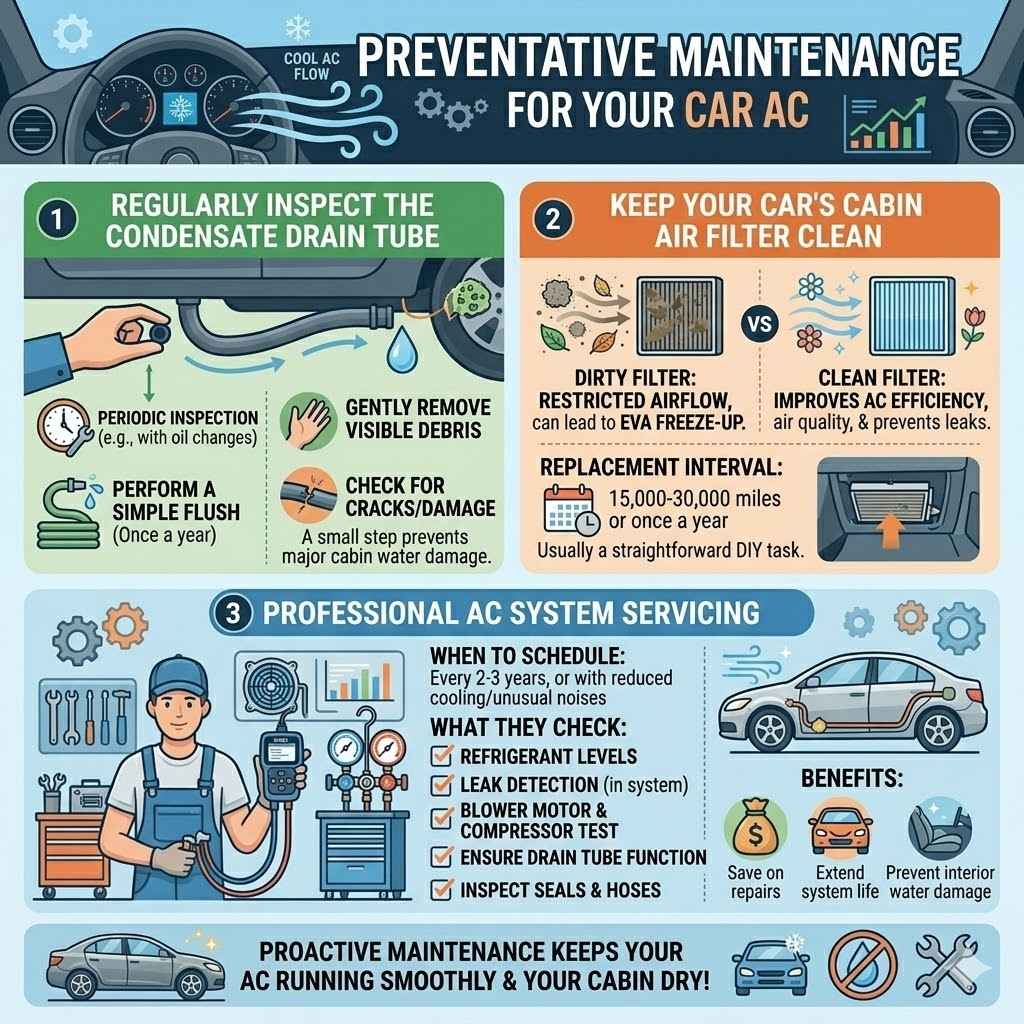
As we’ve discussed, the condensate drain tube is the most frequent culprit for AC water leaks. Make it a habit to check this tube periodically, perhaps during your car’s regular oil changes or every few months. Simply look under your car for the rubber hose and inspect its end for any debris.
If you see anything, gently remove it.
You can also perform a simple flush of the drain tube. Once a year, use a garden hose to gently run water through the tube. This helps clear out any accumulated grime or sediment that could eventually cause a blockage.
If you notice any signs of mold or mildew around the drain tube’s exit, you can use a mild disinfectant spray to clean it. This proactive approach can prevent the buildup that leads to leaks.
A visual inspection is often enough to catch potential problems early. If the drain tube appears to be cracked or severely damaged, it’s best to have it replaced by a mechanic before it fails completely and causes a leak. Paying attention to this small but critical component can save you a lot of trouble down the road.
Keep Your Car’s Cabin Air Filter Clean
Your car’s cabin air filter plays a vital role in keeping the air you breathe inside your car clean. It traps dust, pollen, leaves, and other debris before they can enter your car’s ventilation system. If the cabin air filter becomes clogged, it can restrict airflow to the AC system.
This restricted airflow can cause the evaporator coil to freeze up, leading to the melting ice issue we discussed earlier.
Check your car’s owner’s manual for the recommended replacement interval for your cabin air filter. Typically, it should be replaced every 15,000 to 30,000 miles, or once a year. Replacing a clogged cabin air filter is usually a straightforward DIY task that can be done in minutes.
You can usually access it from inside the glove box or under the dashboard.
A clean cabin air filter not only helps prevent AC leaks but also improves the air quality inside your car and helps your AC system perform more efficiently. When the filter is clean, the blower motor can push air more effectively over the evaporator coil, ensuring proper cooling and condensation management.
Professional AC System Servicing
While many AC water leaks can be fixed with simple DIY steps, sometimes a professional touch is necessary. Scheduling regular professional servicing for your car’s AC system can help catch potential problems before they become major issues. Mechanics have specialized tools and knowledge to inspect all components of the AC system.
During a professional service, a mechanic will check refrigerant levels, inspect for leaks in the system, test the operation of the blower motor and compressor, and ensure the condensate drain is functioning correctly. They can also identify any wear and tear on seals and hoses that might lead to future problems. While this might seem like an unnecessary expense, it can save you money in the long run by preventing costly repairs and damage.
Consider having your AC system serviced every two to three years, or if you notice any unusual noises, reduced cooling performance, or strange smells. Proactive maintenance is key to keeping your car’s AC system in top condition and avoiding inconvenient water leaks inside your car.
Frequently Asked Questions
Question: How often should I check my car’s AC drain tube?
Answer: It’s a good idea to visually inspect your car’s AC drain tube at least a couple of times a year, perhaps during spring and fall. If you live in an area with a lot of trees or debris, checking more often can be beneficial.
Question: Can I just pour bleach down the drain tube to clear it?
Answer: It’s generally not recommended to use harsh chemicals like bleach. While it might kill mold, it can also damage rubber or plastic components over time. Stick to compressed air, a flexible wire, or water flushing for clearing the tube.
Question: What if water is leaking from the center console?
Answer: A leak from the center console might indicate an issue with the evaporator case itself or its seals. This is a more complex problem that often requires professional diagnosis and repair.
Question: Is it safe to drive my car if the AC is leaking water?
Answer: A small amount of water dripping under your car from the AC drain tube is normal. However, if water is pooling inside your car, it can cause damage to the interior, mold growth, and electrical issues. It’s best to address the leak as soon as possible.
Question: How much does it typically cost to fix a car AC water leak?
Answer: The cost can vary greatly. Clearing a clogged drain tube might be a DIY fix costing nothing. Repairing a cracked evaporator case or other major component can cost hundreds or even over a thousand dollars, depending on the vehicle and the labor involved.
Summary
Dealing with water inside your car from the AC can be a nuisance, but figuring out How to Fix Car AC Leaking Water Inside Your Car is usually achievable. Most leaks stem from a blocked drain tube, which can be cleared with simple tools. If that doesn’t work, other issues like a cracked evaporator case or a frozen coil might be the cause, often requiring professional help.
Regular maintenance of your AC system is key to preventing these problems and keeping your car’s interior dry and comfortable.