How to Unclog a Car AC Drain Line: Causes, Fixes and Safe Limits
Water on the passenger-side floor with the A/C running usually means the evaporator drain is not letting condensation out. To unclog a car AC drain line, find where it exits, clear it with low-pressure air (20 psi or less), suction or a soft brush, then run the A/C and watch for a normal drip under the car. Before you start, check one thing: clear water dripping outside the car is normal, and water inside is the problem.
Quick Answer
Six maker bulletins we read give six different reasons for a wet front carpet, and only three of them are true clogs. Toyota caps compressed air at 20 psi through a removed hose. Never open the refrigerant lines, because the drain has nothing to do with them.
Why Your Car’s AC Drain Line Gets Clogged
Best Drain Tube Brush Pick
|
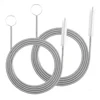
2-Pack 80-Inch Flexible Drain Brush for AC Drain Line, Sunroof & Ice Maker A long flexible brush for scrubbing out a drain tube you can reach, as a gentle follow-up after the air or suction step below.
As an Amazon Associate we earn from qualifying purchases. Price when checked: $7.99. Price and availability change; check the listing. |
Cooling the cabin air also pulls moisture out of it. That water collects on the evaporator inside the HVAC box and runs out through a small drain tube or hose. When something blocks that path, the water has nowhere to go and spills into the cabin, most often onto the passenger-side floor.
What blocks it varies. A Toyota bulletin for the 2011-2014 Scion tC says the HVAC drain tube can clog with debris and leak water. A separate Toyota bulletin (T-SB-0080-19) covers hoses plugged by an insect nest on 2006-2022 models in particular geographic areas. A third (T-SB-0007-22) covers some 2020-2021 RAV4 and RAV4 Hybrid builds where the inside of the drain hose was obstructed with plastic, which means that clog was a factory flaw rather than dirt.
Is It Really a Clogged Drain? Symptoms and Other Causes
Most guides stop at “the drain is clogged.” The bulletins show that a wet floor has other causes too, and clearing a clean hose fixes nothing. This table pulls the patterns from the six maker bulletins we read, plus Toyota’s own statement about normal dripping.
| What you see | Likely cause | Fix, and where it comes from |
|---|---|---|
| Clear, odorless water dripping under the car after the A/C runs; cabin carpet dry | Normal condensation leaving through the drain | Nothing to fix. Toyota says water dripping under the vehicle after A/C use is normal. |
| Damp or wet passenger-side floorboard while the A/C runs; no water coming in from outside | Drain hose blocked by debris, an insect nest, or (on some builds) plastic inside the hose | Remove the hose, blow it clear at 20 psi or less, or replace it (Toyota bulletins T-SB-0007-22, S-SB-0026-13, T-SB-0080-19). |
| Front carpet wet when the A/C is on, hose is clear | Collapsed or misaligned drain grommet where the tube passes through the body | Reseat the grommet from inside, under the console area (GM bulletin 09-01-39-007B). |
| Water on the right front floor during or after A/C use on a 2018-2020 F-150, Expedition, Navigator or Super Duty built on or after 31 Aug 2018 | Condensation entering through the drain tube seal | Dealer fit of an elbow on the drain tube (Ford TSB 19-2345, about 0.6 hours labor). |
| Wet front carpet and no outside water entry on a 2007-2012 Nissan Versa | Water draining from the evaporator case into the cabin | Check the drain cup stud for a missing nut, then fit a drain hose extension (Nissan NTB08-101b). |
| Colored, oily or sweet-smelling fluid instead of clear water | Not condensation, so not a drain problem | Have the fluid identified by a shop before you drive much further. |
Notice the common thread in the Nissan and Toyota paperwork: confirm that water is not coming in from outside first (door seals, cowl, sunroof). Nissan’s bulletin makes that a condition for applying its fix, and it warns that its bulletins are written for qualified technicians, not do-it-yourselfers.
- Musty smell when the fan starts: damp carpet or a wet HVAC box. The Ford and Toyota bulletins both include carpet dampness or odor around the repair.
- Squelch under the floor mat: pull the mat and press the carpet by hand, passenger side first.
- No drip under the car after a long A/C run, but a wet floor: the water is probably going into the cabin instead of out.
Locating Your Car’s AC Drain Line
There is no universal location. The bulletins we read describe water on the passenger side or front floor, and the drain itself sits in different places: Toyota’s RAV4 procedure disconnects a hose from the HVAC box and a body grommet, Ford’s 2018-2020 trucks have a drain tube behind a metal shield, GM’s Caprice PPV and Pontiac G8 route the tube through a grommet reached under the console, and the Nissan Versa uses a drain cup inside the center console. Your owner’s manual may show the exit point, and your vehicle’s service information shows how to reach it.
To see where the water leaves, park on level ground, run the A/C for several minutes and look for a drip near the passenger side under the car. Stay out from under the car while it is held up by a jack alone. If you must lift it to look, use rated jack stands at the lift points in your owner’s manual.
How to Unclog Your Car AC Drain Line: Step-by-Step
Start with the gentlest method that your vehicle’s layout allows. Wear safety glasses throughout; Toyota’s bulletin calls for eye and ear protection when working with compressed air.
Method 1: Low-Pressure Air Through the Removed Hose
This is the method the Toyota bulletins describe. With the hose detached from the HVAC box (use your vehicle’s service information for the clamp and grommet details), loosely cover the free end with a plastic bag, leaving room for the bag to inflate, and blow air through at no more than 20 psi. If dirt or insect debris comes out, that was your clog. Toyota’s RAV4 bulletin treats a hose that passes no such debris yet leaks as defective and replaces it. Reinstall with no twist or crush, because Toyota warns that a twisted or crushed hose can leak water into the cabin.
Method 2: Suction at the Outer End
If you can reach the open end under the car, a wet/dry vacuum with a small nozzle held against the tube pulls out standing water and loose sludge without pushing anything back toward the HVAC box. This is common practice rather than a maker procedure, so keep the suction gentle and stop if the hose starts to collapse.
Method 3: A Soft Brush as a Last Light Pass
A flexible nylon brush such as the one in the box above can scrub slime from the last few inches of tube. Feed it in only until you meet resistance. Do not use a coat hanger or stiff wire: none of the bulletins uses one, and a hard tip can punch through a soft drain hose. Skip household chemicals too, since none of the six bulletins calls for bleach or vinegar.
Check That It Worked
- Run the A/C and watch for the drip near the passenger side. GM’s bulletin ends the same way, by running the vehicle with the A/C on and confirming that it drains.
- Press the passenger carpet again after a drive. If it is still wet, water is getting in elsewhere.
- Dry the carpet properly. Our guide on how to dry wet car carpet covers it, and Toyota’s RAV4 bulletin points to a separate odor remediation bulletin (T-SB-0094-21) after water intrusion.
What If the Drain Line Is Inaccessible?
On several of the vehicles above the drain is behind the console, under carpet or behind a shield, so a driveway fix is not realistic. The GM procedure alone removes an insulator panel, the knee bolster, the console extension panel and the console trim plate before it reaches the grommet. That is the point to book a shop visit, and the bulletins give a labor figure to compare quotes against: Ford lists 0.6 hours for the 2018-2020 trucks and GM lists 0.4 hours for the grommet reseat.
Bulletin applicability depends on model year, build date and sometimes plant, so ask the dealer to look up your VIN. NHTSA hosts many of these maker bulletins at nhtsa.gov.
Preventing Future AC Drain Line Clogs
- Replace the cabin air filter on schedule. Toyota’s repair for the Scion tC bulletin includes installing a new cabin air filter after clearing the tube. Our air filter schedule guide covers the interval.
- Know your region. Toyota’s insect-nest bulletin applies to certain geographic areas, and its repair uses a drain hose tip that contains the pesticide permethrin, so ask a dealer rather than improvising a repellent.
- Watch for early signs. A musty smell or slightly damp carpet is easier to fix than a soaked floor.
When to Call a Professional
- The drain is behind the console, dash or a shield and you would have to remove trim to reach it.
- Water returns within days after you clear the hose, which points to a grommet, seal or case issue rather than a clog.
- The carpet is soaked or the water has reached electronics under the dash or seats.
- The fluid is colored, oily or sweet-smelling, which is not condensation.
- You suspect a refrigerant leak. Do not open the A/C lines: EPA says refrigerant cannot be intentionally vented, and anyone servicing an MVAC system for payment must be certified under section 609. The EPA page explains the rules for MVAC servicing.
For a car that will not cool at all, start with our guide on how to reset a car air conditioner. For a plain explanation of normal dripping, see is it normal for water to drip from your car. Toyota’s own overview of common A/C issues is on its car tips page.
Frequently Asked Questions (FAQ)
Where is the AC drain line on a car?
There is no single spot. The bulletins we read describe a hose on the HVAC box in a Toyota RAV4, a drain tube behind a metal shield on a 2018-2020 Ford F-150, a grommet reached under the console on a GM Caprice PPV, and a drain cup inside the center console of a Nissan Versa. In each case the water showed up on the passenger side or front floor. Check your vehicle’s service information for the exact location.
Is it normal for water to drip under my car when the AC is on?
Yes. Toyota states that water dripping under the vehicle from the air conditioning after use is normal. The problem is water inside the cabin, usually on the passenger floor, or a drip that is colored, oily or sweet-smelling.
What air pressure is safe for clearing a car AC drain hose?
Toyota’s bulletin T-SB-0007-22 limits compressed air to 20 psi (140 kPa) through the removed hose, with a plastic bag loosely over the end and eye and ear protection. That is well below the 30-40 psi some guides suggest.
Can a clogged AC drain cause a musty smell?
It can. Water that cannot leave the HVAC box soaks the carpet, and both the Toyota and Ford bulletins include checking the carpet for dampness or odor around the repair. Dry the carpet fully once the drain works.
Products related to this article
Sponsored / affiliate links. As an Amazon Associate I earn from qualifying purchases. I may earn additional commission from eligible campaigns.