How to Fix Mobile Connection in Trojena Camp
It can be tricky to keep your phone connected when you’re exploring a new place like the Trojena Pioneer Camp. Sometimes, getting a strong signal just isn’t as simple as it is back home. For those new to camping or remote areas, figuring out why your mobile connection is weak or gone can feel confusing.
This guide is here to make it easy. We’ll walk you through simple steps to help you solve this problem quickly. Get ready to learn how to fix mobile connection in Trojena Pioneer Camp so you can stay in touch.
Troubleshooting Mobile Signal Issues
This section will guide you through the fundamental steps to get your mobile signal back on track. It covers the basics that often solve connection problems without needing technical expertise. You’ll learn about checking your device and your surroundings, which are the first lines of defense against a weak signal. We aim to equip you with the knowledge to identify and resolve common mobile connection glitches.
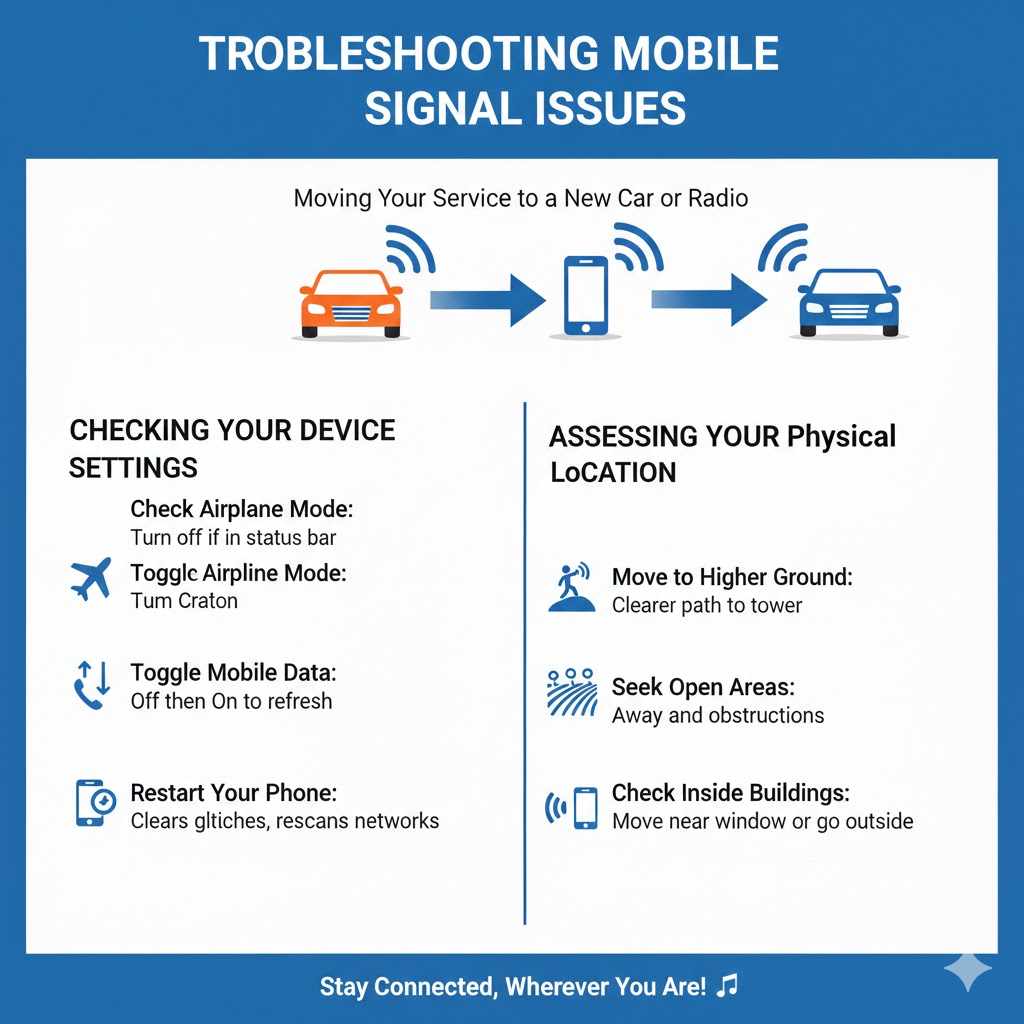
Checking Your Device Settings
Your phone’s settings play a big role in how well it connects to the network. Sometimes a simple setting change can make a huge difference. This part focuses on the easy-to-miss adjustments within your phone’s software.
- Check Airplane Mode
Your phone might accidentally have Airplane Mode turned on. This feature disables all wireless radios, including your cellular connection. Look for an airplane icon in your status bar. If you see it, tap on it to turn it off. This is the quickest fix if your signal has suddenly disappeared. - Toggle Mobile Data On and Off
Sometimes, just refreshing your mobile data connection can help. Go to your phone’s settings, find the “Mobile Network” or “Cellular” section, and switch “Mobile Data” off for a few seconds, then turn it back on. This forces your phone to re-establish a connection with the nearest cell tower. - Restart Your Phone
A simple reboot can clear up many temporary software glitches that might be affecting your signal. Press and hold the power button, then select “Restart” or “Reboot.” This allows your phone’s system to reset and re-scan for available networks.
Assessing Your Physical Location
Where you are standing can dramatically affect your signal strength. Certain environments naturally block or weaken radio waves, making it harder for your phone to connect. This subsection highlights how your immediate surroundings impact your mobile connection.
- Move to Higher Ground
Cell towers often have a line of sight to your phone. If you are in a valley or surrounded by thick trees, your signal can be poor. Moving to a higher spot, like a small hill or an open area, can often improve your signal strength by giving your phone a clearer path to the tower. - Seek Open Areas
Buildings, dense forests, and even large rocks can interfere with radio signals. Try to find a more open space, away from obstructions. Being in the middle of a field or near the edge of a wooded area might offer a better connection than being deep inside. - Check Inside Buildings
Many modern buildings have materials that block cell signals. If you are inside a cabin or a tent, try stepping outside. Even moving closer to a window can sometimes help. For persistent issues inside, consider using Wi-Fi if it’s available.
Advanced Signal Improvement Techniques
When the basic troubleshooting doesn’t solve the problem, it’s time to look at more advanced methods. These techniques involve understanding network settings and using tools that can boost your signal. This section aims to provide solutions for when simple checks aren’t enough.
Optimizing Network Settings
Your phone has various network settings that can be adjusted to improve its ability to connect. Fine-tuning these can make a significant difference, especially in areas with weaker coverage. We will explore how to manage these settings effectively.
- Select Network Operator Manually
Your phone usually automatically selects the best available network. However, in areas with multiple carriers or weak signals, it might struggle to find the strongest one. You can manually choose your network provider from your phone’s settings. This forces your phone to connect to your specific carrier’s towers, potentially improving stability. - Network Mode Selection
Phones offer different network modes like 4G/LTE, 3G, and 2G. If you are in an area with very weak 4G coverage but strong 3G, switching your network mode to 3G might give you a more stable connection, albeit at slower speeds. Access this in your mobile network settings. - Reset Network Settings
This option can resolve complex issues caused by corrupted network configurations. It will erase all saved Wi-Fi passwords, Bluetooth pairings, and cellular settings, returning them to their defaults. Go to your phone’s general settings, find “Reset,” and select “Reset Network Settings.” You will need to re-enter Wi-Fi passwords afterward.
Utilizing External Tools and Services
Sometimes, your phone alone isn’t enough, and external help is needed. This involves looking at devices or services designed to enhance or provide connectivity. These methods can be particularly useful in remote locations like the Trojena Pioneer Camp.
- Wi-Fi Hotspots
If your camp has Wi-Fi, using it for calls and data is a great alternative to cellular service. Many smartphones can create a mobile hotspot, allowing other devices to connect to the internet through your phone’s data if you have a strong signal. Check your phone’s tethering or hotspot settings. - Signal Boosters (Mobile Boosters)
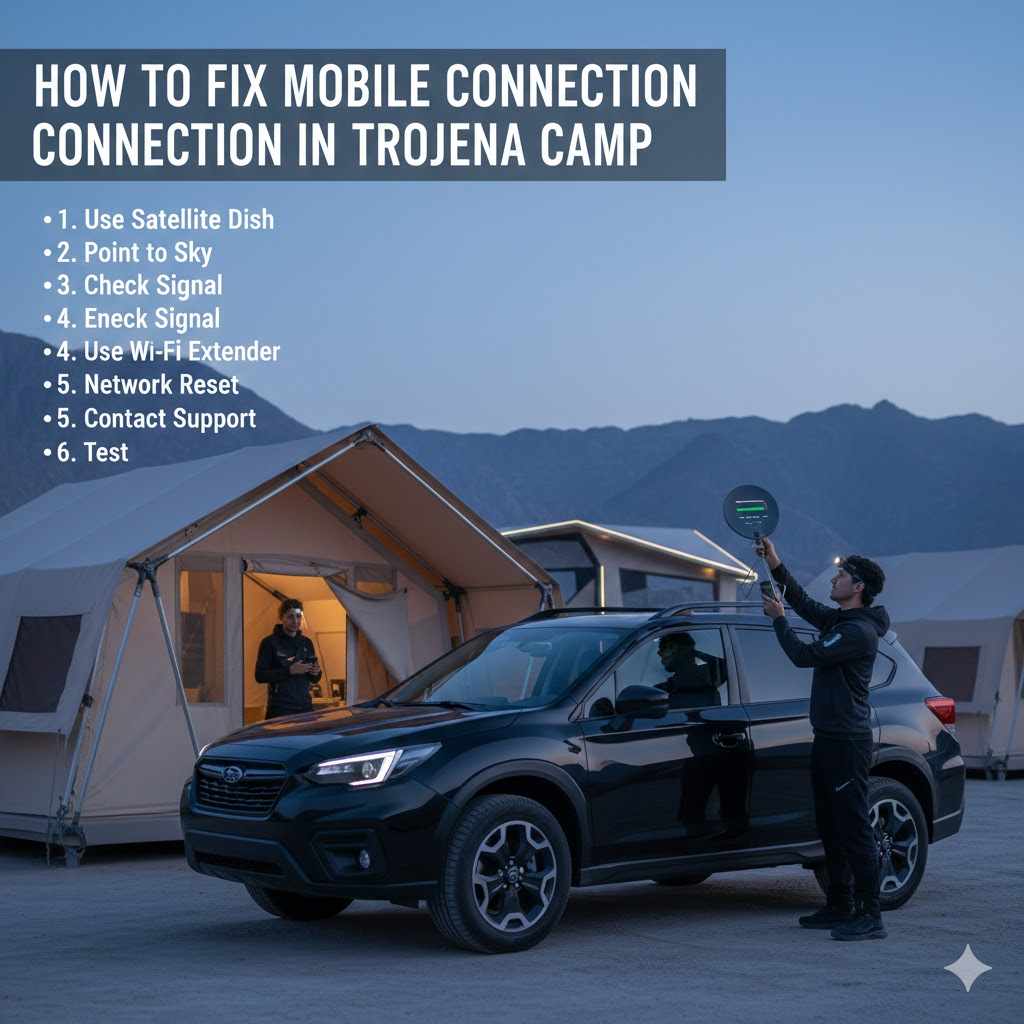
A mobile signal booster, also known as a cell signal amplifier, can pick up weak signals and rebroadcast them within a certain area. These devices are more complex and often require professional installation, but they can significantly improve reception inside a cabin or camp. - Satellite Communication Devices
For absolute connectivity in the most remote areas, satellite phones or communication devices are an option. These work by connecting to satellites in orbit, offering a connection virtually anywhere on Earth. They are typically used for emergencies or critical communication needs.
Understanding Network Coverage at Trojena
It is important to know what kind of mobile coverage to expect in the Trojena Pioneer Camp area. Understanding the local network infrastructure helps manage expectations and prepare for potential connectivity challenges. This section provides insights into how coverage works in such locations.
Factors Affecting Rural Coverage
Rural areas often have fewer cell towers compared to urban centers. This means that signals have to travel further, and there might be fewer redundant connections. The terrain can also play a significant role, with mountains and dense vegetation creating natural barriers.
- Tower Density
The number of cell towers in an area directly impacts signal strength and reliability. In remote locations like the Trojena Pioneer Camp, tower density is typically lower. This means you might have to travel further to find a strong signal or experience intermittent service. Statistics show that rural areas often have 50% fewer cell sites per capita than urban areas. - Terrain and Obstructions
Geographical features such as mountains, hills, and dense forests can block or weaken mobile signals. Radio waves have difficulty penetrating these obstacles. This is a common challenge in mountainous or heavily wooded regions, which is relevant for understanding how to fix mobile connection in Trojena Pioneer Camp. - Carrier Infrastructure
The specific mobile carrier you use also matters. Some carriers may have better coverage in certain rural areas than others, depending on their investment in infrastructure. It’s wise to check your carrier’s coverage map before heading to a remote location.
Best Practices for Maintaining Connection
Staying connected in a pioneer camp requires proactive measures. It’s not just about fixing a problem when it arises but also about setting yourself up for success. This part offers practical advice for keeping your phone operational.
- Stay Updated on Network Availability
Before your trip, check your mobile carrier’s website for their coverage map of the Trojena area. This can give you an idea of expected signal strength and potential dead zones. You can often find information about which towers are in operation or planned for the region. - Conserve Battery Power
A dying phone battery is useless, especially if you need to make an emergency call. Keep your phone charged whenever possible. Utilize battery-saving modes and reduce screen brightness. Consider bringing a portable power bank, which is essential for extended stays in remote areas. - Communicate Your Plans
Let someone know your itinerary and expected return time. If you are going to be out of signal range for an extended period, ensure they know how to reach you through other means if necessary. This safety measure is critical when mobile connection is unreliable.
Mobile Connection Issues and Solutions
This section addresses specific problems you might encounter and provides targeted solutions. Understanding these common issues will help you troubleshoot more effectively. We will break down various scenarios and offer practical advice.
No Service or “Searching”
This is a common issue where your phone cannot connect to any network. It will typically display “No Service” or keep searching for a network.
- Check SIM Card
Ensure your SIM card is properly inserted and not damaged. Remove it, check for any debris, and reinsert it securely. Sometimes a loose SIM card can cause this problem. - Network Search
In your phone settings, manually search for available networks. Your phone should list available carriers. Select your carrier from the list. If your carrier isn’t listed, it might mean there’s no coverage from them in that specific spot. - Carrier Outage Check
In rare cases, there might be a temporary outage with your mobile carrier’s network in the area. While difficult to check without service, if you can get a brief signal or access Wi-Fi, you could check your carrier’s status page online.
Weak Signal Strength
A weak signal means you have service, but calls drop, or data is very slow. This is often due to distance from the tower or obstructions.
- Signal Booster App
There are apps that claim to boost your signal, though their effectiveness varies greatly. Some might help by optimizing your phone’s network connection. Be cautious of apps that require payment or promise unrealistic results. - Antenna Orientation (for some devices)
If you are using a satellite phone or a specialized mobile device with an external antenna, ensure the antenna is pointed correctly towards the sky or the direction of the nearest tower if known. - Offload Data Usage
If your data is slow, try to perform data-intensive tasks when you have a stronger signal or are connected to Wi-Fi. This includes downloading large files or streaming video.
Intermittent Connection Drops
Your phone might connect and disconnect frequently, making it hard to have a stable call or data session.
- Disable Wi-Fi Calling
If you have Wi-Fi calling enabled and are in an area with a very unstable Wi-Fi connection, your phone might try to switch between cellular and Wi-Fi, causing drops. Try disabling Wi-Fi calling in your phone’s settings to see if it helps. - Background App Refresh
Some apps might be constantly trying to refresh in the background, consuming your limited signal. Temporarily disable background app refresh for non-essential apps to reduce this drain. - Firmware Updates
Ensure your phone’s operating system and carrier firmware are up to date. Manufacturers and carriers release updates that can improve network performance and bug fixes.
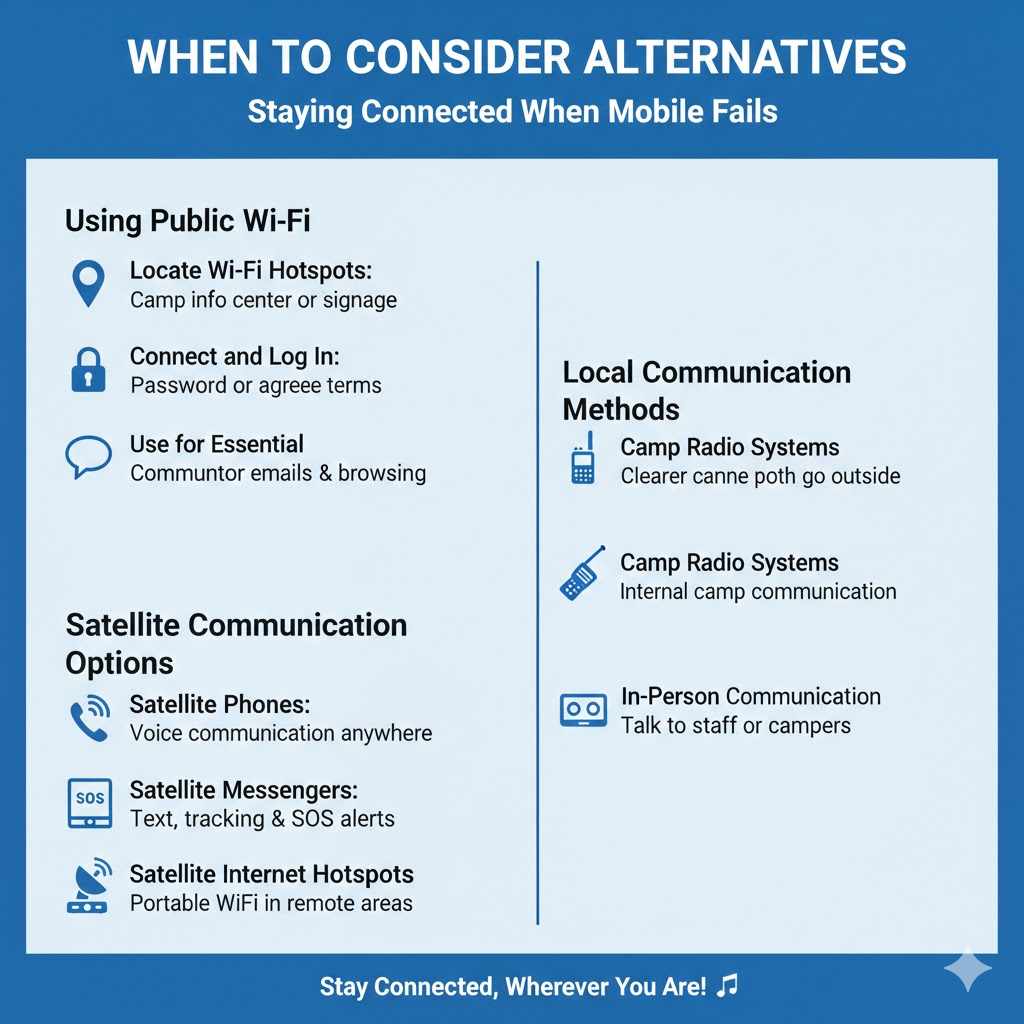
When to Consider Alternatives
If you’ve tried everything and still can’t get a reliable mobile connection, it might be time to think about alternatives. These options ensure you can still communicate or access information when your mobile service is unavailable. This part guides you on what to do when mobile connectivity fails.
Using Public Wi-Fi
If the Trojena Pioneer Camp has a communal area with Wi-Fi, this can be a lifesaver. Many camps provide internet access for guests.
- Locate Wi-Fi Hotspots
Inquire at the camp’s information center or check signage for the location of Wi-Fi hotspots. These are usually in common areas like dining halls or reception. - Connect and Log In
Once you find a Wi-Fi network, select it on your device and follow the prompts to log in. You might need a password or agree to terms of service. - Use for Essential Communication
Wi-Fi can be used for making calls via apps like WhatsApp or Zoom, sending emails, and browsing the web. This provides a vital link to the outside world.
Satellite Communication Options
For critical communication needs or extended stays, satellite devices are a reliable option.
- Satellite Phones
These devices work independently of cellular networks, connecting directly to satellites. They offer voice communication in remote locations. Rental options are often available for short-term needs. - Satellite Messengers
Devices like Garmin inReach or SPOT allow you to send and receive text messages, track your location, and trigger SOS alerts via satellite. They are ideal for hikers, adventurers, and anyone needing reliable communication in areas with no cell service. - Satellite Internet Hotspots
Some services offer portable satellite internet devices that can create a Wi-Fi hotspot, providing internet access anywhere. These are typically more expensive and intended for situations where connectivity is paramount.
Local Communication Methods
In a pioneer camp setting, traditional communication methods might still be in use.
- Camp Radio Systems
If you are part of an organized group or expedition, they might have their own radio communication system for internal camp use. - In-Person Communication
Don’t underestimate the power of talking to people! Camp staff or fellow campers can often provide information or assistance if you need to contact someone.
Frequently Asked Questions
Question: What is the most common reason for no mobile signal in Trojena Pioneer Camp?
Answer: The most common reason is usually the distance from the nearest cell tower and the natural terrain acting as a barrier, which are typical challenges in remote, mountainous areas.
Question: Can I use a VPN to improve my mobile connection in Trojena?
Answer: A VPN (Virtual Private Network) encrypts your internet traffic but does not directly improve your cellular signal strength or connectivity to cell towers. It won’t help if you have no service.
Question: How can I check my carrier’s coverage in Trojena before I go?
Answer: Visit your mobile carrier’s official website and look for their coverage map. Enter the Trojena area or specific coordinates to see their predicted signal strength and availability.
Question: What should I do if my phone keeps searching for a network?
Answer: Try manually selecting your network operator in your phone’s settings, toggle airplane mode on and off, or restart your phone. If these don’t work, your carrier might have no coverage there.
Question: Are there any public Wi-Fi spots available at Trojena Pioneer Camp?
Answer: Availability of public Wi-Fi can vary. It’s best to inquire at the camp’s information center or reception upon arrival to get the most up-to-date information.
Summary
Fixing mobile connection issues in the Trojena Pioneer Camp involves simple checks and some advanced steps. You can often improve your signal by adjusting device settings, moving to a better location, or optimizing network preferences. If these fail, consider Wi-Fi or satellite options. Staying prepared and knowing your alternatives will ensure you remain connected when needed.