How To Fix Scratched Car Window: Proven Essential
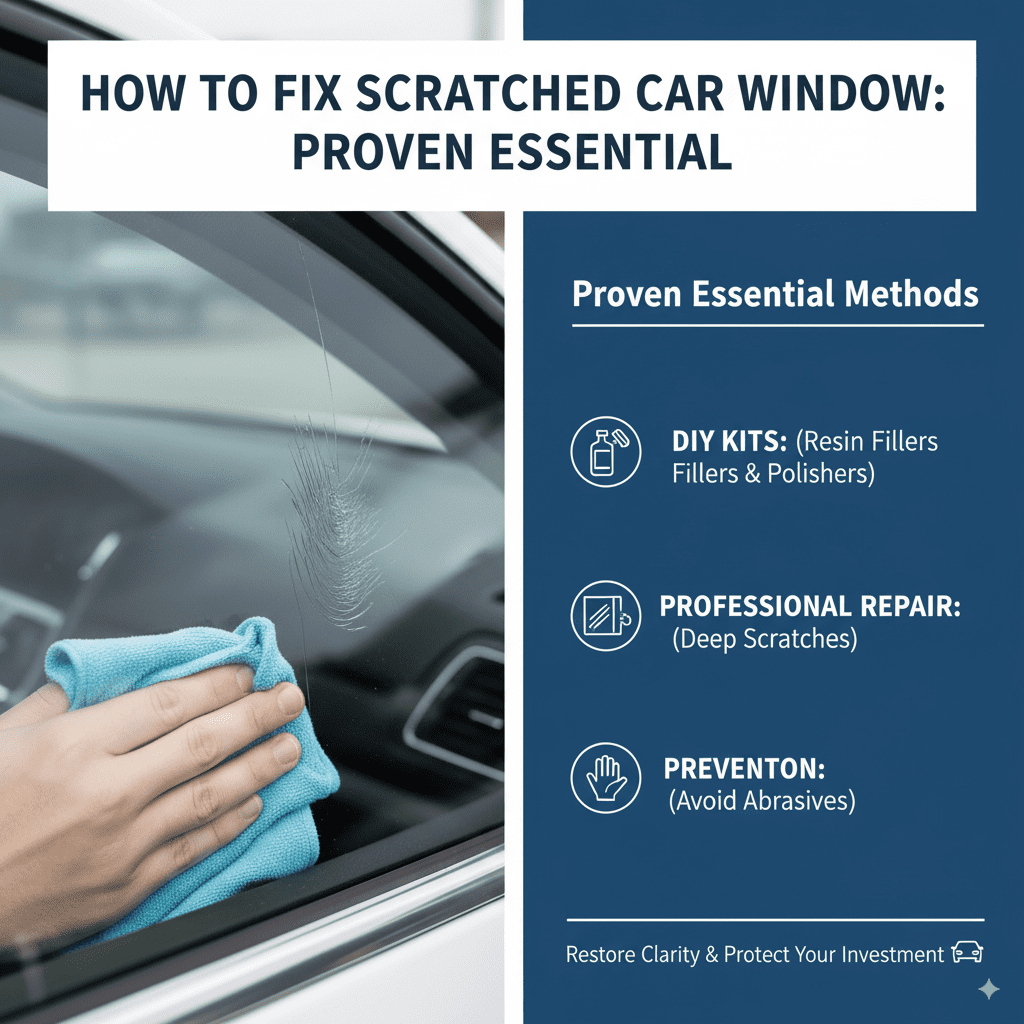
Fixing light scratches on your car window is achievable! With simple DIY methods and readily available products, you can restore clarity to your glass. This guide breaks down the best techniques, from using toothpaste to specialized glass repair kits, helping you tackle those annoying marks and save on professional costs.
It’s a common frustration: you notice a faint scratch on your car window. Perhaps it came from a rogue wiper blade, a carelessly placed piece of debris, or even a faulty car wash. These marks can be more than just an eyesore; they can distort your view and, over time, make you feel like your car isn’t quite as pristine as it once was. Don’t worry! Many window scratches can be fixed right at home, without needing a trip to an expensive auto glass shop. You might be surprised at how effective everyday items and simple techniques can be. This article will walk you through the proven methods for tackling those annoying scratches and getting your car’s windows looking clear again.
Understanding Car Window Scratches
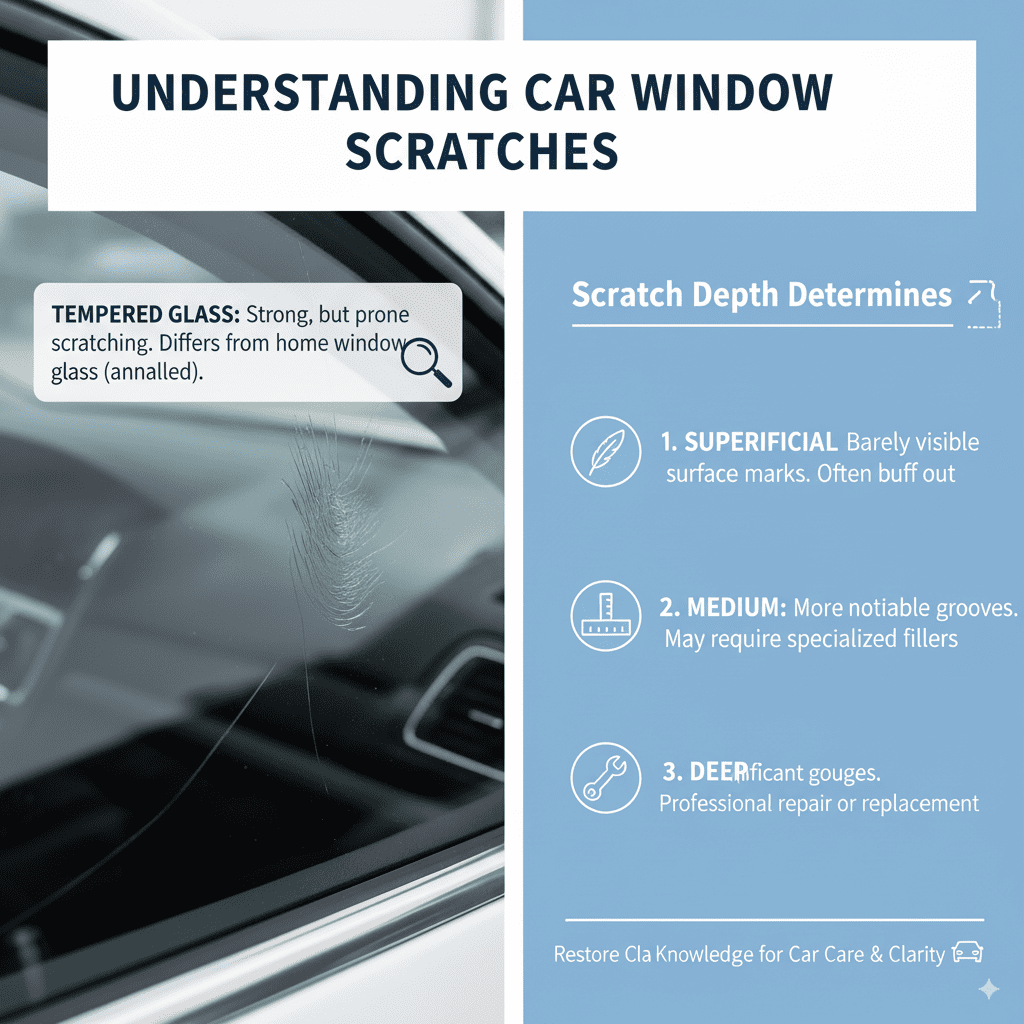
Before we grab our tools, let’s quickly understand what we’re dealing with. Car windows are typically made of tempered glass, designed to be strong but also to shatter into small, relatively harmless pieces if broken. This makes them different from your home’s window panes, which are usually made of annealed glass. Scratches on car windows can range from very light surface marks that are barely noticeable to deeper gouges that can compromise the glass. The depth of the scratch will determine the best repair method. Superfine scratches can often be buffed out, while deeper grooves might require more specialized approaches or, in some cases, professional intervention.
Assessing the Scratch: The First Crucial Step
The most important initial step is to accurately assess the scratch. This will guide your choice of repair method. A scratch that you can feel with your fingernail is likely too deep for most DIY solutions and might need professional attention. However, if your fingernail glides smoothly over the surface, there’s a good chance you can fix it yourself!
How to Test for Scratch Depth:
- Clean the window thoroughly with a glass cleaner.
- Dry the area completely with a lint-free cloth.
- Gently run your fingernail across the scratch.
- If your nail catches, it’s a deeper scratch.
- If your nail glides over it, it’s likely a superficial scratch that you can repair.
DIY Methods for Fixing Light Scratches
For those superficial scratches that don’t catch your fingernail, several effective DIY methods can restore clarity. These involve common household items or easily accessible products designed for glass polishing.
Method 1: The Toothpaste Trick
This is a classic DIY solution for minor glass imperfections. The mild abrasive nature of toothpaste can gently buff out very light scratches. It’s important to use non-gel, white toothpaste for this method, as colored or gel varieties can leave residue.
What You’ll Need:
- White, non-gel toothpaste (avoid whitening or gritty types)
- A clean, soft microfiber cloth or cotton ball
- Water
Steps:
- Clean the Window: Start by thoroughly cleaning the area around the scratch with glass cleaner and a soft cloth. Ensure the glass is dry and free of dirt or debris.
- Apply Toothpaste: Squeeze a small amount of toothpaste onto your clean cloth or cotton ball. Don’t use too much – a dab is sufficient.
- Buff the Scratch: Gently rub the toothpaste into the scratched area using small, circular motions. Apply light pressure. Continue for about 30 seconds to a minute.
- Wipe Clean: Dampen a separate clean cloth with water and wipe away the toothpaste residue.
- Inspect and Repeat: Inspect the window. If the scratch is less visible but still present, you can repeat the process a couple more times. Be patient; multiple light applications are better than aggressive scrubbing.
- Final Polish: Once you’re satisfied, clean and polish the entire window with a standard glass cleaner and a fresh microfiber cloth for a streak-free finish.
Method 2: Baking Soda Paste
Similar to toothpaste, baking soda is a mild abrasive that can help polish away light glass scratches. It’s another safe and affordable option for DIY repair.
What You’ll Need:
- Baking soda
- Water
- A clean, soft microfiber cloth or sponge
Steps:
- Prepare the Paste: In a small bowl, mix baking soda with water. Create a paste with a consistency similar to toothpaste – not too runny, not too dry. A good ratio is roughly 1 part water to 1 part baking soda.
- Clean the Window: As with the toothpaste method, ensure the window is clean and dry where the scratch is located.
- Apply the Paste: Apply a small amount of the baking soda paste to your clean cloth or sponge.
- Gentle Buffing: Gently rub the paste onto the scratch using circular motions. Apply light, consistent pressure for about 30 seconds.
- Rinse and Dry: Use a damp cloth to wipe away the paste. Ensure all residue is removed. Dry the area with a clean, lint-free cloth.
- Assess and Repeat: Check the scratch. If needed, repeat the application and buffing process.
- Final Clean: Finish by cleaning the entire window with glass cleaner for clarity.
Method 3: Clear Nail Polish (for very tiny nicks)
This method is best for extremely fine hairline scratches or tiny chips that might be prone to getting worse. It acts more as a sealant to prevent the scratch from expanding rather than a true polish.
What You’ll Need:
- Clear nail polish
- Rubbing alcohol (or glass cleaner)
- A very fine-grit sandpaper (e.g., 2000-grit, optional for smoothing)
- A clean, soft cloth
Steps:
- Clean the Area: Thoroughly clean the window and the scratch with glass cleaner or rubbing alcohol. Dry it completely.
- Apply Nail Polish: Carefully apply a thin layer of clear nail polish directly into the scratch. Be precise to avoid getting it on the surrounding glass.
- Let it Dry: Allow the nail polish to dry completely. This may take 15-30 minutes.
- Smooth (Optional but Recommended): Once dry, you can very gently use a piece of 2000-grit or higher sandpaper (wet it first!) to lightly buff over the dried nail polish. This helps to level it with the glass surface. Alternatively, you can gently buff with a microfiber cloth. Be extremely careful not to scratch the surrounding glass.
- Clean and Polish: Clean the entire window with glass cleaner and polish to achieve a clear finish.
Specialized Glass Polishing Kits
For scratches that are a bit more stubborn, or if you prefer a dedicated product, glass polishing kits are an excellent option. These kits typically contain a cerium oxide compound, which is a professional-grade polishing agent for glass.
Cerium oxide is a fine powder that, when mixed with water and applied with friction, works to smooth and polish glass surfaces. It’s highly effective at removing light to moderate scratches, haze, and even swirl marks.
What You’ll Need:
- A glass polishing kit (containing cerium oxide powder and possibly applicator pads)
- Water
- A drill with variable speed settings (optional, but recommended for efficiency)
- A felt polishing pad or applicator pad
- A spray bottle
- Microfiber cloths
Steps:
- Read Kit Instructions: Always begin by carefully reading and following the specific instructions provided with your chosen glass polishing kit.
- Prepare the Area: Clean the scratched area thoroughly.
- Mix the Slurry: If your kit uses cerium oxide powder, mix it with water in a container to create a slurry. The consistency should be like thin pancake batter. You can also use a pre-mixed cerium oxide solution.
- Apply the Slurry: Apply the slurry to the scratched area or directly to your polishing pad.
-
Start Polishing:
- By Hand: If polishing by hand, use a felt pad or a soft cloth and rub the slurry into the scratch using firm, circular motions.
- With a Drill: If using a drill, attach the felt polishing pad. Set the drill to a low to medium speed (around
- Popular Mechanics offers great tips on using polishing tools effectively, which can be adapted for glass.
- Use moderate, consistent pressure. Avoid overheating the glass by not staying in one spot for too long. Move the pad continuously in a cross-hatch pattern (side-to-side, then up-and-down).
- Keep it Wet: Periodically spray the area with water to keep the slurry moist and prevent the pad from overheating the glass.
- Wipe and Inspect: Wipe away the slurry with a damp cloth and inspect your progress. You may need to repeat the polishing process multiple times for deeper scratches.
- Final Cleaning: Once the scratch is gone, thoroughly clean the window with glass cleaner and polish with a clean microfiber cloth to remove any residue and achieve a perfect finish.
When Standard DIY Methods Aren’t Enough
While toothpaste, baking soda, and polishing kits are great for superficial scratches, some damage is simply too severe for DIY fixes. If your fingernail catches deeply in the glass, or if the scratch is a significant crack or chip, it’s time to consider professional help.
Deep Scratches and Cracks:
- Professional Glass Repair: For deeper scratches or chips, professional auto glass repair services often use specialized resins and tools. They can inject a clear resin into the damaged area, which hardens and can make the scratch or chip nearly invisible and structurally sound.
- Window Replacement: In cases of extensive damage, such as long cracks or numerous deep scratches that compromise visibility or structural integrity, the only safe and effective solution is to replace the entire window.
Consulting with reputable auto glass professionals is the best course of action when DIY methods fall short. Organizations like the Auto Glass Repair Information offer resources to understand professional repair options.
Preventing Future Scratches
The best way to deal with scratches is to avoid them in the first place. Here are some tips to keep your car windows in pristine condition:
Your Window Care Checklist:
- Wiper Blade Maintenance: Regularly inspect your wiper blades for wear and tear. Replace them every 6-12 months or when they start to streak, chatter, or leave debris. Avoid using them to scrape ice or snow forcefully.
- Careful Car Washing: When washing your car, rinse off loose dirt and debris before scrubbing the windows. Use a clean wash mitt and plenty of soapy water. Avoid automatic car washes with abrasive brushes.
- Environment Awareness: Be mindful of your surroundings. Park away from trees that shed leaves or debris, and avoid parking under structures where materials might fall onto your car.
- Sticker Removal: When removing stickers or decals, use a plastic scraper or a dedicated adhesive remover, and work gently to avoid scratching the glass.
- Keep the Interior Clean: Dust and grit on the inside of the window can also cause scratches, especially when interacting with window tinting or during repeated cleaning.
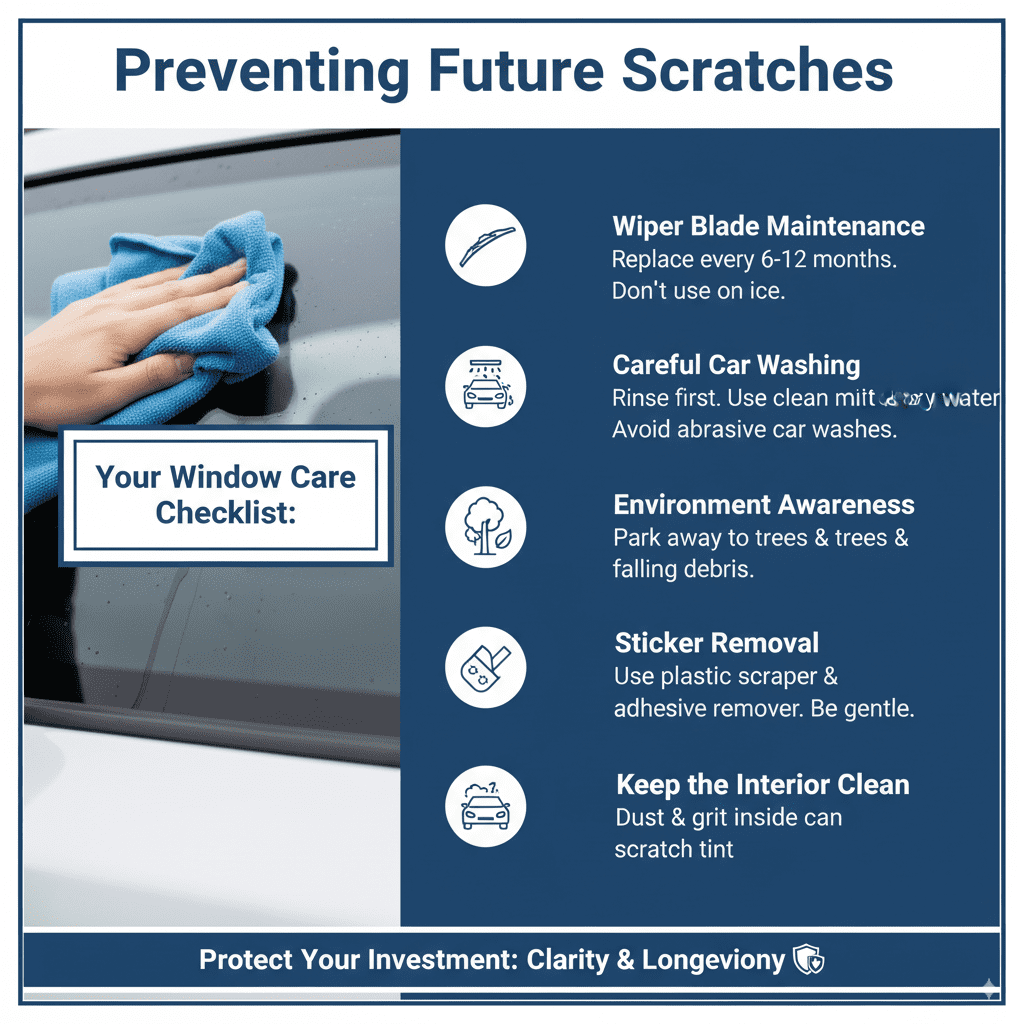
Table: Comparing Scratch Repair Methods
Here’s a quick comparison to help you choose the right method for your scratched car window:
| Method | Best For | Pros | Cons | Difficulty Level | Cost |
|---|---|---|---|---|---|
| Toothpaste | Very light surface scratches | Cheap, readily available ingredients, easy to try | Limited effectiveness on deeper scratches, can be messy | Easy | $ |
| Baking Soda Paste | Light surface scratches | Inexpensive, effective mild abrasive, simple to make | Similar limitations to toothpaste, requires careful mixing | Easy | $ |
| Clear Nail Polish | Extremely fine hairline scratches, tiny nicks | Seals minor imperfections, inexpensive | Does not truly repair, can be tricky to apply cleanly, limited durability | Medium | $ |
| Glass Polishing Kit (Cerium Oxide) | Light to moderate scratches, hazy glass | Professional-grade results, effective for a wider range of scratches | Requires specific tools (e.g., drill, pads), more effort, can overheat glass if misused | Medium-Hard | $$ |
| Professional Repair/Replacement | Deep scratches, cracks, chips, severe damage | Effective for all levels of damage, restores structural integrity | Most expensive option, requires scheduling an appointment | Professional | $$$ |
Frequently Asked Questions (FAQ)
Q1: Can I really fix scratched car windows with toothpaste?
Yes, for very light, superficial scratches, toothpaste can work. Its mild abrasive qualities help to gently buff out marks that don’t catch your fingernail. Don’t expect miracles on deep scratches, though!
Q2: How do I know if a scratch is too deep for DIY repair?
The best test is your fingernail. If your fingernail glides smoothly over the scratch, it’s likely shallow enough for DIY methods. If your fingernail catches or snags on the scratch, it’s probably too deep and might require professional attention.
Q3: Will these methods damage my window tint?
These methods should generally be safe for the exterior of your car windows. However, if you attempt to use them on tinted windows, be extremely cautious. The abrasives could potentially scratch or damage the tint film. It’s best to avoid these DIY methods on tinted windows and consult a professional if they are scratched.Glassparency provides insights into tint caution.
Q4: How long does a DIY scratch repair last?
For light scratches repaired with toothpaste or baking soda, the results can be long-lasting if the underlying cause is removed. However, if the glass is prone to new scratches (e.g., old wiper blades), new marks can appear. Professional repairs using resin are generally more durable.
Q5: What’s the difference between a DIY scratch repair and a professional one?
DIY methods like toothpaste and baking soda are best for buffing out minor surface imperfections, essentially making them less visible. Professional repairs, especially those involving resin for chips and cracks, actually fill and bond the damaged area, restoring its structural integrity and appearance more permanently.
Q6: How do I choose the right glass polishing compound?
For car windows, cerium oxide-based compounds are the standard for glass polishing. When buying a kit, look for one specifically designed for automotive glass. Ensure it comes with appropriate applicator pads and clear instructions. For extremely fine scratches, a less aggressive polishing agent might be included, but cerium oxide is the most effective for noticeable but not deep scratches.
Q7: Can I use a glass polishing kit on my phone screen?
While some polishing compounds might seem similar, it’s generally not recommended to use automotive glass polishing kits on sensitive electronics like phone screens. These kits are designed for thicker, more robust automotive glass and could potentially damage the coatings or surface of a delicate screen. Stick to products specifically made for electronics repair.
Conclusion
Dealing with scratched car windows can feel daunting, but as you’ve seen, many common issues are well within your reach to fix yourself. By understanding the depth of the scratch and choosing the right method – whether it’s a simple toothpaste buff, a baking soda paste, or a more specialized polishing kit – you can restore clarity to your glass. Remember to always start with the least abrasive method and work your way up, and crucially, to assess the scratch’s depth before you begin. For deeper damage, don’t hesitate to seek professional help. With these proven techniques and a little patience, you can keep your car windows crystal clear and enhance your driving experience, saving money and gaining confidence in your DIY car care skills.