Green Wrap for Car: Best VViViD Colors, Costs and Legal Facts
For a green car wrap, a gloss or satin hunter green is often a safe pick if you want a clean OEM-style look; installed prices often run about $2,500 to $5,000, and in California a DMV color update may be needed when the wrap changes the vehicle’s dominant color. Skip the paperwork or cheap out on install, and you can end up with visible seams, premature peeling, and a registration record that no longer matches the car. This guide breaks down the best VViViD green finishes, what a professional wrap really costs, and how California color-change rules work.
Reviewed for installation accuracy by a vinyl wrap installer. The practical details below focus on the points that most often cause trouble in the field: edge lift on complex curves, contamination that shows through lighter greens, and paperwork mismatches when a wrap changes the vehicle’s main color.
Green wrap basics
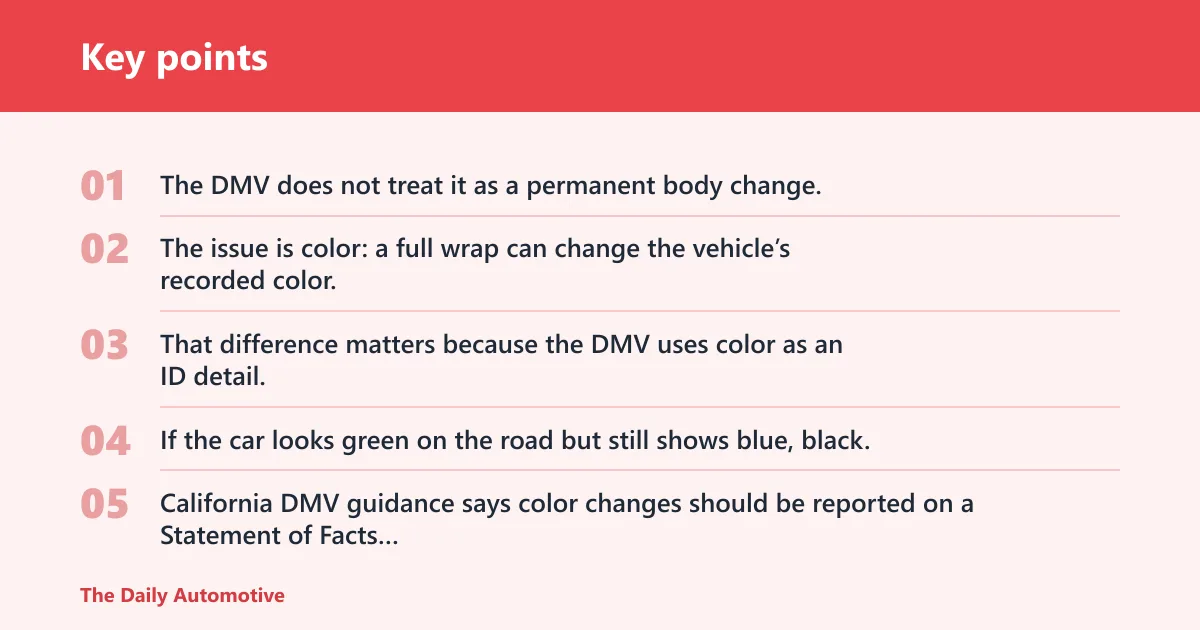


A vinyl wrap is legal. The DMV does not treat it as a permanent body change. The issue is color: a full wrap can change the vehicle’s recorded color, and a large partial wrap can do the same if green becomes the main color people see. Small decals and stripes are different.
That difference matters because the DMV uses color as an ID detail. If the car looks green on the road but still shows blue, black, or silver on the registration record, the vehicle can be harder to match during a stop, a sale, or a claim review. California DMV guidance says color changes should be reported on a Statement of Facts (REG 256), not REG 156, which is used for transfer/release of liability. California DMV color change guidance REG 256 Statement of Facts REG 156 Notice of Transfer and Release of Liability
What a vinyl wrap changes on a car
A wrap changes the exterior look, not the body panels underneath. That makes it a non-permanent change, but it can still change how the car is listed in state records. In California, the DMV says a color change should be reported when the vehicle’s color is changed, and the update is made with a Statement of Facts (REG 256).
Coverage matters as much as film choice. A hood, roof, and doors in green film may trigger a reportable change. A mirror cap, pinstripe, or logo strip usually does not.
Full wrap vs partial coverage
A full wrap covers most or all visible painted panels, so it is the clearest case for a reportable color change. A partial wrap sits in the middle. It can still count if the wrapped area is large enough that the car reads as green at a glance.
Small accents are the least likely to trigger DMV reporting. Thin stripes, a small hood graphic, a roof accent, or door logos that do not dominate the car’s appearance usually stay outside the line.
Why green finish choice matters
Green is not one look. Gloss finishes look closest to OEM paint. Satin cuts the shine and reads a little more modern. Matte removes reflection and makes surface defects, dust, and fingerprints stand out more. Metallic and color-shift greens pull more attention and fit a deliberate custom build better than a stock-looking sedan or truck.
That choice affects visibility, cleaning, and resale. A darker green can hide light grime better than a bright green. Satin can be easier to live with than matte if you want fewer handling marks. High-chroma greens can narrow the buyer pool later if the next owner wants a quieter look.
Which VViViD green finish fits?
For a straightforward factory-style result, VViViD’s gloss and satin greens are usually the safest starting points. If you want a paint-like look, a gloss line such as VViViD+ Gloss Hunter Green is the better fit. If you want a deeper, less reflective finish, a satin line such as VViViD XPO Satin British Racing Green is better for daily-driven cars because it softens reflections without going fully matte. The most dramatic look is usually in the specialty lines, where metallic or color-shift greens show more edge detail and more install imperfections.
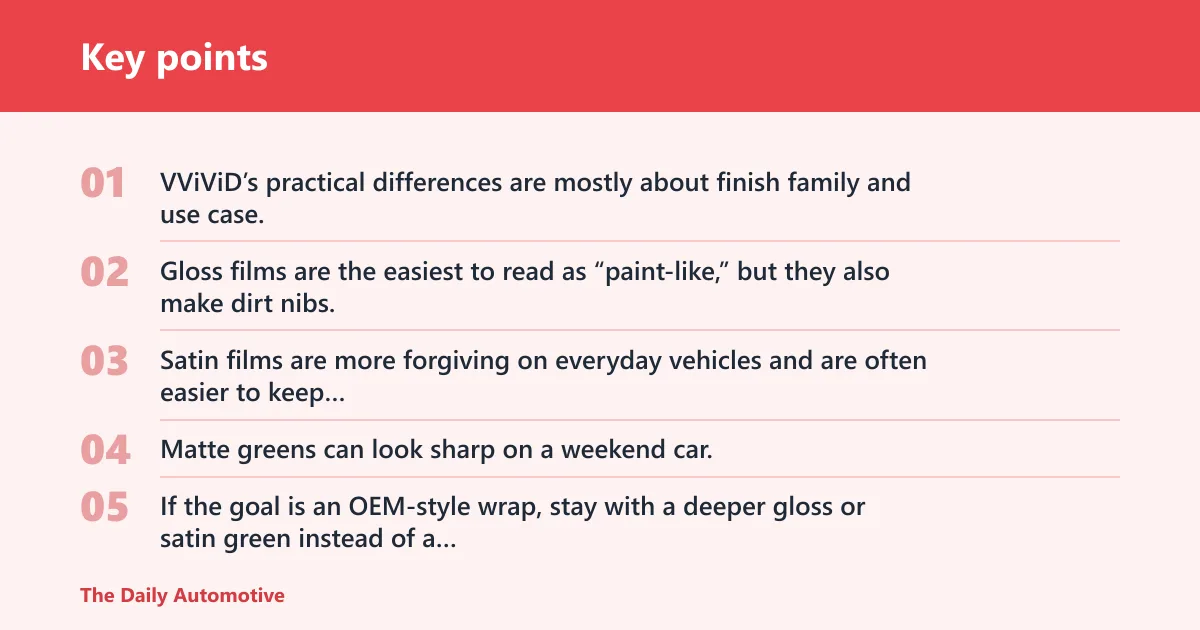
VViViD’s practical differences are mostly about finish family and use case. Gloss films are the easiest to read as “paint-like,” but they also make dirt nibs, stretch marks, and edge imperfections more obvious. Satin films are more forgiving on everyday vehicles and are often easier to keep visually consistent across large panels. Matte greens can look sharp on a weekend car, but they are less friendly to careless washing because scuffs and pressure marks can linger. If the goal is an OEM-style wrap, stay with a deeper gloss or satin green instead of a specialty effect film.
Gloss, satin, and matte differences
Gloss throws light back most strongly and tends to look closest to a paint booth finish when installed well. Satin splits the difference. Matte cuts reflections and can make a car look more aggressive, but it also makes cleaning habits matter more because dirt and abrasion show sooner.
For most daily drivers, satin is the cleanest compromise. It hides minor surface variation better than gloss while avoiding the heavy maintenance reputation of matte. If you want a more original look, gloss is the safer bet.
When metallic or color-shift greens make sense
Metallic or color-shift green films make sense when the wrap is part of the design, such as on a coupe, coupe-like crossover, or weekend car with black trim and tinted glass. They are less forgiving on cars with lots of body lines, because the finish throws those edges into sharper relief.
Say your sedan is already blacked-out with dark wheels. A satin or metallic green can work well because the trim contrast supports the look. On a silver minivan, the same finish can feel louder than intended and may age faster in your eyes.
How to compare shade, visibility, and care
Check the green in daylight, shade, and under streetlights. A wrap that looks balanced in a showroom may look brighter outdoors. Also think about maintenance: matte and satin usually need gentler wash habits than gloss, and very dark greens can show dust sooner than medium tones.
Do not compare the film by color name alone. Compare it by how it reads from 10 feet away, because that is how other drivers, police, and DMV staff will see it first.
What does a green wrap cost?
The installed cost of a green wrap usually runs about $2,500 to $5,000, with the final number driven by vehicle size, coverage, prep, finish, and labor. A simpler partial wrap costs less. A full wrap in a premium finish costs more, especially if the installer has to correct paint defects or remove trim.
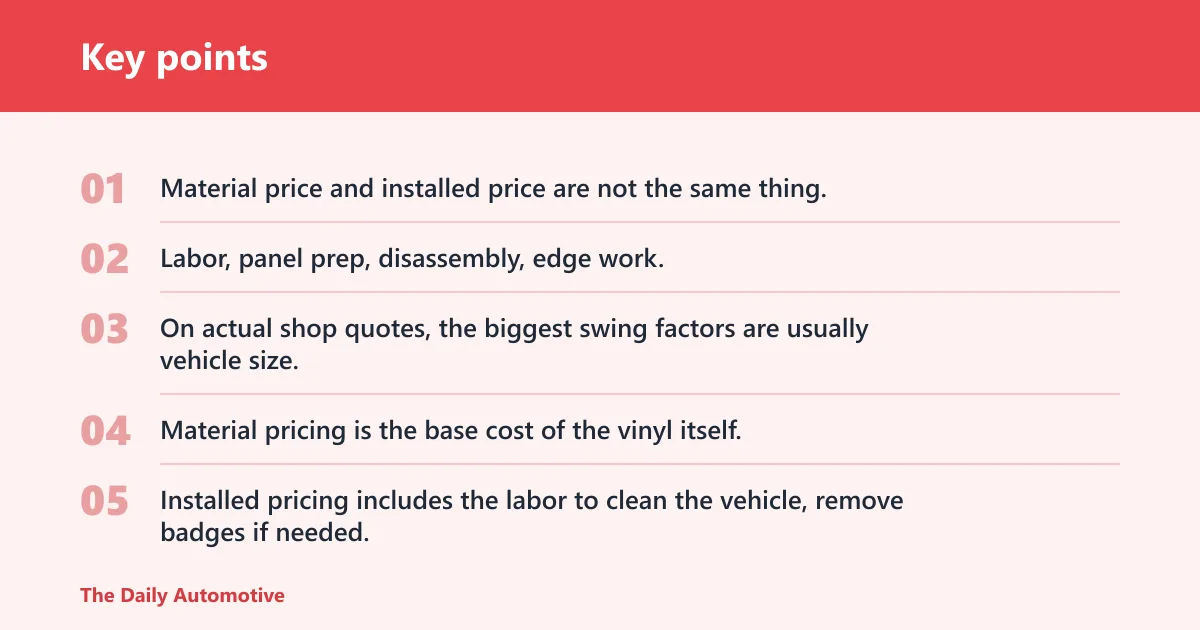
Material price and installed price are not the same thing. Film alone is only part of the bill. Labor, panel prep, disassembly, edge work, and waste from cutting around tight curves all add cost. On actual shop quotes, the biggest swing factors are usually vehicle size, how much trim has to come off, how many badges need removal and reinstallation, and whether the paint needs correction before film goes down.
Material price vs installed price
Material pricing is the base cost of the vinyl itself. Installed pricing includes the labor to clean the vehicle, remove badges if needed, place the film, tuck edges, heat-form corners, and finish the seams. That is why two cars in the same green finish can land in different price bands.
A larger SUV or truck usually lands toward the upper end of the range because of surface area and labor time. A compact sedan with a simple body can stay nearer the lower end if the finish is common and the prep is straightforward.
How coverage area changes the bill
Full wrap pricing is often the highest because it covers the most panel area and usually takes the most labor. Partial wrap pricing depends on how much of the car is changed. A hood, roof, and mirrors in green film can be far less expensive than a full color change, but it can still cost more than simple graphics.
A common first-timer mistake is choosing a bright green wrap without budgeting for labor, removal, and any local inspection or documentation fees. A shop quote that looks cheap may not include trim removal, decontamination, or post-install correction. Those items matter because they affect both appearance and longevity.
Why prep and labor move the total
Prep is a big part of wrap quality. Paint chips, old adhesive, oxidation, and contamination all make the install harder. If the vehicle has complex curves or deep body creases, the installer may need more time to avoid lifting edges later.
Cheaper labor can also mean more visible seams or less careful edge finishing. That is where the low bid can become expensive later, because peeling corners and trapped debris often need rework.
Green wrap legal facts
Wrapping a car is legal, but paperwork rules vary by state. In California, the DMV says a color change should be reported when the wrap changes the vehicle’s color, and the proper form is the Statement of Facts, REG 256. The best practice is to file promptly after the vehicle’s color changes rather than waiting for renewal. California DMV guidance also supports keeping the registration record consistent with the vehicle’s current appearance. California DMV color change guidance REG 256 Statement of Facts
Insurance should also be told about the wrap. That helps avoid confusion if a claim is filed after the car changes color. Insurers commonly ask policyholders to report modifications and appearance changes, because the vehicle needs to be described accurately on the policy. GEICO vehicle modifications guidance
California color-change reporting rules
California requires reporting a color change to the DMV when a wrap changes the vehicle color. The update is not about the fact that the car was wrapped; it is about the color now shown on the vehicle. That distinction matters because a wrap can come off later while still changing the way the car is identified on paper.
REG 256 is the correct DMV form for a color change update. The DMV’s own guidance points to a Statement of Facts for color changes, not REG 156. The form can be submitted with the vehicle’s updated information and supporting details that identify the car.
When a partial wrap becomes reportable
A partial wrap can still count as a color change if it covers a substantial portion of the car. That means the judgment is visual, not just mathematical. A hood and roof in green film may be enough on some vehicles, especially if the side panels stay close in tone or the wrapped panels dominate the view.
Small decals or stripes may not require a DMV trip. But do not assume every partial wrap is exempt. If the green coverage becomes the main color people see, treat it like a reportable change.
Why registration and insurance records matter
The registration record should reflect the updated color because it supports identification. If the car looks green but the record says something else, a police stop, emissions visit, or resale transaction can take longer than it should.
Insurance records matter for the same reason. If a claim touches bodywork, theft, or vandalism, the carrier should already know the car’s current appearance. That reduces the chance of a documentation dispute after the loss. Insurers also tend to view unreported appearance changes as a paperwork problem if the loss details do not match the policy record.
Green wrap decision table
This table separates the wrap scope from the paperwork issue. Use it to decide whether the green film is likely to need a DMV update, what to tell your insurer, and what records to keep.
| Wrap scope | Likely DMV reporting need | Insurance note | What to keep |
|---|---|---|---|
| Full wrap | Usually yes if green becomes the vehicle’s visible color; report promptly in California using REG 256. | Tell the insurance company so the current color is on file. | REG 256, proof of ownership, wrap invoice, photos of the finished car. |
| Substantial partial wrap | Often yes if the green coverage is large enough to count as a color change. | Notify the insurer if the wrapped area meaningfully changes the car’s appearance. | REG 256 if filed, invoice, installer notes, before-and-after photos. |
| Small accents or stripes | Often no, provided the graphics do not dominate the car’s appearance. | Still worth mentioning if the policy asks about appearance changes. | Invoice, color samples, dated photos showing the limited coverage. |
| Logo decals | Usually no unless the decals are large enough to change the car’s visible color. | Keep the insurer informed if the graphics are significant or commercial. | Order confirmation, install receipt, photos, business-use records if applicable. |
Picture a coupe with a full satin green wrap. That car is likely to need a color update because the new finish dominates the body. Now picture a black sedan with two thin green rally stripes on the hood and trunk. That may stay outside reporting territory if the green does not become the car’s main look. If you are deciding between a full wrap and a partial wrap, this is the point where scope matters most because it affects both the final look and whether the car’s paperwork should change.
How to file the DMV update
Use REG 256 to update the vehicle information when the wrap changes the car’s color. California DMV guidance points to the Statement of Facts for a color change, and the filing should be made promptly after the vehicle’s appearance changes. Keep a copy for your records. REG 256 Statement of Facts California DMV color change guidance
Mail or in-person filing are both noted options. The key is to keep the paperwork aligned with the car’s current appearance and to update the record promptly after the wrap is complete.
Step-by-step filing checklist
- Confirm whether the wrap changes the vehicle’s dominant color.
- Fill out REG 256 with the updated vehicle information.
- Gather proof of ownership, such as registration or title.
- Attach photos or the shop invoice if you want a clear record of the change.
- File by mail or in person promptly after the color change if California reporting applies.
- Keep a copy of everything you submit.
Do not wait for a renewal notice if the color has already changed. The registration record should match the car now, not later.
What proof to keep with your paperwork
Keep the wrap invoice, the installer’s contact details, and photos that show the whole car from a few angles. Those records help if a clerk, insurer, or officer needs to understand why the color listed on the old paperwork no longer matches the vehicle.
If the wrap is partial, dated photos matter even more. They show how much of the car is actually green and help support the judgment call if the DMV question comes up later.
Frequently asked questions
Is a green car wrap legal?
Yes. Wrapping a car in green is legal. The main issue is whether the wrap changes the car’s recorded color. If it does, California expects the owner to update the DMV record, and the registration should match the car’s current appearance. California DMV color change guidance
Do I need to tell the DMV if I wrap my car a different color?
If the wrap changes the vehicle color, yes. California requires a color change to be reported, and the DMV points to REG 256 as the correct form. The filing should be made promptly after the change. REG 256 Statement of Facts California DMV color change guidance
How long do I have to report a wrap color change in California?
California DMV guidance says to report the color change promptly after the vehicle’s appearance changes. The important point is not to let the record fall behind the car. If the wrap changes the dominant color, file the update right away. California DMV color change guidance
Does a partial wrap count as a color change?
Sometimes. A partial wrap can still count if it covers a substantial portion of the car and changes how the vehicle is identified. Small decals or stripes may not require reporting, but larger coverage can push the car into reportable territory.
Should I tell my insurance company about a car wrap?
Yes. The article advises notifying the insurance company about the wrap. That helps avoid claim complications if the car is damaged, stolen, or inspected after the color change. It also keeps the policy record aligned with the vehicle’s current appearance. GEICO vehicle modifications guidance
What form do I use to update my car color with the DMV?
Use REG 256. California DMV guidance for color changes points to the Statement of Facts, not REG 156. It is the form used to update vehicle information when the color changes. REG 256 Statement of Facts REG 156 Notice of Transfer and Release of Liability
Will a wrap affect my registration or insurance claim?
It can if the records are out of date. The registration record should reflect the updated color, and the insurer should know about the wrap. If the paperwork still shows the old color, that mismatch can slow down identification and claim handling.
Can I be fined for not updating my vehicle color after a wrap?
Missing the color update can create a paperwork problem if the vehicle record no longer matches the car. The safer approach is to file the California color change update with REG 256 as soon as the wrap changes the vehicle’s dominant color, then keep the registration and insurance records current. California DMV color change guidance REG 256 Statement of Facts
Products related to this article
Sponsored / affiliate links. As an Amazon Associate I earn from qualifying purchases. I may earn additional commission from eligible campaigns.