
How to Get a Co Signer Off a Car Loan: The Genius, Easy Way
The easiest way to get a co-signer off a car loan is to refinance the loan in your name only. This creates a new loan that pays off the original one, legally removing the co-signer. Other options include selling the car to pay off the loan or asking your lender for a co-signer release clause.
Having a co-signer can be a huge help when you first get a car loan. They lend their good credit to help you get approved. But what happens when things change? Maybe your credit has improved, or maybe the person who co-signed is no longer in your life. Now, you’re wondering how to get them off the loan.
It can feel like a tricky situation, but don’t worry. You are not stuck. Thousands of people go through this every year, and there are clear, simple paths forward. In this guide, I’ll walk you through the easiest and most effective ways to remove a co-signer from your car loan, step by step. We’ll make it simple, clear, and stress-free.
First, Understand What a Co-Signer Really Is
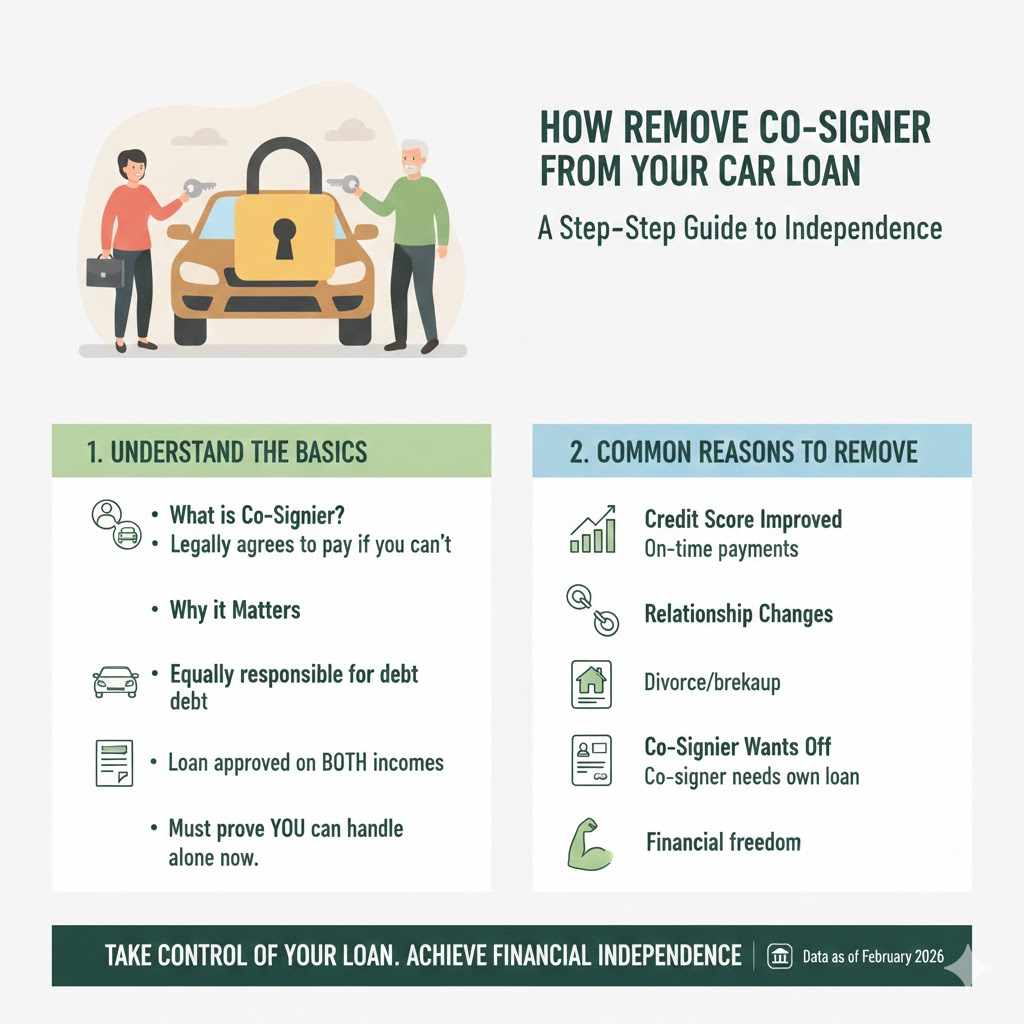
Before we dive into the “how,” let’s quickly cover the “what.” A co-signer is someone who legally agrees to pay back your car loan if you can’t. They are just as responsible for the debt as you are. To the bank, you and your co-signer are a team. This is why you can’t just call the lender and ask them to take the co-signer’s name off.
The loan was approved based on both of your financial situations. To remove one person, you have to prove that the remaining person (you!) can handle the loan all by yourself. The lender wants to be sure they will get their money back.
Common Reasons to Remove a Co-Signer
Life happens, and your reasons for needing a change are perfectly valid. Here are some of the most common scenarios:
- Your Credit Score Has Improved: You’ve been making payments on time and your credit is much stronger now. You no longer need the help and can qualify for a loan on your own.
- Relationship Changes: Often, a co-signer is a parent, spouse, or former partner. If a relationship ends, like in a divorce, it’s wise to separate your financial ties.
- The Co-Signer Wants Off: Your co-signer might be applying for their own major loan, like a mortgage. Having your car loan on their credit report could affect their chances of approval.
- You Want Full Independence: It’s a great feeling to be fully responsible for your own finances. Removing a co-signer is a big step toward financial independence.
The 3 Proven Ways to Get a Co-Signer Off a Car Loan
Okay, let’s get to the good part. There are three primary methods to remove a co-signer. We’ll start with the most common and effective one first.
| Method | How It Works | Best For |
|---|---|---|
| 1. Refinance the Loan | You get a brand-new loan in your name only to pay off the old, co-signed loan. | Most people whose credit has improved and can qualify on their own. |
| 2. Sell the Car | You sell the vehicle and use the money to pay off the entire loan balance. | People who no longer need or want the car, or can’t qualify for refinancing. |
| 3. Ask for a Co-Signer Release | You ask the original lender to officially remove the co-signer from the existing loan. | Rare cases where the loan contract specifically allows for it. |
Now, let’s break down each of these options so you know exactly what to do.
Method 1: Refinance the Loan (The Best and Most Common Way)
Refinancing is the gold standard for removing a co-signer. Think of it like this: you are replacing the old team loan with a new “just me” loan. The new loan pays off the old one completely, and the co-signer is officially free and clear. It’s the cleanest, most definitive way to do it.
Even better, if your credit has improved, you might get a lower interest rate with your new loan. That means you could save money every month!
Step-by-Step Guide to Refinancing Your Car Loan
Follow these simple steps to make the refinancing process smooth and easy.
Check Your Credit Score
This is the most important first step. Your ability to get a new loan by yourself depends almost entirely on your credit score and history. Lenders will want to see a history of on-time payments. You can get your credit report for free from all three major credit bureaus at AnnualCreditReport.com, a site authorized by federal law.
A score above 670 is generally considered good and gives you a strong chance of being approved. If your score is lower, you might still qualify, but your interest rate could be higher.
Gather Your Documents
Lenders will need some information from you to process your application. Having it ready will speed things up. You’ll typically need:
- Proof of income (pay stubs, tax returns)
- Proof of residence (utility bill, lease agreement)
- Your driver’s license
- Vehicle information (VIN, mileage, registration)
Your current loan statement with the payoff amount
Shop Around for the Best Rates
Don’t just go with the first lender you find! Different banks, credit unions, and online lenders offer different rates. Shopping around can save you hundreds or even thousands of dollars over the life of the loan.
Get pre-approval from at least three different lenders. Pre-approvals are usually “soft” credit inquiries that won’t hurt your credit score. This allows you to see the exact rates and terms you qualify for.
Choose Your Best Offer and Apply
Once you have a few offers, compare them. Look at the interest rate (APR), the loan term (how many months), and the monthly payment. Choose the one that works best for your budget.
Complete the official application. The lender will run a “hard” credit check at this stage. Once approved, they will send you the loan documents to sign.
Pay Off the Old Loan
Your new lender will handle this part for you. They will send the funds directly to your old lender to pay off the original loan. Once that loan is paid in full, it will be closed. Your co-signer is now officially off the hook!
You’ll start making payments to your new lender. It’s that simple.
Method 2: Sell the Car and Pay Off the Loan
Sometimes, refinancing isn’t an option. Maybe your credit isn’t quite strong enough yet, or perhaps you just don’t need the car anymore. In this case, selling the vehicle is a straightforward way to close the loan and remove the co-signer.
The goal is to sell the car for enough money to cover the remaining loan balance. If you can sell it for more than you owe, you get to keep the extra cash!
Things to Know Before You Sell
- Find Your Payoff Amount: This is the total amount you need to pay the lender to close the loan. It includes the remaining balance plus any interest. Call your lender or check your online account to get this exact number.
- Determine Your Car’s Value: Use online tools like Kelley Blue Book (KBB) or Edmunds to get a good idea of what your car is worth. Be honest about its condition, mileage, and features.
- What if You Owe More Than It’s Worth? This is called being “upside down” or having negative equity. For example, if you owe $15,000 but the car is only worth $13,000, you have $2,000 in negative equity. If you sell the car, you will need to pay that $2,000 out of your own pocket to close the loan.
How to Sell Your Car
- Prepare the Car: Clean it thoroughly inside and out. A clean car looks more valuable and sells faster. Get all your maintenance records together.
- List It for Sale: You can sell it privately through sites like Facebook Marketplace or Craigslist, or you can sell it to a dealership like CarMax or Carvana. Selling privately usually gets you more money, but selling to a dealer is faster and easier.
- Complete the Transaction: When you find a buyer, you’ll need to work with your lender to transfer the title. The buyer will pay the money, which goes directly to your lender to pay off the loan. Once the loan is paid, the lender will release the title to the new owner. Your co-signer is then free.
Method 3: Ask for a Co-Signer Release
A co-signer release is when your current lender agrees to remove the co-signer from your existing loan contract. This is the simplest option in theory, but it’s also the hardest to get.
Why is it so rare? Most auto loan contracts don’t include a co-signer release clause. Lenders prefer the security of having two people responsible for the loan. However, it never hurts to ask.
How to Request a Co-Signer Release
- Read Your Loan Agreement: Check your original loan paperwork carefully. Look for any mention of a “co-signer release” or similar terms. If it’s in there, it will spell out the conditions you need to meet.
- Contact Your Lender: If you can’t find it in the paperwork, call your lender’s customer service line. Ask them directly if they offer a co-signer release program.
- Meet the Requirements: If they do offer it, they will have strict requirements. Typically, you must have:
- Made a certain number of on-time payments consecutively (e.g., 12 or 24 months).
- An improved credit score that meets their standards for a sole applicant.
- A stable income sufficient to cover the payments alone.
- Submit the Paperwork: You will likely need to fill out an application and provide updated financial documents. The lender will review your case and decide whether to grant the release.
Be prepared for a “no.” This option is a long shot for most people, but it is worth a phone call just in case. The Consumer Financial Protection Bureau (CFPB) offers more details on the responsibilities of a co-signer and why lenders are often hesitant to release them.
What If You Can’t Get the Co-Signer Removed Right Now?
If you’ve tried these options and nothing has worked, don’t panic. It doesn’t mean you’re stuck forever. It just means you need a little more time.
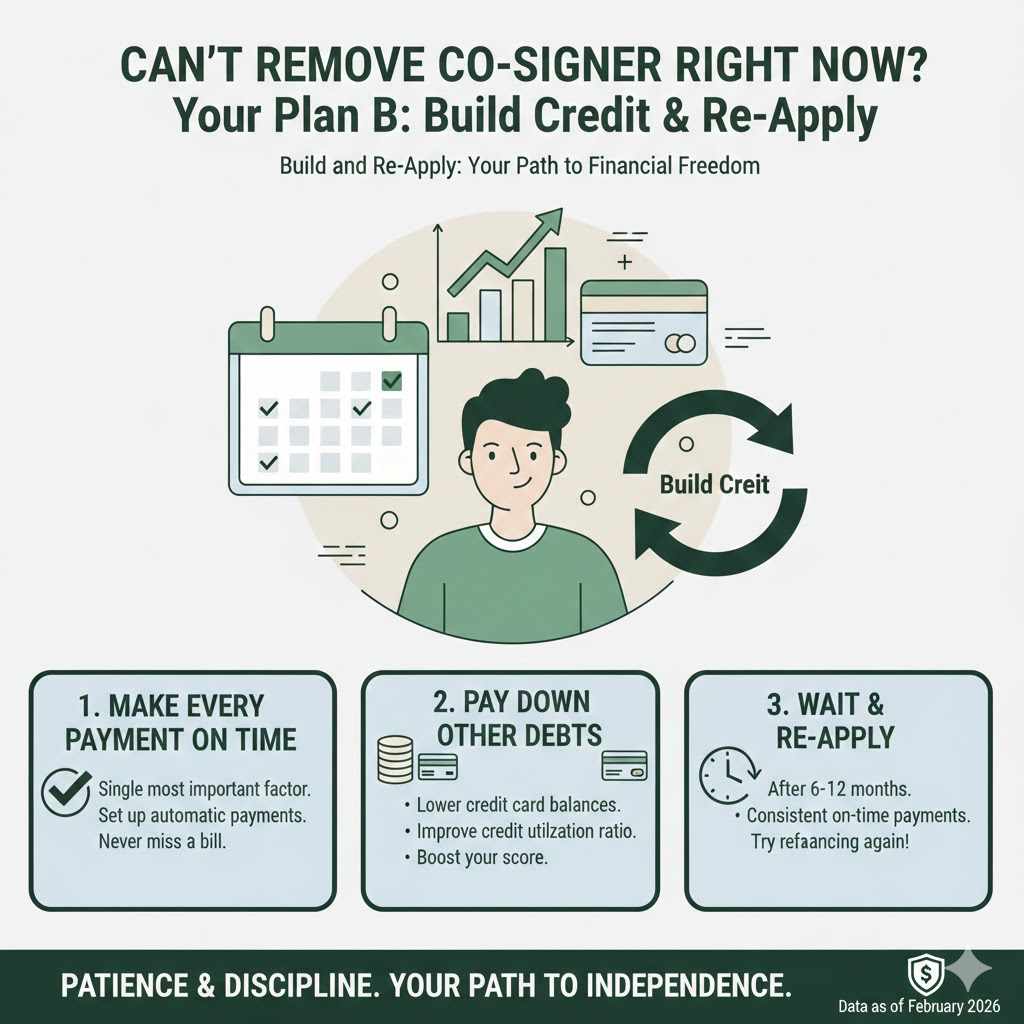
Your Plan B: Build and Re-Apply
If you were denied for refinancing because of your credit, your new goal is simple: improve your credit score. Here’s how:
- Make Every Payment on Time: This is the single most important factor for your credit score. Set up automatic payments for your car loan and all other bills so you never miss one.
- Pay Down Other Debts: If you have high credit card balances, work on paying them down. Lowering your credit utilization ratio can give your score a nice boost.
- Don’t Open New Credit Unnecessarily: Every time you apply for new credit, it can cause a small, temporary dip in your score. Avoid opening new accounts while you’re trying to build your score for refinancing.
- Wait and Try Again: After 6 to 12 months of consistent on-time payments and good financial habits, your score will likely be higher. At that point, you can try applying for refinancing again.
Frequently Asked Questions (FAQ)
1. Can I remove a co-signer without them knowing?
No, you cannot. Refinancing or selling the car are processes that will legally and officially remove them, and they will be notified when the original loan is paid off and closed. A co-signer release would also require their signature. It’s always best to communicate openly with your co-signer about your plans.
2. How long does it take to refinance a car loan?
The process can be quite fast. Once you submit your application and documents, you can be approved in as little as one day. The entire process, from shopping for rates to the old loan being paid off, typically takes one to two weeks.
3. Will removing a co-signer hurt my credit score?
The process itself shouldn’t hurt your score. When you apply for refinancing, there will be a hard inquiry, which might cause a small, temporary dip (usually less than five points). However, continuing to make on-time payments on your new loan will help your score grow over time.
4. What happens if the primary borrower stops paying?
If you are the co-signer and the primary borrower stops paying, you are legally responsible for making the payments. If you don’t, the lender can report the missed payments on both of your credit reports, which will damage both of your scores. This is why it’s so important to separate these financial ties when necessary.
5. Can I just take over the payments and not refinance?
You can continue making payments, but this does not remove the co-signer’s legal responsibility. They are still tied to the loan and their credit is still at risk if you miss a payment. The only way to legally get their name off the loan is through one of the methods we discussed: refinancing, selling the car, or a co-signer release.
6. What if my co-signer refuses to cooperate?
This can be a tough situation. For refinancing or a co-signer release, you don’t typically need their cooperation, as you are the one applying for the new loan. For selling the car, their name is on the title, so you will likely need their signature. If they refuse, you may need to consult with a legal professional to understand your options, especially in cases like a divorce.
7. Does it cost money to refinance a car loan?
Some lenders may charge small fees, such as a title transfer fee or a small loan origination fee. However, many lenders offer refinancing with no application fees. Be sure to ask about any potential costs when you are shopping for rates.
Your Path to Financial Freedom
Getting a co-signer off your car loan is a major step toward taking full control of your finances. It might seem like a big task, but when you break it down, it’s very manageable. For most people, refinancing is the genius, easy way to get it done. It’s a clear process that not only frees your co-signer but can also save you money.
Remember to be patient with yourself. Check your credit, gather your documents, and explore your options. You have the power to make this change. By taking these steps, you’re not just managing a loan—you’re building a stronger financial future for yourself. You can do this!