What Is the Fastest Muscle Car? 2026 Speed Rankings Explained
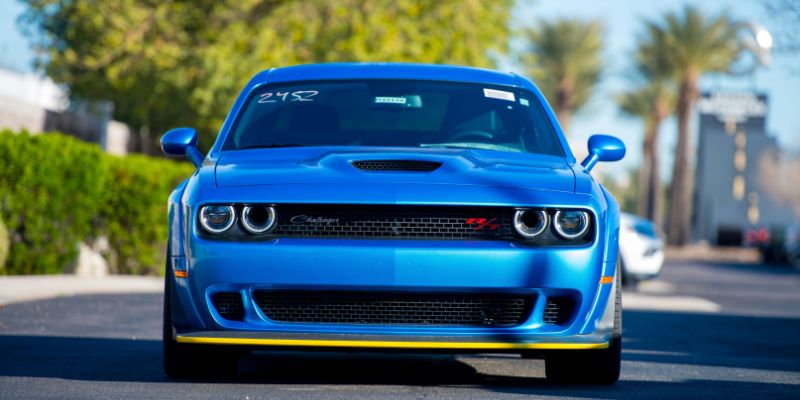
The fastest muscle car ever built is the 2023 Dodge Challenger SRT Demon 170. On E85 fuel it makes 1,025 horsepower, hits 60 mph in an NHRA-certified 1.66 seconds, and runs the quarter mile in 8.91 seconds at 151.17 mph – the first factory production car ever to break the 9-second barrier.
That number matters because it is not a tuner claim or a one-off prototype. It is a car Dodge sold with a VIN, a warranty, and (optional) passenger seats, built during a short production run before the brand retired its supercharged HEMI V8 muscle cars for good. Fewer than 3,300 were made, and Dodge has confirmed it will not build another Demon.
This guide breaks down what actually makes the Demon 170 the fastest muscle car, how it stacks up against the current 2026 Dodge Charger and Ford Mustang lineups now that V8 muscle cars are mostly gone, and what “fastest” even means once you account for 0-60 time, quarter-mile time, and top speed separately.
What Actually Counts as the Fastest Muscle Car
“Fastest” gets used loosely, but it means three different things in the muscle car world, and a single car rarely wins all three. 0-60 mph time measures raw launch acceleration. Quarter-mile time measures acceleration over a fixed distance and is the number drag racers actually care about, since it also factors in how well the car keeps pulling after the launch. Top speed measures how fast the car goes with room to keep accelerating, which almost no muscle car is built to do – American muscle cars are tuned for straight-line launches, not high-speed stability.
A muscle car, in the traditional sense, is a mid-size, rear-wheel-drive, two-door American coupe with an oversized V8 shoehorned into a relatively affordable body – think Dodge Challenger, Chevrolet Camaro, and Ford Mustang. That definition is getting stretched in 2026, since two of the three nameplates above no longer come with a V8 at all.
SCALE MODEL OF THE RECORD HOLDER
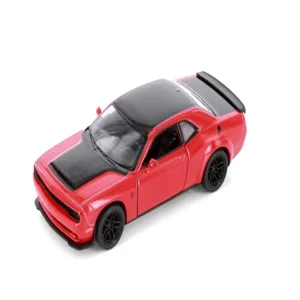 |
2023 Challenger SRT Demon 170 Diecast Model – $10.95 Since fewer than 3,300 real Demon 170s exist and Dodge is not building another one, this 1/40 scale replica of the car covered in this guide is the realistic way most people will ever own one.
|
The Fastest Muscle Car Ever Built: 2023 Dodge Challenger SRT Demon 170
The Demon 170 was Dodge’s send-off for the supercharged HEMI V8 Challenger, and it was built with one job: destroy the quarter mile. Its 6.2-liter supercharged HEMI makes 900 horsepower on 91-octane pump gas, but fill it with E85 ethanol and output jumps to 1,025 horsepower and 945 lb-ft of torque – more than 200 horsepower over the already-brutal Hellcat Redeye.
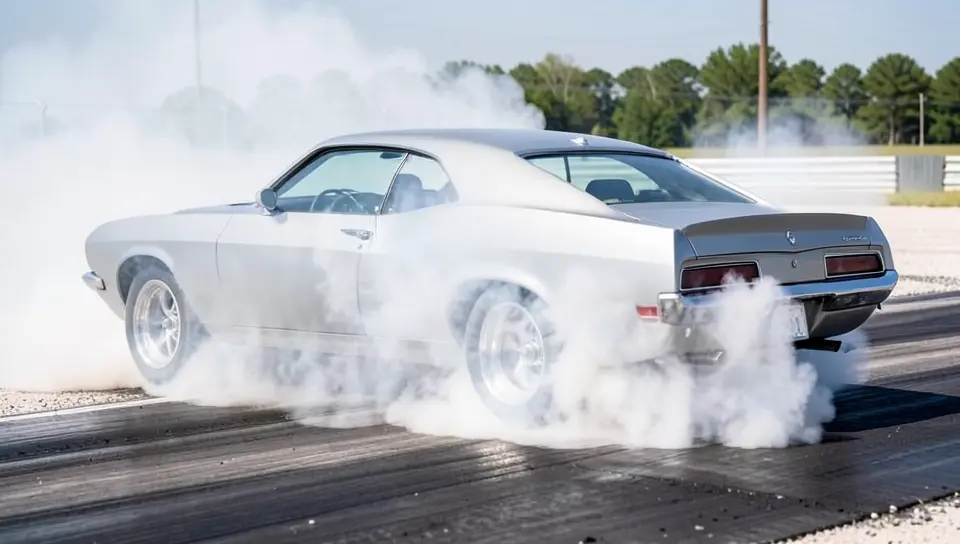
With drag radials mounted, the launch-control system dialed in, and the optional rear seat and passenger seat removed to save weight, an NHRA official timed the Demon 170 at 8.91 seconds through the quarter mile at 151.17 mph. That is the first time any factory production car has run a sub-9-second quarter mile. Dodge also had the car’s 0-60 time of 1.66 seconds and its 2.004 g of launch acceleration independently verified – both remain the quickest recorded figures for a production muscle car.
None of that comes cheap to run. On E85, expect roughly 8-10 mpg, and finding E85 pumps can be difficult outside the Midwest and parts of the South. The trade-off for owning the record holder is that it is not really built for daily driving – it is a street-legal dragster with a warranty.
How Muscle Cars Actually Make That Kind of Power
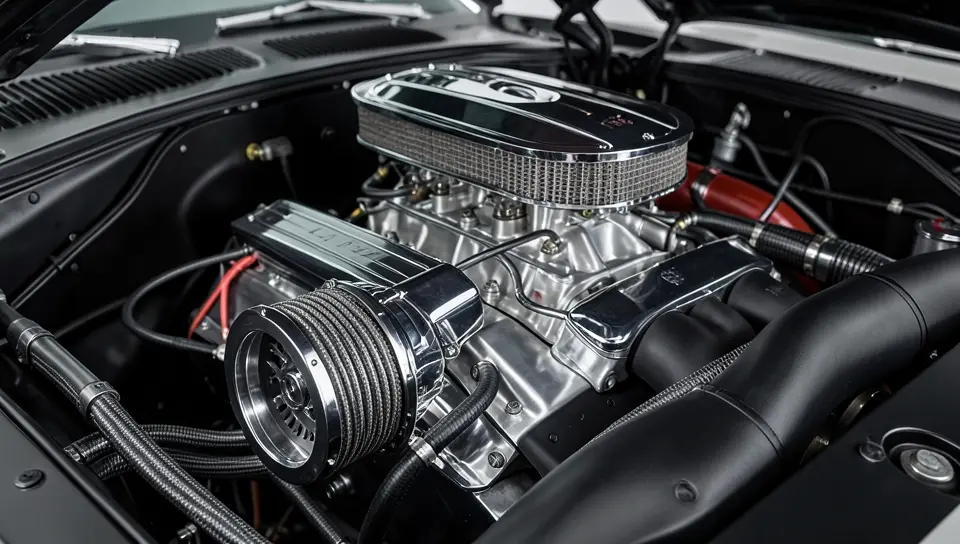
The Demon 170 and most other quick modern muscle cars rely on forced induction. A supercharger is a belt-driven compressor bolted directly to the engine that force-feeds it compressed air the instant the throttle opens, which is why supercharged cars build boost immediately at low RPM instead of waiting for exhaust flow to spool a turbo. A turbocharger instead uses spinning exhaust gas to drive a turbine, which is more fuel-efficient at highway speeds but has a slight lag before boost builds. The new-generation Dodge Charger uses a twin-turbo inline-six for exactly that efficiency reason, which is a real departure from the supercharged-V8 formula that defined the last 15 years of Dodge muscle.
Horsepower gets the headlines, but torque is what actually launches the car off the line. Torque is rotational force, and a muscle car needs a lot of it delivered low in the rev range to get 4,000+ pounds of steel and rubber moving instantly. That is also why electric muscle cars like the current Charger Daytona can match or beat a gas V8 off the line despite having less peak horsepower – electric motors deliver their full torque the instant current flows, with zero turbo lag or clutch engagement to wait through.
Why the V8 Muscle Car Era Just Ended
If you have shopped for a new muscle car recently, you already know the landscape changed fast. Chevrolet ended sixth-generation Camaro production in January 2024, and as of late 2026 GM has not confirmed a return date or greenlit a next-generation model – if the Camaro does come back, GM has indicated it is unlikely to be gas-powered. Dodge discontinued the supercharged V8 Challenger and Charger after the 2023 model year as part of its “Last Call” send-off, of which the Demon 170 was the final and most extreme edition.
That leaves the Ford Mustang as the only nameplate of the traditional big-three still selling a V8 muscle car new, in the GT and Dark Horse trims. Dodge replaced its V8 Challenger and Charger lineup with the current sixth-generation Charger, which comes as either a twin-turbo inline-six (“Sixpack”) or a fully electric Daytona. Whether you consider those two the true successors to the muscle car formula or a different kind of car entirely is a fair debate – but they are what is actually fast and in showrooms right now.
The Fastest Muscle Cars You Can Actually Buy in 2026
The Demon 170 is sold out and can only be found used, typically well above its original sticker price as a collector car. Here is how the record holder compares with the quickest muscle-adjacent cars still in production, based on manufacturer-published and independently tested figures.
| Model | 0-60 mph | Quarter Mile | Horsepower | Availability |
|---|---|---|---|---|
| 2023 Challenger SRT Demon 170 | 1.66 sec | 8.91 sec | 1,025 hp (E85) | Discontinued, collector-only |
| 2021-2023 Challenger SRT Super Stock | 3.25 sec | 10.5 sec | 807 hp | Discontinued |
| 2026 Ford Mustang GTD | ~3.3 sec | <10.5 sec (est.) | 815 hp | New, ultra-limited (~$325,000) |
| 2026 Charger Daytona Scat Pack (EV) | 3.3 sec | 11.5-11.6 sec | 670 hp (w/ PowerShot) | New, in production |
| 2026 Charger Scat Pack Sixpack (turbo I6) | 3.9 sec | 12.2 sec | 550 hp | New, in production |
Two things stand out in that table. First, nothing currently in production comes close to the Demon 170’s quarter-mile time – the newest Charger models are more than 2.5 seconds behind it. Second, the electric Charger Daytona Scat Pack’s 3.3-second 0-60 time is now essentially tied with the discontinued gas-powered Super Stock’s 3.25-second time, which says a lot about how fast EV torque delivery has closed the gap on traditional muscle car acceleration – even though the Super Stock still pulls ahead in the quarter mile.
Does the Ford Mustang GTD Count as a Muscle Car?
The 2025-2026 Ford Mustang GTD is the fastest Mustang ever built, with an 815-horsepower supercharged 5.2-liter V8, a carbon-fiber driveshaft, a rear-mounted transaxle for near 50/50 weight balance, and a 202 mph top speed. That top speed alone beats every muscle car on this list, gas or electric.
Whether it still counts as a “muscle car” is genuinely debatable. At roughly $325,000, hand-built in extremely limited numbers, and engineered with track-focused aerodynamics and suspension that have more in common with a Porsche 911 GT3 RS than a showroom Mustang GT, the GTD is better described as a factory supercar wearing a Mustang badge. It is faster than any traditional muscle car, but it is not built to the same affordable, mass-produced formula that defines the category.
Frequently Asked Questions
What Is the Fastest Muscle Car of All Time?
The 2023 Dodge Challenger SRT Demon 170 is the fastest muscle car ever built. It runs an NHRA-certified 1.66-second 0-60 mph time and an 8.91-second quarter mile at 151.17 mph on E85 fuel, making it the first factory production car to break the 9-second quarter-mile barrier.
Is the Demon 170 Faster Than the Original 2018 Dodge Demon?
Yes. The original 2018 Dodge Challenger SRT Demon made 840 horsepower on E85 and ran a 9.65-second quarter mile. The 2023 Demon 170 adds another 185 horsepower and cuts nearly three-quarters of a second off that time, dropping it to 8.91 seconds.
What Is the Fastest American Muscle Car You Can Buy New in 2026?
Among cars still in production, the 2026 Ford Mustang GTD is the quickest and fastest, with 815 horsepower, a 0-60 time around 3.3 seconds, and a 202 mph top speed – though at roughly $325,000 it is priced and built more like a supercar than a traditional muscle car. Among mainstream muscle cars, the electric 2026 Dodge Charger Daytona Scat Pack is the quickest off the line at 3.3 seconds to 60 mph.
Why Did Chevrolet Stop Making the Camaro?
GM ended sixth-generation Camaro production in January 2024, citing the aging platform and shifting demand. GM executives have said the Camaro name is not gone for good, but as of late 2026 the company has not confirmed a next-generation model or a return date, and any future Camaro is expected to be electric rather than gas-powered.
Is the Electric Dodge Charger Daytona Actually Faster Than the Old V8 Charger?
Off the line, it is close but not quite. The electric 2026 Charger Daytona Scat Pack hits 60 mph in 3.3 seconds, a hair behind the discontinued 807-horsepower Challenger SRT Super Stock’s 3.25-second time, and neither comes close to the Demon 170’s 1.66-second run. In the quarter mile the gap widens: the gas-powered Super Stock’s 10.5-second time is clearly quicker than the EV Daytona’s 11.5-second time, since the V8 keeps pulling harder in the second half of the run while the electric motors taper off.
What Does 0-60 Time Actually Measure Versus Quarter-Mile Time?
0-60 time measures only the first few seconds of acceleration from a standstill. Quarter-mile time measures acceleration over a fixed 1,320-foot distance and factors in how well a car keeps accelerating after that initial launch, which is why it is the number drag racers and manufacturers use to compare true straight-line performance.
Conclusion
The fastest muscle car, full stop, is the 2023 Dodge Challenger SRT Demon 170 – a 1,025-horsepower, 1.66-second, 8.91-second-quarter-mile factory drag car that will likely hold the title for years, since the platform it was built on no longer exists. If you want the fastest thing you can actually order new today, that title splits between the ultra-limited, supercar-priced Ford Mustang GTD and the electric Dodge Charger Daytona Scat Pack, depending on whether you still count a $325,000 track car as a muscle car at all.
Either way, the era of a supercharged HEMI V8 being the default answer to this question is over. Whatever replaces it next – twin-turbo six-cylinders, electric motors, or something else – will have to beat a car that already ran the quarter mile in under 9 seconds from the factory.
Products related to this article
Sponsored / affiliate links. As an Amazon Associate I earn from qualifying purchases. I may earn additional commission from eligible campaigns.