How to Get a Title for an Auction Car: Essential Guide
To get a title for an auction car, confirm the seller (auction house or individual) provides a clear title. If not, you might need a bonded title, bill of sale, or salvage title, depending on the car’s status and your state’s laws. Always verify the title’s legitimacy and understand your state’s DMV procedures.
Buying a car from an auction can feel like a treasure hunt! You might snag an amazing deal on a vehicle you’ve always wanted. But once the hammer falls, a big question pops up: How do you actually get the title? This is super important because a car without a title is like a beautiful painting without a frame – you can’t legally drive it or officially own it.
It’s a common concern, especially for first-time auction buyers, and honestly, it can be a bit daunting. But don’t worry! This guide is here to break down exactly what you need to do, step-by-step, so you can confidently drive away with your new ride and clear ownership. We’ll walk through everything from understanding different title types to navigating the paperwork at your local DMV.
Understanding Auction Car Titles: What You Need to Know
When you buy a car, especially from an auction, the title is the key piece of paper that proves you are the legal owner. It’s like a deed for your car. Without it, transferring ownership is impossible, and you can’t register the vehicle for the road. Auction houses usually handle this process, but it’s crucial to know what to expect, especially since not all auction cars come with a standard, clear title. Sometimes, vehicles might have a history that affects the type of title you receive, or the seller might not be fully equipped to provide one. Knowing the different types of titles and what they mean will save you a lot of headaches down the road.
Types of Car Titles You Might Encounter
Cars can have various types of titles based on their history. Understanding these is the first step to knowing what you’re getting into when you buy an auction car.
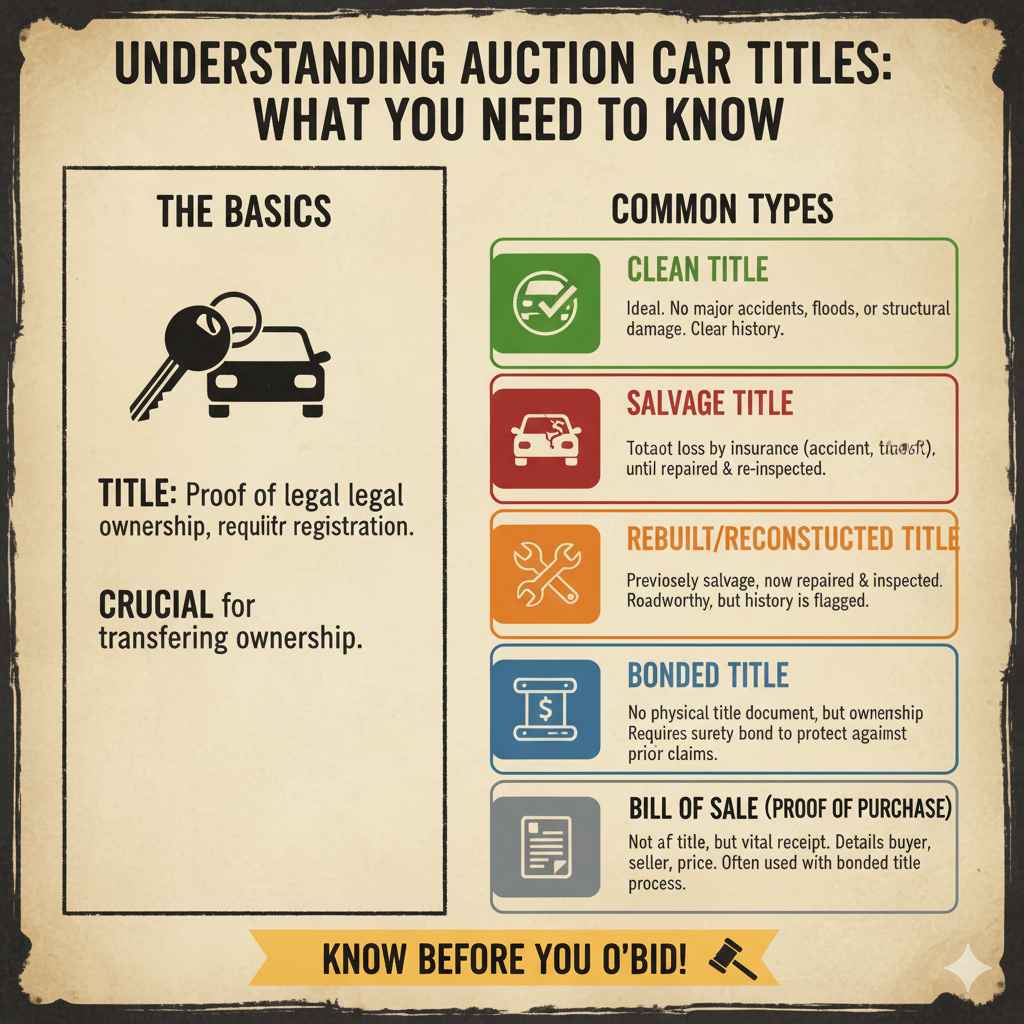
- Clean Title: This is the ideal title. It means the car hasn’t been declared a total loss by an insurance company (salvaged), nor has it been structurally damaged in a way that significantly affects its safety or value (rebuilt/reconstructed).
- Salvage Title: This means the car was declared a total loss by an insurance company due to an accident, flood, or other major damage. While you can still buy a salvage car, it cannot be legally driven on the road until it’s repaired and passes a special inspection, at which point it may receive a “rebuilt” or “reconstructed” title.
- Rebuilt/Reconstructed Title: This title is issued for a car that was previously salvaged but has since been repaired and passed a state inspection. It’s roadworthy, but its history is flagged on the title.
- Bonded Title: This is for when you can prove ownership but don’t have the physical title document. It often applies if a title was lost, stolen, or if the seller didn’t have one. You typically purchase a surety bond to protect against potential previous owners surfacing. This is more common when buying from private sellers or if the auction itself didn’t get the title from the previous owner.
- Certificate of Origin (New Vehicles): For brand new cars.
- Bill of Sale: While not a title, it’s a crucial document that shows proof of purchase. It’s often used alongside a title or when a bonded title process is initiated. It details the buyer, seller, vehicle information, and sale price.
Why Different Title Types Matter for Auction Cars
The title type dramatically affects the value, legality, and insurance options for your auction car. A clean title car is generally worth more and is easier to register and insure. Cars with salvage or rebuilt titles might be cheaper upfront, but they come with restrictions, repair costs, and potential insurance hurdles. A bonded title process can be complex and involves additional costs and time. Always know the title status before you bid!
How to Get the Title: Step-by-Step Process
Getting the title can vary slightly depending on where you bought the car and your state’s specific rules. Here’s a general walkthrough:
Step 1: Confirm Title Status at the Auction
Before you even place a bid, ask about the title. Reputable auction houses will be upfront. They will usually display the title status with the vehicle listing. If it’s a private seller at an auction, they should have the title in hand. If the seller (or auction house) claims they don’t have it or will “mail it later,” be extremely cautious. This can sometimes lead to issues with getting a legal title.
- Check the Listing: Most online and physical auctions will note the title status.
- Ask Directly: Don’t be shy! Ask the auctioneer or seller’s representative for details about the title.
- Review Auction Terms: Read the fine print. Some auctions specialize in vehicles with specific title issues or might require you to handle title transfer yourself.
Step 2: Obtain Necessary Paperwork
After winning the bid, you’ll need specific documents to complete the transfer. The exact paperwork depends on the title status and your state.
-
If the Seller Has a Clear Title:
- The existing title document, signed over to you by the seller.
- A Bill of Sale, detailing the transaction. This is essential in most states to prove the purchase price and that the transfer occurred.
-
If the Car Has a Salvage or Rebuilt Title:
- The salvage or rebuilt title document itself.
- Proof of repairs if it’s a salvage title being converted to a rebuilt title (receipts, inspection reports).
-
If There’s No Title (Bonded Title Scenario):
- A Bill of Sale.
- Possibly a lost title application form from your state’s DMV.
- You will likely need to apply for a bonded title, which involves getting a surety bond. The U.S. General Services Administration provides general guidance on vehicle titles.
Step 3: Complete the Title Transfer and Registration
This is where you head to your local Department of Motor Vehicles (DMV) or equivalent state agency.
- Gather Your Documents: Bring the signed title (or other proof of ownership), bill of sale, your driver’s license, proof of insurance, and any other required forms from your state’s DMV. Check your state’s DMV website for a comprehensive checklist. For example, the New York DMV outlines necessary documents for title transfers.
- Fill Out Applications: You’ll likely need to fill out an application for a new title and registration.
- Pay Fees: Be prepared to pay title transfer fees, registration fees, and sales tax based on the vehicle’s purchase price or value.
- Pass Inspections: Depending on your state and the car’s history (e.g., salvaged), you might need a safety inspection, emissions test, or a VIN inspection.
- Receive New Title: After processing, your state’s DMV will issue you a new title in your name. This can take anywhere from a few days to several weeks.
Step 4: Special Cases: Bonded and Salvage Titles
These require extra steps and attention.
Getting a Bonded Title
If you bought a car that should have a title but the seller doesn’t have it, or it’s lost, you might need a bonded title. This process essentially guarantees your ownership. It usually involves:
- Obtaining a Surety Bond: Contact an insurance agency that offers surety bonds. The bond amount is typically 1.5 to 2 times the vehicle’s estimated value.
- Applying to the DMV: Submit the surety bond, a bill of sale, proof of ownership attempts, and other required documents to your state’s DMV.
- Waiting Period: There’s often a waiting period during which the DMV advertises your intent to get a bonded title. This allows previous owners or lienholders to come forward.
- Receiving a Bonded Title: If no claims are made, the DMV will issue you a bonded title. This title will be marked as “bonded.”
- Converting to a Clear Title: After a specified period (often 3-5 years) of holding the bonded title without incident, you may be able to apply for a standard, clear title.
Buying and Registering a Salvage/Rebuilt Title Car
If you’re buying a car with a salvage title, understand that it’s not road-legal as-is.
- Purchase with Salvage Title: You’ll get a salvage title, which is a strong indicator of past damage.
- Repair the Vehicle: Get all necessary repairs done to make the car safe and functional. Keep detailed records and receipts.
- Get Inspected: Most states require the vehicle to undergo a thorough inspection by a state-certified facility to ensure repairs are adequate and safe.
- Apply for a Rebuilt Title: After passing inspection, you’ll apply for a rebuilt or reconstructed title.
- Register and Insure: With the rebuilt title, you can then register the car and seek insurance, though insurance premiums for rebuilt vehicles can sometimes be higher.
Key Documents and Where to Find Them
Having the right documents is crucial. Here’s a quick rundown:
| Document | Purpose | Typical Source | Why It’s Important for Auction Cars |
|---|---|---|---|
| Title Certificate | Official proof of ownership. | Previous Owner/Seller, Lienholder, DMV (if lost and replaced) | Absolutely essential. Varies by state (e.g., “Pink Slip” metaphor in some states). |
| Bill of Sale | Records the sale transaction details. | Seller, often downloadable templates | Proof of purchase price for taxes and ownership transfer; crucial if title is missing. |
| DMV Forms | Applications for title, registration, etc. | Your State’s DMV Website | State-specific procedures must be followed. |
| Surety Bond Certificate | Guarantees your ownership for a bonded title. | Insurance/Bonding Agency | Required for bonded title applications. |
| Repair Receipts/Inspection Reports | Proof of repairs and safety status. | Repair Shop, Inspection Station | Necessary for converting salvage to rebuilt titles. |
Tips for a Smooth Title Transfer Process
Navigating the title process after an auction can be straightforward if you’re prepared. Here are some tips to make it easier:
- Do Your Research: Before attending an auction or bidding online, know your state’s specific laws regarding vehicle titles, especially for salvage or bonded titles. Your state’s DMV website is your best friend here.
- Inspect Thoroughly (if possible): If you can inspect the vehicle before bidding, also look at the existing title document for any signs of tampering or unclear information.
- Budget for Fees: Always factor in title transfer fees, sales tax, registration costs, and potential inspection fees into your budget. Don’t forget potential costs for a surety bond if needed.
- Be Patient: The title process, especially for bonded titles or if there are state processing delays, can take time. Don’t expect to drive the car legally the same day you win the auction if the title isn’t immediately clear.
- Keep Copies: Make copies of all documents you sign or receive during the auction purchase and the DMV process.
- Ask for Help: If you’re unsure about any step, don’t hesitate to contact your state’s DMV for clarification. They are there to help you navigate their specific procedures.
When to Be Extra Cautious
Some auction scenarios require heightened awareness:
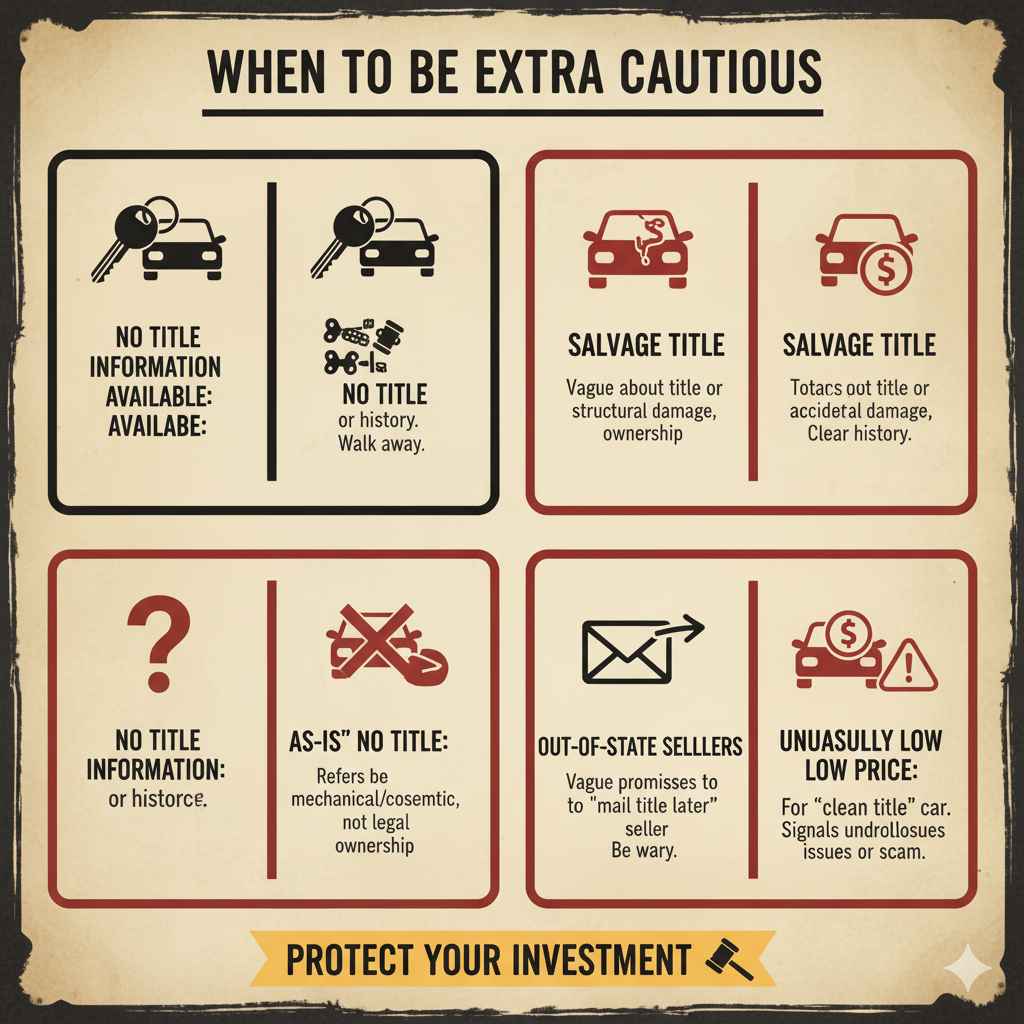
- No Title Information Available: If the auction or seller is vague about the title, walk away.
- “As-Is” with No Title: While many auction cars are sold “as-is” (meaning you accept them in their current condition), this typically refers to mechanical or cosmetic condition, not the legal ownership documents.
- Out-of-State Sellers with Vague Promises: Be very wary if the seller is out-of-state and promises to “mail the title later” without providing a clear, signed-over title at the time of sale.
- Unusually Low Price for a Clean Title Car: If a car with a clean title is priced extraordinarily low, investigate why. It might signal undisclosed issues or a scam.
Frequently Asked Questions (FAQ)
Q1: Can I drive an auction car home right after buying it?
A: Generally, no. You cannot legally drive any vehicle on public roads without proper registration and plates, which requires a title in your name. You’ll need to either tow the car or arrange for temporary transit tags (if available and allowed by your state and the car’s condition).
Q2: What if the auction car has a lien on the title?
A: A lien means someone (usually a bank or lender) has a legal claim on the car until a debt is paid. If an auction car has a lien, the seller (or the auction house) must pay off that lien and get it released before they can transfer a clear title to you. Always check for liens.
Q3: Is buying a car with a salvage title a good idea?
A: It can be, but only if you’re prepared for the extra steps and costs. Salvage title cars are significantly cheaper. However, you’ll need to have them repaired and inspected to get a “rebuilt” title before you can register and drive them. It’s best for those with mechanical skills or a trusted mechanic.
Q4: How long does it take to get a new title after buying an auction car?
A: This varies by state. It can range from a couple of weeks to over a month. If you’re going through a bonded title process, it can take much longer – potentially 6 months to over a year.
Q5: Do I need insurance to get a title for my auction car?
A: Most states require proof of insurance before you can register the vehicle, which is often a prerequisite for issuing a new title in your name, or at least required to drive it off the lot. Always check your state’s specific requirements.
Q6: What if the auction car is from another state?
A: The process is similar, but you will need to adhere to the title and registration laws of the state where you plan to register the car. You’ll likely need the title from the previous state correctly signed over to you and may need a VIN inspection to ensure it complies with your state’s standards.
Conclusion
Purchasing a car from an auction can be an exciting and cost-effective way to acquire a vehicle. However, understanding and securing the title is the most critical step after winning the bid. By knowing the different types of titles, confirming the seller’s ability to provide clear documentation, and diligently following your state’s DMV procedures, you can navigate the process with confidence. Whether you’re dealing with a standard title transfer, a salvage vehicle requiring repair, or a complex bonded title application, staying informed and prepared will ensure you legally own and can legally drive your auction find. So, go ahead, bid smart, and embrace the road ahead with your newly acquired, properly titled vehicle!