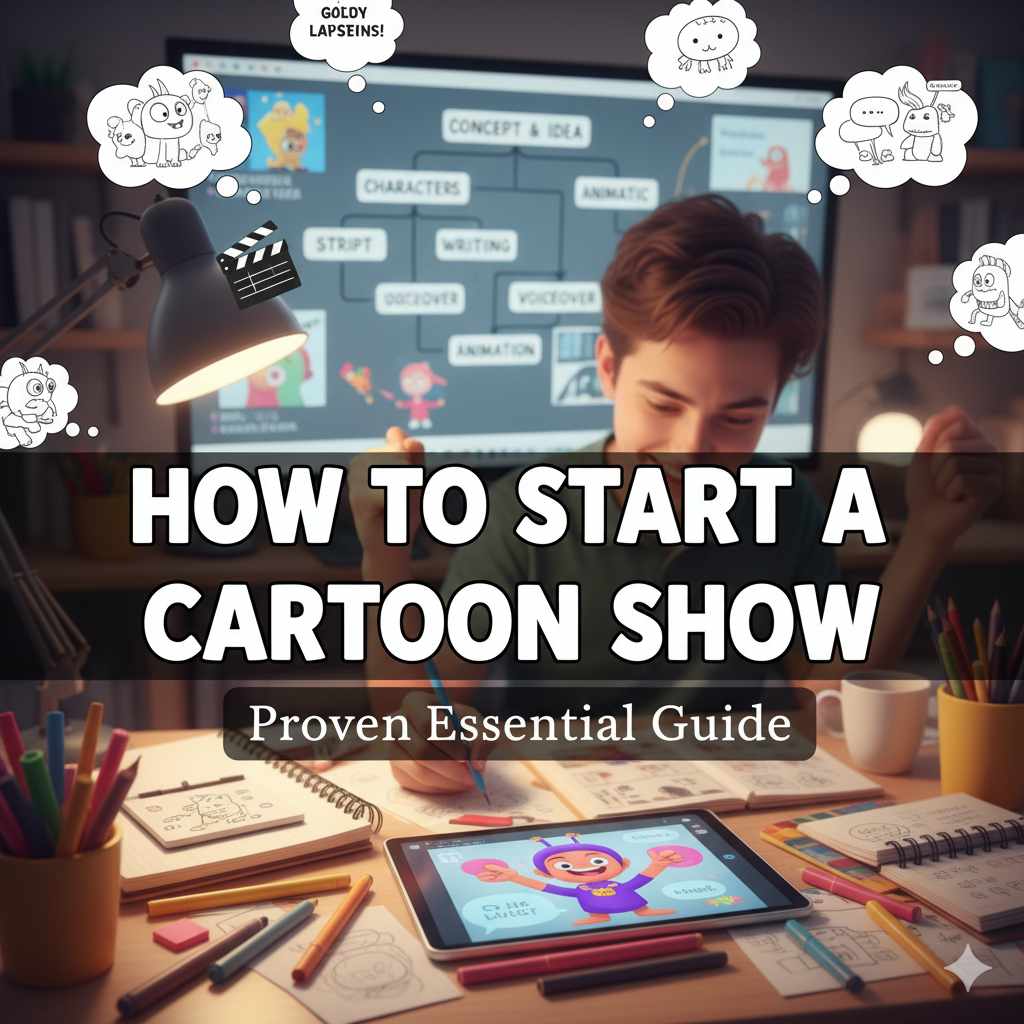
How to Start a Cartoon Show: Proven Essential Guide
Are you dreaming of bringing your own animated world to life? Creating a cartoon show might seem like a huge undertaking, but it’s more accessible than you think! This guide breaks down the process into simple, manageable steps, from the spark of an idea to sharing your finished animation. We’ll cover everything you need to know to get started, making your cartoon-making journey exciting and achievable. Let’s dive in and make your animation dreams a reality!
Bringing Your Cartoon Idea to Life: A Step-by-Step Journey
Have you ever watched a cartoon and thought, “I could do that!”? Many people have fantastic stories and characters in their heads, but they don’t know where to begin turning those ideas into a real cartoon show. It can feel overwhelming, like trying to build a spaceship without a blueprint! But don’t worry. With a clear plan and some dedication, you can absolutely make your own animation. This guide is designed to help you every step of the way, from the very first thought to showing your cartoon to the world. Ready to start building your animated adventure?
Phase 1: The Idea Incubator – From Spark to Story
Every great cartoon starts with a simple idea. This is where the magic truly begins! Think about what kind of stories you love, what characters fascinate you, and what messages you want to share. Don’t censor yourself at this stage; just let your creativity flow.
1. Brainstorm Your Core Concept
What’s your show about? Is it a comedy, an adventure, a drama, or something quirky and unique? Who are your main characters? What kind of world do they live in? You can jot down notes, create mind maps, or even just imagine different scenarios. Think about what makes your idea stand out.
2. Develop Your Characters
Characters are the heart of your show. Give them personalities, backstories, motivations, and unique appearances. What do they want? What are they afraid of? Even simple characters can be captivating if they feel real. Consider creating character sheets that detail their traits and looks.
- Name: What is your character called?
- Personality: Are they brave, shy, funny, grumpy?
- Appearance: What do they look like? (Color, shape, clothing)
- Backstory: Where do they come from?
- Goals: What do they want to achieve?
3. Outline Your Story and World
Before you start drawing, you need a story. For a show, this usually means an overall premise for the series and then individual episode ideas. What is the main conflict or journey your characters will undertake? Build a world that supports your story, whether it’s a fantastical land, a bustling city, or a quiet suburban neighborhood.
Consider the tone of your show. Is it lighthearted and funny, or does it explore deeper themes? This will influence your writing, art style, and even the music.
Phase 2: Building the Foundation – Scripting and Storyboarding
Once you have a solid idea, it’s time to flesh it out into a script and visualize it with storyboards. This is where you translate your thoughts into a format other people can understand and that will guide your animation process.
4. Write Your Script
Your script is the blueprint for your dialogue, action, and pacing. For a short cartoon, you might just need a few pages. For a series, you’ll need to think about an arc. Keep your dialogue natural and character-appropriate. Even if you’re not a seasoned writer, practice makes perfect. There are many online resources and script templates available to help you format correctly.
- Scene Headings: Indicate where the scene takes place (INT./EXT. LOCATION – DAY/NIGHT).
- Action: Describe what is happening visually.
- Character Names: Centered above their dialogue.
- Dialogue: What your characters say.
- Parentheticals: Brief notes on how a line should be delivered (e.g., (whispering), (angrily)).
5. Create Your Storyboard
A storyboard is a visual representation of your script. It’s like a comic book version of your show, panel by panel. Each panel shows a key moment, camera angle, and sometimes notes on dialogue or action. This step is crucial for planning shots, pacing, and ensuring your story flows well visually.
You don’t need to be a great artist to storyboard. Simple stick figures and basic shapes are perfectly fine. The goal is communication, not fine art. Tools like StoryboardThat can help you create digital storyboards even if you’re not an artist.
Phase 3: The Visual Magic – Art and Design
This is where your cartoon starts to look like a cartoon! You’ll need to develop a consistent art style and create the visuals that will bring your characters and world to life.
6. Design Your Characters and Backgrounds
Based on your character sheets, create detailed character model sheets. These show your characters from different angles, with different expressions, and in various poses. This ensures consistency throughout your animation. Similarly, design your backgrounds, props, and any other visual elements your show will need.
Consider the overall aesthetic. Will it be cartoony and vibrant, or more stylized and minimalist? Research different animation styles for inspiration. A great resource for understanding visual development in animation is the Animation Guild, which often shares insights into industry standards and practices.
7. Choose Your Animation Style and Tools
There are many ways to animate a cartoon. Your choice will depend on your resources, skills, and desired look.
| Animation Style | Description | Pros | Cons |
|---|---|---|---|
| 2D Traditional Animation | Hand-drawn frame by frame, like classic cartoons. | Fluid motion, rich expressive potential. | Time-consuming, requires high skill level. |
| 2D Digital Animation | Created using computer software, often with digital drawing tablets. | Efficiency, easier revisions, can mimic traditional look. | Can sometimes look too “clean” or sterile if not careful. |
| 3D Computer Animation | Objects and characters are modeled in a 3D space and animated. | Realistic lighting and depth, great for complex movements. | Steep learning curve for software, can be resource-intensive. |
| Stop-Motion Animation | Physical objects (puppets, clay) are moved in small increments and filmed. | Unique tactile aesthetic, very creative. | Extremely time-consuming, requires physical materials. |
For beginners, 2D digital animation is often the most accessible. Popular software includes:
- Toon Boom Harmony: Industry standard for 2D animation.
- Adobe Animate: Powerful for vector animation and interactive content.
- OpenToonz: Free and open-source, used by Studio Ghibli.
- Krita: Free and open-source digital painting and animation program.
- Blender: Primarily for 3D, but has robust 2D animation capabilities (Grease Pencil).
If you’re aiming for 3D, Blender is an incredibly powerful and free option.
Phase 4: Bringing it All Together – Animation and Production
This is the core of making your show. Here, you’ll animate the actions, record voices, and add sound effects and music.
8. Animate Your Scenes
This is where your storyboards and designs come to life. Depending on your chosen software and style:
- Frame-by-Frame Animation: Drawing each individual frame. This is highly time-consuming but offers the most control and fluidity.
- Cut-Out Animation: Creating character parts and rigging them to move like a puppet. This is much faster and is common in digital 2D animation.
- Motion Graphics: Animating graphic elements rather than character-driven scenes, often used for intros or simpler explanations.
Focus on good principles of animation, such as squash and stretch, anticipation, and timing. Even simple animations can feel dynamic with these techniques. The 12 Principles of Animation, originally developed by Disney animators, are fundamental to creating believable and engaging movement.
9. Voice Acting and Sound Design
Voice Acting: Find actors (friends, family, or hire professionals) who can bring your characters to life through their voices. Record dialogue in a quiet space for the best quality. Consider the emotional range and tone needed for each line.
Sound Effects (SFX): These are crucial for making your world feel real. Footsteps, doors closing, magical spells – add them to enhance the audience’s immersion. You can find free sound effect libraries online.
Music: Background music sets the mood for your scenes. It can be original or sourced from royalty-free music libraries.
Software to consider for audio editing includes:
- Audacity: Free, open-source, and powerful audio editor.
- Adobe Audition: Professional-grade audio workstation.
- GarageBand (macOS/iOS): User-friendly option for music and audio work.
10. Editing and Compositing
This is where all your pieces come together. You’ll import your animated scenes, audio tracks, and music into video editing software. You’ll assemble them in sequence, adjust timing, add visual effects (like glowing effects or camera shakes), and ensure smooth transitions between scenes.
Popular editing software:
- Adobe Premiere Pro: Industry-standard professional video editor.
- DaVinci Resolve: Free version is incredibly powerful for editing, color correction, and visual effects.
- Final Cut Pro: Professional video editor for macOS.
- Shotcut: Free and open-source video editor.
- iMovie (macOS/iOS): Beginner-friendly video editor.
Phase 5: Sharing Your Creation – Distribution and Promotion
Your cartoon is made! Now it’s time to show it off to the world and hopefully build an audience.
11. Export Your Final Video
Once editing is complete, you’ll export your cartoon in a suitable video format (like MP4 or MOV) and resolution (e.g., 1080p or 4K) for online sharing.
12. Choose Your Platform
Where will people watch your show? Popular options include:
- YouTube: The biggest platform for video content, with advanced analytics and monetization options.
- Vimeo: Known for its high-quality playback and professional audience, good for showcasing portfolios.
- Social Media (e.g., TikTok, Instagram Reels): Great for shorter clips, teasers, or serialized content.
- Dedicated Animation Platforms: Some platforms are emerging specifically for independent animators.
When uploading, use relevant keywords in your title, description, and tags to help search engines find your show. Think about what people would type into a search bar to find content like yours.
13. Promote Your Show
Getting people to watch your cartoon requires promotion. Share it with friends and family, post it on your social media, and engage with animation communities online. Consider creating trailers, behind-the-scenes content, or character profile videos to build interest.
Building a following takes time and consistent effort. Keep creating, keep sharing, and engage with your audience. Respond to comments and feedback; it’s a great way to connect with viewers and improve your craft.
Tips for Beginner Cartoonists
Starting out can be tough, but a few key tips can make the journey smoother and more rewarding.
- Start Small: Don’t aim for a feature-length film on your first try. A short film or a 1-2 minute episode is a more achievable goal and a great way to learn.
- Focus on Story: Even with simple animation, a compelling story will keep viewers engaged.
- Learn the Fundamentals: Study the principles of animation, drawing, and storytelling. There are countless free tutorials and resources online.
- Practice Consistently: The more you animate, the better you’ll become. Dedicate regular time to your projects.
- Get Feedback: Share your work with trusted friends, mentors, or online communities and be open to constructive criticism.
- Don’t Be Afraid to Make Mistakes: Every mistake is a learning opportunity. Embrace the process and celebrate your progress.
- Network: Connect with other animators, artists, and storytellers. Collaboration and shared knowledge can be invaluable.
Frequently Asked Questions About Starting a Cartoon Show
Q1: How much does it cost to start a cartoon show?
The cost can vary wildly! You can start with absolutely $0 if you use free software, your existing computer, and your own voice acting. If you invest in a drawing tablet, paid software subscriptions, or hire voice actors and composers, costs can go up. For beginners, focusing on free or low-cost tools is highly recommended.
Q2: Do I need to be a professional artist to make a cartoon?
Not at all! While artistic skill helps, many successful animators started with basic drawing abilities. Focus on clear storytelling and good animation principles. Many talented animators utilize simpler art styles or cut-out techniques that don’t require hyper-realistic drawing skills.
Q3: What’s the difference between a cartoon series and a short film?
A cartoon series is intended to have multiple episodes, often following a set of recurring characters and storylines over time. A short film is a standalone, complete story that is much shorter in length, typically ranging from a few seconds to under 40 minutes.
Q4: How long does it take to create a cartoon?
This depends heavily on the length, complexity, and number of people working on it. A 30-second animated clip could take a few days for one person, while a 5-minute episode might take several weeks or months. Professional studios can take years to produce even a single episode of a TV series.
Q5: What are the essential software tools I need?
For beginners, a good starting point would be: a digital drawing program (like Krita, Procreate, or Photoshop), an animation software (like OpenToonz, Adobe Animate, or Blender), and a video editor (like DaVinci Resolve or Shotcut). Plus, a free audio editor like Audacity is very useful.
Q6: Should I create my cartoon entirely on my own or with a team?
For your first project, doing it solo is a great way to learn all the different aspects of production. As you get more experienced, you might want to collaborate with others – a scriptwriter, a composer, or other animators – to achieve bigger projects or to share the workload.
Q7: How can I make my cartoon stand out from others on YouTube?
Focus on a unique story concept, memorable characters, a distinct art style, and high-quality sound. Engaging with your audience, being consistent with your uploads, and cross-promoting on social media can also help build a dedicated following.
Conclusion: Your Animated Adventure Awaits!
Embarking on the journey to create your own cartoon show is an exciting adventure that blends creativity, technical skill, and a good dose of persistence. You’ve learned that it’s possible to start with just an idea and a computer, and that breaking down the process into manageable steps — from conceptualizing characters and stories, to storyboarding, designing, animating, and finally sharing — makes it far less daunting. Remember, your first cartoon doesn’t need to be perfect; it just needs to be made. Every animation you create will teach you something new and bring you closer to refining your skills and vision.
Whether you dream of making short comedic sketches, epic adventures, or heartwarming tales, the tools and knowledge are more accessible than ever. So, dust off your imagination, grab your digital pen, and start bringing your animated world to life. The animation community is waiting to see what amazing stories you have to tell!