How To Turn On Your Car Interior Lights Easily
Sometimes, figuring out the small things in your car can feel a bit tricky, especially if you’re new to driving or have a different car. The dome light, reading lights, or vanity mirror lights might seem like they have hidden buttons. But don’t worry, learning How to Turn On Interior Lights in Your Car Easily is actually super simple.
We’ll walk you through it step-by-step so you can light up your car’s cabin whenever you need to.
Understanding Your Car’s Interior Lights
Your car’s interior lights are more than just simple bulbs; they are designed for convenience and safety. They help you see what you’re doing inside your vehicle at night or in dark conditions. This section will explore the different types of interior lights you might find in a car and their common locations.
Types of Interior Car Lights
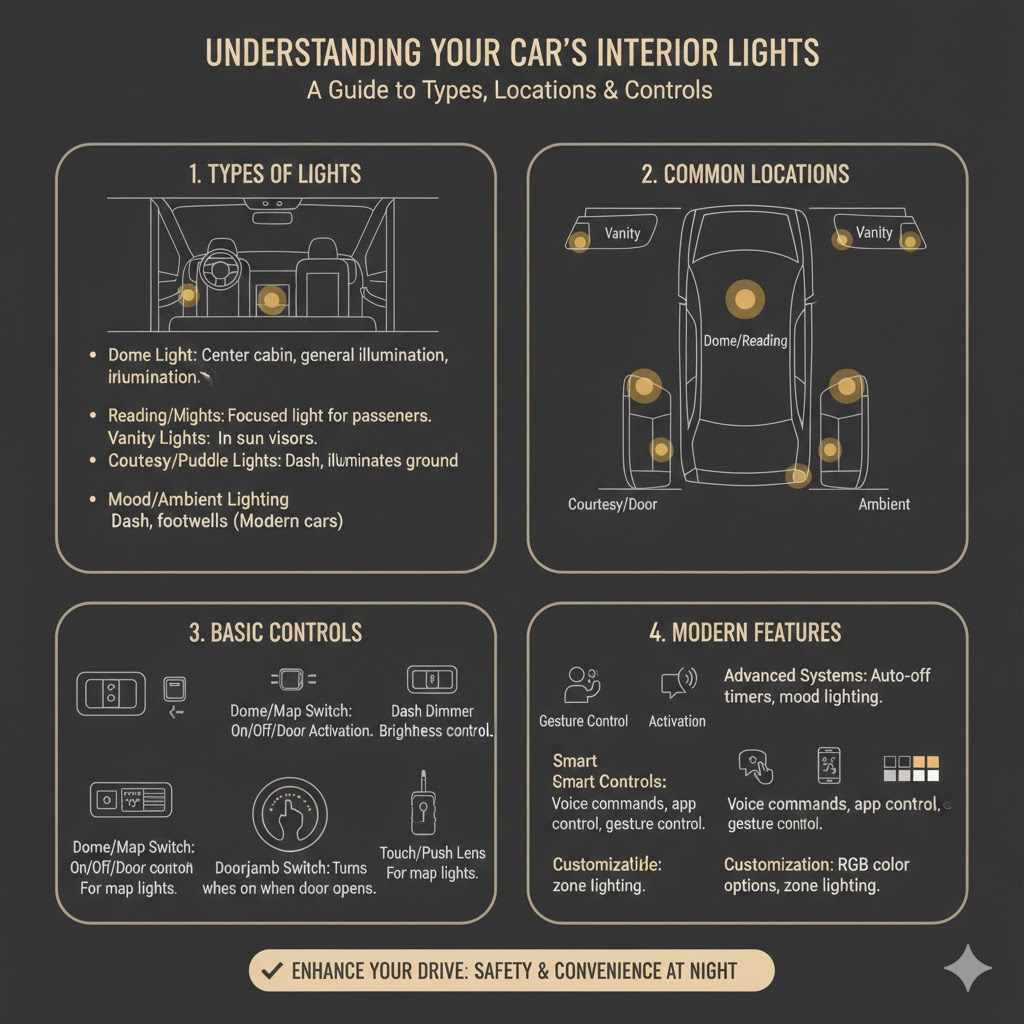
Cars come with various interior lights to suit different needs. The most common is the main dome light, usually found in the center of the ceiling. This light illuminates the entire cabin.
You might also find smaller reading lights positioned above the front seats or even in the back. Some cars have vanity lights built into the sun visors, which are great for checking your appearance or applying makeup.
Many cars also have courtesy lights in the doors. These turn on when you open the door, helping you see the ground and avoid puddles or obstacles. These lights are usually small and subtle.
They add to the overall lighting scheme and enhance safety.
Common Locations for Interior Lights
The main dome light is almost always overhead, between the front and rear seats, or near the rearview mirror. Reading lights are often small, focused bulbs located next to the dome light or integrated into the headliner above each seat. Vanity lights are typically hidden behind the sun visors.
You’ll find door lights low down on the inside of the car doors, near the bottom edge.
Knowing these common spots helps you locate the controls. Even if your car’s design is a bit different, these general locations are a good starting point for your search. Understanding where these lights are helps you know where to look for their controls.
Finding the Controls for Interior Lights
The controls for your car’s interior lights are usually quite straightforward once you know where to look. They are designed to be accessible without taking your eyes too far off the road. This part will guide you to the typical switches and buttons you’ll use to operate these lights.
The Dome Light Switch
The dome light often has a simple switch. This switch usually has three positions: ON, OFF, and DOOR. In the ON position, the light stays on regardless of whether the doors are open or closed.
In the OFF position, the light stays off. The DOOR position is the most common setting. When the doors are opened, the light comes on automatically.
When the doors are closed, the light turns off after a short delay.
This three-way switch is designed for convenience. It allows you to have light whenever you need it or keep it off completely. The automatic door function is especially useful for safety and convenience when getting in and out of your car at night.
Reading Light Buttons
Reading lights often have individual buttons or small dials. These are usually located very close to the light itself. Some might be touch-sensitive, while others are small push buttons.
You might need to press the button once to turn the light on and again to turn it off. Some systems allow you to adjust the brightness of these lights.
These lights are perfect for passengers who want to read a book or look at a map without disturbing the driver. Their focused beam means they don’t create glare for everyone in the car. Finding these small controls is key to using them effectively.
Door Panel Light Switches
Some cars have manual switches for interior lights integrated into the door panels or the dashboard. These might be small toggles or push buttons. You’ll need to familiarize yourself with your car’s specific layout to find these.
Often, they are located near the power window controls.
These switches give you direct control over the interior lighting. They can be handy if you want to turn off all interior lights manually for any reason. Checking your car’s manual is always a good idea if you can’t locate them.
How to Turn On Interior Lights in Your Car Easily
Now that you know where to look, let’s get straight to the “how-to.” Learning How to Turn On Interior Lights in Your Car Easily is all about finding the right switch and using it correctly. We’ll cover the common methods you’ll encounter.
Method 1 Activating the Dome Light
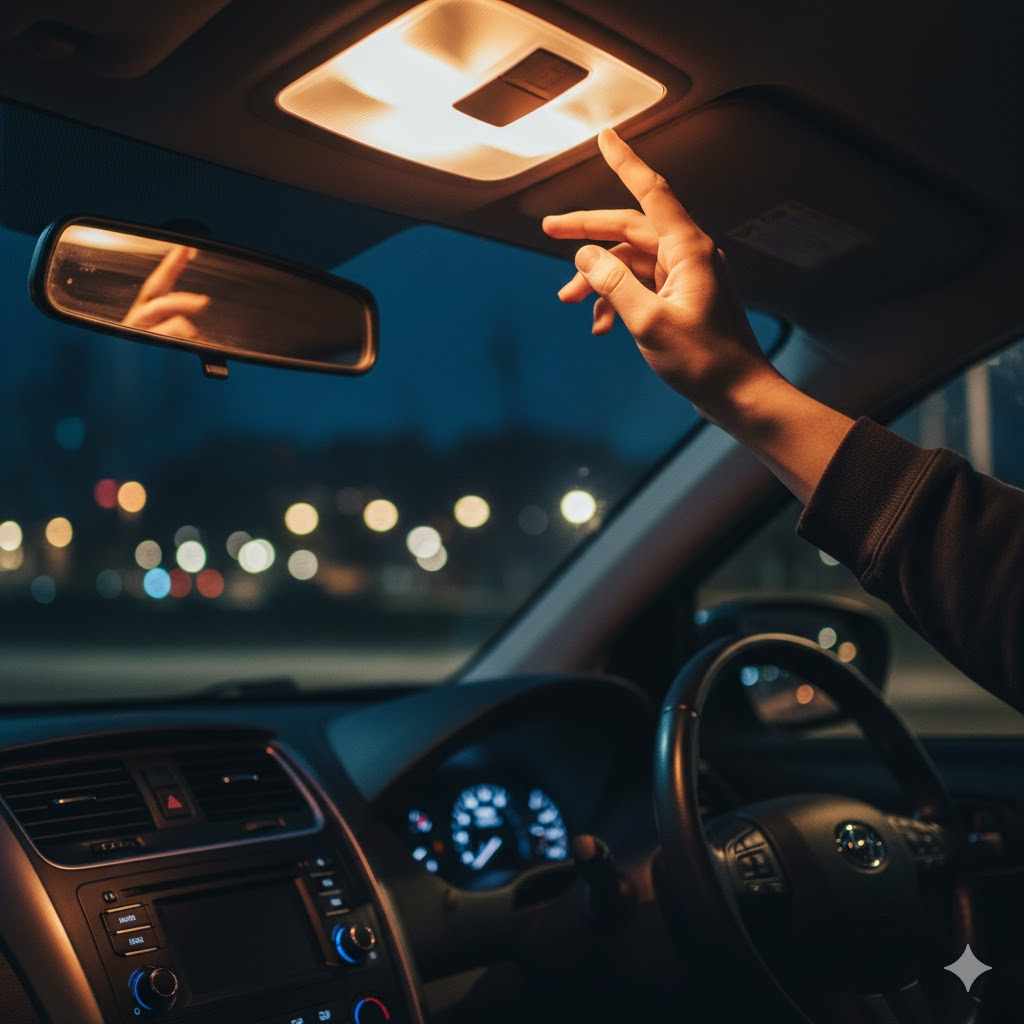
The dome light is the most frequently used interior light. To turn it on manually, locate the switch on or near the dome light fixture. This switch typically has positions like ON, OFF, and AUTO or DOOR.
Flip the switch to the ON position. This will illuminate the main cabin area. To turn it off, simply flip the switch back to the OFF or AUTO position.
The AUTO or DOOR setting is convenient as it links the light to your car doors.
This is the simplest way to get light. It’s great for finding dropped items or helping passengers get settled. The AUTO setting ensures you don’t have to think about it when getting in or out.
Method 2 Using Reading Lights
Reading lights are usually activated by pressing a button directly on or next to the light. Some cars have a single button for multiple reading lights, while others have individual controls for each. Press the button once to turn the light on.
Press it again to turn it off. If there are multiple reading lights, you might need to find separate buttons for each one.
These lights are perfect for individual tasks. They provide focused light without being too bright for the entire car. This makes them ideal for nighttime reading or navigation.
It’s a subtle but very useful feature.
Method 3 Engaging Door Lights
Door lights are designed to turn on automatically when the door is opened. You typically don’t need to do anything manually to turn them on. However, if they aren’t working, check the dome light switch.
It needs to be in the AUTO or DOOR position for these lights to function. Some vehicles might have a separate manual override for door lights, often found on the driver’s door panel or dashboard.
These lights enhance safety by illuminating the area around your car when you enter or exit. They help you see the ground and avoid hazards. This automatic feature is a key part of your car’s safety system.
Troubleshooting Common Interior Light Issues
Sometimes, your interior lights might not work as expected. This section covers common problems and their simple solutions, helping you get your lights back on track.
Bulb Burnout
The most frequent reason for a light not working is a burnt-out bulb. Interior light bulbs have a lifespan and will eventually need replacement. If a single light isn’t working, try tapping lightly on the lens.
If it flickers or comes on, the bulb is likely loose or the connection is weak. If tapping doesn’t help, the bulb probably needs replacing. You can often replace these yourself by carefully prying off the lens cover and swapping out the bulb for a new one.
Check your car’s manual for the correct bulb type.
Bulb replacement is usually a straightforward DIY task. Many auto parts stores sell replacement bulbs for most car models. This is a cost-effective solution compared to visiting a mechanic for a simple bulb change.
Fuse Issues
Cars have fuses to protect electrical circuits from damage. If multiple interior lights stop working, or if a light doesn’t turn on even with a new bulb, a blown fuse could be the culprit. Your car’s fuse box is usually located under the dashboard or in the engine bay.
Consult your owner’s manual to find the specific fuse that controls interior lighting. If the fuse is blown (the metal wire inside is broken), you’ll need to
Replacing a fuse is a simple process. You’ll need a fuse puller, which is often included in your car’s toolkit, and a supply of replacement fuses. It’s a good idea to keep spare fuses in your glove box.
Electrical Connection Problems
Sometimes, the wiring or electrical connections to the lights can become loose or corroded. This is more common in older vehicles or those exposed to moisture. If you’ve
Checking for visible signs of corrosion on the bulb socket or wiring can be a first step. Cleaning any corroded areas gently with a wire brush or electrical contact cleaner might solve the issue. However, proceed with caution and only if you are comfortable working with electrical components.
Tips for Using Interior Lights Safely and Effectively
Using your car’s interior lights wisely can improve your driving experience and safety. This section provides practical advice on maximizing the benefit of your car’s lighting.
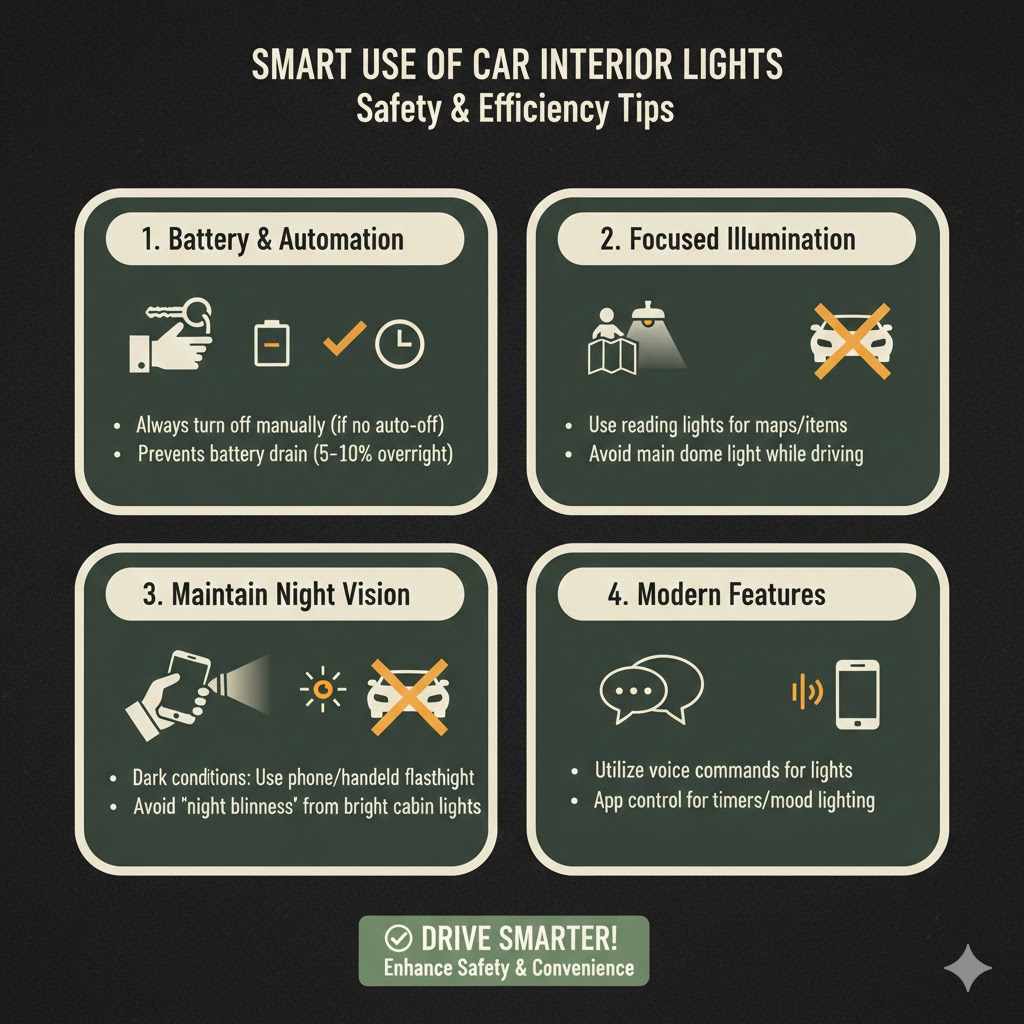
- Always ensure your interior lights are off when you leave the car if they are not on an automatic setting. Leaving them on can drain your car battery, especially if the car is not driven for a while. Many modern cars have a system that automatically turns off interior lights after a set period to prevent battery drain, but it’s still good practice to check. Being mindful of this habit can save you from a dead battery and the inconvenience it causes.
- Use reading lights for specific tasks like reading maps or looking for something, rather than turning on the main dome light. This provides focused illumination without distracting other passengers or the driver. It’s a more efficient way to use your car’s lighting resources. The directional nature of reading lights is key here, ensuring light goes where you need it.
- If you are driving in very dark conditions and need to find something quickly, use your phone’s flashlight or a small handheld flashlight instead of turning on your car’s interior lights. Bright interior lights can temporarily reduce your ability to see in the dark, a phenomenon known as “night blindness.” This can be dangerous when driving. This temporary blindness can affect your vision for several minutes.
Statistic on Car Battery Drain
A study found that leaving interior lights on overnight can drain approximately 5-10% of a car’s battery charge, depending on the bulb type and battery condition. For a typical car battery, this can translate to a significant loss of power, potentially leading to a no-start situation.
Frequently Asked Questions
Question: How do I turn on the lights in my car’s back seat?
Answer: Look for individual reading lights above the back seats, usually with small push buttons. The main dome light also typically illuminates the back seat area.
Question: What is the difference between ON and AUTO for my dome light?
Answer: ON means the light stays lit regardless of door status. AUTO means the light turns on when a door is opened and off when it’s closed, often with a delay.
Question: My interior light won’t turn on, even after replacing the bulb. What else could it be?
Answer: It’s likely a blown fuse or a problem with the electrical connection. Check your car’s fuse box and consult your owner’s manual for the interior light fuse.
Question: Can I leave my interior lights on all night?
Answer: It’s not recommended. While some cars have automatic shut-off features, leaving lights on unnecessarily can drain your car battery, potentially preventing it from starting.
Question: Where can I find my car’s interior light fuse?
Answer: The location of the fuse box varies by car model. It’s usually under the dashboard, near the steering wheel, or in the engine compartment. Your car’s owner’s manual will specify its exact location and which fuse controls the interior lights.
Conclusion
Learning How to Turn On Interior Lights in Your Car Easily involves knowing where the controls are and what each setting does. By checking overhead fixtures, reading light buttons, and door panels, you can confidently manage your car’s cabin illumination. Remember to address any issues like burnt bulbs or blown fuses promptly to keep your lights working perfectly.
Products related to this article
Sponsored / affiliate links. As an Amazon Associate I earn from qualifying purchases. I may earn additional commission from eligible campaigns.