How to Tell If a Car Thermostat Is Bad: Signs and Symptoms
A bad car thermostat shows up in one of two ways: the engine runs too cold (temperature gauge stays low, weak heat, poor fuel economy) if it’s stuck open, or the engine overheats (gauge climbs into the red, steam from the hood) if it’s stuck closed.
The thermostat is a small valve that sits between the engine and radiator and controls when coolant is allowed to flow. When it fails, it almost always fails in one of those two directions, and each direction produces a different set of symptoms. Knowing which set you’re seeing tells you a lot about what’s actually wrong before you ever open the hood.
Quick answer: Your thermostat is likely bad if the temperature gauge either stays unusually low with a weak heater (stuck open) or climbs into the red/overheating zone with steam or a warning light (stuck closed). A shop can confirm it with a boil test in a few minutes, and the part itself typically costs $10–$80, though labor can bring total replacement to $150–$500 depending on the vehicle.
Signs Your Thermostat Is Stuck Open (Engine Runs Cold)
HANDY FOR CONFIRMING THE SYMPTOM
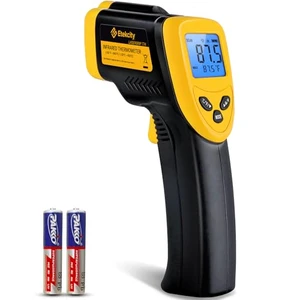 |
Etekcity Infrared Thermometer 774 – $18.99 Point it at the upper radiator hose or thermostat housing after warming up the engine — a cold reading where it should be hot (or vice versa) confirms a stuck thermostat before you spend money on parts.
|
A thermostat stuck in the open position never closes, so coolant keeps flowing to the radiator constantly and the engine can’t hold onto heat. This is actually the more common failure mode on many modern vehicles. The main signs are:
- Temperature gauge sits lower than normal, especially at highway speed, and rarely settles into its usual middle position.
- Weak or lukewarm cabin heat, because the coolant never gets hot enough for the heater core to do its job.
- Longer warm-up times and rough or uneven idle right after starting the car cold.
- Worse fuel economy, since the engine computer stays in a fuel-rich cold-start mode longer than it should.
- A check engine light with code P0128 (“coolant temperature below thermostat regulating temperature”) is the most direct confirmation on OBD-II vehicles, though that code can also point to a faulty coolant temperature sensor rather than the thermostat itself.
Signs Your Thermostat Is Stuck Closed (Engine Overheats)
A thermostat stuck closed is the more urgent failure, because it blocks coolant from reaching the radiator at all. Heat builds up with nowhere to go, and this can cause real engine damage in a matter of minutes if you keep driving.
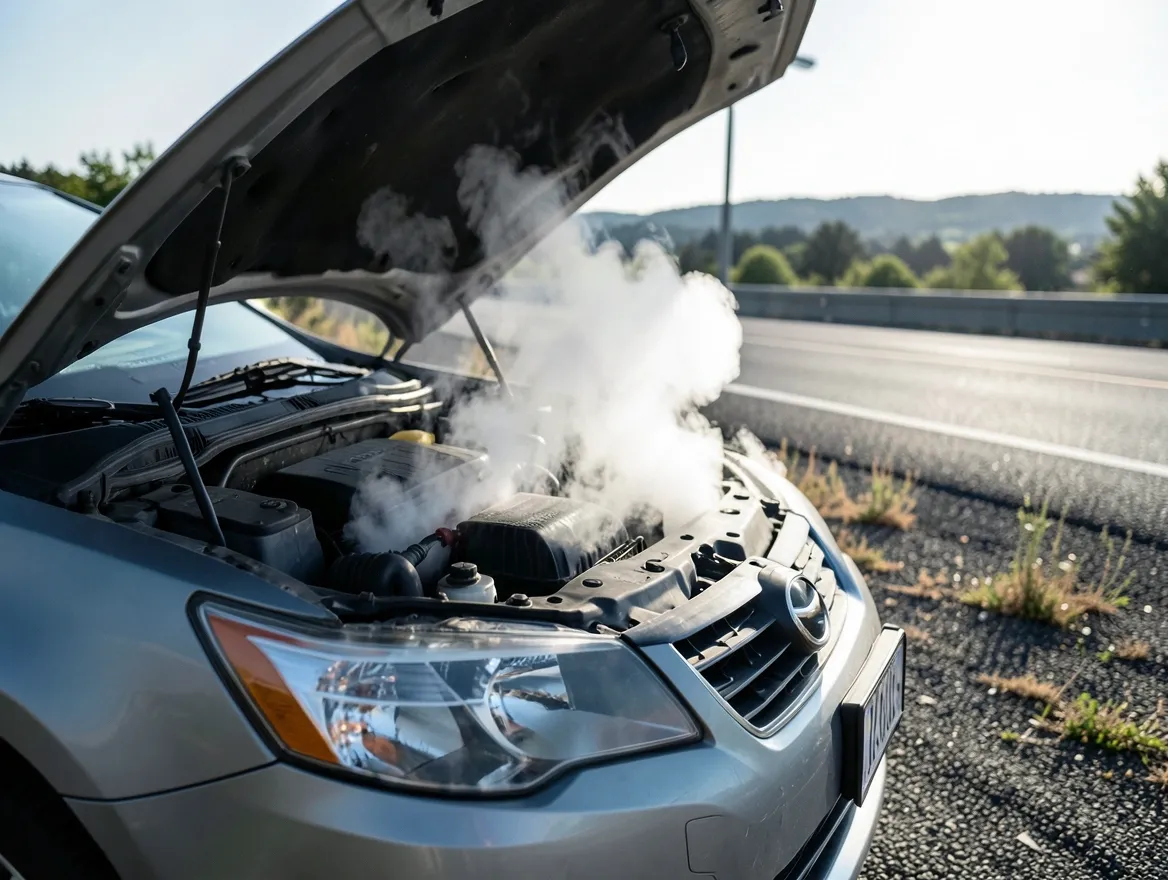
- Temperature gauge climbs into the red or “H” zone, often rising quickly after just a few minutes of driving.
- Steam or a sweet smell coming from under the hood as coolant boils over.
- A high-temperature warning light on the dashboard, which should be treated as a signal to pull over immediately, not “keep driving a bit longer.”
- Fluctuating readings where the gauge and the heater swing between hot and cold, which can happen when a thermostat is only partially sticking rather than fully failed.
If the gauge is already in the red, stop the car and shut off the engine as soon as it’s safe to do so. Never open the radiator cap while the engine is hot — pressurized coolant can be well above the boiling point and cause serious burns.
Car Thermostat Problems: Quick Symptom Comparison
Because “car thermostat problems” and “car overheating problems” can point to a few different failure patterns, here’s how the two main modes (and a common in-between one) compare side by side:
| Failure Mode | Temp Gauge | Cabin Heat | Most Common Cause |
|---|---|---|---|
| Stuck open | Low, rarely reaches normal | Weak or lukewarm | Spring/wax pellet fails in the open position |
| Stuck closed | Climbs into red quickly | Blows hot, then car overheats | Corrosion or debris jams the valve shut |
| Sticking intermittently | Jumps between low and high | Swings hot and cold | Aging valve that partially opens/closes unevenly |
Coolant Leaks and Thermostat Housing Damage
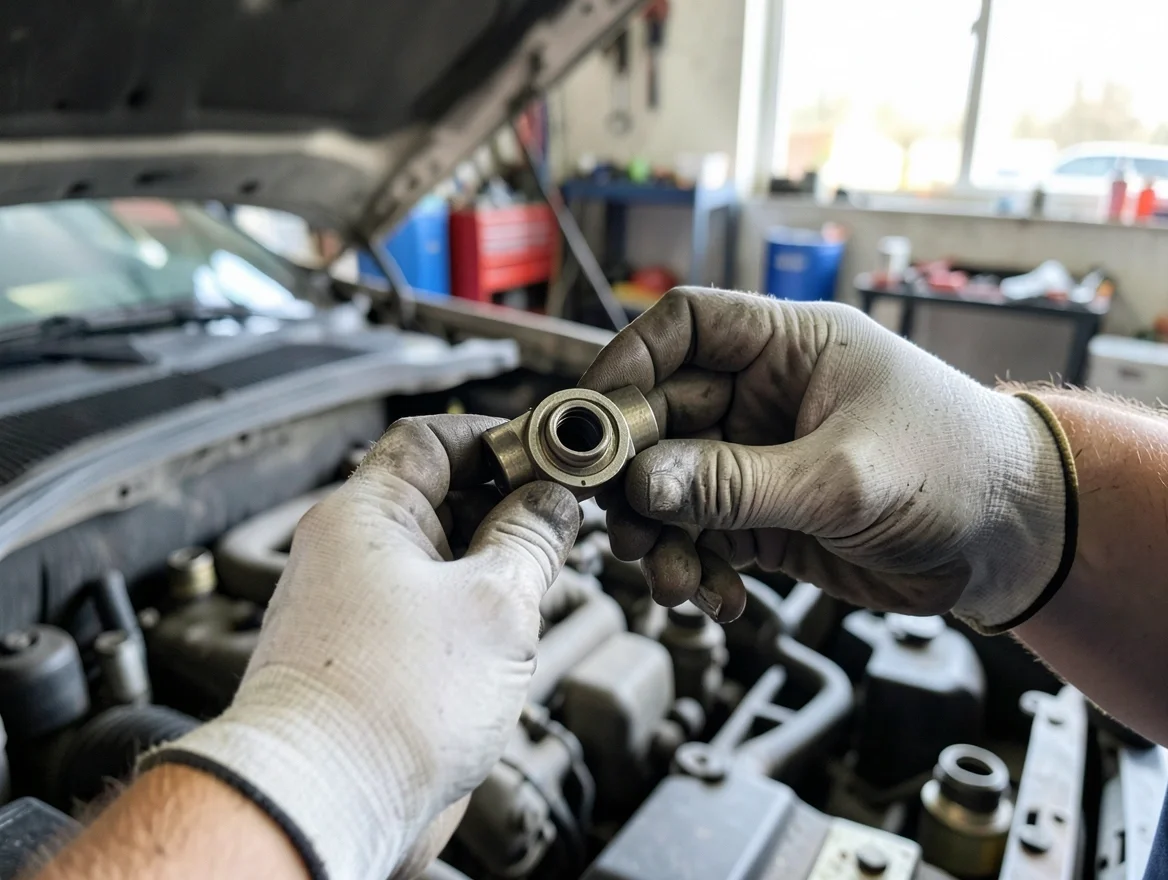
A failing thermostat isn’t always about temperature alone. The housing that holds it in place is a common leak point, especially as the gasket ages or the plastic housing (common on many newer engines) becomes brittle from years of heat cycling.
- Wet, crusty residue (green, orange, or pink, depending on the coolant type) around the housing usually means a slow leak at the gasket.
- Cracks in the housing itself are common once a plastic housing gets old, and they get worse with every heat cycle.
- A coolant reservoir that keeps running low with no visible puddles can mean a small leak that’s evaporating off a hot part, or coolant escaping past a stuck thermostat seal.
How to Quickly Confirm a Bad Thermostat at Home
Two fast checks can point you in the right direction without pulling anything apart. First, feel (or use an infrared thermometer on) the upper radiator hose after the engine has been idling for 10–15 minutes: it should be hot to the touch once the car reaches operating temperature. If it stays cool while the temperature gauge or a scan tool shows the engine has warmed up, coolant likely isn’t reaching the radiator — a sign of a stuck-closed thermostat. Second, watch how quickly the gauge and heater respond after a cold start; a thermostat stuck open will show gradual, sluggish warm-up instead of the more predictable climb to operating temperature you’d normally see.
These checks tell you whether the thermostat is a likely suspect, but the only way to confirm it for certain is to remove it and test it directly in a pot of heated water, watching for it to open at its stamped rating (commonly somewhere in the 180°F–205°F range). We cover that full step-by-step process, including tools and how to read the results, in our separate guide on how to test a car thermostat.
When to See a Mechanic
If the temperature gauge ever reaches the red zone or a warning light comes on, pull over and let the engine cool rather than trying to finish the drive. A stuck-open thermostat is far less urgent and safe to drive on for a while, but it’s still worth fixing soon since it wastes fuel and wears the engine faster during long cold-running periods. Most shops can confirm a bad thermostat with a quick pressure or boil test, and parts and labor for a standard replacement typically run $150–$500 total, though vehicles with hard-to-reach thermostats or luxury/performance engines can push that higher.
Frequently Asked Questions
How Do I Know My Car Thermostat Is Bad?
Your car thermostat might be bad if the engine overheats (stuck closed) or never reaches normal operating temperature and blows weak heat (stuck open). Watch for fluctuating temperature gauge readings, a check engine light with code P0128, and coolant residue near the thermostat housing. A mechanic can confirm it with a quick boil test.
How Do I Know If My Thermostat Needs Replacing?
Your thermostat likely needs replacing if it’s stuck fully open or closed during a boil test, if the engine consistently overheats or runs cold, or if you find corrosion or cracking in the housing itself. Thermostats don’t have a fixed replacement schedule the way oil or a timing belt do, but many mechanics suggest replacing an aging one anytime the cooling system is already opened up for another repair, since the part itself is inexpensive.
How Do I Know If My Thermostat Is Stuck Closed?
A thermostat stuck closed almost always shows up as rapid overheating: the temperature gauge climbs into the red within a few minutes of driving, the heater may blow hot air right before the overheating starts, and you may see steam or smell coolant. Pull over immediately if this happens.
How To Tell If Your Thermostat Or Water Pump Is Bad?
Both can cause overheating, but a bad water pump usually adds a whining or grinding noise from the front of the engine, visible coolant leaking from the pump’s weep hole, or a loose/wobbly pulley, while a bad thermostat typically overheats or runs cold without those extra noises. If you’re not sure, a mechanic can pressure-test the cooling system and check both parts at once.
Conclusion
A bad thermostat almost always tells on itself: either the engine runs colder than it should with weak heat, or it overheats fast with steam and a warning light. Catching either pattern early — and confirming it with a simple hose-temperature check or a full boil test — can save you from a much bigger repair bill down the road.
Products related to this article
Sponsored / affiliate links. As an Amazon Associate I earn from qualifying purchases. I may earn additional commission from eligible campaigns.