How to Tell an Unmarked Police Car Is Real (And What to Do)
Unmarked police cars usually have hidden light bars, spotlights, extra antennas, and government plates — but the most reliable safety step isn’t spotting these features, it’s knowing what to do if you’re unsure whether a stop is real.
Unmarked units blend into everyday traffic on purpose, which is exactly what makes drivers uneasy when unmarked lights appear behind them. This guide covers the physical clues that separate a real unmarked cruiser from a regular sedan, and more importantly, the specific steps law enforcement and legal experts recommend if you’re not sure the vehicle behind you is legitimate.
Quick Answer
Look for a hidden light bar, spotlight, extra antennas, and government-style plates. If you’re unsure it’s real, turn on your hazard lights, slow down, and drive to the nearest well-lit, populated area (gas station, police station) before stopping — you have the legal right to do this. Call 911 while driving to confirm the stop is legitimate.
Introduction To Unmarked Police Cars
Unmarked police cars play an important role in law enforcement, helping officers catch speeders, conduct surveillance, and respond to calls without alerting suspects in advance with obvious markings.
Seeing one behind you can feel unsettling, especially since impersonating a police officer to pull drivers over is a real, documented crime. Knowing both the physical clues and the correct safety response removes most of that uncertainty.
📊 Police impersonation arrests jumped 50% year-over-year in New York City alone — 1,474 people arrested for impersonating a cop or other public servant in 2025, per NYPD data. It’s a local figure, not a national one, but it shows this isn’t a rare, one-off risk. Related: NHTSA’s own 2026 warning on traffic-ticket impersonation scams.
Key Features Of Unmarked Police Vehicles
Unmarked cars are usually standard civilian models — Ford, Chevrolet, Dodge, and Toyota sedans and SUVs are all commonly used — with subtle equipment added rather than obvious police graphics.
| Common Model | Typical Added Features |
|---|---|
| Chevrolet Impala / Malibu | Reinforced suspension, extra radio antennas |
| Dodge Charger / Chrysler 300 | Push bumper, spotlight, subtle grille lights |
| Ford Explorer / Taurus | Government plates, hidden light bar in the windshield or rear window |
Exterior Clues To Identify Unmarked Cars
Look for a spotlight mounted on the driver’s side pillar (between the front and rear doors), one or more short antennas on the trunk or roof, and a push bumper on the front. Many unmarked units also run government-issued or exempt plates instead of standard consumer plates, though this varies by state and agency.
Interior Signs And Equipment
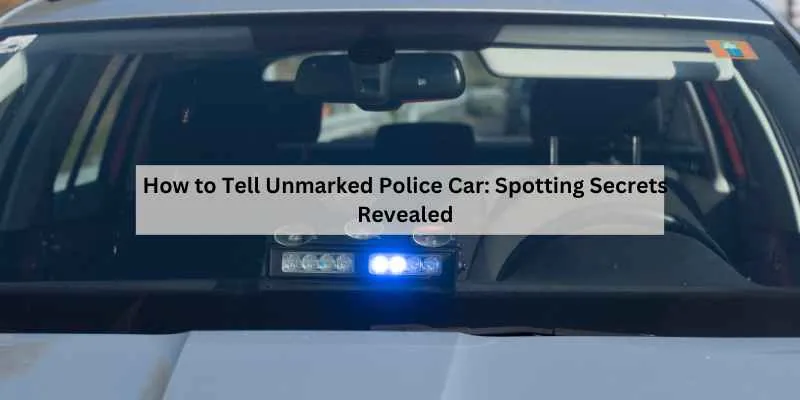
From outside, you may be able to spot a dashboard-mounted radar unit, a laptop or mobile data terminal mounted near the center console, or a light bar built into the interior of the windshield or rear deck that only activates when needed.
| Indicator | What It Looks Like |
|---|---|
| Hidden light bar | Red/blue lights built into the grille, windshield, or rear window, invisible until activated |
| Radar/laser unit | Small box mounted on the dash or windshield |
| Mobile data terminal | Laptop or rugged tablet mounted near the console |
| Police radio | Handset or mic clipped near the dash, sometimes visible through the window |
Behavioral Patterns Of Unmarked Police
Unmarked units generally drive predictably: steady speed, legal following distance, and no aggressive lane changes, since drawing attention defeats the purpose of being unmarked. A vehicle that has been following you closely for an extended distance without activating any lights, especially on an empty road, is one of the more common red flags cited in police-impersonation cases.
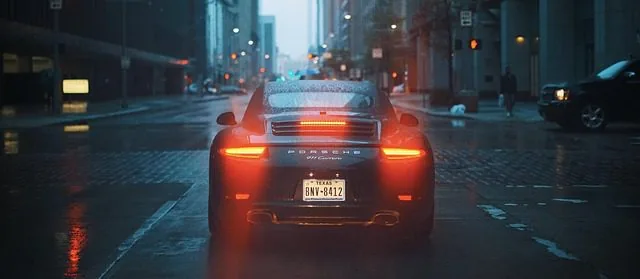
What To Do If You Think You’re Being Stopped by an Unmarked Car
“If you believe you are being pulled over by a person who may be impersonating a police officer: put on your hazard lights, drive at a safe and legal speed, and call 911. Tell the dispatcher you’re concerned someone is trying to pull you over in an unmarked car, and ask them to verify whether it’s a real law enforcement stop.”
— Standard guidance shared by state police and university public-safety departments nationwide
This is the part most guides skip, and it matters more than memorizing exterior details. If lights come on behind you and you’re not certain the stop is legitimate, safety experts and multiple law enforcement agencies recommend the following:
- Turn on your hazard lights and slow down immediately. This signals that you’ve noticed the vehicle and intend to comply, which reduces the chance of the situation escalating either way.
- Drive to the nearest well-lit, populated location — a gas station, a shopping center, or even a police station — before coming to a full stop. In most states you have the legal right to do this as long as you’re clearly signaling and driving at a reasonable, slow speed toward that location.
- Call 911 while you’re driving there (hands-free or on speaker). Tell the dispatcher you’re being followed by an unmarked vehicle, give your location and direction of travel, and ask them to confirm whether a legitimate stop is in progress. You can also ask for a marked unit to be sent.
- Keep your doors locked once stopped, and only crack the window enough to talk. Ask to see a badge and identification through the gap. A real officer will not be bothered by this request.
A relevant legal point: courts in multiple states have held that a driver cannot be convicted of “fleeing and eluding” a police vehicle that isn’t marked, since the underlying laws typically require the vehicle to be identifiable as law enforcement. Rules vary by state, so this isn’t a blanket guarantee, but it reflects why driving slowly and visibly to a safe, public location before stopping is treated as a reasonable response rather than evasion.
None of this should be read as advice to ignore a real officer — it’s specifically for the narrow, but real, situation where you can’t yet tell if the stop is legitimate.
Best Dash Cam Pick
Recommended: Record the Stop, Just in Case
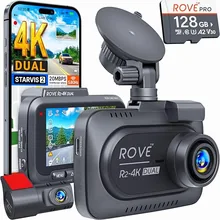
ROVE R2-4K Dual Dash Cam (Front & Rear)
Best for: drivers who want a timestamped record of the whole stop, not just what’s ahead.
Why we picked it: 4K front + rear coverage captures the vehicle’s markings, lights, and the officer’s approach from both angles — useful whether the stop is routine or you ever need to prove what actually happened.
Main drawback: pricier than a single-channel cam, and the rear camera needs a cable run to the back window.
View Our Pick on AmazonCompare more dash cam options:
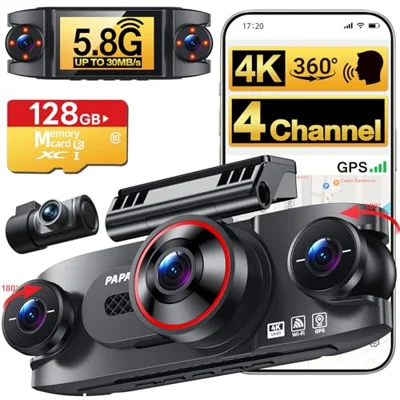 4-Channel 360° Dash Cam (4K Front + 1080P Rear/Left/Right) Best for: full 360° coverage around the whole vehicle, not just front/rear. Drawback: more cameras and cabling means a longer, more involved install. Check on Amazon |
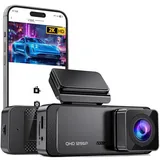 V300 WiFi Single Dash Cam Best for: drivers who just want basic front-facing coverage on a budget. Drawback: no rear camera, so it won’t capture anything behind you. Check on Amazon |
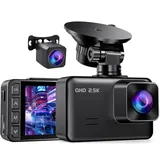 2.5K+1080P Dual Dash Cam Best for: a middle-ground pick with sharper front resolution than most budget duals. Drawback: rear camera resolution (1080P) is noticeably lower than the front. Check on Amazon |
As an Amazon Associate we earn from qualifying purchases.
Legal Implications And Public Safety
Confirming a stop’s authenticity matters because police impersonation to commit robbery, assault, or worse is a documented, if uncommon, crime. Watch for a vehicle with no visible official markings even after lights activate, no response to your hazard lights and slow approach toward a public area, or reluctance to provide a badge number or call in backup when asked. Any of these should push you toward calling 911 rather than simply complying.
The Debate Around Unmarked Police Cars
Unmarked cars help catch speeders, aggressive drivers, and suspects who would otherwise spot and evade a marked cruiser. At the same time, community advocates and some legislators have pushed for restrictions, arguing that unmarked traffic stops make it harder for drivers to verify legitimacy and can be exploited by impersonators. Some states have passed laws limiting when unmarked units can make routine traffic stops for exactly this reason.
Staying Informed And Vigilant
A few habits make you far less likely to be caught off guard:
- Save your local non-emergency police line in your phone alongside 911, so you can quickly verify a stop if you’re not in an emergency situation.
- Know that dash cams are legal to use in nearly every state and create a record that protects both drivers and officers.
- Check your specific state’s laws on unmarked police stops, since a handful of states restrict when unmarked units can pull vehicles over for routine violations.
- Stay alert to how a vehicle drives and responds to your hazard lights, not just how it looks.
Frequently Asked Questions
How can I identify an unmarked police car?
Look for a hidden light bar, a spotlight on the driver’s side pillar, extra antennas, a push bumper, and government-style plates. Standard models used include Ford, Chevrolet, Dodge, and Toyota sedans and SUVs.
What should I do if I’m not sure an unmarked car pulling me over is real?
Turn on your hazard lights, slow down, and drive to the nearest well-lit, populated area before stopping fully — you have the legal right to do this. Call 911 while driving to confirm the stop is legitimate and, once stopped, keep your doors locked and only crack the window to check identification.
Are unmarked police cars legal to use?
Yes, unmarked police vehicles are legal in most jurisdictions and are commonly used for traffic enforcement, surveillance, and investigations. However, some states restrict when an unmarked unit can initiate a routine traffic stop, so rules vary by location.
How do I confirm a police stop is legitimate?
Call 911 and give the dispatcher your location, direction of travel, and a description of the vehicle. Ask them to confirm whether a legitimate stop is in progress and request a marked unit if one is available. Once stopped, ask to see a badge and identification through a partially cracked window.
Can I be charged with fleeing and eluding an unmarked police car?
In many states, courts have held that fleeing-and-eluding laws require the pursuing vehicle to be identifiable as law enforcement, which unmarked cars often aren’t until lights are activated. This varies by state, so it isn’t a guarantee, but driving slowly and visibly to a safe, public location before stopping is generally treated as a reasonable safety response, not evasion.
Conclusion
Spotting an unmarked police car comes down to a handful of physical clues — hidden lights, antennas, government plates — but the more important skill is knowing what to do when you’re unsure. Slow down, signal with your hazards, drive to a safe public location, and call 911 to confirm. That response protects you either way, whether the car behind you is a real officer or not.
Products related to this article
Sponsored / affiliate links. As an Amazon Associate I earn from qualifying purchases. I may earn additional commission from eligible campaigns.