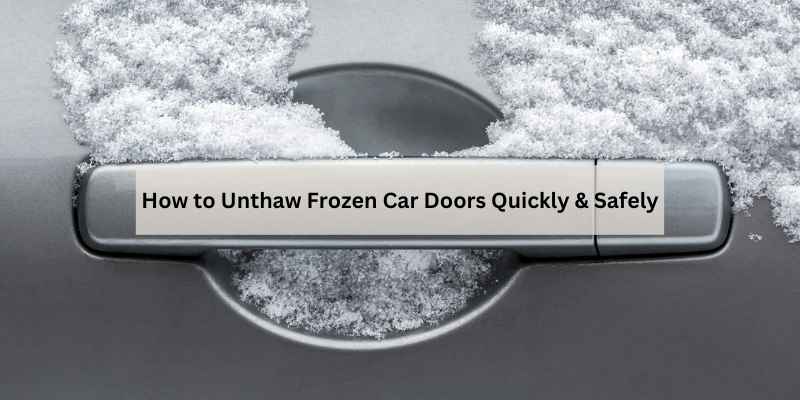
How to Unthaw Frozen Car Doors Without Breaking Something
You’re already late, coffee in hand, and you pull the door handle. Nothing. You pull harder. Still nothing. Then you yank it with all your weight, and you hear that sickening crack — not ice, but plastic. Every winter, thousands of drivers do the same thing, and it ends with a broken handle, a torn seal, or a door that won’t latch properly.
This guide covers the physics of why doors freeze, the exact methods that work at different temperatures, and the mistakes that cause real damage. You’ll learn how to break the ice seal without breaking your car, what to do if the lock cylinder is frozen, and how to keep the problem from coming back. No fluff, just what works.

Subzero
Lock De-Icer & Lubricant, 18.5mL
- 18.5mL, of de-icer
- Used for car doors, ski racks, luggage, padlocks, home and garage doors, mailboxes and more.
- Thaws frozen locks instantly and lubricates lock cylinder
If you’re in a pinch and need something fast, a pocket-sized lock de-icer from Subzero thaws frozen locks instantly and lubricates the cylinder at the same time. It’s small enough to keep in your coat, and the snap-on cap means it won’t leak in your pocket. Keep one in your winter jacket and one in the glovebox.
Why Your Car Door Freezes Shut (The Science of Ice)
Ice doesn’t just glue the door to the frame — it forms a mechanical bond. When temperatures drop below freezing, moisture in the air condenses on the cold rubber seal and the metal door frame. That thin layer of water freezes, and as it expands, it locks the two surfaces together like a clamp.
The seal itself makes things worse. Rubber seals are slightly porous, so water seeps into the microscopic gaps and freezes there. That’s why a door can look completely clear of ice and still refuse to open. The bond is happening inside the seal, not on the surface.
Temperature matters more than you think. At 25°F (-4°C), the ice is brittle and breaks easily. At 10°F (-12°C), it’s harder and more adhesive. At -10°F (-23°C), the rubber seal itself stiffens, which means it can crack if you force it. So the method you choose should depend on how cold it actually is.
Another factor is interior ice. If you’ve had snow on your boots or left a wet bag on the seat, moisture evaporates inside the car, then condenses on the inside of the door frame. That freezes too, and it’s worse because you can’t see it. You’ll pull the handle, the door moves a little, and then it stops — that’s often interior ice, not the outer seal.
The Golden Rule: Break the Seal, Don’t Break the Handle
Most people grab the handle and pull outward with maximum force. That’s exactly wrong. The handle is connected to a cable or rod that operates the latch. When you pull hard, you’re putting stress on that mechanism, not on the ice. The handle can snap, the cable can stretch, or the latch can bend. All of those repairs cost more than a bottle of deicer.
The right approach is to break the ice seal first, then open the door normally. Think of it like prying a frozen lid off a jar — you don’t yank the lid; you twist it to break the seal. Same idea here.
The safest first move is the push-in technique. Instead of pulling the handle, place your palm flat against the door near the handle and push inward, toward the car. This compresses the rubber seal and cracks the ice bond along the entire edge. You’ll hear a pop or a crunch. Then try the handle gently.
If the door still won’t budge, don’t keep pushing harder. Move to one of the methods below, or work the door from the outside edge. The goal is always to break the ice, not to overpower it.
The 5 Safest Ways to Unthaw a Frozen Car Door
The Push-and-Pull Method
This works for light frost, not thick ice. Start by pushing the door inward with your palm, as described above. Then, while maintaining that pressure, pull the handle gently and rock the door slightly — an inch forward, an inch back. The rocking motion works the ice loose without stressing the latch.
If you’re dealing with a driver’s door that’s frozen, try the passenger door first. It might not be frozen, and you can reach across to unlock the driver’s side from inside. That doesn’t break the ice seal, but it gets you in the car so you can start the engine and turn on the heat.
The Alcohol and Water Spray
Rubbing alcohol (isopropyl) has a freezing point around -128°F (-89°C), so it melts ice even in extreme cold. Mix two parts 70% isopropyl alcohol with one part water in a spray bottle. Spray it along the door seam, the rubber seal, and the lock cylinder. Wait 30 seconds, then try the push-and-pull method.
This is one of the most effective DIY solutions because it’s cheap, it doesn’t damage paint or rubber, and it evaporates quickly so it won’t refreeze. Keep the spray bottle in your house, not your car — if the car is frozen, the bottle might be frozen too.
One caveat: alcohol can dry out rubber over time, so don’t use it every day. Use it as a rescue, not a routine.
The Lukewarm Water Pour (And Why Hot Water is a Mistake)
Hot water is the classic advice, and it’s the worst thing you can do. Boiling water can crack your window glass, warp the door seal, and strip the paint. Even hot tap water (above 140°F) can damage the clear coat in freezing temperatures because the sudden temperature change stresses the material.
Lukewarm water — about body temperature, 98°F (37°C) — is safe. Pour it slowly along the door seam, not directly on the glass. The water melts the ice, and the warmth softens the rubber seal. Wait a few seconds, then use the push-and-pull method. This works best when the temperature is above 20°F. In extreme cold, the water may freeze before it does anything.
After you get the door open, dry the seal with a towel. If you don’t, that water will refreeze and lock the door again in ten minutes.
Using a Hairdryer or Portable Heater
If you have access to an extension cord or a portable battery-powered heater, this is the gentlest method. A hairdryer on low or medium heat, aimed at the door seam and the rubber seal, will melt the ice in a few minutes. It’s slow, but it’s safe for the paint, the glass, and the seal.
Keep the dryer moving — don’t hold it in one spot. Concentrated heat can crack glass, especially if the outside temperature is below 10°F. Work in a sweeping motion along the entire door edge.
This method is best for interior ice, because you can point the heat at the inside of the door frame where the condensation freezes. You’ll need to be inside the car, so use the passenger door or the trunk to get in.
The Commercial Deicer (And How to Use It Properly)
Commercial deicers, like the Subzero lock de-icer, are formulated to melt ice fast and also lubricate the lock cylinder. They’re not just for locks — they work on door seals too. The key is to apply it directly to the seam where the door meets the frame, not just on the handle.
Spray it along the entire edge, wait 30 seconds, and then try the push-and-pull method. The deicer penetrates the ice and breaks the bond. For a frozen lock cylinder, insert the nozzle into the keyhole and give it a short burst. The lubricant helps the tumblers move freely so the key turns without forcing it.
These products are small and cheap, so it’s worth keeping one in your coat pocket and one in the glovebox. Just remember to bring the glovebox one inside if the temperature drops below 0°F — some deicers can freeze in the tube.
What NOT to Do (The Damage Checklist)
Here’s where most people cause permanent damage. Avoid these at all costs:
- Don’t use a crowbar or screwdriver to pry the door open. You’ll dent the frame and tear the seal. The repair will cost hundreds.
- Don’t pour boiling water on the glass or the lock. Glass can shatter, and the lock cylinder can seize from the thermal shock.
- Don’t yank the handle with all your strength. The handle will snap before the ice breaks. A new handle costs $50–$200 plus labor.
- Don’t use a key to chip away ice at the lock. You’ll bend the key or break it off inside the cylinder.
- Don’t use a torch or heat gun. You’ll melt the plastic trim and possibly start a fire.
- Don’t use WD-40 as a deicer. It’s a water displacer, not a deicer. It won’t melt ice, and it leaves a residue that attracts dust and dirt.
If you’re driving a newer car with electric handles or touch-sensitive locks, be extra careful. These systems rely on sensors and small motors. Forcing the door can damage the actuator, and replacing it means removing the entire door panel. Electric handles often don’t have a mechanical backup, so if the ice jams the mechanism, you might not be able to open the door from inside or outside until it thaws.
How to Prevent Frozen Doors in the First Place
Lubricating the Seals Correctly
The best way to deal with a frozen door is to stop it from freezing. Silicone spray is the answer. It creates a thin, water-repellent layer on the rubber seal that stops ice from bonding. Apply it in the fall, before the first freeze, and again in mid-winter if you’ve washed the car or had heavy rain.
Spray the silicone onto a cloth first, then wipe it onto the rubber seal. Don’t spray directly onto the seal — overspray can get on the paint and make it slippery. Wipe off any excess. The goal is a thin, even coat, not a wet mess.
This takes five minutes and costs about $6 for a can that lasts two winters. It’s the single most effective prevention method I know.
The Car Cover Hack
If you park outside and know a storm is coming, throw a tarp or a car cover over the doors. Even a simple fitted sheet tucked into the door seam will keep moisture off the rubber seal. You don’t need to cover the whole car — just the door handles and the seams.
When you arrive at your car in the morning, pull the cover off and the door opens normally. It’s not a permanent solution, but it works for a night or two of freezing rain.
Another trick: after you park, open the doors for 30 seconds to let the warm interior air escape. That reduces condensation inside the car, which means less interior ice on the door frame.
What to Do If the Lock Cylinder is Frozen
A frozen lock cylinder is a different problem — it’s not the door seal, it’s the keyhole itself. The tumblers inside the cylinder are stuck because moisture froze between them. You can’t push the door open to fix this; you need to thaw the lock from the outside.
First, try the key. Insert it gently and wiggle it slightly. Don’t force it. If it doesn’t turn, stop — forcing it will bend the key.
Then use a commercial lock deicer, like the Subzero lock de-icer. Insert the nozzle into the keyhole and spray for 2–3 seconds. The deicer melts the ice and lubricates the tumblers. Wait 15 seconds, then try the key again. It should turn smoothly.
If you don’t have a deicer, use the alcohol spray from earlier. Spray it directly into the keyhole. It evaporates quickly and won’t leave residue that could freeze later.
One more option: heat the key itself with a lighter for 5 seconds, then insert it. The heat melts the ice around the tumblers. Don’t make the key too hot to hold — you’ll melt the plastic head or the lock cylinder.
If the lock is frozen and you have a key fob, try the fob first. Many modern cars let you unlock with the fob even when the cylinder is frozen, because the fob doesn’t need the mechanical lock. Then you can open the door from inside and address the cylinder later if needed.
Immediate Post-Thaw Care to Prevent Refreezing
You got the door open. Now what? If you just walk away, the door will freeze shut again in half an hour, especially if the temperature is still below freezing. Here’s what to do in the first five minutes:
- Dry the rubber seal with a towel or rag. Wipe the entire length of the seal, both the door side and the frame side. Any water left will freeze.
- Dry the door frame and the latch mechanism. Use the same towel.
- Apply a fresh coat of silicone spray to the seal. This creates a barrier that stops new moisture from bonding.
- Test the door from the inside — open and close it a few times to make sure the latch works smoothly.
- If you used water to thaw the door, dry the area around the lock cylinder too. Water can seep into the keyhole and freeze the tumblers.
- If you used a deicer, wipe off any excess so it doesn’t drip down the door and leave streaks.
If you’re parked at home, you can also leave the door slightly ajar for a few minutes with the heat on. That dries the interior moisture and prevents interior ice from forming overnight.
What Actually Works — A Quick Comparison
| Method | Best For | Time to Work | Risk of Damage | Cost |
|---|---|---|---|---|
| Push-and-pull technique | Light frost, early freezing | 1–2 minutes | Very low | Free |
| Alcohol and water spray | Moderate ice, down to -20°F | 30 seconds | Low (dries out rubber over time) | $2–$3 |
| Lukewarm water pour | Moderate ice, above 20°F | 1–2 minutes | Low if done carefully | Free |
| Hairdryer or heater | Interior ice, extreme cold | 5–10 minutes | Low (keep moving) | Free (electricity) |
| Commercial deicer | Lock cylinders, door seals | 15–30 seconds | Very low | $5–$10 |
Frequently Asked Questions
Can I use a credit card to open a frozen car door?
Yes, but with serious warnings. Slide a plastic card (like an old gift card, not your actual credit card) between the door and the frame, just above the latch. Work it back and forth to break the ice. This works best if the ice layer is thin. It won’t work if the ice is thick or if the seal is completely frozen. And don’t use a metal tool — you’ll scratch the paint or damage the seal. The card method is a last resort, not a first move.
How long does it take for a frozen door to thaw on its own?
It depends on the temperature. At 30°F, a door might thaw in 15 minutes with the sun on it. At 10°F, it could take hours. If you start the engine and turn on the heat, the interior will warm up, which helps thaw the door from the inside. But if the seal is frozen solid, the heat takes a while to reach it. Patience is cheaper than a new handle.
Why does my car door freeze from the inside?
That’s condensation. Warm, moist air inside the car hits the cold metal door frame and freezes. It usually happens after you’ve had snow on your boots, a wet coat, or a cup of coffee that spilled. The fix is to dry the interior before you park, and to keep the windows slightly open to let moisture escape. If it’s already frozen, use a hairdryer from inside the car.
Is it safe to use a torch or lighter on the lock?
No. A torch will melt the plastic around the lock, and a lighter held too close can do the same. If you need heat, use a hairdryer or a warm key. Even the warm-key method has limits — if the key is too hot, you’ll damage the cylinder. Stick to deicer or alcohol for locks.
What’s the best lubricant for car door seals in winter?
Silicone spray is the best. It’s water-repellent, doesn’t freeze, and is safe for rubber. Apply it in the fall and again mid-winter. Avoid petroleum-based lubricants like WD-40 or grease — they degrade rubber over time and attract dirt. If you don’t have silicone spray, you can use a dry Teflon lubricant, but silicone is easier to find and cheaper.
What You Should Remember Next Time It Freezes
- Push the door inward before you pull the handle — it breaks the ice seal without stressing the latch.
- Never use hot water. Lukewarm only, and dry the seal afterward.
- Keep a small commercial deicer in your coat pocket or glovebox — it’s the fastest fix for locks and seals.
- Alcohol and water spray is a great DIY rescue, but don’t use it daily.
- Silicone spray on the seals in the fall prevents most frozen doors.
- If the lock cylinder is frozen, use deicer in the keyhole, not force.
- Dry the seal and re-lubricate immediately after thawing to stop refreezing.
Frozen doors are a nuisance, but they don’t have to cost you a repair bill. The key is to break the ice, not fight it. With the right technique and a little prevention, you’ll be inside your car in under a minute — without breaking anything.
Products related to this article
Sponsored / affiliate links. As an Amazon Associate I earn from qualifying purchases. I may earn additional commission from eligible campaigns.