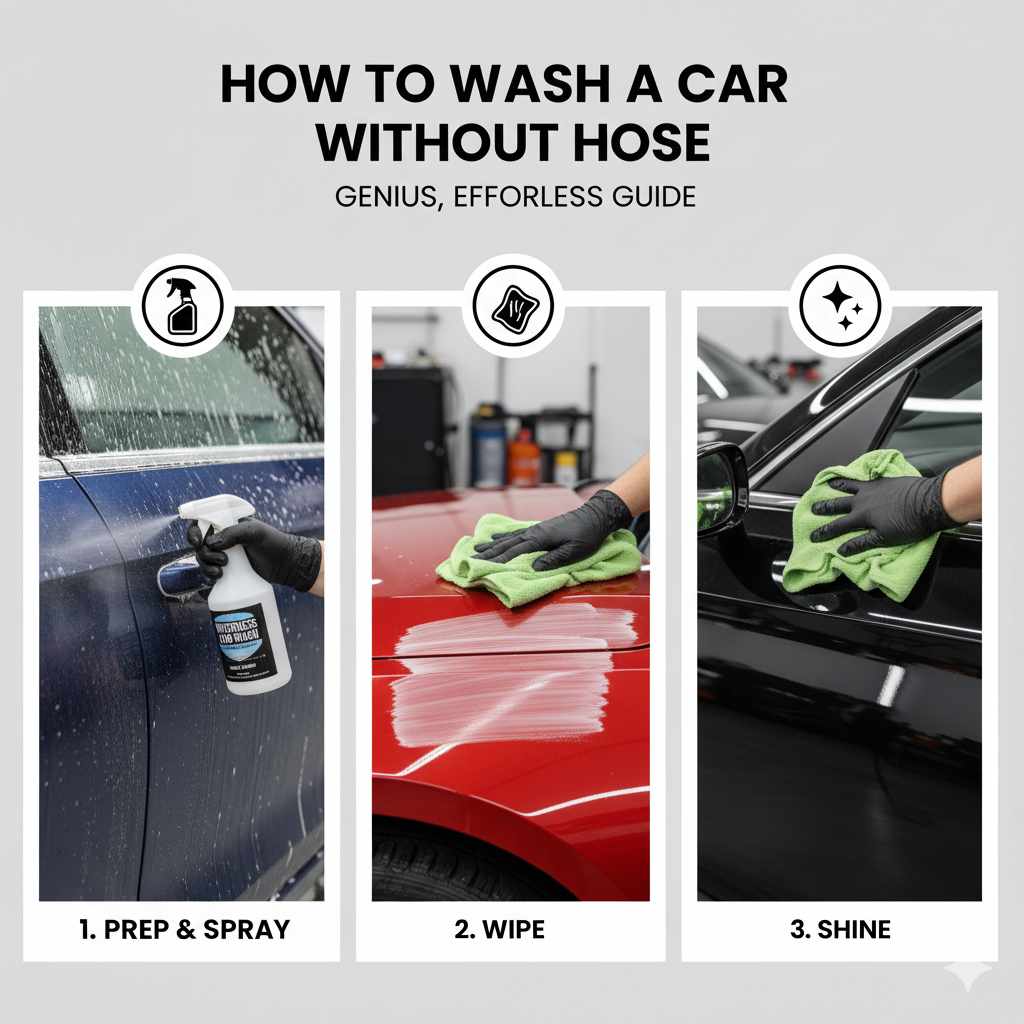
How to Wash a Car Without Hose: Genius, Effortless Guide
Can’t use a hose? No problem! You can achieve a sparkling clean car with just a few buckets, microfiber towels, and a bit of know-how. This guide shows you the most effective, water-saving methods for a spotless wash, proving that a professional-looking shine is totally achievable without a traditional hose setup.
Hey there, car lovers! Md Meraj here, your go-to buddy for making car care feel a whole lot simpler. Ever look at your car and sigh, wishing it was clean, but then you remember… no hose? Maybe you live in an apartment, have water restrictions, or just can’t believe the hassle of dragging out the hose and sprinkler system. I get it! It can feel like a big roadblock to keeping your ride looking its best. But what if I told you that you can get that showroom shine without ever turning on a hose? That’s right, a brilliant wash is totally within your reach, even with limited water. In this guide, I’ll walk you through some genius, effortless methods that are surprisingly effective. Get ready to ditch the hose and embrace a cleaner, simpler way to wash your car!
Why Washing Your Car Without a Hose is a Smart Move
Let’s face it, not everyone has easy access to a hose. Whether you’re dealing with apartment living, water conservation mandates, or just the sheer inconvenience of a lengthy hose, finding an alternative is a big win. Washing your car without a hose isn’t just about overcoming limitations; it’s often a more eco-friendly and water-saving approach. These methods are designed to use minimal water while still delivering maximum cleaning power. They’re perfect for quick touch-ups or a full clean when traditional methods are off the table. Plus, they’re surprisingly effective at preventing scratches and swirl marks when done correctly, ensuring your car’s paint stays looking fantastic for longer.
Your Hose-Free Car Wash Toolkit
Before we dive into the washing process, let’s gather your supplies. You don’t need much, and having the right tools makes all the difference. Think of this as assembling your car’s spa kit!
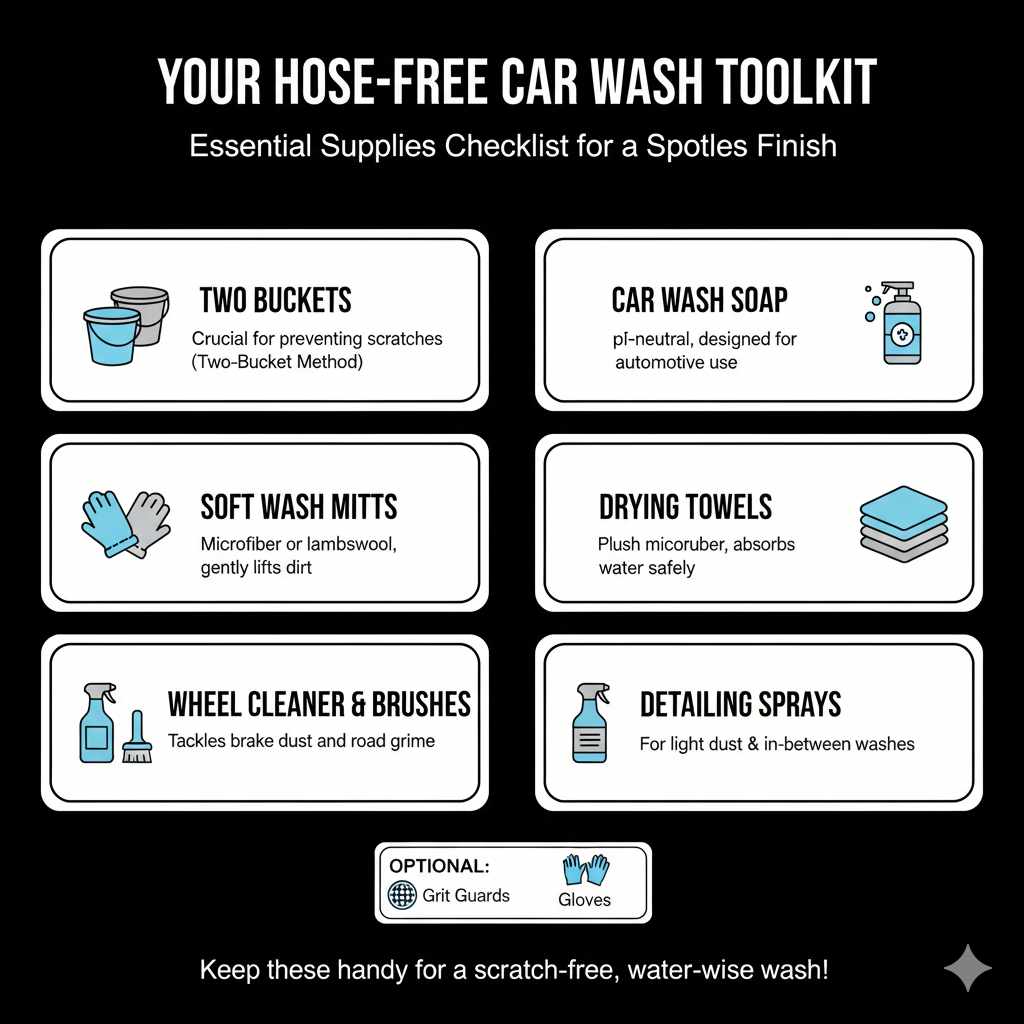
Essential Supplies Checklist:
- Two Buckets (The Two-Bucket Method is Key!): One for soapy water, one for rinsing your wash mitt. This is crucial for preventing scratches.
- High-Quality Car Wash Soap: Look for a pH-neutral soap designed for automotive use. Avoid dish soap, as it can strip protective waxes and sealants.
- Soft Wash Mitts: Microfiber or lambswool mitts are best. They hold soap and gently lift dirt without scratching. Have at least two – one for the upper parts of the car and one for the lower, dirtier sections.
- Plenty of Microfiber Drying Towels: Invest in soft, plush microfiber towels. These absorb more water and are safer for paint than chamois or old cotton towels.
- Wheel Cleaner and Brushes: Specific wheel cleaners are formulated to tackle brake dust and road grime safely. Separate brushes for wheels are a must to avoid transferring brake dust to paint.
- Detailing Sprays or Waterless Wash Products: These are your secret weapons for in-between washes or for tackling light dust and dirt.
- Spray Bottles: For diluting cleaning solutions or for holding your waterless wash product.
- Gloves: Protect your hands from harsh chemicals.
- Optional: Grit Guards for Buckets: These sit at the bottom of your buckets to trap dirt, further reducing the risk of scratching.
Method 1: The Two-Bucket Wash (Your Go-To for a Deep Clean!)
This is the gold standard for washing your car safely, even without a hose. It minimizes the risk of swirling and scratching paint by keeping dirt separate from your clean wash solution.
Step-by-Step Guide to the Two-Bucket Wash:
Preparation is Key
Park your car in a shaded area. Washing in direct sunlight can cause soap and water to dry too quickly, leading to water spots and making the process harder. Ensure the car’s surface is cool to the touch. If you have heavy mud or debris, it’s a good idea to pre-rinse what you can with a spray bottle filled with plain water, or even a gentle stream from a watering can if you have one. This removes loose particles.Set Up Your Buckets
Fill one bucket with clean water (this is your rinse bucket). Fill the second bucket with water and add the recommended amount of car wash soap according to the product’s instructions. If you have grit guards, place them at the bottom of both buckets.Start with the Wheels (If They’re Dirty)Wheels are often the dirtiest part of the car and can harbor abrasive brake dust. It’s best to tackle them first so you don’t spread that grime onto your clean paint later. Spray your wheel cleaner onto one wheel at a time, let it dwell for a minute (but don’t let it dry), and then use your wheel brushes to agitate the dirt. Rinse the brushes thoroughly in your rinse bucket or with plain water from a spray bottle.
Wipe down the wheels with a dedicated wheel towel if needed, and set aside for drying later.Wash the Car Top-DownDip your wash mitt into the soapy water bucket. Start washing from the roof of the car, working your way down. Wash in straight-line motions, not circles, as this is less likely to create swirl marks. Wash one panel or section at a time (e.g., the roof, then the hood, then a door).Rinse the Mitt FrequentlyThis is where the magic of the two-bucket method happens: After washing a section, thoroughly rinse your wash mitt in the clean water bucket.
Rub it around to dislodge dirt and grit. Then, dip it back into the soapy water bucket for the next section. This prevents you from transferring dirt back onto the car’s paint, which is the main cause of scratches.Pro Tip: If you notice heavy dirt on your mitt, rinse it extremely well in the clean water bucket. If it seems too gritty, rinse and then even rinse with a squirt from your spray bottle before returning to the soap bucket.
Work in SectionsContinue this process, moving from the cleanest areas (top) to the dirtiest (lower panels). Wash a section, rinse the mitt, re-soap, and move to the next. For heavily soiled lower panels, you might consider using a separate wash mitt dedicated to just these areas.Rinse Off the SoapOnce you’ve washed the entire car, it’s time to rinse off the soap. You can do this very effectively with a spray bottle filled with clean water. Systematically spray down each section, ensuring all soap residue is removed.
For a quicker rinse, you can use a gentle stream from a watering can if available, focusing on sheet-rinsing the water off the surface.Dry ImmediatelyThis is crucial to prevent water spots. Immediately after rinsing, use your clean, plush microfiber drying towels. Gently pat or glide the towel over the surface. Don’t rub aggressively. Use multiple towels if necessary – a damp towel won’t absorb as much water. Start from the top and work your way down.
Method 2: The Waterless Car Wash (For Light Dust and Quick Touches)
If your car is only lightly dusty or has some minor road film, a waterless wash is a fantastic, fast solution. It uses specialized spray cleaners that lift dirt away from the paint surface.
How to Do a Waterless Wash:
-
Choose Your Product Wisely
Purchase a high-quality waterless car wash spray. These products contain lubricants and cleaning agents that encapsulate dirt particles, allowing them to be safely wiped away.Work Panel by Panel
Never spray the entire car at once. Work on one small section or panel (e.g., half a door, the hood) at a time.Spray Generously
Lightly spray the waterless wash product onto the surface. You want to saturate the area with the cleaner to lift the dirt.Use Multiple Clean Towels Per Panel
Take a clean microfiber towel, fold it into quarters. Gently wipe the sprayed area in one direction. Do NOT scrub or use circular motions. The lubricants in the spray should allow the dirt to glide off. As soon as the towel has picked up dirt, flip to a clean section of the towel. Once all four sides are dirty, use a fresh towel for the next pass.Follow Up Wiping
After you’ve wiped away the dirt with your initial towel, take another clean, dry microfiber towel and lightly dry the area. This buffing step helps remove any remaining residue and leaves a nice shine.Repeat and Be Patient
Continue this process panel by panel. For heavily soiled areas, this method is not suitable and could lead to scratches. It’s best for maintenance washes or cars kept relatively clean.
Important Note: A waterless wash should not be used on cars with heavy mud, thick grime, or excessive dirt. For those situations, the two-bucket method or a rinseless wash is a safer bet. You can learn more about car wash product safety guidelines from organizations like the U.S. Environmental Protection Agency, which often discusses water usage in car washing.
Method 3: The Rinseless Wash (The Bathtub of Car Washing)
This method is the perfect hybrid between a full wash and a waterless wash. It uses one bucket with a highly concentrated cleaning solution and special microfiber towels, significantly reducing water usage while still being effective for moderately dirty cars. It’s ideal for those who want a thorough clean without the need for a hose to rinse. The key is using rinse aid or polymers in your wash solution that leave a protective barrier.
Getting Started with a Rinseless Wash:
Gather Your Supplies
You’ll need one bucket, a highly concentrated rinseless wash solution (like Optimum No Rinse Wash & Shine, often abbreviated as ONR), and a stack of clean microfiber towels (at least 10-12 is recommended). You might also want a grit guard for your bucket.Prepare Your Bucket
Fill your bucket with about 2 gallons of water. Add the recommended amount of rinseless wash solution. Many rinseless washes contain polymers that help encapsulate dirt and provide lubrication, acting like a rinse aid. Follow the product’s dilution instructions carefully – over-concentrating can lead to residue.Soak Your Towels (The “Wash & Dry” Towels)
Submerge most of your microfiber towels into the bucket of solution. Let them soak. These will be your “wash and dry” towels. Have about 2-3 towels ready for the initial wash phase, and the rest for drying/buffing.Wash Top-Down, One Panel at a Time
Take one soaked towel from the bucket. Gently wipe across one panel of the car (e.g., the roof) in a straight-line motion. Lift dirt, but don’t scrub. The wash solution will help lift and hold the dirt within the towel fibers.Dry and Buff with the Same Towel
After one pass with the soaked towel, flip it to a clean side. Gently dry and lightly buff the same panel. The towel should now be relatively clean, and the panel should be clean and streak-free. You can then set that towel aside for later cleaning.Repeat with Clean Towels
Take another soaked towel from the bucket. Work on the next panel (e.g., the hood). Again, one gentle wipe, then flip to a clean side to dry/buff. Set this towel aside. Continue this for the entire car.Final Buff
Once you’ve completed the wash/dry cycle on all panels, take a fresh, dry microfiber towel and give the entire car a finalbuff. This will remove any last traces of moisture and enhance the shine.Dealing with Dirtier Cars
For cars with moderate dirt, you can use about 4-6 soaked towels for the washing stage, setting each used towel aside. Then, use more dry towels for the final buff. If your car has very heavy road grime or mud, the two-bucket method is still the safest bet.
Table: Comparing Hose-Free Washing Methods
Here’s a quick comparison to help you choose the best method for your needs:
| Method | Best For | Water Usage | Risk of Scratching | Effort Level | Time Commitment |
|---|---|---|---|---|---|
| Two-Bucket Wash | Heavy dirt, thorough cleaning | Moderate (uses water for rinsing, but less than a hose wash) | Low (when performed correctly) | Moderate | Moderate to High |
| Waterless Wash | Light dust, quick touch-ups, very lightly soiled cars | Very Low (uses spray product) | Medium to High (if car is too dirty or done aggressively) | Low | Low |
| Rinseless Wash | Moderate dirt, efficient cleaning with minimal water | Low (uses one bucket of water) | Low (when performed correctly with plenty of towels) | Moderate | Moderate |
Tips for a Perfect Shine (Hose-Free Edition!)
No matter which method you choose, these tips will elevate your car’s appearance and protect its finish:
- Always use clean microfiber towels. Seriously, this cannot be stressed enough. Dirty towels are the enemy of a scratch-free finish.
- Work from top to bottom. Gravity is your friend! Wash the roof first, then the windows, hood, trunk, and finally the lower sides and bumpers.
- Don’t let cleaning products dry on the paint. This is why shade is important, and why you work in small sections.
- Invest in quality products. Good car wash soap, decent microfiber towels, and effective waterless/rinseless wash solutions make a world of difference.
- Clean glass last. Use a dedicated glass cleaner and microfiber towels for a streak-free finish. Don’t use your paint-washing towels on glass.
- Protect your paint. After washing, consider applying a spray wax or sealant. This adds shine and makes future washes easier. A good spray wax can be applied with a microfiber towel and buffed off, much like the drying step in a waterless wash. For more durable protection, look into ceramic spray coatings, which can significantly enhance gloss and water beading.
- Detailing clay can be used dry with appropriate spray lubricants if you’re using a waterless or rinseless wash, but be extra careful. For beginners, it’s often safer to use clay with a dedicated detailing spray.
Dealing with Stubborn Spots and Contaminants
Sometimes, basic washing isn’t enough. Here’s how to tackle common issues without a hose:
Tar Spots and Bug Splatter
These love to stick around. For bugs, a good waterless wash spray, applied heavily, can often lift them off. For tougher spots or tar, you’ll need a dedicated bug and tar remover. Apply it to a microfiber towel and gently dab at the spot. You may need to let it sit for a minute before it dissolves the residue. Always rinse the area afterward with a damp towel and dry.
Tree Sap
Tree sap is notoriously sticky. Isopropyl alcohol (rubbing alcohol) diluted with water (about 1:1 ratio in a spray bottle) can help break it down. Apply to a towel, then dab the sap. Specialty bug and tar removers can also work on sap. Again, clean the area thoroughly with your chosen wash solution and a clean towel afterward.
Water Spots
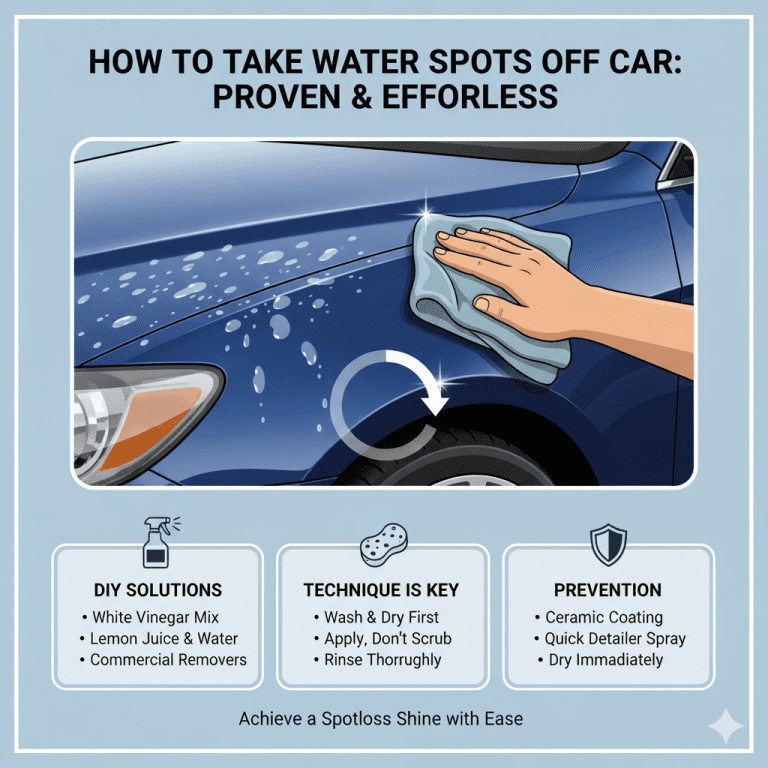
If you already have water spots, you might need a dedicated fallout remover or a clay bar treatment to lift mineral deposits. Even a good quality detail spray can sometimes help buff out light water spots.
Maintenance Wash Frequency
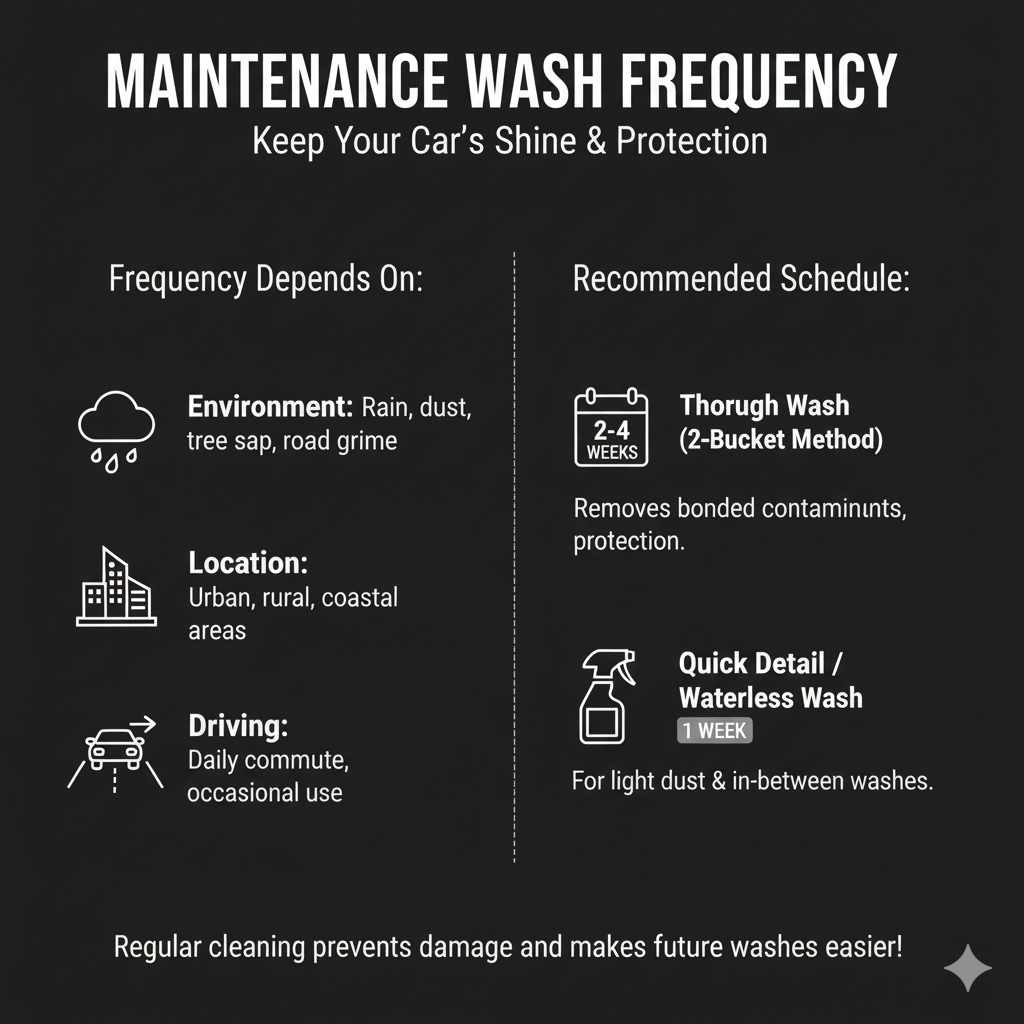
How often you wash your car depends on where you live and drive. If you live in an area with frequent rain, dust, or tree cover, you might need to wash more often. For most drivers, a thorough wash (like the two-bucket method) every 2-4 weeks is good. Between washes, a quick spray with a waterless wash product once a week can keep dirt from accumulating. Regular cleaning prevents harsh contaminants from bonding with your paint, making each wash easier and more effective.
Can I Use a Bucket of Car Wash Soap and a Single Mitt?
While you can do this, it’s absolutely not recommended if you want to preserve your car’s paint. Using only one bucket and one mitt means you are constantly dipping a sandy, dirty mitt back into your soapy water, and then rubbing that dirt all over your car’s surface. This is the fastest way to create scratches and swirl marks, which dull your paint’s shine over time. The two-bucket method, or a rinseless/waterless wash, are far superior for keeping your car looking great without damaging it.
FAQ: Your Hose-Free Car Wash Questions Answered
What is the simplest way to wash a car without a hose?
The simplest method for a light cleaning is the waterless car wash. You’ll need plenty of microfiber towels and a good waterless wash spray. Work panel by panel, spraying the product and gently wiping with a clean towel.
Is a rinseless wash better than a waterless wash?
Generally, yes, for cars with more than just light dust. A rinseless wash uses one bucket of water and special soap that encapsulates dirt, allowing for a more thorough clean with less risk of scratching than a waterless wash on a moderately dirty car. It still uses very little water compared to a traditional hosed wash.
How much water do I really need for a hose-free wash?
For a two-bucket wash, you might use 5-10 gallons of water total, split between two buckets and spray bottles. For a rinseless wash, you’ll typically use only about 2 gallons in one bucket. A waterless wash uses essentially no water, relying on a spray cleaner.
Can I wash my car at an apartment complex without a hose?
Absolutely! The rinseless wash and waterless wash methods are perfect for apartment living. They are designed for minimal water usage and can often be done in a parking spot. Always check your complex’s rules regarding car washing.
Will washing my car without a hose leave water spots?
Water spots form when water evaporates before it’s wiped away, leaving mineral deposits. Any method, hose-free or not, can leave spots if you don’t dry the car immediately and thoroughly after rinsing or washing. Using a high-quality microfiber drying towel is key.
What if my car is really dirty (mud, heavy grime)? Can I still wash it without a hose?
For heavy dirt or mud, the two-bucket method is your safest bet. You can pre-rinse with spray bottles or a watering can to remove the bulk of loose debris, then proceed with the two-bucket wash as described. A waterless or rinseless wash is generally not recommended for very dirty cars as it significantly increases the risk of scratching.
Conclusion
See? Washing your car without a hose is not only possible but can be incredibly effective and even more satisfying. By using the right techniques like the two-bucket method, or embracing the efficiency of waterless and rinseless washes, you can maintain a spotless car without the need for a water-guzzling hose.
Remember to always work in the shade, use plenty of clean microfiber towels, and start from the top down. These methods will help you achieve a professional-looking shine while saving water and protecting your car’s paint. Go ahead, give these genius, effortless guides a try, and enjoy the gleam of your beautifully washed car!