Is a Muscle Car a Sports Car? Essential Comparison
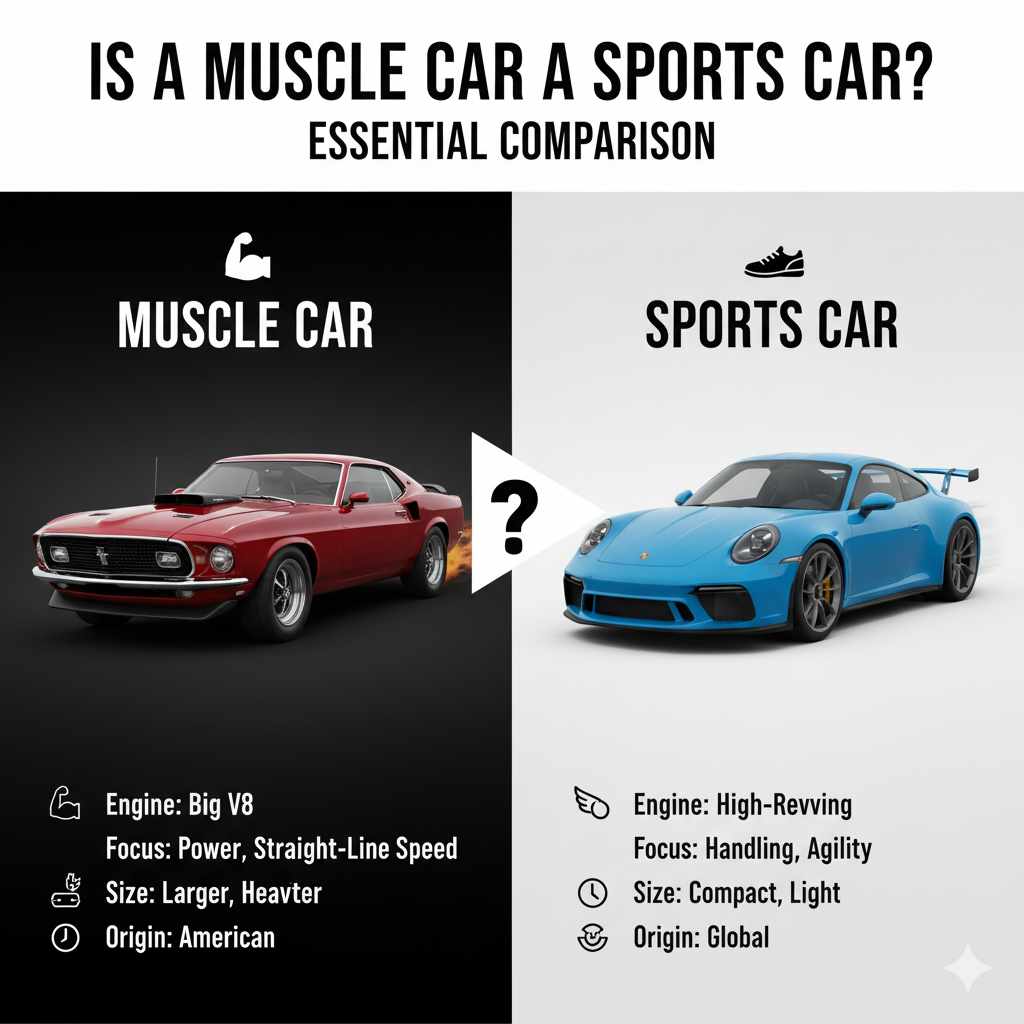
While both muscle cars and sports cars are performance-oriented, they differ significantly. Muscle cars prioritize raw V8 power and straight-line acceleration, often being larger and heavier. Sports cars focus on nimble handling, agility, and precise control, usually being lighter and more compact. Think of it as brute force versus finesse.
Is a Muscle Car a Sports Car? The Essential Comparison You Need to Know
Many car lovers enjoy the roar of a powerful engine and the thrill of a quick acceleration. When we hear about cars built for speed and excitement, two terms often come up: muscle cars and sports cars. But are they the same thing? It’s a question that can spark lively debates at car shows and among friends. For many, the lines can blur, leading to confusion. Don’t worry, understanding the difference is simpler than you might think! We’ll break down what makes each type unique, focusing on what matters most to drivers like you. By the end, you’ll know exactly how to tell them apart and appreciate what makes each special.
What Exactly is a Muscle Car?
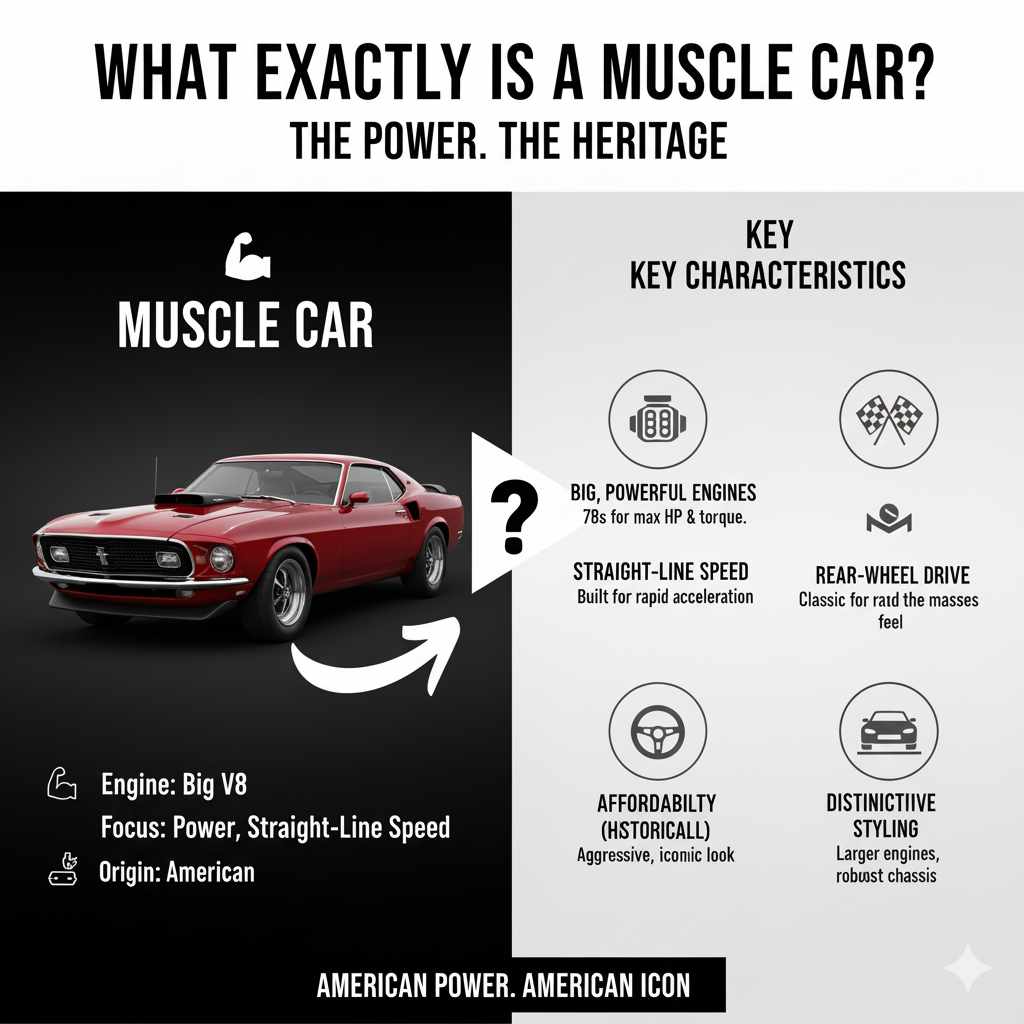
When you picture a muscle car, you probably imagine a powerful machine with a rumbling V8 engine under the hood. That’s pretty much the core idea! Muscle cars are basically American-made, rear-wheel-drive vehicles that put a huge emphasis on raw power. They were most popular during the 1960s and early 1970s.
Key Characteristics of Muscle Cars:
Big, Powerful Engines: This is their defining feature. They typically have large displacement V8 engines designed for serious horsepower and torque, perfect for fast acceleration.
Focus on Straight-Line Speed: Muscle cars are built to be quick in a drag race. They excel at accelerating rapidly down a straight road.
Rear-Wheel Drive (RWD): This setup is traditional for muscle cars, providing that classic driving feel and enabling powerful acceleration.
Affordability (Historically): Many muscle cars were based on affordable, mass-produced car platforms. This made them accessible to a wider audience who wanted performance without a luxury price tag. Think of cars like the Ford Mustang or Chevrolet Camaro in their early days.
Distinctive Styling: They often have a bold, aggressive look with classic lines, wide grilles, and a powerful stance.
Weight: Compared to sports cars, muscle cars tend to be heavier due to their larger engines and chassis designed for durability as much as performance.
A Short History Lesson
The muscle car era really took off in the mid-1960s. Automakers realized that young drivers loved performance. Brands like Pontiac, Dodge, Ford, and Chevrolet started putting bigger, more powerful engines into their existing compact and mid-size car models. This created a new breed of car that offered incredible acceleration for its price. Cars like the Pontiac GTO, Plymouth Barracuda, and Dodge Charger became legends of this era.
What Exactly is a Sports Car?
Sports cars are all about a more balanced approach to performance. While they are definitely designed for speed and excitement, their focus is on how they handle and feel to drive, not just how fast they go in a straight line. They are typically built for agility and a more engaging driving experience.
Key Characteristics of Sports Cars:
Agility and Handling: This is the hallmark of a sports car. They are designed to corner with precision, offering excellent grip and responsive steering.
Lightweight Construction: To achieve better handling and acceleration, sports cars are usually built to be lighter than muscle cars.
Advanced Suspension and Braking: Sports cars often feature sophisticated suspension systems and high-performance brakes designed to work together for optimal control during spirited driving.
Driver-Focused Cockpit: The interior is usually designed around the driver, with supportive seats and controls easily accessible for an immersive experience.
Variety of Engine Types: While many sports cars have powerful engines, they aren’t always large V8s. You’ll find inline-four, V6, and V12 engines, often tuned for a balance of power, efficiency, and sound.
Two-Seaters or Small Rear Seats: Many sports cars are designed as coupes or roadsters with only two seats, or with very small rear seats impractical for adults.
A World of Diversity
The term “sports car” covers a much broader range of vehicles than “muscle car.” You have compact, nimble roadsters like the Mazda Miata, powerful grand tourers like the Porsche 911, and even high-performance coupes like the Chevrolet Corvette (though the Corvette often blurs lines by also having muscle car characteristics). They come from all over the world, with manufacturers like Porsche, Ferrari, BMW, and Mazda creating iconic sports cars.
The Big Differences: Muscle vs. Sports Car
Let’s break down the key differences in a way that makes it easy to see what sets them apart.
Power vs. Precision
This is often the biggest distinction.
Muscle Cars: Prioritize sheer brute force, especially engine power and straight-line acceleration. They are about overwhelming speed.
Sports Cars: Focus on a balance of power, handling, braking, and overall driver engagement. They are about surgical control and agility.
Weight and Size
Muscle Cars: Tend to be heavier and often larger, built on more robust platforms.
Sports Cars: Aim for lightness to improve agility and performance. They are generally smaller and more compact.
Engine Philosophy
Muscle Cars: Almost exclusively V8 engines, chosen for their big displacement and torque.
Sports Cars: Can have a wide range of engines (4-cylinders, V6s, V8s, V12s), with the choice driven by performance goals beyond just raw grunt, such as how the engine revs or its power-to-weight ratio.
Handling and Driving Experience
Muscle Cars: Can be fun to drive fast in a straight line, but their handling might feel less precise in corners compared to a sports car due to their weight and suspension tuning.
Sports Cars: Engineered for superior cornering ability, responsive steering, and a connected feel to the road. The driving experience is often more dynamic in twisty conditions.
Origin and Heritage
Muscle Cars: Primarily an American phenomenon, deeply rooted in the classic American automotive culture of the 1960s and 70s.
Sports Cars: A global category with iconic models coming from Europe and Japan, as well as the US.
Can a Car Be Both? Exploring the Gray Areas
Yes, the automotive world loves to blur lines for exciting new categories! Some cars manage to blend characteristics of both muscle and sports cars, creating unique performance machines.
The “Pony Car” and Its Evolution
Cars like the Ford Mustang, Chevrolet Camaro, and Dodge Challenger are often called “pony cars.” They originated as stylish, affordable coupes with more power than typical compact cars, but they weren’t initially as powerful as full-blown muscle cars. Over time, these models developed into cars that could have both powerful V8 engines (leaning towards muscle) and surprisingly capable handling (leaning towards sports car). Modern versions of these cars often offer performance packages that significantly improve their cornering abilities, making them more athletic.
The High-Performance Sports Car with a Big Engine
Consider a car like the Chevrolet Corvette. It’s a quintessential American sports car, known for its sleek design, two-seater layout, and excellent handling. However, it almost always features a powerful V8 engine, harking back to muscle car roots. When you combine its lightweight construction and handling prowess with that V8 torque, you get a car that excels at both straight-line speed and dynamic driving.
Understanding Key Performance Metrics: Beyond Horsepower
When people talk about car performance, they often just say “horsepower.” But for muscle cars and sports cars, other numbers and aspects are just as important.
Horsepower (HP):
This is the rate at which an engine does work and is a primary indicator of how fast a car can potentially go.
Muscle Cars: Often boast very high horsepower figures, especially from their large V8s.
Sports Cars: Can have high horsepower, but it’s often achieved through more advanced engineering (like turbocharging or high-revving engines) and balanced with other performance factors.
Torque (lb-ft or Nm):
This is the rotational force an engine produces, directly related to acceleration, especially at lower speeds.
Muscle Cars: Famous for massive torque figures, providing that thrilling feel of being pushed back in your seat when you hit the gas.
Sports Cars: Also benefit from good torque, but it’s often delivered in a way that works with the car’s gearing and overall balance rather than just overwhelming power.
0-60 mph (Acceleration Time):
This measures how quickly a car can accelerate from a standstill to 60 miles per hour.
Muscle Cars: Excel here, often achieving impressive times due to their powerful engines and rear-wheel drive traction.
Sports Cars: Also aim for quick 0-60 times, but they achieve it through a combination of power, low weight, and efficient power delivery.
Handling Metrics (G-Force and Lap Times):
These are harder to put a single number on for street cars but are crucial for sports cars.
Lateral G-Force: Measures how much sideways force the car can withstand when cornering. Sports cars typically have much higher lateral G-force ratings than muscle cars.
Lap Times: On a race track, sports cars generally achieve much faster lap times than muscle cars due to their superior ability to carry speed through corners.
Weight-to-Power Ratio:
This calculation shows how much weight the engine has to move for each unit of horsepower. A lower number is better for acceleration and agility.
Muscle Cars: May have high horsepower, but their heavier weight can mean a less favorable weight-to-power ratio than a dedicated sports car.
Sports Cars: Often have an excellent weight-to-power ratio, making light work of acceleration and improving their responsiveness.
Which Type of Car is Right for You?
Deciding between a muscle car and a sports car (or a car that blends them) depends on what you want from your driving experience.
Choose a Muscle Car If:
You love the rumble and visceral thrill of a big V8 engine.
Straight-line acceleration and feeling that raw power is your top priority.
You appreciate iconic American automotive design and heritage.
You want a car that makes a bold statement.
You don’t mind a car that might be a bit heavier and perhaps less nimble in tight turns.
Choose a Sports Car If:
You enjoy the challenge and fun of driving on winding roads.
Precise handling, responsive steering, and agility are what you crave.
You value a balanced performance package, including braking and suspension.
You prefer a more compact, often two-seater or 2+2 configuration.
You appreciate sophisticated engineering and often a more global automotive perspective.
Maintaining Your Performance Machine: Essential Tips
Whether you lean towards a muscle car or a sports car, these vehicles are designed for performance, and that means they often require specific care to keep them running at their best and safely on the road. As your trusted guide, I want to help you feel confident about looking after your car.
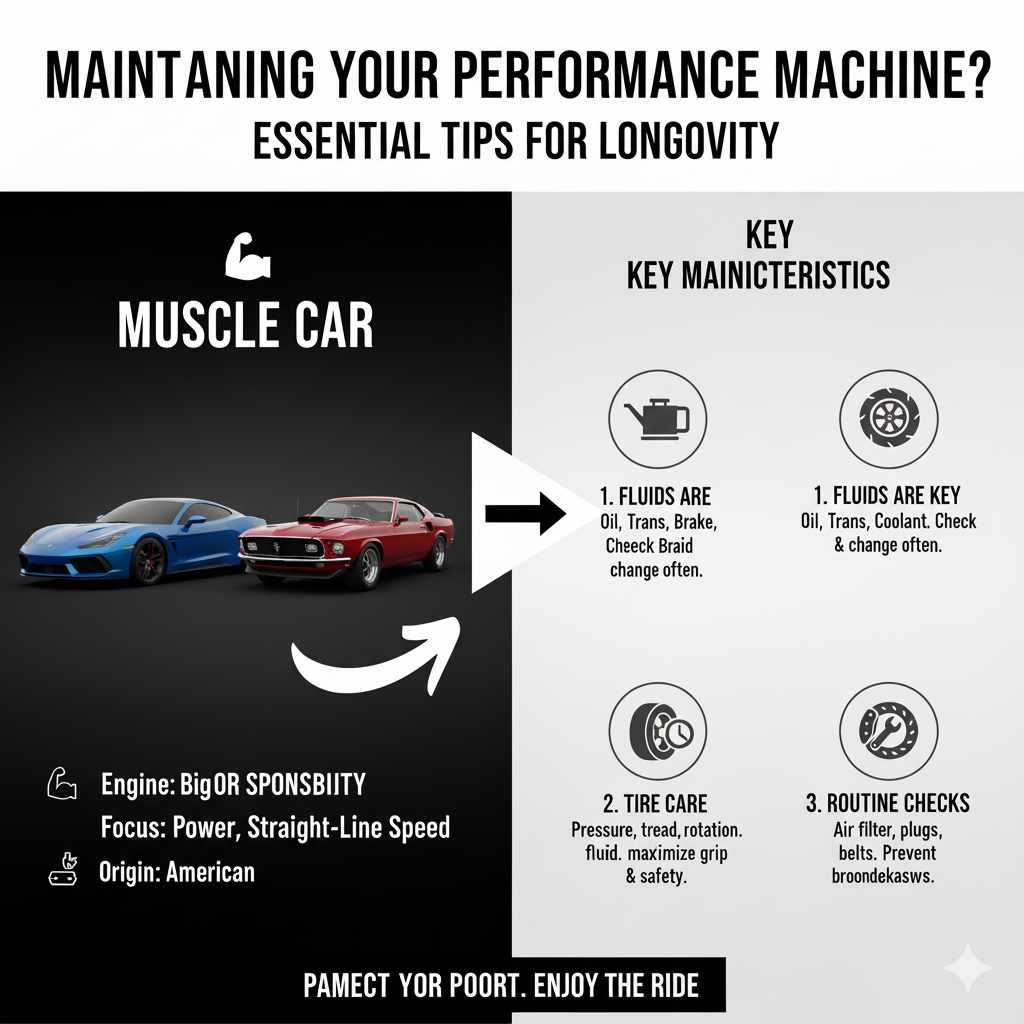
Fluids are Key to Performance and Longevity:
Engine Oil: High-performance engines work harder and get hotter. Using the correct type and viscosity of oil recommended by the manufacturer is crucial. Regularly check your oil level and change it according to the manufacturer’s schedule, or even more frequently if you drive enthusiastically. For classic muscle cars, finding the right oil can be important to protect flat-tappet camshafts (you may need oil with ZDDP additive). Consult your owner’s manual!
Transmission Fluid: Whether manual or automatic, proper transmission fluid keeps things shifting smoothly and prevents overheating. If you’re doing spirited driving, consider a high-quality synthetic fluid
Brake Fluid: This absorbs moisture over time, reducing its effectiveness. For performance cars, especially sports cars that might see track use, flushing and replacing brake fluid more often is a good idea. High-performance brake fluid has a higher boiling point, preventing fade. For brake fluid types, DOT 3, DOT 4, and DOT 5.1 offer different boiling points and compatibility. Typically, DOT 4 is a common upgrade for performance cars. Learn more about brake fluid types from the U.S. Department of Transportation.
Coolant: High-performance engines generate a lot of heat. Ensure your coolant is at the correct level and mixture for optimal cooling. Overheating can cause severe damage.
Tires Matter a Lot for Handling:
Sports cars and muscle cars rely heavily on their tires for grip.
Check tire pressure regularly – under or over-inflated tires severely impact handling and braking.
Ensure your tires are in good condition with adequate tread depth.
For performance driving, consider tires specifically designed for grip and handling, but remember these often wear out faster than all-season tires.
Brakes: Your Safety Net
Performance cars need excellent brakes. Regularly inspect your brake pads and rotors.
Listen for any unusual noises (grinding, squealing) which can indicate worn parts.
Ensure your brake fluid is clean and at the right level.
Routine Maintenance for Reliability:
Air Filter: A clean air filter ensures your engine gets enough air for optimal performance.
Spark Plugs: Worn spark plugs can reduce power and fuel efficiency.
Belts and Hoses: Inspect these for cracks or wear. A failing belt or hose can leave you stranded.
Driving Style:
Even with regular maintenance, how you drive affects your car. Driving aggressively all the time puts more stress on components.
Warm up your engine and transmission before driving hard, especially in colder weather.
Allow your engine to cool down after hard driving, particularly if it’s turbocharged.
By staying on top of these basic care tips, you can help ensure your performance car remains a joy to drive for years to come, whether it’s a roaring muscle icon or a nimble sports machine.
FAQ: Your Muscle vs. Sports Car Questions Answered
Here are some common questions beginner car enthusiasts have:
What’s the difference between a sports car and a grand tourer (GT)?
A sports car is typically smaller, lighter, and focused on agile handling and driving excitement, often with limited seating. A grand tourer (GT) is a high-performance car designed more for comfortable, high-speed travel over long distances. GTs are usually larger, more luxurious, and have more comfortable seating, often 2+2 (two main seats and two smaller rear seats). Think of a GT as a sports car that’s also great for road trips.
Are all V8 cars muscle cars?
No, not all V8 cars are muscle cars. While V8 engines are a defining characteristic of classic muscle cars, many sports cars and even some luxury sedans also use V8 engines. The muscle car specifically combines a powerful V8 with a generally rear-wheel-drive, American-made platform, prioritizing straight-line acceleration.
Can a car be both a muscle car and a sports car?
Yes, some cars blur the lines brilliantly! Modern “pony cars” like the Ford Mustang GT or Chevrolet Camaro SS, for example, offer powerful V8 engines (muscle car trait) with significant improvements in handling and braking that rival true sports cars. The Chevrolet Corvette is another example, being a sports car in its chassis and design but featuring powerful V8 engines characteristic of muscle cars.
Are modern muscle cars still relevant?
Absolutely! While the classic era of muscle cars was in the 60s and 70s, automakers continue to produce powerful, V8-equipped cars that carry the muscle car spirit. Cars like the Dodge Challenger, Ford Mustang GT, and Chevrolet Camaro SS today offer incredible performance, advanced technology, and styling that pays homage to their heritage, proving the muscle car is far from obsolete.
What is the most iconic muscle car?
This is subjective and debated often! However, cars frequently cited as iconic include the Pontiac GTO (often considered the first muscle car), the Ford Mustang (especially early models and the Shelby variants), the Dodge Charger (particularly the ’68-’70 models), and the Chevrolet Camaro. Each has a strong claim to being an icon due to its impact, performance, and enduring popularity.
What are some examples of entry-level sports cars?
Good examples of more affordable or “entry-level” sports cars that prioritize fun driving dynamics over extreme power include the Mazda MX-5 Miata, Subaru BRZ, Toyota GR86, and older models of cars like the Porsche Boxster. These cars are designed to be lightweight and agile.
Why are sports cars sometimes more expensive than muscle cars?
Sports cars often use more advanced and lighter materials, sophisticated suspension and braking systems, and more finely tuned engines, which can increase manufacturing costs. Their development also focuses heavily on precise engineering for handling, which is often more complex and costly than simply fitting a large, powerful V8 engine into a chassis, as was common with many classic muscle cars.
Conclusion
So, is a muscle car a sports car? The answer is a clear no, but with some fascinating overlaps! While both types of cars are designed to be exciting and perform well, they do so with different priorities. Muscle cars deliver a thrilling experience through raw V8 power and straight-line speed, embodying a kind of American performance art. Sports cars, on the other hand, offer a more sophisticated blend of agility, precise handling, and driver engagement, often on a global stage.
Understanding these differences helps you appreciate the unique character of each.