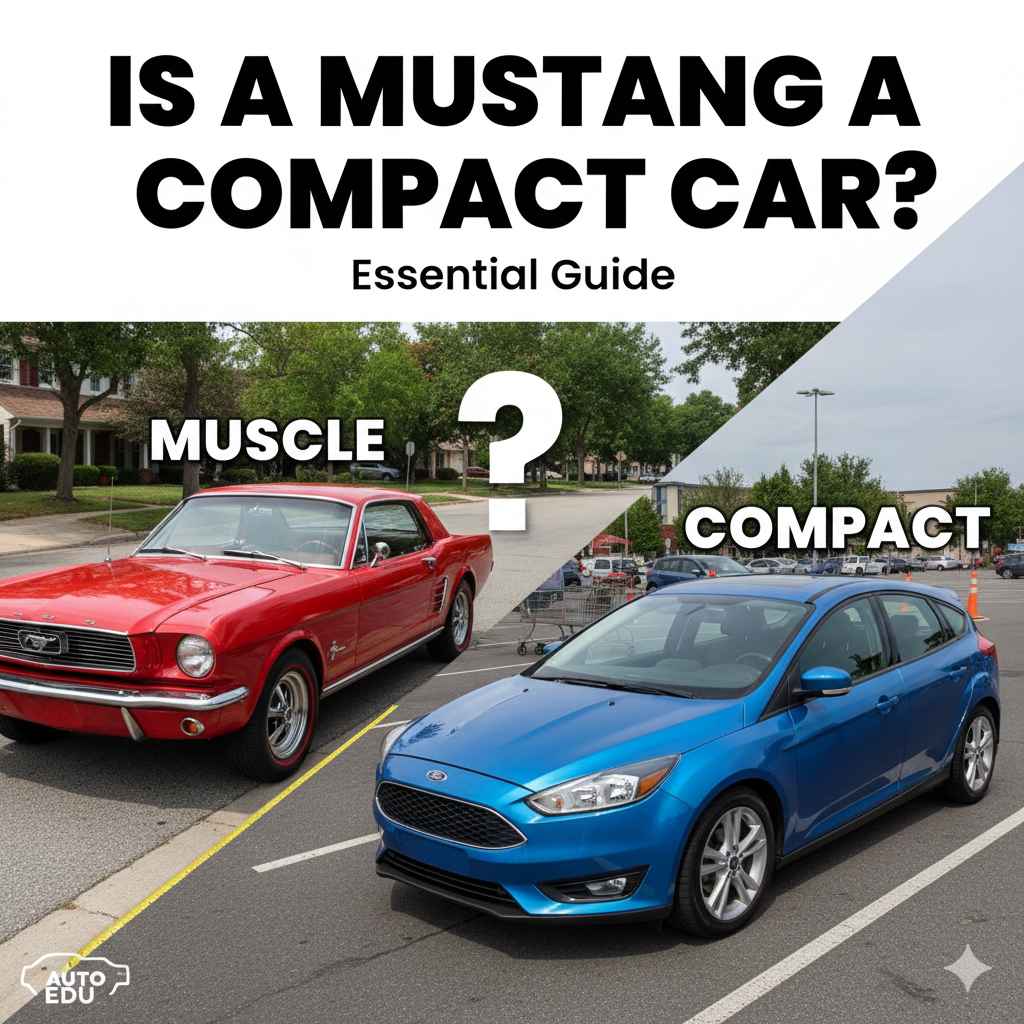
Is A Mustang A Compact Car? Essential Guide
Is a Mustang a compact car? No, a Ford Mustang is generally classified as a sports car or a pony car, not a compact car. Compact cars are typically smaller sedans or hatchbacks focused on fuel efficiency and everyday practicality. Mustangs are known for their performance, V8 engines, and iconic sporty design.
Ever wonder if that sleek Mustang parked down the street fits the same category as your everyday sedan? It’s a common question, especially when you see them navigating city streets. Many folks hear “car” and think of something practical and unassuming. But then there’s the Mustang – a legend on wheels! If you’ve found yourself scratching your head, wondering where this iconic vehicle sits in the automotive world, you’re in the right place. We’re here to clear things up in a way that’s easy to understand, no confusing jargon needed. Let’s dive in and find out what makes a Mustang, well, a Mustang!
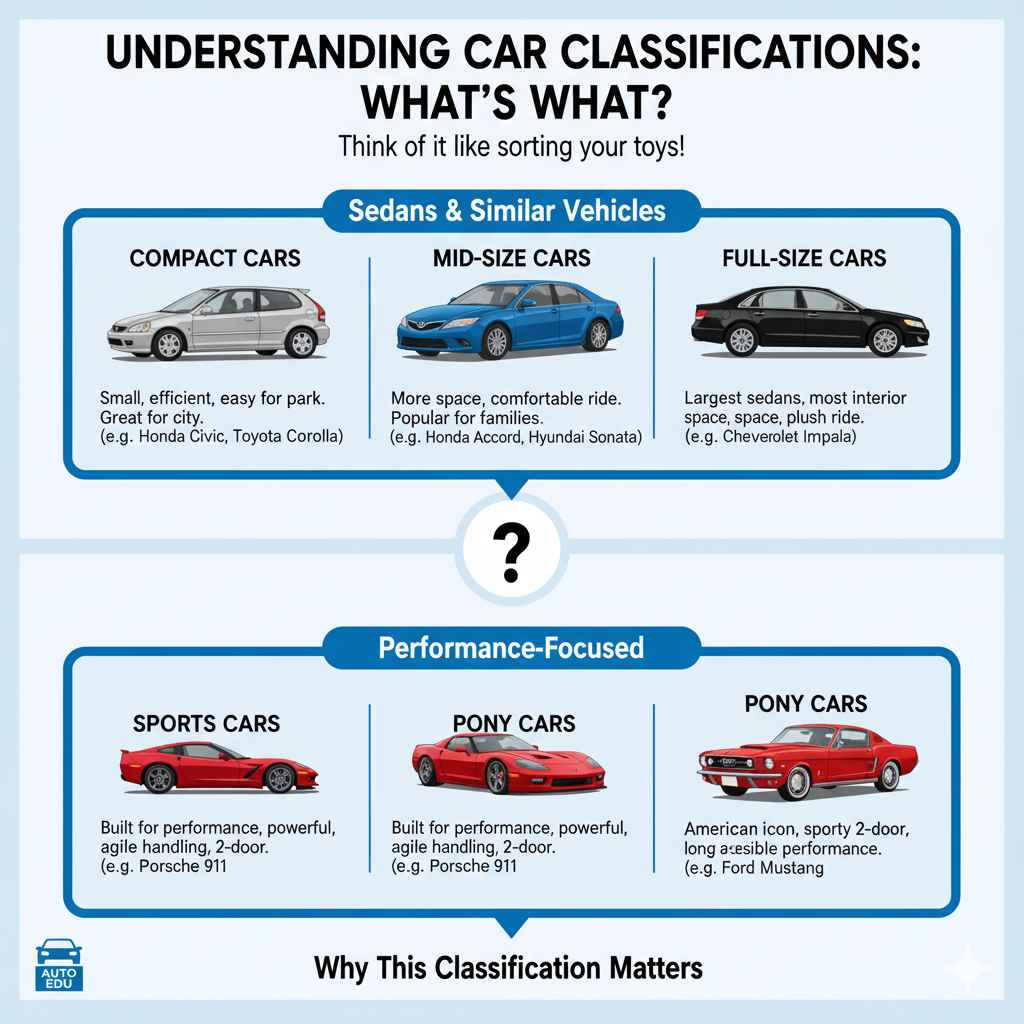
Understanding Car Classifications: What’s What?
Before we pinpoint the Mustang’s place, it helps to know how car manufacturers and enthusiasts group vehicles. Think of it like sorting your toys: you have building blocks, action figures, and stuffed animals – each with its own distinct features and purpose. Cars are similar! These classifications help us understand a car’s size, its intended use, and its general performance characteristics. It’s not just about looks; it’s about what the car is designed to do best.
Compact vs. Mid-Size vs. Full-Size Cars
These categories often refer to sedans and similar vehicles. They are primarily about the car’s exterior dimensions and interior passenger volume.
- Compact Cars: These are generally smaller vehicles, designed for efficiency and ease of parking. Think of them as the nimble city dwellers. They usually seat four to five people comfortably and offer a good balance of economy and utility. Examples include the Honda Civic, Toyota Corolla, and Mazda3.
- Mid-Size Cars: A step up in size from compacts, mid-size cars offer more interior space and often a more comfortable ride. They are a popular choice for families because they provide a good blend of passenger room, cargo space, and reasonable fuel economy. Examples include the Honda Accord, Toyota Camry, and Hyundai Sonata.
- Full-Size Cars: These are the largest sedans, offering the most interior space and a plush, comfortable ride. They’re often associated with luxury and a commanding presence on the road. Examples include the Chevrolet Impala (in its sedan form) and, historically, models like the Ford Crown Victoria.
Sports Cars and Pony Cars: A Different Breed
This is where the Mustang truly shines. These categories have different priorities.
- Sports Cars: These cars are built with performance as their top priority. They typically have powerful engines, rear-wheel drive, and a focus on agile handling and an engaging driving experience. They often feature two doors and a sportier, more aerodynamic design. Examples include the Chevrolet Corvette and the Porsche 911.
- Pony Cars: This is a very specific and iconic American class, pioneered by the Ford Mustang itself! Pony cars are characterized by their sporty, two-door styling, a long hood, a short deck, affordable pricing, and a focus on performance that’s accessible to the average buyer. They often offer more powerful engine options than typical compact or mid-size cars.
So, Is a Mustang a Compact Car? The Verdict
The short answer is a resounding no. A Ford Mustang is not a compact car. Let’s break down why using the criteria we just learned.
Size and Dimensions
While Mustangs have come in various forms over the decades, even the smaller models are typically longer and wider than a typical compact car. They are designed with a bolder, more substantial presence.
For example, let’s look at some dimensions (these can vary slightly by year and trim level):
| Vehicle Type | Typical Length (inches) | Typical Width (inches, excluding mirrors) | Typical Wheelbase (inches) |
|---|---|---|---|
| Compact Car (e.g., 2023 Toyota Corolla Sedan) | 182.3 | 69.9 | 106.3 |
| Mid-Size Car (e.g., 2023 Toyota Camry) | 190.4 | 72.4 | 109.3 |
| Ford Mustang (e.g., 2023 Coupe) | 189.0 | 75.1 | 107.1 |
| Ford Mustang (e.g., 2023 Convertible) | 189.4 | 75.1 | 107.1 |
As you can see from the table, a Mustang’s width is significantly greater than many compact cars, and it’s comparable to or even wider than some mid-size cars. While the length might seem similar to a mid-size car, the overall proportions and design language are entirely different.
Performance and Engine Options
This is where the biggest difference lies. Compact cars are usually equipped with smaller, fuel-efficient four-cylinder engines. Their focus is on everyday driving and saving gas money. The Mustang, on the other hand, is renowned for its powerful engine options, most famously its V8 engines. These engines are designed for performance, acceleration, and that exhilarating driving experience.
- Compact Car Engines: Typically 1.5L to 2.5L four-cylinder engines, prioritizing fuel economy.
- Mustang Engines: Historically and currently range from turbocharged four-cylinders (still offering good performance) up to potent 5.0L or larger V8 engines, designed for power and speed.
Design and Purpose
A compact car often features a practical sedan or hatchback body style. They are built for hauling groceries, fitting multiple passengers, and easy daily commuting. The Mustang has a distinct sporty silhouette, usually with two doors, a sloping roofline, and an aggressive front end. Its purpose is performance, style, and creating an emotional connection with the driver, rather than maximizing passenger or cargo space.
The very definition of the “pony car” class, which the Mustang created, emphasizes sportiness, affordability, and a specific aesthetic that is far removed from the practical design of a compact car. You can learn more about the history of this automotive segment from sources like MotorTrend car historians.
Target Audience
The primary buyers of compact cars often prioritize practicality, reliability, and value for money for daily transportation. Mustang buyers, however, are typically looking for a car that offers excitement, style, and a performance edge, often as a second car or a weekend cruiser, though many do use them as daily drivers.
What Kind of Car is a Mustang, Then?
The Ford Mustang is most accurately classified as a sports car or, more specifically, a pony car. Let’s elaborate:
The Pony Car Icon
The term “pony car” originated with the first Ford Mustang, introduced in 1964. These cars were designed to be sporty, affordable, and personal in size, usually featuring two doors, a long hood, and a short rear deck. They were a hit because they offered American drivers the thrill of a sports car without the prohibitive price tag of European exotics. The Mustang wasn’t just a car; it was a cultural phenomenon that spawned an entire segment of the automotive market. Competing pony cars followed, such as the Chevrolet Camaro, Dodge Challenger, and Pontiac Firebird.
Sports Car Characteristics
While its pony car heritage is strong, the Mustang also embodies many traits of a modern sports car:
- Performance Focus: Powerful engines, responsive handling, and strong braking capabilities.
- Rear-Wheel Drive: Traditionally rear-wheel drive, which is favored for performance driving dynamics.
- Sporty Design: Aerodynamic lines, aggressive styling, and a driver-centric cockpit.
- Driver Engagement: Designed to provide an exciting and connected driving experience.
Today’s Mustangs continue this tradition, offering sophisticated suspension systems, advanced engine technologies, and a range of performance trims that cement their status as true sports cars that also carry the legacy of the pony car.
Comparing Mustang to Other Categories
To further solidify the Mustang’s classification, let’s compare it against other common car types:
Mustang vs. Compact Car
This is the core of our question. The differences are vast:
- Size: Mustangs are generally wider and have a more substantial feel.
- Engine: Mustangs offer significantly more power, especially with V8 options.
- Handling: Tuned for sportier, more responsive performance rather than everyday comfort.
- Doors: Typically two doors vs. the four doors common on compact sedans.
- Purpose: Fun, performance, and style vs. practicality and fuel efficiency.
Mustang vs. Mid-Size Sedan
While a Mustang might share some length with a mid-size sedan, the comparison really ends there:
- Passenger Capacity: Mid-size sedans usually seat five comfortably; Mustangs typically seat four, with the rear seats being more for occasional use.
- Cargo Space: Sedans generally offer more practical trunk space for groceries and luggage.
- Driving Dynamics: Mid-size sedans prioritize a smooth, comfortable ride, while Mustangs are tuned for firmer, sportier handling.
- Drivetrain: Many mid-size sedans offer front-wheel drive (FWD) or all-wheel drive (AWD), whereas Mustangs are traditionally rear-wheel drive (RWD).
Mustang vs. Full-Size Sedan
The gap widens considerably here:
- Dimensions: Full-size sedans are simply larger vehicles all around.
- Comfort: Full-size sedans are built for maximum passenger comfort, often with luxury features.
- Performance: While some full-size sedans have powerful engines, their size and weight mean they aren’t designed for the same agility as a Mustang.
Mustang vs. Other Sports Cars
This is where you’ll find the most overlap. Today’s Mustang competes directly with cars like the Chevrolet Camaro and the Dodge Challenger. It also sits in a segment that includes cars that might be considered more “exotic” or high-performance, like the Corvette, but the Mustang has always aimed for a more attainable price point, making it unique.
Key Differences Summarized in a Table
Here’s a quick look at how the Mustang stacks up against the compact car classification:
| Feature | Compact Car | Ford Mustang (Pony/Sports Car) |
|---|---|---|
| Primary Classification | Compact Sedan/Hatchback | Pony Car / Sports Car |
| Doors | Typically 4 | Typically 2 |
| Engine Focus | Fuel Efficiency, Commuting | Performance, Power, Acceleration |
| Drivetrain | Often FWD (Front-Wheel Drive) | RWD (Rear-Wheel Drive) |
| Handling | Comfortable, Predictable | Agile, Responsive, Sporty |
| Design | Practical, Utilitarian | Sporty, Aggressive, Iconic Styling |
| Typical Passenger Seating | 5 | 2 + 2 (rear seats often small) |
A Quick Look at Mustang Generations and Classifications
It’s worth noting that over its long history, the Mustang’s size and specific features have evolved. However, its core identity has remained consistent.
- First Generation (1964.5–1973): This is the car that defined the pony car segment. It was compact for its time but sporty and stylish, available in coupe, convertible, and fastback body styles.
- Second Generation (1974–1978): This generation was shorter and more fuel-efficient, partly due to the 1973 oil crisis. While it was more compact in size, its sporty styling kept it distinct from typical compacts.
- Third Generation (1979–1993): Known as the “Fox Body,” this Mustang became more European in its styling and often used with turbocharged four-cylinder engines, though V8s remained popular. It was a more modern, sport-focused design.
- Fourth Generation (1994–2004): A redesign brought a sleeker, more rounded look. Performance models like the Cobra continued to push the boundaries.
- Fifth Generation (2005–2014): This generation saw a return to retro-inspired styling and significantly increased performance, especially with the introduction of the 5.0L Coyote V8 engine’s revival.
- Sixth Generation (2015–2023): Introduced independent rear suspension for improved handling and a more global appeal. It also became the first Mustang officially sold in markets outside North America.
- Seventh Generation (2024–Present): The latest iteration continues the tradition of performance and iconic styling, with even more advanced technology and handling improvements.
Even when it was at its smallest, the Mustang’s performance-oriented nature and sporty design clearly set it apart from the pragmatic nature of a compact car. Understanding these generational shifts helps appreciate the Mustang’s enduring legacy as a performance vehicle.
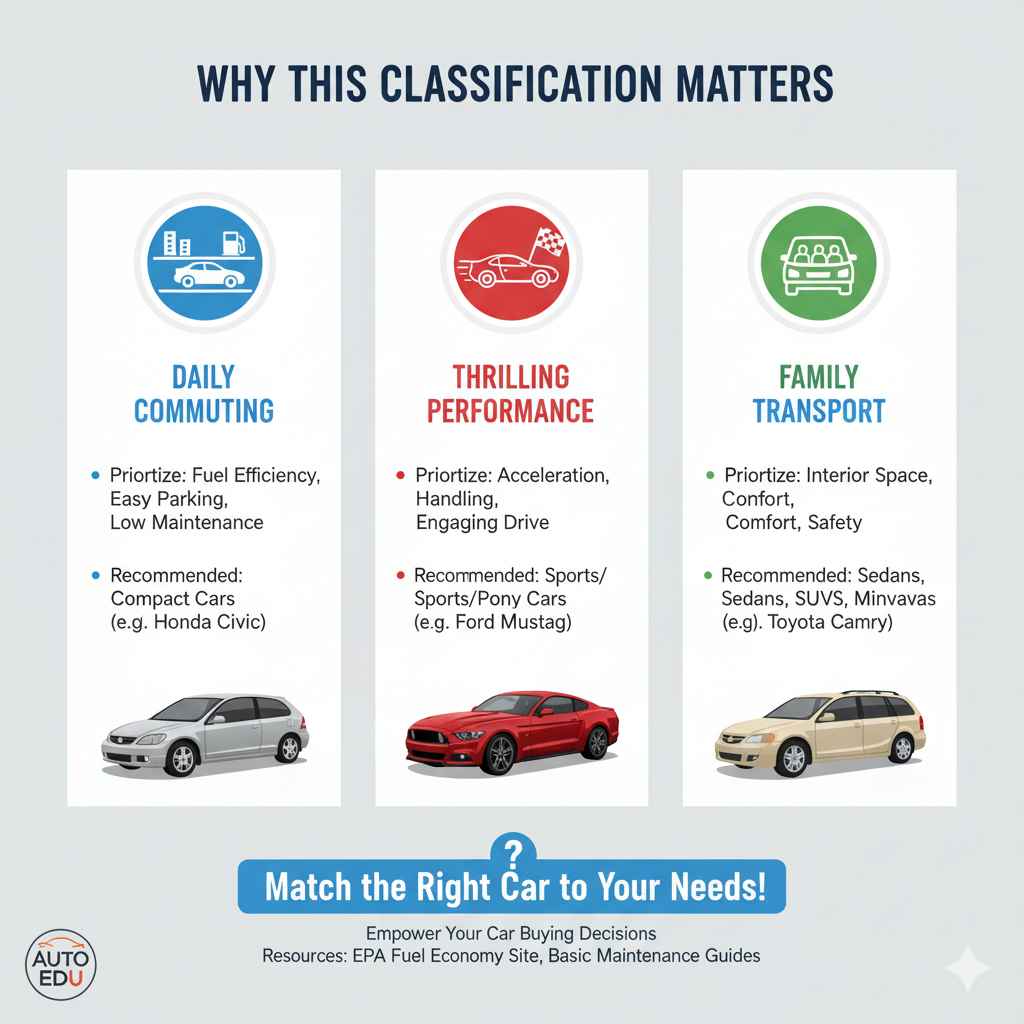
Why This Classification Matters
Knowing what category a car belongs to helps you understand its capabilities, its limitations, and what to expect in terms of performance, fuel economy, and maintenance. For instance:
- If you need a car primarily for commuting and saving on gas, a compact car is likely your best bet.
- If you’re looking for a thrilling driving experience with powerful acceleration and sharp handling, a Mustang or similar sports/pony car is what you’ll be drawn to.
- If you need to ferry a family of five regularly, neither a compact car nor a Mustang is the ideal choice; you’d look at sedans, SUVs, or minivans.
This knowledge empowers you to make informed decisions when you’re looking to buy a new car or even when discussing vehicles with friends and family. It’s about matching the right car to your needs and desires. If you’re curious about basic car maintenance, understanding your vehicle’s type is the first step. For example, while oil changes are common to most cars, the specific type of oil and filter might differ. Resources like the EPA’s Fuel Economy website can help you compare vehicles based on their class and specific models.
Frequently Asked Questions (FAQ)
Q1: Can a Ford Mustang be considered an economical car?
Generally, no. While some Mustang models with the 4-cylinder EcoBoost engine offer respectable fuel economy for their performance, the Mustang is not primarily designed for economy. Traditionally, Mustangs with V8 engines are quite thirsty. Compact cars are the clear leaders in fuel efficiency.
Q2: How many people can fit comfortably in a Mustang?
A Mustang typically seats four people. The front seats are comfortable for adults. The rear seats are often small and best suited for children or for very short trips for adults. If you frequently need to carry more than two adults comfortably, a Mustang might not be the best daily driver.
Q3: Is a Mustang good for long road trips?
Yes, many people take their Mustangs on long road trips! Modern Mustangs, especially those with the EcoBoost engines, can be quite comfortable and offer decent highway mileage. However, the sporty suspension might make rough roads feel a bit jarring compared to a larger sedan. Also, cargo space is more limited than in a sedan or SUV, so pack light!
Q4: What’s the difference between a Mustang and a muscle car?
The terms “pony car” and “muscle car” are often used interchangeably, but there are distinctions. Muscle cars are typically larger, American-made cars with powerful V8 engines, designed for straight-line acceleration (e.g., Dodge Charger, Chevrolet Camaro of the classic era). Pony cars, like the Mustang, are generally smaller, sportier, and more affordable, often starting with a smaller engine but offering more powerful V8 options.