Navigating Seasonal Changes in the Automotive Lifestyle
Check tires, battery, wipers, fluids, and HVAC at every seasonal shift. If temperatures stay warm enough for long enough, change tires or fluids as needed, and consider a shop visit for brakes, alignment, AC, or cooling issues. Skip the checks and you invite dead batteries, tread wear, overheating, weak stopping, and bigger repair bills. This guide shows what to inspect yourself, what can wait, and when weather means a mechanic visit.
How do seasonal changes affect a car?
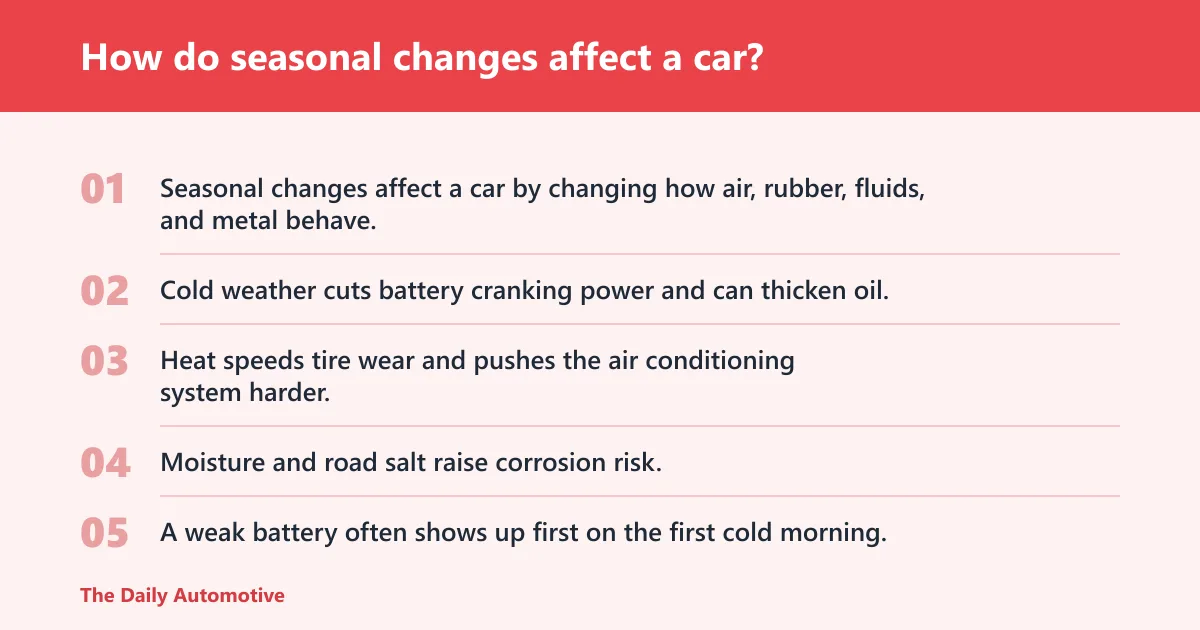


Seasonal changes affect a car by changing how air, rubber, fluids, and metal behave. Cold weather cuts battery cranking power and can thicken oil. Heat speeds tire wear and pushes the air conditioning system harder. Moisture and road salt raise corrosion risk, and skipped seasonal prep is a common reason for avoidable roadside breakdowns.
Temperature swings change battery output
A weak battery often shows up first on the first cold morning. Cold-weather cranking power drops, terminals can collect corrosion, and a battery that seemed fine in mild weather may struggle once temperatures fall. A pre-freeze test makes sense before the first hard freeze if the battery is older or has already cranked slowly.
Tire pressure moves with the thermometer
Air pressure changes with temperature, so tire pressure can drift week to week as the weather shifts. A common rule of thumb is that a tire can lose about one pound of pressure for every 10°F temperature drop. That is enough to affect steering feel, wear, and fuel use, especially on underinflated tires.
Fluids and seals react to heat, cold, and moisture
Temperature changes can make fluids behave differently and rubber parts expand or contract. That is why oil, coolant, brake fluid, and windshield washer fluid deserve a seasonal look. Winter cold can lead to sluggish starts, thickened oil, and frozen lines, while summer heat can push cooling systems and A/C harder.
What should you check before winter?
Before winter, focus on the battery, tires, heater, defroster, wipers, washer fluid, coolant, and brake fluid. Those items affect starting, stopping, and visibility when cold weather and slush arrive. If any system already shows slow cranking, weak heat, poor airflow, or uneven tire wear, book a shop visit before the first storm.
Battery, terminals, and pre-freeze testing
Inspect the battery case for swelling, check the terminals for white or green corrosion, and make sure the clamps are tight. A pre-freeze battery test is the right move if the battery is several years old, the engine cranks slowly, or the car has needed jump starts. Clean terminal corrosion before winter.
Tires, tread depth, and winter tire timing
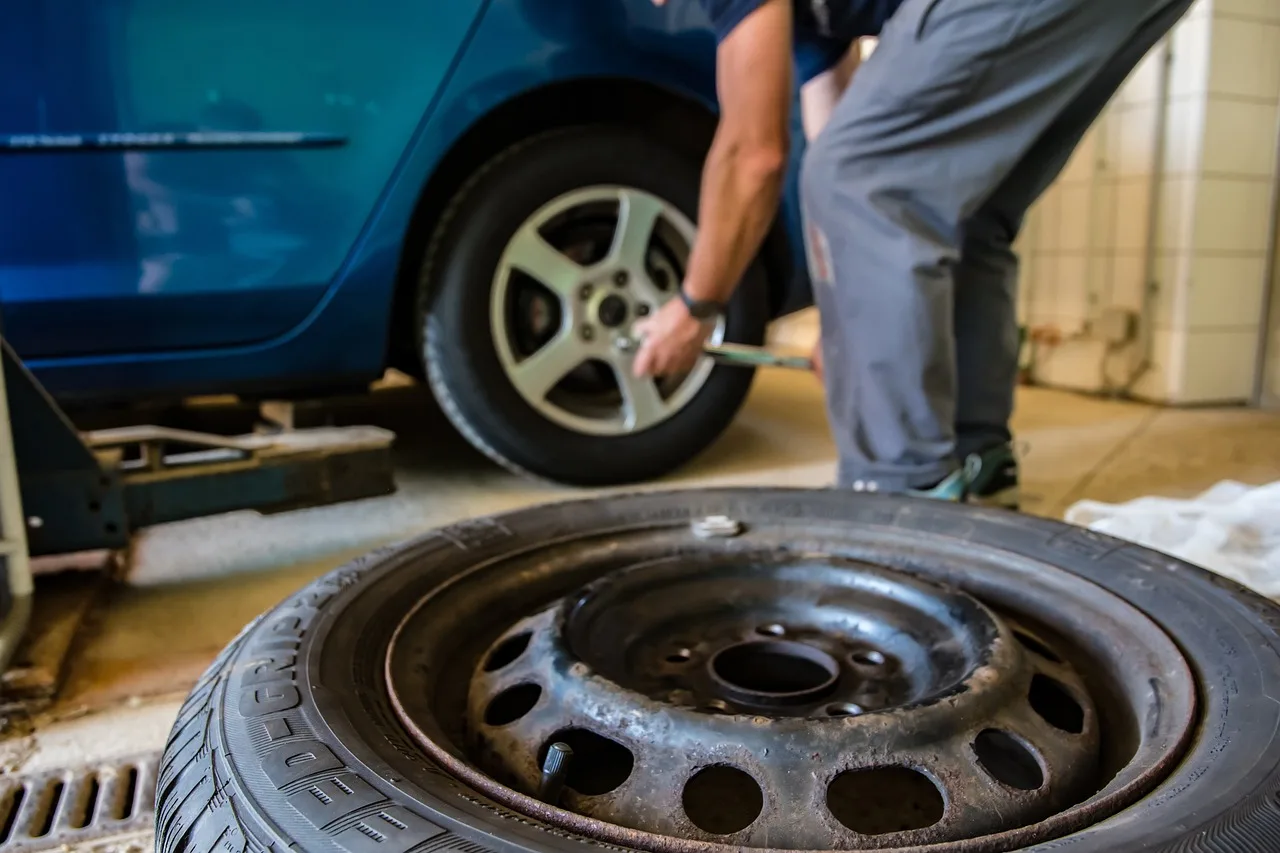
Check tire pressure when temperatures fall, then inspect tread depth and wear pattern. If the tread is low or the tires wear unevenly, seasonal weather will make the problem more obvious. Winter tire timing depends on local conditions more than the calendar, and drivers who see regular freezing temperatures should plan ahead before traction drops.
Heater, defroster, wipers, washer fluid, and coolant
Test the heater and front and rear defrosters before the season turns harsh. Replace worn wiper blades, fill the washer reservoir with winter-ready fluid, and check coolant level and condition. Winter readiness includes antifreeze, brake fluid, and oil level or viscosity checks, because poor heat, fogged glass, and low fluid can all become roadside problems quickly.
Climate-by-climate maintenance priorities
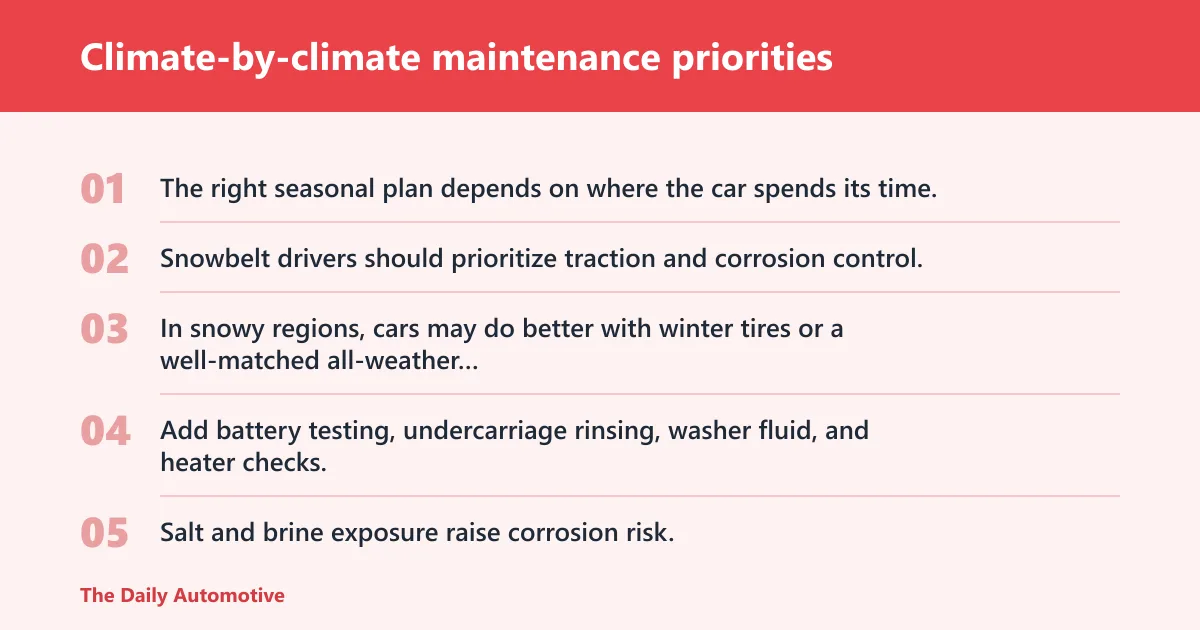
The right seasonal plan depends on where the car spends its time. Snowbelt drivers should prioritize traction and corrosion control, mild-winter drivers can keep lighter checks on the calendar, desert-heat drivers need cooling and tire pressure attention, and humid or coastal drivers should watch for rust, dampness, and visibility problems.
Snowbelt drivers: traction, corrosion, and cold-start prep
In snowy regions, cars may do better with winter tires or a well-matched all-weather setup when roads stay cold and slick for long stretches. Add battery testing, undercarriage rinsing, washer fluid, and heater checks. Salt and brine exposure raise corrosion risk, so washing the lower body and wheel wells after storms matters more here than in warmer regions.
Mild-winter drivers: what to keep on the calendar anyway
Even in mild winter regions, temperature swings still affect pressure, fluids, and batteries. Keep an eye on battery age, tread depth, washer fluid, and wiper condition. You may not need winter tires, but you still need a plan for cold snaps, wet roads, and the occasional freeze that catches drivers off guard.
Desert-heat drivers: tire pressure, coolant, and A/C load
Hot weather can cause tires to wear down faster and strain the air conditioning system. In dry heat, check tire pressure more often, watch coolant level and condition, and make sure the cabin air system can move enough air. Heat can also expose weak hoses and seals that only leak once the system runs hotter.
Humid or coastal drivers: corrosion checks and visibility
Coastal moisture and humid air can speed corrosion and keep glass, blades, and seals in worse shape for longer. Check the undercarriage, brake hardware, and fasteners for rust, and inspect wipers often. Damp weather can also make fogging and streaking more annoying, so the defroster and washer system need regular attention.
Seasonal maintenance decision table
Use this table to match the climate, the task, and the place it belongs on your to-do list. The goal is simple: do the low-cost checks early, delay non-urgent work only when the symptoms are absent, and send the car to a shop when the signs point to a real fault.
| Climate | Task priority | DIY vs shop | Estimated time | Red-flag symptoms for escalation |
|---|---|---|---|---|
| Snowbelt | Winter tires, battery test, corrosion rinse | DIY for pressure and visual checks; shop for battery testing and tire mounting | roughly a short DIY window; about an hour or two at a shop | Slow cranking, dashboard battery light, cords or belts exposed, deep rust on brake parts |
| Mild-winter | Battery, wipers, washer fluid, tread check | Mostly DIY | 15-20 minutes | Cracked tires, repeated low pressure, weak heat, foggy glass that will not clear |
| Desert-heat | Coolant, tire pressure, A/C performance | DIY for fluid level and pressure; shop for cooling or A/C faults | 20-30 minutes DIY; 1-2 hours shop time | Overheating, coolant smell, A/C that blows warm, visible fluid loss |
| Humid/coastal | Undercarriage rust inspection, wipers, defroster | DIY inspection; shop for brake or suspension corrosion | 20-30 minutes DIY | Rust flakes, soft brake pedal, uneven stopping, wipers that chatter or streak badly |
When should you change tires or stick with all-seasons?
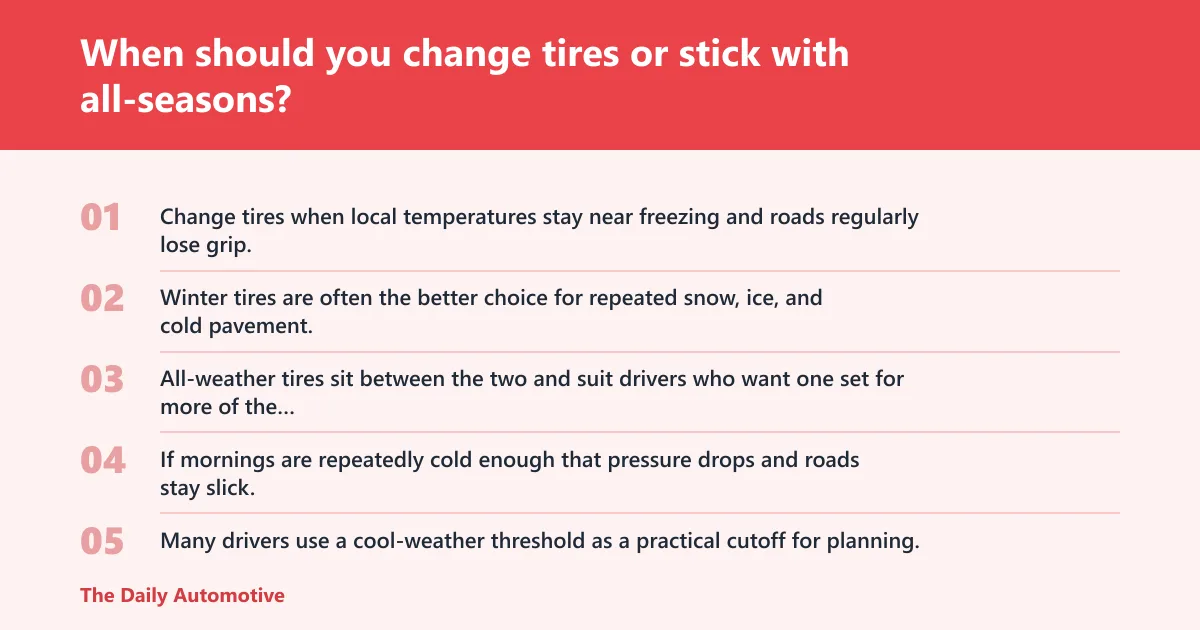
Change tires when local temperatures stay near freezing and roads regularly lose grip, not because a date on the calendar says so. Winter tires are often the better choice for repeated snow, ice, and cold pavement. All-seasons are fine for mixed conditions. All-weather tires sit between the two and suit drivers who want one set for more of the year.
Winter tire timing based on temperature, not the calendar
If mornings are repeatedly cold enough that pressure drops and roads stay slick, it is time to think about winter tires. Many drivers use a cool-weather threshold as a practical cutoff for planning, since rubber and traction can change as the air gets colder. Waiting for the first storm can leave you behind the curve.
All-weather versus all-season versus winter tire tradeoffs
All-season tires are the everyday default, but they are not equal to winter tires on snow and ice. All-weather tires can be a better middle ground for drivers who see cold weather but do not want seasonal swapping. Winter tires make the most sense for snowbelt roads, steep driveways, or frequent morning frost.
Wear patterns that mean the tires need attention now
Uneven wear, feathering, visible cracking, or tread that is too shallow for wet roads means the tires need attention now. A rotation may help if wear is uneven but not severe. If the car pulls, shakes, or the tread is near the wear bars, schedule a shop inspection instead of waiting for the next season.
Say your compact sedan sits outside in a snowbelt driveway and starts feeling loose at highway speed after a thaw-freeze cycle. If one front tire is low and the inner edge is worn, that is not a seasonal nuisance. It is a sign to check alignment, pressure, and tire condition before the next storm.
How can you prevent rust, corrosion, and spring damage?
Prevent rust by washing salt and brine off the undercarriage during winter, then inspecting brakes, fasteners, and wheel wells when spring arrives. Heavy rain and potholes can damage suspension and tires, so the first rough-road weeks are the time to listen for clunks, watch for pulling, and check for fresh wear marks.
Undercarriage rinsing after salt and brine exposure
Salt and brine work fast on exposed metal. Winter rinsing does not need to be fancy, but the lower body, wheel wells, and suspension parts should be cleaned often enough that salt does not sit for weeks. Regular washing also helps keep road spray from hiding early rust at brake lines and fasteners.
Spring suspension checks after potholes and rough roads
Spring can bring heavy rain and potholes that can damage suspension and tires. After rough roads, look for new steering pull, uneven tire wear, or a knocking sound over bumps. Those symptoms point toward alignment, bent components, or tire damage that is better handled by a shop than by waiting.
Inspecting brake components, fasteners, and wheel wells
Brake hardware, lug nuts, splash shields, and wheel wells should be part of a seasonal corrosion check. Surface rust is common; flaking metal, seized fasteners, or wet spots near brake parts are not. If rust reaches structural areas or the brakes feel different, the car needs a mechanic now.
What should snowbirds do with their car before moving south?
Snowbirds should decide early whether to drive, ship, or store the vehicle, because demand for car shipping services increases as winter approaches and prices may rise. Book transportation early to avoid last-minute complications or price hikes, then prep the car with fluid, battery, tire, and registration checks before departure.
Shipping versus storage versus driving the vehicle
Driving works only if the route, weather, and timing are manageable. Shipping is often the cleaner answer for long moves, especially if the car will not be needed during transit. Storage can make sense if the vehicle stays behind for the season, but it still needs battery care and inflation checks.
Advance booking and peak-season price pressure
Snowbirds move from colder climates to warmer ones during winter months, and transport demand rises with them. That is when carrier schedules fill and prices may rise due to increased demand. Booking early gives more route choices and lowers the chance of scrambling when departure dates shift.
Fuel, battery, tire, and registration prep before departure
Before a long move, top off critical fluids, inspect battery condition, and set tire pressure for the expected load. Check registration, insurance, and any required paperwork before the car leaves. If the battery is weak, the tires show uneven wear, or the cooling system has a smell, get those items checked before shipping or driving.
What are the most common seasonal car problems?
The most common seasonal car problems are weak batteries, incorrect tire pressure, worn tread, fluid issues, visibility failures, corrosion, and weather-related suspension wear. Cold weather can trigger sluggish starts and frozen lines, while heat can expose tire and cooling problems. Skipping seasonal checks makes each of those more expensive to fix later.
Battery problems
Winter cold makes weak batteries show their age. If the starter turns slowly, the lights dim at idle, or corrosion keeps returning at the terminals, do not wait for the first hard freeze. A pre-season test is the right call when the battery is old or already acting tired.
Tire and pressure problems
Tire pressure loss, shallow tread, and uneven wear are the most common seasonal tire issues. Check pressure whenever temperatures change sharply, and inspect tread before wet or snowy weather arrives. If the car vibrates, pulls, or the wear looks uneven, a rotation or alignment check belongs on the next shop visit.
Fluid, visibility, and corrosion problems
Low coolant, dirty oil, weak washer fluid, bad wipers, and winter road corrosion often travel together. That is why fluid checks, visibility checks, and undercarriage rinsing should happen on the same seasonal schedule. If there is a coolant smell, fog that will not clear, or rust around brake parts, the problem is already past the simple-check stage.
Frequently asked questions
What maintenance should I do before winter?
Before winter, check the battery, terminal corrosion, tire pressure, tread depth, wipers, washer fluid, heater, defroster, coolant, and brake fluid. If the battery cranks slowly, the glass stays foggy, or the tires are worn unevenly, a shop inspection should come before the first freeze.
What should I check on my car in hot weather?
In hot weather, focus on tire pressure, coolant level, hose condition, and air conditioning performance. Heat can speed tire wear and strain the cooling system. If the temperature gauge climbs, the cabin stays warm, or you smell coolant, do not wait for the next drive to have it checked.
How often should tire pressure be checked as temperatures change?
Check tire pressure at least once a month and again after a sharp temperature swing. Because pressure changes with temperature, a cold snap can leave tires underinflated fast. A quick check is enough for most drivers, but a warning light, pull, or repeat loss means something more than weather is going on.
What fluids need seasonal inspection in a vehicle?
Inspect oil, coolant or antifreeze, brake fluid, and windshield washer fluid before a major weather change. Those fluids affect starting, cooling, stopping, and visibility. If levels are low, the fluid looks dirty, or there is a smell of coolant, a mechanic should inspect the system rather than waiting.
Why does my car battery fail more often in winter?
Winter exposes weak batteries because cold reduces cranking power while engines need more effort to start. Corrosion at the terminals can make matters worse. If the battery is older, slow to crank, or already needed a jump start, testing it before freezing weather is the smart move.
Products related to this article
Sponsored / affiliate links. As an Amazon Associate I earn from qualifying purchases. I may earn additional commission from eligible campaigns.
 Brake Bleeder Kit Automotive,Brake Fluid Bleeder Exchanger Machines,Brake Oil Fluid Extractor Pump,Professional Pulsating Brake Oil Fluid Bleeding Tool,Automatic Vacuum Brake Bleeder One Person
 Cabilock 3pairs Rubber Battery Terminal Covers Positive Negative Protection Caps for Car and Motorcycle Battery Terminals Flexible and Lightweight Circuit Protection Coding