
Is Audi A German Car? Brand Origin & Ownership Explained
Audi is indeed a German car brand. It is headquartered in Ingolstadt, Bavaria, Germany. While its origins are firmly in Germany, its current ownership structure involves a larger automotive group. Audi is a subsidiary of the Volkswagen Group, which is also German. This means German engineering and design principles are at its core.
Where Did Audi Come From?
Audi has a rich history. It all started with a man named August Horch. He was a pioneer in the early days of automobiles.
He founded his first car company in 1899. That company was called A. Horch & Cie.
Motorwagenwerke Zwickau. However, he had a falling out with his business partners. So, he left and started a second company in 1909.
He wanted to call it Horch Automobilwerke GmbH. But the name was already taken by his first company. So, he looked for a new name.
His business partner’s son suggested the Latin word for “horch.” That word is “audi.” So, Audi Automobilwerke GmbH was born. The name stuck and is still used today. This marked the beginning of the Audi brand we know.
The company was officially established in 1910. Its early cars were known for their quality and innovation. They even participated in races.
This helped build the brand’s reputation. Over the years, Audi went through many changes. These included mergers and reorganizations.
It became a symbol of German automotive excellence. Its commitment to engineering stood out.
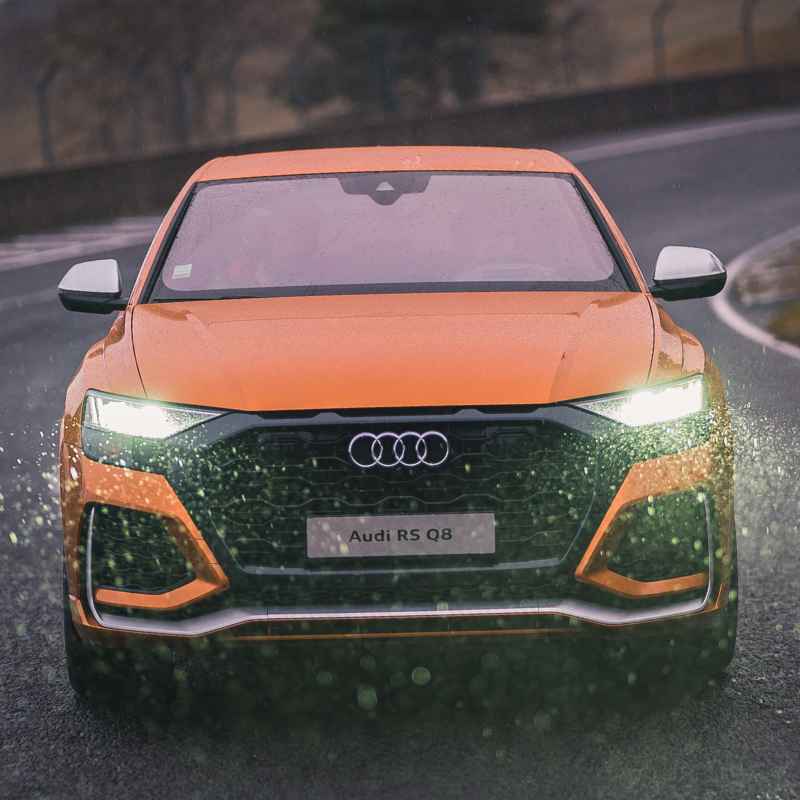
The Famous Four Rings
The Audi logo is very recognizable. It’s the symbol of four interlocking rings. These rings represent a significant event in Audi’s history.
In 1932, four independent German car manufacturers joined forces. These companies were Audi, DKW, Horch, and Wanderer. They formed a new company called Auto Union AG.
This union was a response to the tough economic times of that era.
Each of the four companies brought something unique. They combined their strengths to create a stronger automotive entity. The four rings were created to symbolize this merger.
They showed unity and shared purpose. This historic alliance laid the groundwork for the modern Audi brand. The name “Audi” was kept as the premium brand.
DKW focused on motorcycles and small cars. Horch was for luxury cars. Wanderer offered a range of vehicles.
The Auto Union AG company continued to grow. It became a major player in the German auto industry. During World War II, its factories were heavily involved in war production.
After the war, the company was dissolved. The Soviet Union took control of some assets. However, the brand name “Audi” and the four rings survived.
They were eventually revived in the post-war era.
The Volkswagen Group Era
Audi’s journey took a major turn in the late 1960s. In 1965, Volkswagen AG acquired Auto Union. This was a pivotal moment.
Volkswagen decided to revive the Audi nameplate. They launched new models that were a big success. These cars were modern and well-built.
They helped re-establish Audi as a strong competitor. The focus was on sophisticated design and advanced technology.
Over the next few decades, Audi grew significantly. It became a key part of the Volkswagen Group’s portfolio. Volkswagen is one of the world’s largest automakers.
It owns many famous car brands. These include Porsche, Skoda, SEAT, and Lamborghini. Audi operates as a premium brand within this group.
It often competes with other luxury car manufacturers like BMW and Mercedes-Benz. The goal was to offer a different kind of luxury. One that blended performance with refined comfort.
The relationship with Volkswagen is very important. Audi benefits from the group’s resources. This includes research and development capabilities.
It also shares platforms and technologies with other brands. For example, many Audi models share underlying structures with Volkswagens and other VW Group cars. This allows for cost savings and faster development.
Yet, Audi maintains its distinct identity. Its design language and engineering focus remain unique. The German roots are still very visible.
Is Audi Still German-Engineered?
Absolutely. Despite being part of a larger international group, Audi’s core identity remains German. The company’s headquarters are still in Germany.
Most of its design and engineering happens there. The Ingolstadt headquarters is a major hub. It’s where many of the brand’s iconic vehicles are conceived.
German engineering is synonymous with precision, quality, and innovation. Audi strives to uphold this reputation.
This commitment is evident in the cars themselves. You can see it in the build quality. You can feel it in the driving dynamics.
German automakers are known for their attention to detail. Audi is no exception. They focus on things like suspension tuning.
They also pay close attention to interior ergonomics and material choices. This dedication to excellence is a hallmark of German engineering.
The automotive industry is global. Many brands have manufacturing plants all over the world. Audi is no different.
They have factories in several countries. However, the core research and development remain in Germany. This ensures that the brand’s DNA is preserved.
When you buy an Audi, you are buying a product of German automotive tradition. This heritage is a big part of its appeal.
What Does Volkswagen Ownership Mean for Audi?
Being part of the Volkswagen Group offers many advantages. It provides financial stability and a broad global reach. Volkswagen’s vast network helps Audi sell cars worldwide.
It also allows for shared research and development costs. This means Audi can invest more in new technologies. Think about electric vehicles or autonomous driving systems.
The group’s scale makes these investments more feasible.
Volkswagen Group allows its brands to operate somewhat independently. Each brand has its own identity. Audi focuses on a sporty, sophisticated luxury segment.
Porsche focuses on sports cars. Lamborghini is all about exotic supercars. This diverse lineup caters to different customer needs.
But they all benefit from the group’s synergies. For example, platforms for electric vehicles are often shared across brands. This accelerates their rollout.
However, some critics worry about brand dilution. They fear that common parts or platforms might make brands too similar. Audi works hard to maintain its unique character.
They focus on specific design cues and driving characteristics. Their interiors often feature a minimalist yet luxurious feel. Their quattro all-wheel-drive system is a signature feature.
This ensures that each Audi feels distinct. It’s a balance between group efficiency and brand individuality.
Audi’s Global Presence
Audi is not just a German car. It’s a global luxury brand. Its cars are sold and loved in countries all over the world.
Major markets include North America, Europe, and Asia. China is a particularly important market for Audi. The demand for premium vehicles there is very high.
Audi has adapted its offerings to suit local preferences in different regions.
Manufacturing facilities are spread across different continents. This helps reduce transportation costs and import duties. It also allows Audi to tailor production to local market needs.
For instance, they might build specific versions of cars for certain regions. This global manufacturing footprint is a common strategy for large automakers. It ensures they can serve customers effectively everywhere.
Despite global manufacturing, the heart of Audi remains in Germany. The brand’s identity and core values are shaped by its German heritage. This includes a focus on advanced technology.
It also means a commitment to high-quality materials. The driving experience is always a priority. This consistent focus helps Audi maintain its global appeal.
Customers trust the brand for its engineering and style.
Key Audi Milestones
1899: August Horch founds his first company.
1909: Audi Automobilwerke GmbH is founded.
1932: Four companies merge to form Auto Union AG.
1965: Volkswagen Group acquires Auto Union.
1970s: Audi becomes a standalone premium brand within VW.
Today: Audi is a leading global luxury car manufacturer.
Audi’s Place in the Luxury Market
Audi competes directly with other established luxury brands. Its main rivals are BMW and Mercedes-Benz. These German automakers have a long history of producing high-quality luxury cars.
Audi has carved out its own niche in this competitive landscape. It’s often seen as offering a more modern, tech-focused luxury experience.
The brand is known for its advanced driver-assistance systems. It also leads in lighting technology, like LED and Matrix LED headlights. Audi interiors are celebrated for their clean design and premium materials.
The user interface for infotainment systems is often praised for its ease of use. These elements combine to create a sophisticated driving environment. It’s a blend of cutting-edge tech and refined comfort.
Audi also has a strong presence in performance vehicles. The “S” and “RS” models are high-performance variants. They offer exhilarating driving experiences.
These cars showcase Audi’s engineering prowess. They are built to compete with the best sports sedans and coupes. This range of offerings helps Audi appeal to a broad spectrum of luxury buyers.
Some want comfort, others want speed.
Common Misconceptions Addressed
One common question is about Audi’s ownership. Many people might think it’s independent. Or they might wonder if it’s owned by a Japanese or American company.
The fact that it’s part of the Volkswagen Group is key. Volkswagen is a German company. This reinforces Audi’s German identity.
It’s not foreign-owned in the way some other car brands are.
Another point of confusion can be the name. Some might not know the story behind “Audi.” They might think it’s just a random name. Understanding that it comes from the founder’s name, August Horch, and its Latin translation is interesting.
It adds a layer of history and meaning to the brand.
People also sometimes wonder if Audi cars are built entirely in Germany. As mentioned, manufacturing is global. However, the design, engineering, and core development remain in Germany.
This ensures consistency in quality and brand identity. So, while a car might be assembled elsewhere, its soul is German.
Audi vs. Competitors: A Quick Look
Focus:
- Audi: Sporty, sophisticated tech, modern luxury.
- BMW: Driving dynamics, “ultimate driving machine” feel.
- Mercedes-Benz: Comfort, prestige, traditional luxury.
Technology: Audi often pioneers lighting and infotainment.
Design: Audi interiors are known for clean, minimalist aesthetics.
The Experience of Owning an Audi
Owning an Audi often means more than just having a car. It’s about experiencing German automotive craftsmanship. People often talk about the refined feel of the cabin.
The seats are usually very supportive. The materials used feel premium to the touch. There’s a sense of solidity that many drivers appreciate.
The driving experience is also a major draw. Audis are known for their comfortable yet engaging ride. The quattro all-wheel-drive system provides excellent traction.
This is especially useful in challenging weather conditions, like snowy winters in places like Minnesota or icy roads in Colorado. It inspires confidence. The steering is typically precise.
The engines offer a good balance of power and smoothness.
Maintenance and service are also part of the ownership experience. Like any premium vehicle, Audis require specific care. Dealerships that specialize in Audi can provide expert service.
Parts might be more expensive than for non-luxury brands. But this is typical for the segment. The overall feeling is one of owning a well-engineered piece of machinery.
It’s a bit like owning a finely tuned instrument.
What the Future Holds for Audi
Audi is heavily investing in the future of mobility. The company is committed to electrification. They have introduced a range of electric vehicles under the “e-tron” banner.
These include SUVs and sedans. The goal is to offer a fully electric lineup in the coming years. This aligns with global trends towards sustainability.
It also positions Audi at the forefront of automotive innovation.
Digitalization is another key area. Audi is developing more advanced connectivity features. They are also exploring autonomous driving technologies.
The integration of AI and smart systems into cars is a major focus. This will enhance safety and convenience for drivers. The car of the future will be more connected than ever.
Audi is also looking at new business models. This could include subscription services or mobility solutions. The way people use cars is changing.
Audi aims to adapt to these shifts. They want to remain a leader in the luxury automotive market. Their German heritage will likely continue to guide their innovation.
The focus on quality and engineering will remain paramount.
Audi’s Electric Drive: The e-tron Lineup
Key Models:
- Audi e-tron GT: A sleek, performance-oriented electric sedan.
- Audi Q4 e-tron: A compact electric SUV.
- Audi Q8 e-tron: A larger, luxurious electric SUV.
Technology: Features advanced battery tech and fast charging capabilities.
Range: Designed to offer competitive electric driving ranges.
Real-World Scenarios and Audi
Imagine you’re driving on a long road trip. Maybe you’re heading from Chicago to Denver. You want comfort for the long haul.
An Audi sedan like the A6 or A7 would be ideal. The quiet cabin minimizes road noise. The seats are designed for support.
Advanced safety features like adaptive cruise control help reduce fatigue.
Or perhaps you live in a place with frequent snow. Think about cities like Boston or Salt Lake City. The quattro all-wheel-drive system in an Audi SUV, like the Q5 or Q7, provides great security.
It helps you navigate slippery roads with confidence. This makes it a practical choice for many families.
Consider a busy professional who needs a reliable car for city driving. An Audi A4 or A3 offers a premium experience in a more compact package. It’s easy to maneuver in traffic.
Parking assist features can be very helpful. The stylish design makes a good impression. It’s a car that balances luxury with everyday usability.
Even for someone who loves driving for fun, Audi offers options. The TT coupe is a sporty icon. The R8 supercar represents the pinnacle of Audi’s performance engineering.
These cars are built for enthusiasts. They show that Audi can produce vehicles that excite and thrill.
When is an Audi “German”?
An Audi is German in its origin, design, and engineering philosophy. The company is headquartered in Germany. Its primary research and development facilities are in Germany.
The brand’s identity is deeply rooted in German automotive traditions of quality, precision, and innovation. Even when cars are assembled in other countries, the blueprints, the core technology, and the overall driving character are conceived by German engineers.
Think of it like fine wine. A wine might be aged in French oak barrels, but if the grapes are grown in California, it’s a Californian wine with French influence. For Audi, the grapes are German, and the aging process (manufacturing) can happen elsewhere, but the essence is German.
The stringent German safety and environmental standards are also incorporated into the design process.
The Volkswagen Group’s German ownership further solidifies this connection. While it’s a global conglomerate, the parent company is German. This means German management and corporate culture often influence the operations.
So, the label “German car” for Audi is accurate and reflects its core identity.
Is Audi a Luxury Brand?
Yes, Audi is unequivocally a luxury brand. It positions itself in the premium segment of the automotive market. This is reflected in several key aspects.
First, the price point. Audi vehicles are generally more expensive than mass-market cars. This is due to higher quality materials, advanced technology, and superior engineering.
Second, the design and materials. Audi interiors are characterized by high-end finishes, such as leather, aluminum, and wood trims. The fit and finish are typically exceptional.
The exteriors feature sleek, modern styling that is instantly recognizable.
Third, the technology and features. Audi cars often come equipped with cutting-edge technology. This includes advanced infotainment systems, sophisticated driver-assistance aids, and innovative lighting solutions.
These features are often standard or available as options on premium vehicles.
Finally, the brand perception. Audi is marketed and perceived as a brand that offers prestige, performance, and refinement. It competes directly with other established luxury automakers.
This positioning is reinforced through its marketing, its association with high-profile events, and its overall product strategy. It’s a brand that aims to provide a superior ownership experience.
What About Ownership vs. Origin?
It’s important to distinguish between a car brand’s origin and its current ownership. Audi’s origin is undeniably German. It was founded and developed in Germany.
Its engineering legacy is German.
However, its current ownership is within the Volkswagen Group. Volkswagen AG is a German company. So, the ultimate parent company is also German.
This is a key detail. If Volkswagen were owned by a non-German entity, the discussion might be different.
Many car manufacturers operate this way. For example, Volvo is a Swedish brand, but it is owned by Geely, a Chinese company. Jaguar Land Rover is British but owned by Tata Motors, an Indian company.
In Audi’s case, the ownership structure reinforces its German identity, rather than diluting it.
The strategic decisions, the long-term vision, and the core engineering principles are still heavily influenced by its German roots and its place within the German-based Volkswagen Group. This integrated ownership helps maintain the brand’s unique character while leveraging the benefits of a large automotive conglomerate.
My Own Audi Experience
I remember test-driving an Audi A4 a few years back. I was looking for a new car and was curious about the brand. I’d heard good things about their interiors.
Stepping inside, I was immediately struck by the quality. The leather felt soft. The dashboard was clean and uncluttered.
Then start the engine. It purred to life, a subtle but refined sound. On the road, the car felt planted.
The steering was responsive. Test the brakes; they should feel strong and reassuring. Even on slightly rougher pavement, the ride remained remarkably smooth.
It didn’t feel jarring at all.
What really impressed me was the attention to detail. The way the climate control vents were designed. The satisfying click of the buttons.
The crisp display of the infotainment screen. It all added up to a feeling of superior craftsmanship. It felt like a car built with real care.
That experience definitely made me understand why Audi is considered a luxury brand.
Quick Audi Checks
- Check 1: Interior Materials. Feel the leather, touch the plastics. Do they feel premium?
- Check 2: Driving Feel. Is the ride smooth? Is the steering precise? Does it feel solid?
- Check 3: Technology Integration. Is the infotainment system easy to use? Are features like navigation clear?
- Check 4: Build Quality. Look at the gaps between body panels. Do the doors close with a satisfying thud?
Audi’s Legacy and Impact
Audi has left a significant mark on the automotive world. Its innovations have often pushed the industry forward. The quattro all-wheel-drive system, first introduced in the 1980s, revolutionized traction and stability.
It became a benchmark for performance and safety in various conditions.
The brand’s commitment to design has also been influential. Audi has consistently produced cars with a clean, modern aesthetic. This design language has influenced other manufacturers.
Its adoption of LED lighting technology was also ahead of its time. It significantly changed how car headlights and taillights looked and performed.
Audi’s success within the Volkswagen Group is also notable. It has proven that a brand can maintain its unique identity while being part of a larger conglomerate. This model has been successful for other premium brands within VW as well, like Porsche.
The legacy of German engineering, combined with Audi’s own innovative spirit, has cemented its place. It continues to be a respected name in the automotive industry. Its focus on quality, performance, and technology ensures its relevance for years to come.
It stands as a prime example of German automotive excellence.
Understanding Different Audi Models
Audi offers a wide range of models to suit different needs. Understanding these can help clarify the brand’s offerings:
- A Series (Sedans & Wagons): The core lineup. Examples include the A3 (compact), A4 (mid-size), A6 (executive), and A8 (full-size luxury sedan). The “Avant” designation is for their wagon versions. These focus on comfort, technology, and a refined driving experience.
- Q Series (SUVs): These are Audi’s sport utility vehicles. They range from the compact Q3 and Q4 to the mid-size Q5, the larger Q7, and the flagship Q8. They offer practicality, all-wheel-drive (quattro), and a higher driving position.
- TT (Sports Car): A compact, stylish sports car. It’s known for its distinctive design and engaging handling. Available as a coupe or roadster.
- R8 (Supercar): The halo car for Audi. A high-performance supercar with a V10 engine. It represents the peak of Audi’s engineering and performance capabilities.
- e-tron (Electric Vehicles): This is Audi’s dedicated electric vehicle sub-brand. It includes models like the e-tron GT, Q4 e-tron, and Q8 e-tron. These cars are designed from the ground up as electric vehicles, focusing on range, performance, and advanced technology.
- S and RS Models: These are performance-oriented versions of the standard A and Q models. “S” models offer enhanced performance and sportier styling. “RS” (Rennsport) models are the most extreme, high-performance variants, often featuring more powerful engines and track-tuned dynamics.
Each model line has its own character, but they all share the core Audi values of quality, technology, and sophisticated design.
The Global Automotive Landscape
The automotive industry is highly interconnected. Brands operate globally, and ownership structures are complex. Audi’s position within the Volkswagen Group is a prime example of this.
It allows for shared development and manufacturing, leading to efficiencies.
For consumers, this means access to a wide variety of vehicles. It also means that many cars share underlying technologies. For Audi, this means benefiting from VW’s scale in areas like electric vehicle development.
It allows them to compete effectively against rivals like Toyota, Ford, and General Motors, as well as other luxury players.
The trend towards electrification and autonomous driving is reshaping the industry. Brands like Audi are central to this transformation. Their ability to adapt and innovate is crucial for their long-term success.
The German engineering tradition provides a strong foundation for this progress.
When to Seek Expert Advice
While Audi cars are built to last, like any complex machine, they can require attention. If you notice unusual sounds, warning lights on the dashboard, or changes in performance, it’s wise to consult a professional. For routine maintenance, like oil changes or tire rotations, using a certified Audi dealer or a trusted independent mechanic specializing in German cars is recommended.
For more complex issues, especially those related to the advanced electronics or powertrain, seeking expertise is key. Dealerships have access to the latest diagnostic tools and factory-trained technicians. They understand the intricacies of Audi engineering.
This ensures that repairs are done correctly the first time.
Don’t hesitate to ask questions when you take your car in for service. Understanding what work is being done and why is important. A good service advisor will explain things clearly.
This helps build trust and ensures you are informed about your vehicle’s health. It’s part of the ownership experience.

Conclusion
So, to wrap it all up, yes, Audi is a German car. Its heritage, engineering, and design principles are deeply rooted in Germany. It’s a proud member of the Volkswagen Group, which is also German.
This powerful combination allows Audi to blend German precision with global reach. It offers a luxury experience that is both modern and timeless. You can count on Audi for its quality and innovation.
Frequently Asked Questions About Audi’s Origin and Ownership
Is Audi an American car company?
No, Audi is not an American car company. It is a German automotive brand.
Who owns Audi cars today?
Audi is owned by the Volkswagen Group, which is also a German company. Volkswagen AG is the parent company.
Are Audi cars manufactured only in Germany?
No, while many Audi cars and their core engineering originate in Germany, the company has manufacturing plants in several countries around the world to serve global markets.
What does the ‘Auto Union’ name mean for Audi?
The ‘Auto Union’ name represents the merger of four German car manufacturers (Audi, DKW, Horch, and Wanderer) in 1932. The four interlocking rings of the Audi logo symbolize this historic union.
Does Audi share parts with other Volkswagen Group brands?
Yes, Audi often shares platforms and technologies with other Volkswagen Group brands, such as Volkswagen, Porsche, and Skoda. This allows for cost efficiencies in development and manufacturing.
What is the main difference between Audi and Volkswagen cars?
Audi is positioned as a premium and luxury brand, focusing on higher-end materials, advanced technology, and more sophisticated design and performance. Volkswagen is generally considered a mass-market brand, offering more affordable and practical vehicles.
Is Audi considered a luxury brand?
Yes, Audi is widely considered a luxury automotive brand, competing with other premium manufacturers like BMW and Mercedes-Benz.
Products related to this article
Sponsored / affiliate links. As an Amazon Associate I earn from qualifying purchases. I may earn additional commission from eligible campaigns.