What is a Flooded Car Battery? A Comprehensive Guide
What is a flooded car battery? If you’re wondering about the common lead-acid batteries found in most vehicles, you’re in the right place. This type of battery, often called a wet-cell battery, has been the workhorse of automotive power for decades, and understanding its design is crucial for proper maintenance and troubleshooting.
This post will break down exactly what a flooded car battery is, how it functions, its key components, and what you need to know to keep it running smoothly.
Simply put, a flooded car battery is a lead-acid battery that uses a liquid electrolyte solution, typically a mixture of sulfuric acid and water, which fully submerges the battery plates. It requires periodic checks and additions of distilled water to maintain optimal performance and longevity.
Key Takeaways
- Flooded car batteries use a liquid electrolyte that covers the internal plates.
- They are the most common type of lead-acid battery in conventional vehicles.
- Maintenance involves checking electrolyte levels and adding distilled water.
- These batteries are characterized by removable caps for electrolyte access.
- Understanding their basic function is key to preventing common issues.
What is a Flooded Car Battery?
A flooded car battery, also known as a wet-cell battery or conventional lead-acid battery, is the standard type of battery found in the vast majority of internal combustion engine vehicles. Its defining characteristic is the presence of a liquid electrolyte that fully submerges the internal battery plates. This electrolyte is a solution of purified water and sulfuric acid, and it plays a critical role in the battery’s electrochemical process.
Unlike maintenance-free or sealed batteries, flooded batteries have removable caps on top. These caps allow for access to the electrolyte, which can evaporate over time due to heat and the natural charging process. This evaporation necessitates periodic checks and topping up with distilled water to ensure the plates remain fully covered and the battery operates efficiently.
The design of the flooded battery has remained largely unchanged for many years because of its effectiveness and cost-efficiency. It relies on a chemical reaction between lead plates and the sulfuric acid electrolyte to generate the electrical current needed to start your car and power its accessories. While newer battery technologies exist, the flooded battery continues to be a reliable option for many automotive applications.
- Electrolyte Composition: A precise mixture of sulfuric acid (H₂SO₄) and distilled water (H₂O).
- Plate Submersion: The electrolyte level must always cover the lead grid plates within each cell.
- Removable Vented Caps: Allows for inspection, addition of water, and release of gasses produced during charging.
- Ventilation System: Each cell has a vent to allow gases (hydrogen and oxygen) to escape safely.
- Terminal Posts: Two terminals (positive and negative) for connecting to the vehicle’s electrical system.
How Does a Flooded Car Battery Work?
The operation of a flooded car battery is based on a reversible electrochemical reaction. When the battery is discharging (providing power), lead dioxide on the positive plate and spongy lead on the negative plate react with the sulfuric acid electrolyte. This reaction produces lead sulfate on both plates and releases electrons, creating an electrical current.
This article is part of our bigger Car Battery Maintenance Guide: Corrosion, Charging, Health & More hub.
When the battery is charging (receiving power from the alternator), this process is reversed. The lead sulfate on the plates reacts with the water in the electrolyte, converting back into lead dioxide and spongy lead, and releasing water and oxygen as byproducts. This is why water can be consumed and why gassing occurs during charging.
The ability to reverse this chemical reaction is what makes lead-acid batteries rechargeable.
Each cell within the battery typically produces about 2.1 volts. A standard 12-volt car battery is composed of six such cells connected in series. This series connection adds up the individual voltages to create the required 12.6 volts (when fully charged).
The sulfuric acid concentration is crucial; a higher concentration means more available ions for the chemical reaction, leading to greater power output and capacity. However, too high a concentration can also be corrosive and dangerous.
- Discharge Cycle: Lead dioxide (positive plate) and lead (negative plate) react with sulfuric acid.
- Byproducts: Lead sulfate forms on both plates, and water is consumed in the reaction.
- Electron Flow: Electrons are released, creating an electrical current to power the vehicle.
- Charging Cycle: Alternator’s electrical current reverses the chemical reaction.
- Replenishment: Lead sulfate converts back to lead dioxide and lead, and water is released.
Key Components of a Flooded Car Battery
A flooded car battery is a complex assembly of several key components, each performing a vital function. Understanding these parts helps in appreciating how the battery operates and what maintenance is required. The core of the battery consists of plates, a separator, electrolyte, and the case that houses everything.
The lead plates are arranged in positive and negative groups within each cell. The positive plates are typically made of lead dioxide (PbO₂), while the negative plates are made of spongy lead (Pb). These plates are crucial for the electrochemical reactions that generate electricity.
Between these plates are separators, usually made of porous materials like fiberglass or plastic, which prevent the plates from touching while allowing ions to pass through.
The case, often made of durable plastic, contains all the internal components and the electrolyte. It’s designed to withstand the corrosive nature of the sulfuric acid and vibrations from the road. The battery also features terminals, typically made of lead alloys, which are the external connection points for the vehicle’s electrical system.
Finally, the vented caps allow for the safe escape of gases produced during charging, preventing pressure buildup.
- Plates: Alternating positive (lead dioxide) and negative (spongy lead) grids.
- Separators: Porous insulating materials preventing short circuits while permitting ion flow.
- Electrolyte: The liquid solution of sulfuric acid and distilled water.
- Case (Container): A durable plastic enclosure for all internal components and electrolyte.
- Terminals: Connectors (positive and negative) for external electrical circuits.
- Vented Caps: Allow for safe release of hydrogen and oxygen gases during charging.
- Internal Connectors: Links cells in series to achieve the desired voltage.
Maintenance Requirements for Flooded Batteries
Proper maintenance is essential for extending the lifespan and ensuring the reliable performance of a flooded car battery. The most critical maintenance task is checking and maintaining the electrolyte level. Over time, water in the electrolyte evaporates, especially in hot climates or during strenuous charging cycles, leaving the plates exposed and potentially causing damage.
To perform this maintenance, you’ll need a clean cloth, gloves, eye protection, and a supply of distilled water. First, ensure the battery top is clean to prevent any dirt from falling into the cells. Then, carefully remove the vent caps.
Using a flashlight, inspect the electrolyte level in each cell. You should be able to see the electrolyte covering the tops of the plates. If the level is low, add just enough distilled water to cover the plates by about a quarter to half an inch.
Do NOT overfill, as this can lead to acid spills.
Warning: Never use tap water or any other liquid besides distilled water to top up your flooded battery. Tap water contains minerals that can damage the battery’s internal chemistry and reduce its performance and lifespan.
Beyond checking water levels, regularly cleaning the battery terminals is also important. Corrosion on the terminals can impede electrical flow, leading to starting issues and charging problems. You can clean them with a wire brush and a mixture of baking soda and water.
Ensure the battery is securely fastened in its tray; a loose battery can be damaged by vibration and can cause electrical shorts.
Pros and Cons of Flooded Car Batteries
Flooded car batteries have been the standard for so long for good reasons, but they also come with certain drawbacks. Understanding these can help you decide if this is the right type of battery for your needs or if you should consider alternatives.
| Pros | Cons |
|---|---|
| Cost-Effective: Generally the most affordable battery option. | Maintenance Required: Needs regular checking of electrolyte levels and topping up with distilled water. |
| Wide Availability: Easy to find at auto parts stores and service centers. | Potential for Spills: Acid can spill if the battery is tipped or overfilled, posing a hazard. |
| Good Starting Power: Provides strong cranking amps for starting engines. | Gassing: Produces hydrogen and oxygen gases during charging, requiring ventilation. |
| Robust Performance: Reliable in a wide range of temperatures, especially cold. | Shorter Lifespan: Typically lasts 3-5 years, less than some sealed batteries. |
| Rechargeable: Can be recharged multiple times when properly maintained. | Corrosive Electrolyte: Sulfuric acid is highly corrosive and requires careful handling. |
While they require more attention, their affordability and robust performance make them a popular choice for many drivers.
When to Replace a Flooded Car Battery
Knowing when to replace your flooded car battery is crucial to avoid being stranded. Several signs indicate that your battery is nearing the end of its life. These can include slow engine cranking, dimming headlights when the engine is off, or a persistent battery warning light on your dashboard.
Age is a significant factor; most flooded car batteries have a lifespan of 3 to 5 years, though this can vary depending on climate, usage, and maintenance. If your battery is older than this and you start noticing these symptoms, it’s wise to have it tested. Many auto parts stores offer free battery testing services.
Important: A battery test can measure its cranking power and overall health. This will give you a clear indication of whether it needs replacement or if another issue is causing the problem.
Visual inspection can also reveal issues. Look for any signs of swelling or bulging on the battery case, which can indicate internal damage or overcharging. Cracks in the case or a significant amount of corrosion on the terminals that can’t be cleaned off are also warning signs.
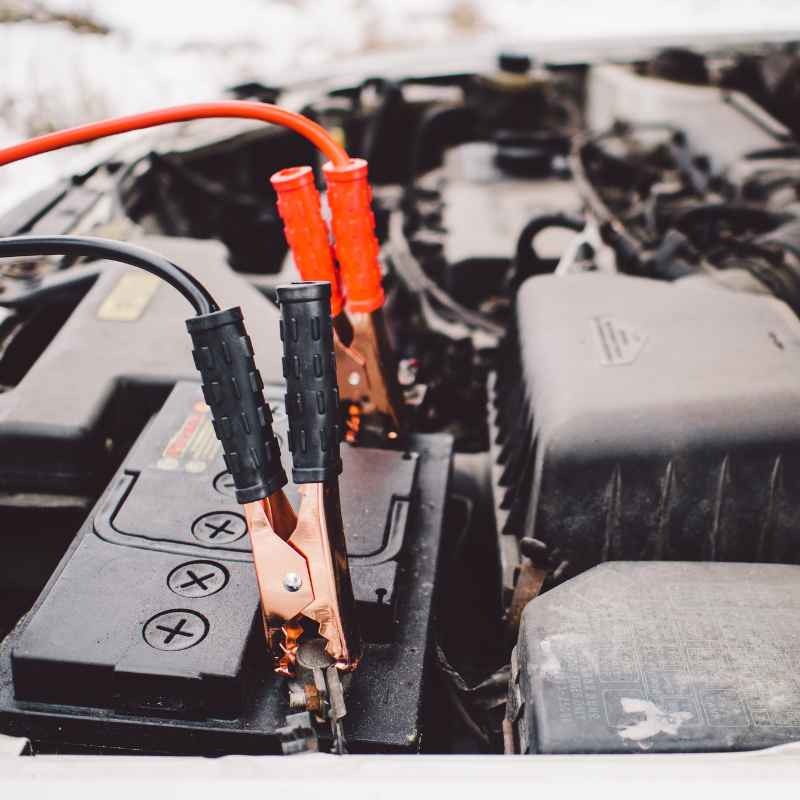
If you’ve had to jump-start your car multiple times recently, it’s a strong indication that the battery can no longer hold a sufficient charge.
- Age: Batteries typically last 3-5 years.
- Slow Cranking: Engine struggles to turn over when starting.
- Dim Lights: Headlights or interior lights are noticeably dimmer than usual, especially when the engine is off.
- Battery Warning Light: Indicator on the dashboard illuminates.
- Frequent Jump Starts: Needing jump starts regularly suggests the battery isn’t holding a charge.
- Swollen Case: Physical deformation of the battery housing.
- Corroded Terminals: Excessive build-up that cannot be resolved by cleaning.
Alternatives to Flooded Car Batteries
While flooded batteries are common, several alternatives offer different advantages for modern vehicles, especially those with more complex electrical systems or start-stop technology. These include sealed maintenance-free (SMF) batteries, also known as VRLA (Valve Regulated Lead-Acid) batteries. SMF batteries are further divided into AGM (Absorbent Glass Mat) and Gel batteries.
AGM batteries are a popular upgrade. Their electrolyte is absorbed into fiberglass mats sandwiched between the plates. This design makes them spill-proof, vibration-resistant, and maintenance-free.
They also offer superior performance in extreme temperatures and can handle deeper discharge cycles, making them ideal for vehicles with high electrical demands like SUVs, trucks, or those with aftermarket accessories. According to a report by the National Renewable Energy Laboratory (NREL), AGM batteries can offer up to 20% more cycle life than traditional flooded batteries.
In short, while flooded batteries are reliable and affordable, AGM batteries offer enhanced durability, maintenance-free operation, and better performance for demanding applications, often justifying their higher initial cost.
Gel batteries use a silica-based gel to immobilize the electrolyte. Like AGM batteries, they are spill-proof and maintenance-free. Gel batteries are particularly well-suited for applications where deep cycling is common, such as in RVs or marine use, and they perform well in higher temperatures.
However, they can be more sensitive to overcharging than AGM batteries and may have a slightly shorter lifespan in some applications. The Automotive Aftermarket Suppliers Association (AASA) notes that the market for VRLA batteries, including AGM and Gel, has seen consistent growth due to vehicle technological advancements.
| Battery Type | Key Features | Best For | Typical Lifespan |
|---|---|---|---|
| Flooded Lead-Acid | Liquid electrolyte, removable caps, requires maintenance. | Standard vehicles, cost-sensitive applications. | 3-5 years |
| AGM (Absorbent Glass Mat) | Electrolyte absorbed in mats, spill-proof, maintenance-free, vibration resistant. | High-performance vehicles, start-stop systems, vehicles with many electronics. | 4-7 years |
| Gel | Electrolyte in gel form, spill-proof, maintenance-free, good for deep cycling. | Off-grid power, RVs, marine applications, high ambient temperatures. | 3-6 years |
When considering an alternative, always ensure it’s compatible with your vehicle’s charging system and electrical needs. Consult your vehicle’s owner’s manual or a qualified mechanic.
Frequently Asked Questions
What is the main benefit of a flooded car battery?
The primary benefit of a flooded car battery is its affordability and widespread availability. They are generally less expensive to purchase and replace compared to advanced battery types like AGM or Gel, making them a budget-friendly option for many standard vehicle applications.
Can I use a sealed battery in a car that originally came with a flooded battery?
Yes, in most cases, you can upgrade to a sealed maintenance-free battery such as an AGM or Gel type, even if your car originally came with a flooded battery. However, it’s essential to ensure the replacement battery has the correct physical dimensions, terminal configuration, and sufficient cranking amps. Some vehicles with specific charging systems might be optimized for flooded batteries, so checking compatibility is always recommended.
How often should I check the electrolyte level in a flooded battery?
It is recommended to check the electrolyte level in a flooded car battery at least once every 3-6 months. More frequent checks, perhaps monthly, are advisable in very hot climates, during periods of heavy battery usage, or if you notice signs of the battery draining quickly, as water evaporation can accelerate under these conditions.
What happens if the electrolyte level gets too low in a flooded battery?
If the electrolyte level in a flooded battery drops below the top of the plates, the exposed parts of the plates will be damaged. This exposure leads to sulfation, reducing the battery’s capacity and ability to hold a charge. In severe cases, it can permanently degrade the battery’s performance and shorten its lifespan considerably.
Is it dangerous to work with a flooded car battery?
Yes, working with a flooded car battery can be dangerous if proper precautions are not taken. The electrolyte is sulfuric acid, which is highly corrosive and can cause severe burns to skin and eyes. Additionally, the charging process produces flammable hydrogen gas, which can explode if exposed to sparks or open flames.
Always wear protective gloves, eye protection, and ensure good ventilation when handling or maintaining these batteries.
Final Thoughts
Understanding what is a flooded car battery involves recognizing its liquid electrolyte, maintenance needs, and fundamental operating principles. While they remain a cost-effective and reliable choice for many, their upkeep is essential for optimal performance and longevity. By performing regular checks and maintenance, you can ensure your flooded battery serves you well for its expected lifespan.
Always prioritize safety when working with these powerful, yet potentially hazardous, components.
Products related to this article
Sponsored / affiliate links. As an Amazon Associate I earn from qualifying purchases. I may earn additional commission from eligible campaigns.