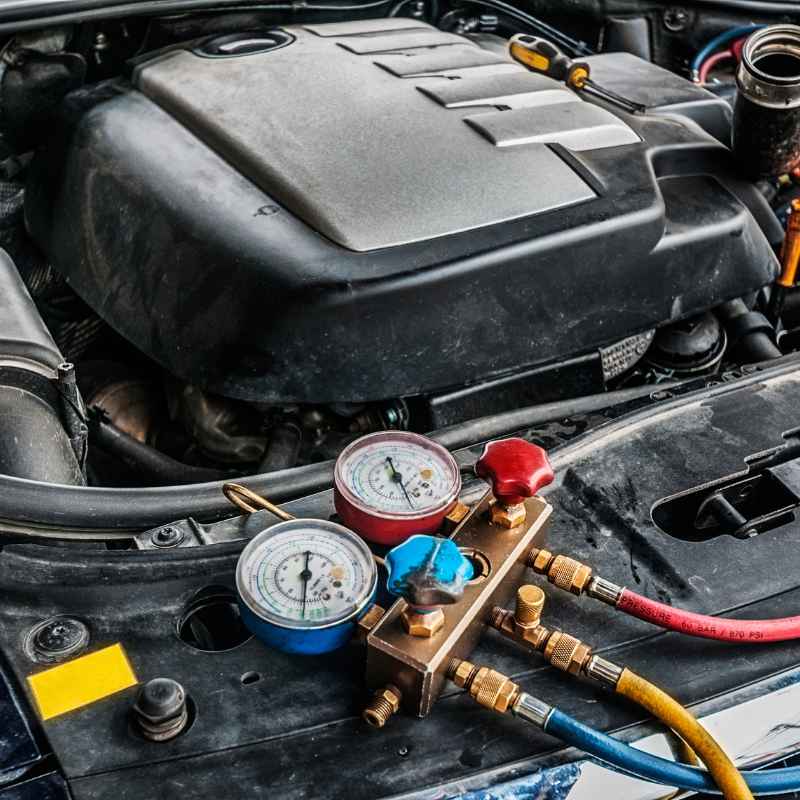
Do Cars Still Use Freon? The Truth About AC Coolants
Do cars still use Freon in their air conditioning systems? This is a common question for car owners, especially when dealing with AC repairs or considering older vehicles. While the term “Freon” is often used generically, it actually refers to a specific type of refrigerant that has largely been phased out due to environmental concerns.
Understanding what refrigerants are used in modern cars is crucial for proper maintenance and to avoid costly mistakes when refilling or repairing your AC system.
This post will break down the history of refrigerants in automotive AC, explain why Freon is no longer used, and detail the current standards. We’ll cover the different types of refrigerants, their characteristics, and what you need to know as a car owner to ensure your vehicle’s AC system functions efficiently and legally.
Simply put, most new cars no longer use Freon (R-12). They now use R-134a or the newer R-1234yf refrigerant. R-12 was phased out due to its ozone-depleting properties, and its use in new vehicles has been banned in many regions. Always confirm your car’s refrigerant type before any AC service.
Key Takeaways
- Do cars still use Freon? No, modern vehicles do not use R-12 (Freon) in their AC systems due to environmental regulations.
- The primary refrigerant in most cars manufactured between the mid-1990s and early 2010s is R-134a.
- Newer vehicles are transitioning to R-1234yf, a refrigerant with a lower global warming potential.
- Servicing a car with the wrong refrigerant can damage the AC system and be environmentally harmful.
- Always check your vehicle’s refrigerant type, typically found on a sticker under the hood or in the owner’s manual.
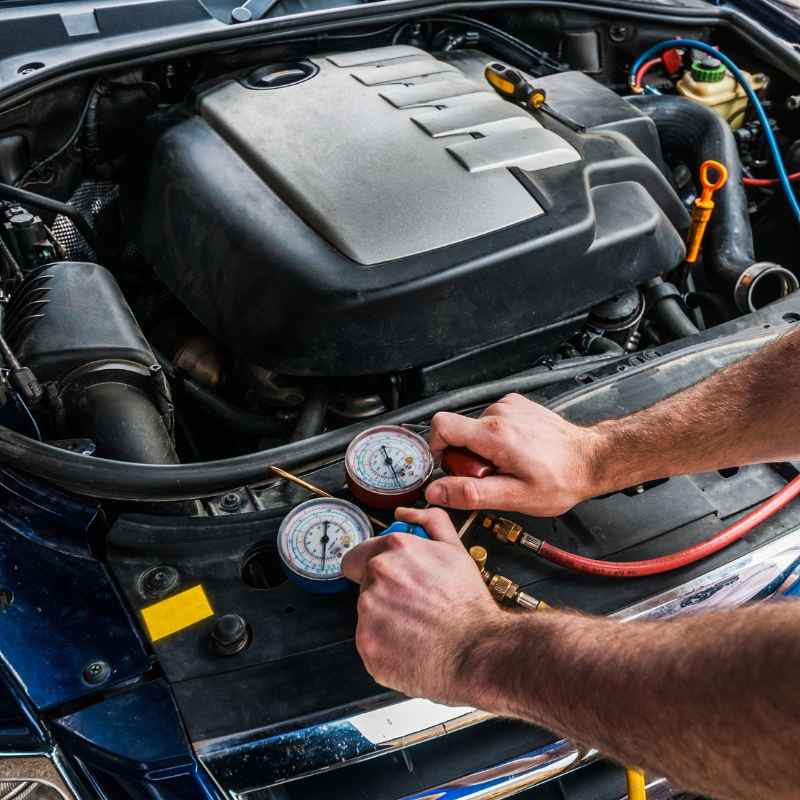
What is Freon and Why Was It Phased Out?
Freon is a brand name for a group of chlorofluorocarbons (CFCs) and hydrochlorofluorocarbons (HCFCs), most commonly associated with Refrigerant-12 (R-12). This refrigerant was widely used in automotive air conditioning systems from the 1950s until the mid-1990s due to its excellent cooling properties and stability. It was effective, relatively inexpensive, and seemed like a perfect solution for keeping car interiors cool.
However, scientific research in the latter half of the 20th century revealed that CFCs like R-12 were significantly contributing to the depletion of the Earth’s ozone layer. The ozone layer is vital for protecting life on Earth from harmful ultraviolet (UV) radiation from the sun. Recognizing this severe environmental threat, international agreements like the Montreal Protocol, signed in 1987, mandated the phase-out of ozone-depleting substances, including R-12.
This phase-out meant that manufacturers had to find alternative refrigerants that were less harmful to the ozone layer. The transition away from R-12 began in the early 1990s, with most automotive manufacturers completing the switch by the mid-to-late 1990s. While R-12 is no longer produced for new systems, it may still be found in older vehicles that haven’t had their AC systems converted or retrofitted.
The environmental impact of refrigerants isn’t limited to ozone depletion. Many refrigerants also contribute to global warming by trapping heat in the atmosphere. This is why newer refrigerants are also evaluated for their Global Warming Potential (GWP).
The Rise of R-134a: The Mid-Generation Coolant
Following the phase-out of R-12, the automotive industry adopted Refrigerant-134a (R-134a) as its primary replacement. This transition was mandated by environmental regulations that aimed to protect the ozone layer. R-134a, a hydrofluorocarbon (HFC), does not contain chlorine and therefore does not deplete the ozone layer.
It became the standard for most car AC systems manufactured from the mid-1990s through the early 2010s.
R-134a offered a viable solution that allowed manufacturers to continue providing air conditioning in vehicles without contributing to ozone depletion. While it was a significant environmental improvement over R-12, it was not without its own environmental considerations. R-134a is a potent greenhouse gas, meaning it contributes to global warming, although its impact is less severe than some older refrigerants.
Its GWP is approximately 1,430 times that of carbon dioxide over a 100-year period.
The widespread adoption of R-134a meant that many car owners who had older vehicles serviced or repaired during this period would have encountered this new refrigerant. Service technicians needed to be trained on the proper handling and charging procedures for R-134a systems, as it requires different equipment and procedures than R-12. Special adapters are also necessary to prevent accidental mixing of the two refrigerants, which can damage the AC system.
The lifespan of R-134a in common use allowed for a gradual transition and provided time for the development of even more environmentally friendly alternatives. While R-134a is still present in millions of vehicles on the road today, its use in new vehicle production is also declining.
| Refrigerant Type | Ozone Depletion Potential (ODP) | Global Warming Potential (GWP) (100-yr) | Typical Use Period |
|---|---|---|---|
| R-12 (Freon) | High | ~10,300 | Pre-mid 1990s |
| R-134a | Zero | ~1,430 | Mid 1990s – Early 2010s |
| R-1234yf | Zero | ~1-4 | Early 2010s – Present |
This table highlights the significant shift in refrigerant technology driven by environmental concerns, moving from ozone-depleting substances to less impactful greenhouse gases.
Introducing R-1234yf: The New Standard
In response to growing concerns about the Global Warming Potential of R-134a and further international agreements like the Kigali Amendment to the Montreal Protocol, the automotive industry has begun transitioning to a new generation of refrigerants. The current industry standard for new vehicles is Refrigerant-1234yf (R-1234yf).
R-1234yf is a hydrofluoroolefin (HFO) that has an extremely low GWP, typically around 1 to 4 times that of carbon dioxide. This is a dramatic reduction compared to R-134a’s GWP of 1,430. This makes R-1234yf a much more environmentally friendly option, significantly reducing the contribution of vehicle air conditioning systems to climate change.
It also has zero Ozone Depletion Potential, aligning with the original goals of the Montreal Protocol.
The transition to R-1234yf began in the early 2010s, with many major automotive manufacturers adopting it for their new models. However, R-1234yf is a mildly flammable refrigerant, which presented new challenges for system design and servicing. Engineers had to implement safety features and updated protocols to ensure its safe use in vehicles.
This includes specific charging equipment, leak detection methods, and handling procedures for technicians.
Because R-1234yf is relatively new and its production is more complex, it is also generally more expensive than R-134a, both for manufacturers and for consumers when AC service is required. This cost factor has led to a slower adoption rate in some markets compared to the R-12 to R-134a transition.
How to Identify Your Car’s Refrigerant Type
Knowing which refrigerant your car uses is crucial before any AC service, whether it’s a routine recharge or a repair. Using the wrong type of refrigerant can lead to serious damage to your AC system, rendering it ineffective and potentially requiring expensive component replacements. It can also be environmentally irresponsible if you introduce an incorrect, high-GWP refrigerant into a system designed for a low-GWP one.
The easiest way to identify your car’s refrigerant type is to check the vehicle’s under-hood information sticker. This sticker, often found on the hood itself, the radiator support, or the strut tower, typically provides essential details about the vehicle, including the type of refrigerant and the correct amount needed for the AC system. Manufacturers usually specify the refrigerant type clearly on this label, often stating “R-134a” or “R-1234yf.”
If you can’t find the under-hood sticker, your vehicle’s owner’s manual is another excellent resource. It will detail the specifications for the AC system, including the required refrigerant. Some vehicles may also have a label directly on the AC service ports, indicating which type of refrigerant they use, though this is less common.
If you are still unsure after checking these locations, consult a qualified automotive AC technician. They have the tools and knowledge to correctly identify your system’s refrigerant type. They can also use specialized diagnostic equipment to determine if there are any existing issues with the refrigerant levels or system integrity.
Never guess or assume; always confirm.
Common Service Ports
- High-Pressure Port: Typically smaller and located on the compressor outlet side or liquid line. Connects to the high-pressure side of the system.
- Low-Pressure Port: Usually larger and located on the accumulator or evaporator inlet side. Connects to the low-pressure side of the system.
The size difference between R-134a and R-1234yf service ports is a key visual differentiator that helps prevent accidental mixing.
Can Older Cars Be Converted to Newer Refrigerants?
For owners of older vehicles that use R-12 (Freon), the question often arises whether they can convert their AC systems to use R-134a or R-1234yf. Yes, retrofitting older vehicles to use R-134a has been a common practice for many years. This conversion typically involves replacing or modifying certain AC system components to be compatible with the new refrigerant, as well as flushing the system to remove residual R-12 and any contamination.
The conversion process for R-134a usually includes replacing the R-12 specific compressor, changing the receiver-drier (which can absorb moisture and is crucial for R-134a system health), and installing barrier-type hoses that are less permeable to R-134a than older hoses. New charging adapters specific to R-134a are also installed. While this conversion allows older cars to use a more environmentally friendly refrigerant, it’s important to note that R-134a still has a significant GWP.
Converting to R-1234yf is also technically possible but is considerably more complex and expensive than converting to R-134a. R-1234yf’s mild flammability requires significant modifications to the system’s design and safety features. The components used in R-12 systems are not designed to handle the properties of R-1234yf, and a full system overhaul would likely be necessary, making it economically impractical for most classic car owners.
Furthermore, specialized equipment and training are essential for handling R-1234yf safely.
Due to the cost and complexity, most conversions focus on R-134a for older vehicles. For those looking to maintain an R-12 system, it is still possible to find R-12, but it is increasingly scarce, expensive, and subject to strict regulations regarding its handling and use. Using it without proper certification and licensing is illegal and environmentally irresponsible.
| Conversion Aspect | R-12 to R-134a Conversion | R-12 to R-1234yf Conversion |
|---|---|---|
| Complexity | Moderate; requires component changes and flushing. | High; requires significant system redesign and safety measures. |
| Cost | Generally more affordable. | Significantly more expensive due to component and safety needs. |
| Environmental Impact | Zero ODP, but significant GWP. | Zero ODP, very low GWP. |
| Commonality | Widely performed for decades. | Rare due to cost and complexity; primarily for newer systems. |
This comparison table clarifies why R-134a remains a more practical conversion option for older vehicles than R-1234yf.
Servicing Your Car’s AC System Correctly
When it comes to servicing your car’s air conditioning, using the correct refrigerant is paramount. If your vehicle was manufactured before the mid-1990s and still has its original R-12 system, you’ll face challenges. Finding R-12 is difficult and expensive, and its use is restricted.
Most mechanics will strongly recommend a conversion to R-134a.
For vehicles manufactured from the mid-1990s to the early 2010s, the system will almost certainly use R-134a. Ensure that any service station uses R-134a and the correct amount as specified for your vehicle. Overcharging or undercharging an AC system can lead to poor performance and damage components.
Newer vehicles, typically from 2015 onwards, are increasingly using R-1234yf. Service stations must have the correct equipment to handle R-1234yf, including specialized recovery machines, vacuum pumps, and charging stations. These systems are also designed with safety measures to account for the mild flammability of R-1234yf.
A common mistake is using generic “AC recharge kits” bought off the shelf. While some may contain R-134a, others might have sealants or additives that can cause problems. Crucially, these kits often lack the precision required for correct charging and can lead to over-or under-servicing.
It’s always best to have your AC system serviced by a professional technician who uses certified equipment and the exact refrigerant your car requires.
Warning: Never attempt to recharge an AC system with a refrigerant type different from what is specified for your vehicle. Mixing refrigerants can cause severe system damage, contaminate expensive equipment, and lead to performance issues. Always verify your vehicle’s refrigerant type before purchasing any service product or visiting a repair shop.
Key Steps for a Safe AC Service:
- Identify Refrigerant Type: Always confirm whether your car uses R-12, R-134a, or R-1234yf.
- Use Certified Equipment: Ensure the service center uses EPA-certified equipment for refrigerant recovery and charging.
- Proper Quantity: The system must be charged with the precise amount of refrigerant specified by the manufacturer.
- Leak Check: Before recharging, a thorough leak test is essential to ensure the system is sound.
- Vacuum Pull: The system should be evacuated with a vacuum pump to remove air and moisture.
- Professional Diagnosis: If the AC isn’t cooling properly, a technician can diagnose underlying issues beyond just refrigerant levels.
Following these steps helps ensure your AC system is serviced correctly and safely.
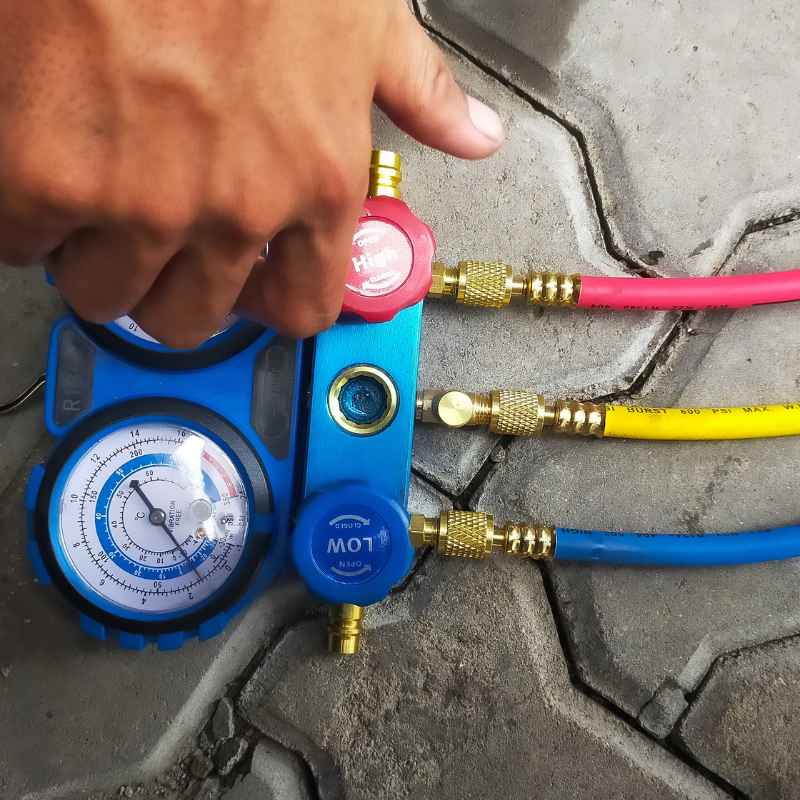
Frequently Asked Questions
Do cars still use Freon today?
No, cars manufactured today do not use Freon (R-12). Freon was phased out in the mid-1990s due to its ozone-depleting properties. Modern vehicles use R-134a or the newer, more environmentally friendly R-1234yf refrigerant.
What refrigerant is in most cars on the road now?
Most cars manufactured between the mid-1990s and the early 2010s use R-134a. Newer vehicles, typically those produced from the early 2010s onwards, are increasingly using R-1234yf, which has a much lower global warming potential.
Is R-1234yf flammable?
Yes, R-1234yf is classified as mildly flammable. This required automotive engineers to implement new safety standards and designs in vehicle AC systems to ensure its safe use. Servicing requires specialized equipment and training.
Can I buy Freon for my old car?
While it is technically possible to find R-12 (Freon), it is heavily regulated, expensive, and environmentally damaging. For older vehicles still using R-12, the recommended and most common service is to convert the AC system to use R-134a.
What happens if you mix R-134a and R-1234yf?
Mixing R-134a and R-1234yf is highly detrimental to the AC system. The different chemical properties and pressures can lead to component damage, reduced cooling efficiency, and contamination of the refrigerant, potentially requiring a complete system flush and component replacement.
Final Thoughts
The question of whether cars still use Freon can be answered with a clear no for modern vehicles. The automotive industry has made significant strides in refrigerant technology, moving from ozone-depleting R-12 to the greenhouse gas R-134a, and now to the ultra-low GWP R-1234yf. Understanding these transitions is vital for proper vehicle maintenance and environmental responsibility.
Always confirm your car’s specific refrigerant type before any AC service to ensure correct operation and longevity of your vehicle’s cooling system.
Products related to this article
Sponsored / affiliate links. As an Amazon Associate I earn from qualifying purchases. I may earn additional commission from eligible campaigns.