Is Carfax Good To Buy From? Essential Guide
Carfax is a valuable tool for checking a vehicle’s history, not a direct seller. While it provides important reports, it’s the dealerships you buy from who use Carfax. Focus on researching those specific dealerships and understanding how to use Carfax reports effectively for smart buying.
Thinking about buying a car can feel exciting, but also a little overwhelming, right? You want a reliable ride that won’t surprise you with unexpected problems down the road. Many people wonder if Carfax is a good place to buy their next car. It’s a common question, and the truth is a little nuanced.
Carfax itself is not a dealership. Instead, it’s a company that provides detailed vehicle history reports. These reports are super helpful for understanding a car’s past. So, while you can’t “buy a car from Carfax” directly, knowing your way around their reports can help you pick a great car from a trustworthy seller.
This guide will clear up any confusion and show you exactly how to use Carfax information to make a confident car-buying decision. We’ll break down what Carfax reports really tell you and how to evaluate the dealerships that use them. Let’s get your journey to a great car started!
What is Carfax, Really?
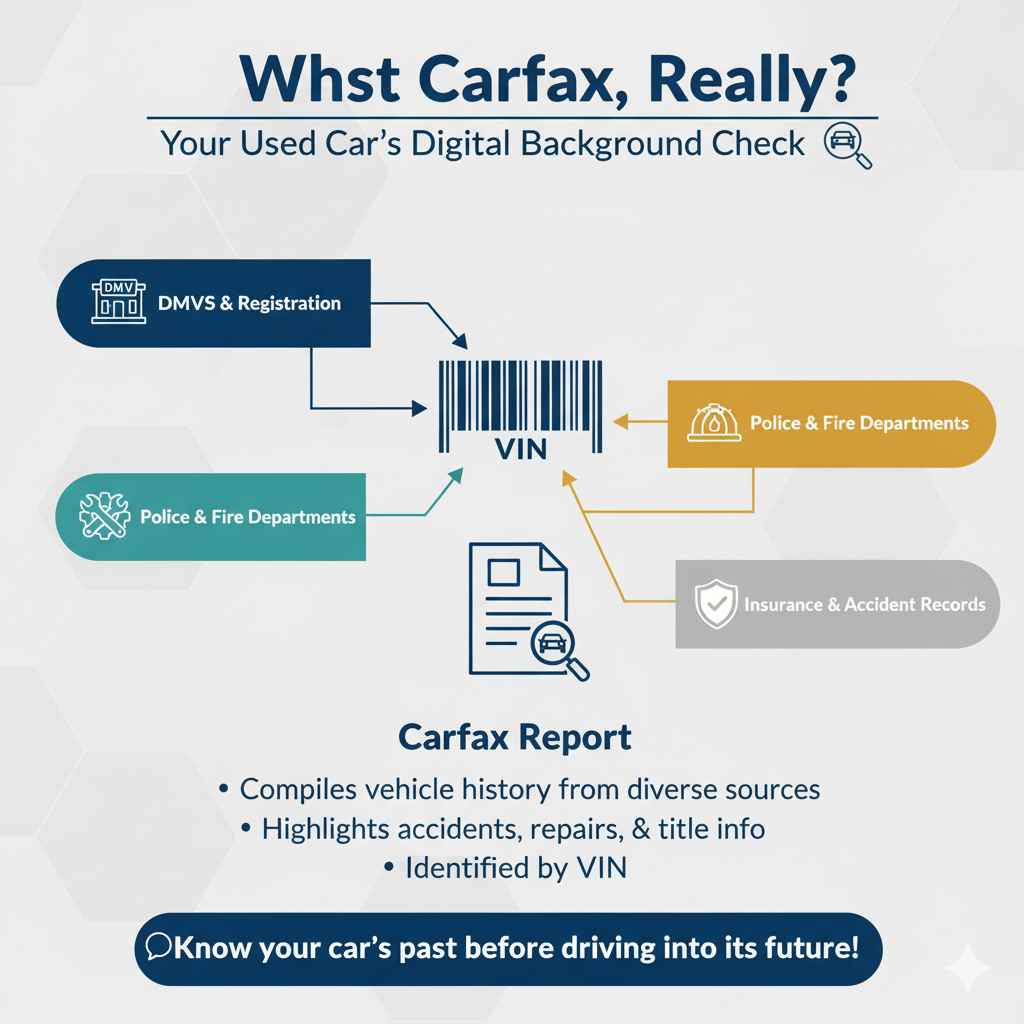
Imagine trying to get to know someone without knowing their past. It’s a bit like buying a used car without knowing its history! That’s where Carfax comes in. Carfax is a company that collects and compiles information about vehicles from various sources.
These sources include:
- DMVs (Department of Motor Vehicles)
- Police departments
- Fire departments
- Insurance companies
- Service and repair shops
- Accident and damage records
- Title and registration information
When you get a Carfax report, you’re essentially getting a digital background check for a specific car, identified by its Vehicle Identification Number (VIN). This report is designed to highlight important events in the car’s life.
What Does a Carfax Report Show You?
A Carfax report is like a storybook for a car. It tells you about its journey from the factory to the present day. Knowing what to look for can save you a lot of headaches and money.
Key Information Found in a Carfax Report:
- Accident History: This is one of the most crucial parts. It can tell you if the car has been in an accident, the severity of the damage, and if airbags deployed.
- Title Issues: Reports will flag if a car has a salvaged, rebuilt, flooded, or lemon title. These can indicate serious underlying problems or diminished value.
- Ownership History: You can see how many previous owners the car had. A car with many owners in a short time might raise a flag.
- Mileage Discrepancies: It helps detect if the odometer reading is accurate or if there’s been any rollback.
- Service Records: Some reports include maintenance history, showing if it’s been regularly serviced at major repair shops. This is a big plus!
- Lien Information: It can show if there’s an outstanding loan (a lien) on the car, which needs to be cleared before you can take full ownership.
- Recall Information: While not always fully comprehensive, it can sometimes highlight open safety recalls.
It’s important to remember that Carfax reports are only as good as the data available to them. Not every single event might be reported, especially minor repairs done by independent mechanics who don’t report to a central database.
The Role of Carfax in the Buying Process
Since you can’t buy a car directly from Carfax, its role is as a vital research tool. When you’re looking at a pre-owned vehicle, especially from a dealership or a private seller, asking for or running a Carfax report is a standard and smart step.
Here’s how it fits into your buying journey:
- Initial Screening: You might see a car online or on a lot. Before you get too attached, check its VIN for a Carfax report. This can quickly tell you if there are any immediate red flags that make the car not worth pursuing.
- Informed Negotiation: If the report shows minor issues, like a past fender bender that was properly repaired, you have information to discuss with the seller. You can ask for repair documentation or use this as a point to negotiate the price.
- Confirmatory Check: Even if a seller provides a Carfax report, it’s often a good idea to get your own. Sometimes, you might find slightly different information or a more detailed history.
- Peace of Mind: A clean Carfax report, especially one with thorough service records, can give you a great deal of confidence in your potential purchase.
Think of Carfax as your detective sidekick, helping you uncover the vehicle’s past so you can make a sound decision about its future with you.
How to Use Carfax When Buying a Car: A Step-by-Step Approach
Using Carfax effectively can feel like having a superpower when shopping for a car. It helps you see beyond the shiny paint and negotiate with confidence. Here’s how to do it:
Step 1: Get the Vehicle Identification Number (VIN)
Every car has a unique 17-digit VIN. You can usually find it on the driver’s side dashboard (visible through the windshield), on the driver’s side doorjamb sticker, or on the vehicle’s registration and insurance documents. Always ask the seller for the VIN if it’s not readily available.
Step 2: Access a Carfax Report
You can purchase a Carfax report directly from their website (Carfax.com). They offer single reports or packages if you’re looking at multiple vehicles. Some dealerships might provide a free Carfax report with their listings, which is a good sign!
Step 3: Carefully Review the Report
This is where your detective work begins. Don’t just glance at it. Read through each section:
- Damage and Accidents: Look for any reported damage. Minor dents or scratches are one thing, but major accidents, frame damage, or airbag deployment are serious concerns.
- Title Status: Absolutely check for “salvage,” “rebuilt,” “flood,” “fire,” or “lemon” titles. These vehicles are often sold at a lower price for a reason and can have hidden problems that are costly to fix. Websites like NHTSA.gov (National Highway Traffic Safety Administration) also provide information on vehicle safety and recalls, which can complement your research.
- Ownership and Usage: A car used as a rental or fleet vehicle might have been driven harder than a personal vehicle. A high number of owners over a short period could also indicate persistent issues.
- Maintenance History: This is golden! Regular oil changes, tire rotations, and timely service appointments suggest the previous owner cared for the car.
Step 4: Cross-Reference and Ask Questions
A Carfax report is a piece of the puzzle, not the whole picture. If the report shows something concerning, ask the seller for documentation of repairs or an explanation. If the Carfax report seems too good to be true, or if there are gaps, consider getting a pre-purchase inspection (PPI) from an independent mechanic.
Step 5: Consider a Pre-Purchase Inspection (PPI)
This is arguably the MOST important step after reviewing the Carfax report. Take the car to a trusted, independent mechanic. They can get the car on a lift, check for hidden damage (like rust or frame issues), inspect the engine and transmission, and identify any upcoming maintenance needs. This is money well spent and can save you thousands down the line. You can find certified mechanics through resources like the ASE (Automotive Service Excellence) website, which certifies automotive professionals.
Carfax Reports vs. Dealership Practices: What’s the Difference?
It’s crucial to understand that Carfax provides information, while dealerships sell cars. When you hear “buy from Carfax,” people usually mean buying a car that has a Carfax report available, or perhaps purchased through a dealership that heavily advertises its use of Carfax.
Let’s break down how they interact:
| Aspect | Carfax Role | Dealership Role |
|---|---|---|
| Primary Function | Vehicle history reporting and data compilation. | Selling vehicles (new and used). |
| Transaction | Sells historical reports. | Sells actual vehicles and may offer reports as part of the sale. |
| Data Source | Compiles data from various public and private sources. | Sells vehicles that have a history, which may be documented by Carfax. |
| Liability | Not responsible for the actual condition of the car; provides data based on available records. | Responsible for the condition of the vehicle sold and may offer warranties or guarantees. |
When you buy from a dealership, they are the ones selling you the car. They might choose to use Carfax reports to build trust with customers, providing them with the reports to show the car’s history. A dealership that proactively offers Carfax reports is often more transparent. However, always do your own due diligence, including the PPI!
Pros and Cons of Relying on Carfax Information
Like any tool, Carfax has its strengths and weaknesses. Knowing these will help you use it wisely.
Pros:
- Uncovers Hidden Dangers: Excellent for revealing accident history, title issues (like salvage or flood titles), and major repairs that a seller might not disclose.
- Provides Ownership & Usage Insights: Helps you understand the car’s past life – how many owners it had, if it was a rental, etc.
- Builds Confidence: A clean report can significantly boost your confidence in a vehicle’s history.
- Supports Negotiation: If issues are found, you have concrete data to negotiate a better price.
- Widely Used & Recognized: Most reputable dealerships, and many private sellers, are familiar with Carfax and may even provide reports.
Cons:
- Not 100% Comprehensive: Minor repairs, issues from private sellers who don’t report, or accidents that were never filed with insurance or police might not show up.
- Data Gaps Exist: The accuracy and completeness depend on the reporting sources. Not every event is captured.
- Interpretational Nuances: You need to understand what the report means. A “minor accident” could be anything from a bumper scrape to something more significant.
- Cost: While not exorbitant, obtaining reports does cost money.
- Doesn’t Replace a Mechanic: It’s historical data. It can’t tell you about current mechanical issues that haven’t happened yet or weren’t reported.
Is it Safe to Buy a Car That Has a “Clean” Carfax Report?
A “clean” Carfax report is a positive sign, but it’s not an absolute guarantee of a perfect car. It means that based on the data Carfax has access to, there are no reported major issues like accidents, title problems, or significant damage.
However, remember:
- “Clean” vs. “Perfect”: A clean report means no reported problems. It doesn’t mean the car has never had a scratch.
- Importance of Mechanics: Even with a clean report, a pre-purchase inspection by a qualified mechanic is essential. They can spot issues that Carfax can’t detect or that simply haven’t been reported.
- Seller Transparency: A seller who willingly provides a Carfax report and allows a PPI is generally more trustworthy than one who is hesitant.
So, while a clean Carfax report is a good starting point and builds confidence, it should be viewed as one piece of your overall due diligence. Always pair it with a thorough mechanical inspection.
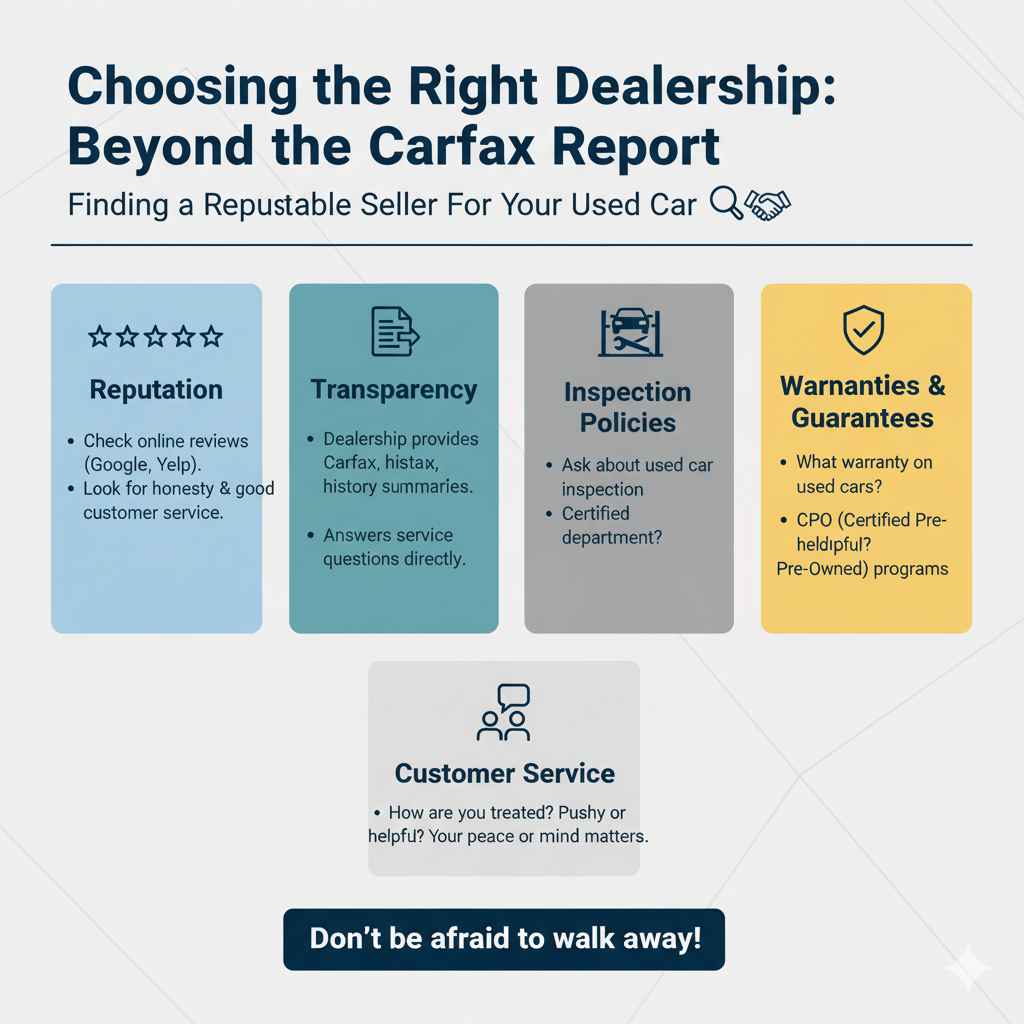
Choosing the Right Dealership: Beyond the Carfax Report
Since you buy from dealerships, choosing a reputable one is key. Carfax reports are a tool, but the dealership’s integrity is paramount.
Here’s what to look for:
- Reputation: Check online reviews (Google, Yelp, etc.) for the dealership. Look for consistent feedback on honesty, good customer service, and fair pricing.
- Transparency: A dealership that openly provides Carfax reports, offers vehicle history summaries without pushing, and answers questions directly is a good sign.
- Inspection Policies: Ask about their inspection process for used cars. Do they have a certified service department inspecting their vehicles?
- Warranties and Guarantees: What kind of warranty do they offer on used vehicles? Some dealerships offer limited warranties or certified pre-owned (CPO) programs that include extended coverage and inspections.
- Customer Service: How do you feel treated? Are they pushy, or do they seem genuinely interested in helping you find the right car?
Don’t be afraid to walk away if a dealership makes you uncomfortable or seems evasive. Your peace of mind is worth more than getting a car quickly.
FAQs About Buying from Carfax
Q1: Can I buy a car directly from Carfax?
A1: No, you cannot buy a car directly from Carfax. Carfax is a company that provides vehicle history reports. You buy cars from dealerships or private sellers who may use Carfax reports.
Q2: How much does a Carfax report cost?
A2: Carfax offers various packages. A single report typically costs around the price of a few coffees, but they also offer bundles of reports if you’re shopping for multiple cars.
Q3: Are Carfax reports always accurate?
A3: Carfax reports are based on the data they receive from various sources. While generally reliable, they may not capture every single event, especially minor repairs or accidents that were not reported to authorities or insurance companies.
Q4: What is the most important thing to look for on a Carfax report?
A4: Key things to look for are accident history (especially serious ones), title issues (like salvage, flood, or lemon titles), and any reported structural damage. A good maintenance history is also a big positive.
Q5: Should I trust a dealership that advertises “Carfax Certified”?
A5: “Carfax Certified” usually means the dealership has run a Carfax for the vehicle. It’s a good indicator of transparency. However, it’s still vital to review the report yourself and get an independent pre-purchase inspection from your own mechanic.
Q6: What if a car has a “minor accident” on its Carfax report?
A6: A “minor accident” can range in severity. It’s essential to ask the seller for details about the repair and, crucially, to have a mechanic inspect it during a pre-purchase inspection to ensure it was repaired properly and that there are no lingering issues.
Q7: Can a Carfax report tell me if a car has existing mechanical problems?
A7: A Carfax report primarily details a car’s history (accidents, title issues, ownership changes). It might indirectly hint at mechanical problems if it shows frequent repairs or a history of issues. However, it cannot diagnose current mechanical problems. For that, you need a pre-purchase inspection by a mechanic.
Conclusion
So, when it comes to “is Carfax good to buy from?” the answer is that Carfax is an indispensable tool for understanding the car you’re about to buy, not a place to buy it from directly. It empowers you with crucial historical information, helping you avoid potential pitfalls like hidden damage or title issues.
By consistently using Carfax reports in conjunction with a thorough pre-purchase inspection by a trusted mechanic, you gain immense confidence. You’ll be able to ask informed questions, negotiate effectively, and ultimately drive away in a vehicle that’s a sound investment. Remember, a clean report is a great start, but a mechanic’s seal of approval is the final green light. Happy car hunting!