12 Volt Air Pump for Car Tires: Portable Solutions for Quick Inflation
For a 12 volt air pump for car tires, match the inflator to your tire size: compact cars can use about 1.0-1.5 CFM units, while SUVs, trailers, and truck tires usually need higher airflow and a compressor built for longer run times. Buy too small a pump and you waste time, overheat the unit, or fail to reach safe pressure on the shoulder. This guide compares power source, airflow, duty cycle, and hose length so you can buy the right portable 12V inflator.
Quick picks

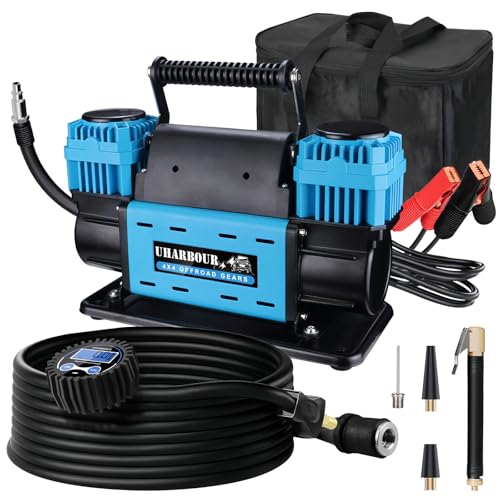

The best overall 12V inflator for most drivers is the one that matches your power source first, then airflow second. For passenger-car top-offs, a plug-in unit with a digital pressure display and automatic shutoff is usually the most convenient. For bigger tires or slower roadside fills, a battery-clamp compressor is the better fit.
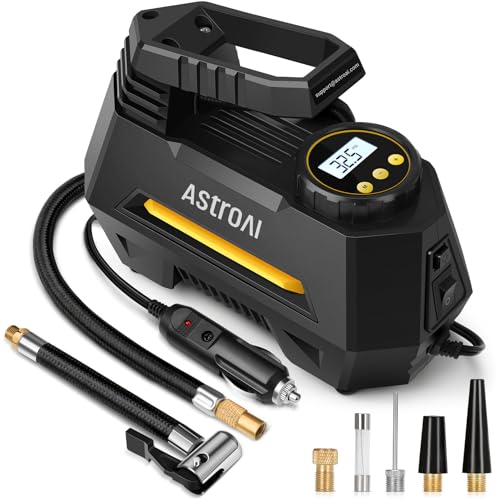
- Best plug-in choice for sedan top-offs: A 12V accessory-jack inflator with digital gauge, auto shutoff, and a hose long enough to reach all four tires.
- Best battery-clamp choice for larger tires: A direct-battery compressor with higher airflow and longer hose reach.
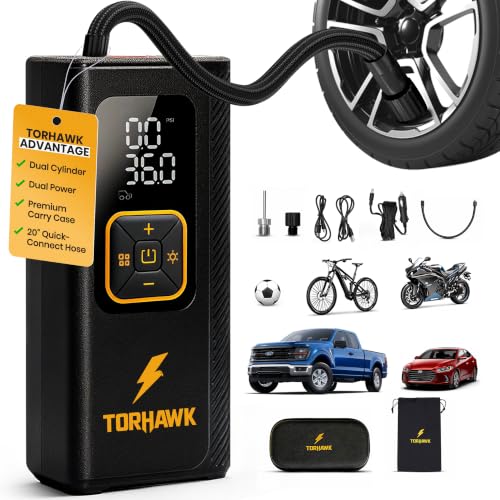
- Best digital inflator for set-and-walk use: A compact digital tire inflator with preset PSI, LED light, and automatic shutoff.
Best plug-in choice for sedan top-offs
Choose a plug-in 12V inflator when you want easy storage and occasional top-offs for a sedan, hatchback, or compact crossover. These units plug into a cigarette lighter or accessory jack, so they are simplest when the car’s 12V outlet can supply enough amperage for the compressor.
Best battery-clamp choice for larger tires
Choose direct battery clamps when the compressor draws more power, the hose needs to reach across a larger vehicle, or you expect slower, heavier fills. Heavy-duty models are more appropriate for larger tire volumes because they avoid the current limits of some cabin outlets.
Best digital inflator for set-and-walk use
A digital tire inflator works well for drivers who want a preset PSI, a digital pressure gauge, LED light, and auto shutoff. Those features do not make the compressor faster by themselves, but they make topping off easier and reduce the chance of overshooting the target.
12V tire inflator decision matrix
| Vehicle type | Tire size | Power source required | Minimum PSI | Recommended hose/cable length | Common failure risks |
|---|---|---|---|---|---|
| Sedan | Passenger-car tire | 12V outlet plug-in is usually enough for top-offs | Match the door placard; typical target is 32 to 35 PSI | At least enough to reach all tires without pulling the unit | Short hose, slow fill, heat buildup on repeated use |
| Compact SUV | Passenger or light crossover tire | Plug-in for routine topping off; battery clamps if draw is higher | Match the placard; do not use compressor max PSI as the target | Long enough to reach the farthest tire from the power outlet | Outlet amperage limit, hose reach, fatigue from longer fill times |
| Full-size SUV | Larger road tire | Direct battery clamps are often the safer fit for power draw | Match the placard or owner’s manual | Long hose and enough cable to reach both sides of the vehicle | Overheating, slow inflation, cord reach that forces awkward placement |
| Light truck | Higher-volume tire | Direct battery clamps | Varies by model and tire; confirm in the owner’s manual | Extended hose and cable reach | Outlet current limit, limited airflow, long fill times |
| Trailer or spare tire use | Varies by tire type | Battery clamps or a higher-output compressor | Follow the tire and vehicle guidance | Long hose helps around long tow rigs | Wrong pressure target, insufficient airflow, poor storage readiness |
Which 12V tire inflator fits your car?
The right answer depends on tire volume, not just the highest PSI number on the box. Passenger cars usually care more about getting to the placard pressure quickly and accurately, while larger tires need more airflow and a power connection that can keep up.
Sedan and compact SUV
For a sedan or compact SUV, a plug-in 12V inflator is usually enough if it can reach the farthest tire and your outlet can support the draw. A digital gauge with auto shutoff helps with routine top-offs and keeps the process simple for emergency roadside use.
Full-size SUV and light truck
For a full-size SUV or light truck, look harder at free-air CFM, hose length, and the power connection type. If the compressor is heavier draw, direct battery clamps are the better match because some cabin outlets can be too limited for sustained inflation.
Trailer and spare tire use
For a trailer or spare tire, check the tire and vehicle manufacturer guidance first. Trailer inflation is not a universal sidewall rule, and the right compressor depends on the tire type, the required pressure, and whether the hose can reach the valve without strain.
Say your sedan needs a quick top-off from 30 PSI to the door placard target of 35 PSI. A compact plug-in inflator with a digital pressure display and auto shutoff can be the easiest fit, because the fill is short and the outlet draw is usually manageable.
Suppose you are dealing with a larger SUV tire that is low enough to need a longer fill. In that case, a battery-clamp compressor with more airflow and a longer hose is more practical, because the outlet may not deliver enough current for a heavy-draw unit.
VIAIR 85P review
The VIAIR 85P is a 12V 15A compressor with 1.26 CFM at 0 PSI and a 60 PSI maximum. It includes a 10-foot power cord and a 3-foot air hose, plus a built-in LED work light. Its listed strength is good convenience for passenger-car top-offs and smaller tires.
What the listed specs mean
Its 1.26 CFM rating at 0 PSI tells you it is aimed at lighter inflation jobs rather than the fastest fill on larger tires. The 60 PSI maximum is enough for typical passenger-car use, since everyday car tire targets are usually around 32 to 35 PSI, not near compressor max.
Where the short hose and cord matter
The 10-foot power cord and 3-foot air hose are fine when the vehicle is parked close to the tire, but they can feel tight on larger vehicles or awkward roadside angles. Short reach is one of the most common failure points in portable inflators, because the unit ends up pulled around during use.
Best use case and limits
This model fits a driver who wants a compact, plug-in 12V inflator for routine car top-offs and occasional roadside correction. It is less appealing if you need faster fills on larger tires or want more reach from the power source to the valve stem.
VIAIR 88P review
The VIAIR 88P uses direct battery clamps, delivers 1.47 CFM at 0 PSI, reaches 120 PSI maximum, and has a 16-foot air hose. It can inflate up to 33-inch tires, which makes it the stronger fit when airflow and hose reach matter more than cabin-socket convenience.
Direct battery clamp setup
Battery clamps give this compressor a more suitable power path for heavier draw. That matters when you are inflating larger tires or want a more capable roadside tool, because some 12V accessory sockets are not the best match for sustained compressor load.
Why airflow matters for larger tires
The 1.47 CFM figure is only part of the story, but it is the right number to compare with other portable units. Higher free-air CFM generally means faster inflation on larger tires, where volume matters as much as maximum pressure.
When this model fits better than a plug-in unit
Use this type of compressor when you want more hose reach, more headroom on tire size, and a better fit for SUV or light-truck duty. It is a stronger match than a plug-in unit if the vehicle’s outlet is marginal or if the tire takes too long to fill with a smaller pump.
How to choose a portable inflator
Start with the power connection type. A plug-in 12V outlet model is the easy choice for passenger cars and light top-offs, while direct battery clamps make more sense when the compressor draws more power or the tire size is larger.
Power connection type
A cigarette lighter or accessory jack is convenient, but it is not always the best power source for a heavier compressor. If the inflator spec sheet calls for direct battery clamps, treat that as a real buying boundary rather than a convenience choice.
CFM, PSI limit, and fill speed
CFM is the more useful airflow number for shopping because it relates to fill speed. PSI max matters too, but mostly as a ceiling; it does not tell you how fast a tire will fill. For passenger cars, the target pressure comes from the placard or owner’s manual, usually around 32 to 35 PSI.
One common mistake is choosing by max PSI alone. A compact inflator with a very high pressure ceiling can still be slow on a larger tire if its airflow is low or the hose is too short to use comfortably.
Digital gauge, auto shutoff, and hose length
A digital tire inflator with a gauge, auto shutoff, LED light, and preset PSI is often the best convenience package for daily drivers. Those features reduce guesswork. They do not replace good airflow, and they do not solve a short hose or limited power source.
12 volt air pump checklist
- Store the inflator where you can reach it quickly, along with the valve adapter if your model uses one.
- Check that the hose, cord, and clamps are not cracked or pinched.
- Test the unit before a trip, not during a roadside emergency.
- Confirm the vehicle’s recommended tire pressure on the door placard or in the owner’s manual.
- Keep the unit out of the driver’s view and away from airbag zones.
- Follow the vehicle and product manual for any electrical connection steps.
Keep in mind that roadside inflation is for emergency top-offs and careful correction, not for ignoring a damaged tire. If a tire is cut, the sidewall is damaged, or the vehicle has been driven flat for too long, inflation may not be the right fix.
Safety note: follow the vehicle and product manual; never work under a vehicle supported only by a jack, use jack stands on level ground, keep items out of airbag zones and the driver’s view, and check local laws.
Frequently asked questions
What is the best 12V air pump for car tires?
The best 12V air pump is the one that matches your tire size and power source, not the one with the biggest pressure number. For most passenger cars, a plug-in digital inflator is enough. For larger tires, a direct-battery compressor with more airflow is the better fit.
Can a 12V air pump inflate a flat car tire?
It can sometimes inflate a low or fully deflated tire, but that depends on the compressor’s airflow, the tire condition, and how much damage the tire has already taken. If the tire was driven flat or the sidewall is damaged, stop and inspect the tire before trying to refill it.
Do I need a cigarette lighter plug or battery clamps for a tire inflator?
Use a cigarette lighter or accessory plug for lighter-duty top-offs and convenience. Choose battery clamps when the compressor draws more current, the hose needs more reach, or the vehicle outlet is not a good match for sustained use. The model listing should make that connection type clear.
How long does a 12V tire inflator take to fill a car tire?
Fill time depends on airflow, tire size, and how low the tire is when you start. On the supplied examples, the VIAIR 85P fills a 225/60R18 tire from 0 to 30 PSI in 3 minutes, while the VIAIR 88P does the same in 2.5 minutes.
What PSI should I set my car tire inflator to?
Set the inflator to the pressure listed on the vehicle’s door placard or in the owner’s manual. For many passenger cars, that is typically around 32 to 35 PSI. Do not use the compressor’s maximum PSI as your tire target; that number is only the unit’s upper limit.
Are cordless tire inflators better than 12V corded ones?
Not always. Cordless inflators are handy for short top-offs, but they can run out of battery and may be slower on larger tires. A 12V corded model keeps running as long as the vehicle power source is available, which is often better for emergency roadside inflation.
Will a 12V air pump work for SUV or truck tires?
Yes, but the right model matters. SUVs and light trucks usually need more airflow and better hose reach than a small sedan pump. For larger tires, a battery-clamp compressor with higher CFM is usually the more practical choice than a compact plug-in unit.
What features should I look for in a portable tire inflator?
Look for a digital pressure gauge, auto shutoff, LED light, preset PSI, a hose long enough for your vehicle, and a power connection that matches the compressor’s draw. Also check user feedback for overheating, short cords, and slow inflation, since those are common complaints on weak units.
Products related to this article
Sponsored / affiliate links. As an Amazon Associate I earn from qualifying purchases. I may earn additional commission from eligible campaigns.