Is NOS Legal in Cars in California? The Real Answer, Fines, and Risks
You just finished installing the bottle, the lines, and the purge kit. The car idles fine, the gauge reads 900 psi, and you are one pull away from feeling that hit. But before you blip the throttle on the 405, you need a straight answer: is NOS legal in cars in California?
The short answer is complicated. Possession is legal. Installation is legal. But the moment you activate it on a public road, you cross into a criminal offense under California Vehicle Code. This guide walks through the exact laws, the penalties, and the financial traps most enthusiasts never see coming. You will learn what disconnected actually means to a cop, how the feds can get involved, and why your insurance company might leave you holding the bag.

Nitrous Express
Nitrous Express 15531 2-1/16" Nitrous Electric Pressure…
- World's first remote electronic nitrous pressure gauges
- Designed for accuracy
- Easy-to-read gauges
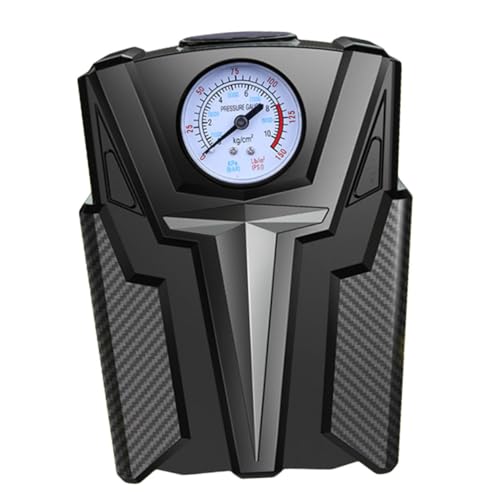
Before diving into the code, one piece of hardware matters more than most people think: a reliable pressure gauge. If you run nitrous, you need to know your bottle pressure at a glance. The Nitrous Express 15531 2-1/16" Nitrous Electric Pressure Gauge with Sensor is a solid pick because it is the world’s first remote electronic nitrous pressure gauge. You can mount the display anywhere in the cabin, which beats leaning over the trunk to check a mechanical gauge. It reads accurately and the white face with black numerals is easy to read in daylight. Check the current price on Amazon if you want one for your setup.
Quick Answer: Is NOS Legal in California?
Yes, you can own and install a nitrous oxide system in California. No, you cannot use it on public roads. The law does not ban the hardware. It bans the act of spraying nitrous while driving on a highway, street, or even a parking lot open to public use.
Think of it like a firearm. Owning one is legal. Firing it in a residential neighborhood is a crime. Nitrous works the same way. The bottle in your trunk is fine. The button on your shifter is fine, as long as you never press it off the track.
The Law: Vehicle Code 23109 and "Exhibition of Speed"
The primary weapon law enforcement uses against nitrous users is California Vehicle Code 23109. This section covers street racing and exhibitions of speed. Subsection (c) specifically prohibits engaging in a speed contest or exhibition of speed on a highway.
Here is the catch: you do not need to be racing anyone. A single pull from a stoplight where you hit 60 mph in 4 seconds can be charged as an exhibition of speed. The officer does not need a radar reading. They need probable cause that you were showing off or testing your vehicle’s acceleration. Spraying nitrous is about as clear a signal as you can send.
The penalties under VC 23109 are not a slap on the wrist:
- First offense: Misdemeanor, up to 90 days in county jail, and fines between $355 and $1,000.
- Second offense within 5 years: Mandatory 4 days in jail (minimum), fines up to $1,000, and a 6-month license suspension.
- Vehicle impoundment: Your car can be impounded for 30 days, even on a first offense.
Judges also have discretion to order a 90-day license suspension and require you to complete a traffic school program focused on reckless driving. That is the state-level risk. It gets worse from here.
The Critical Distinction: Possession vs. Use
This is the gap most articles miss. The law targets use, not installation. You can have a fully plumbed nitrous kit with a charged bottle in the trunk, and you are not breaking the law just by driving around.
The crime happens when you open the valve and press the activation switch. That is the moment you are "engaging in a speed contest or exhibition of speed." The prosecution does not need to prove you actually raced anyone. They need to prove you used the nitrous to accelerate in a way that constitutes a display of speed.
This distinction matters for your defense. If you are pulled over and the officer finds the kit, they cannot arrest you for possession. They can, however, write you a fix-it ticket if the system is not properly disconnected, which we cover next.
| Situation | Legal Status | What the Law Sees |
|---|---|---|
| Bottle in trunk, valve closed, lines intact | Legal to drive | Possession of performance parts |
| Bottle in trunk, valve open, lines pressurized | Legal to drive (if not activated) | Possession, but risky if officer inspects |
| Activating nitrous on public road | Illegal | Exhibition of speed (VC 23109) |
| Spraying at a drag strip or closed course | Legal | Sanctioned event, not a highway |
The "Disconnected" Rule: What Does It Actually Mean?
Many sources mention that a nitrous system must be "disconnected" to pass a smog check or a visual inspection. Few explain what that means in practice. Here is the truth: a visual inspection requires that the system cannot function.
For most officers and smog technicians, "disconnected" means one of these conditions is met:
- The nitrous bottle is physically removed from the vehicle. This is the cleanest and most obvious solution.
- The bottle valve is removed, so no pressure can be delivered. An empty bottle with the valve off is effectively inert.
- The feed line from the bottle to the solenoid is cut or unbolted, and the solenoid is not wired to a power source.
Simply closing the bottle valve is not enough. If the lines are full of nitrous and the solenoids are wired, a technician can reasonably argue the system is ready to use. That fails the inspection.
Visual Inspection Checklist for Law Enforcement
When a CHP officer or smog station inspects your car, they look for these things:
- Bottle presence: Is there a cylinder in the trunk or cabin? If yes, is it secured?
- Valve state: Is the valve open or closed? A closed valve with pressure on the gauge is a red flag.
- Line integrity: Are the high-pressure lines connected to the solenoids? Disconnected lines suggest the system is not operational.
- Wiring: Is the activation switch wired to a 12V source? Unplugged wiring suggests the system cannot fire.
- Purge kit: Is the purge solenoid venting to the atmosphere? If it is plumbed and pressurized, the system is active.
Pro tip: If you drive a car with nitrous on the street, keep the bottle in your garage. An empty trunk is the only guaranteed way to avoid a citation. The 15 minutes it takes to unbolt the bottle is worth avoiding a $1,000 fine.
The Federal Angle: EPA and the Clean Air Act
California is not the only jurisdiction with a say in your nitrous setup. The federal Clean Air Act prohibits tampering with emissions control systems on vehicles driven on public roads. A nitrous kit that interferes with the catalytic converter, oxygen sensors, or engine management can be considered tampering.
This is a separate violation from VC 23109. The EPA can fine individuals up to $4,000 per tampering incident, though in practice they focus on manufacturers and shops. The real risk is that a smog check station will flag your car for a visual inspection failure, which triggers a referee appointment with the Bureau of Automotive Repair (BAR).
CARB (California Air Resources Board) requires an Executive Order (EO) number for any aftermarket part that affects emissions. Most nitrous kits do not have a CARB EO number because they are intended for off-road or track use. Without an EO number, the kit is not street-legal in California, even if it is installed but disconnected.
In plain terms: your nitrous kit makes your car non-compliant with federal and state emissions regulations the moment it is installed, unless it is fully removed or you are on a closed course. This is why track-only use is the standard advice.
The Hidden Cost: Insurance and Liability After an Accident
Here is the financial trap nobody talks about. You crash your car with nitrous installed, even if you never pressed the button. Your insurance company will likely deny your collision claim.
Why? Because your policy contains an exclusion for illegal use of the vehicle. Driving with a prohibited modification can be considered a material misrepresentation or an illegal act, depending on the insurer. If the adjuster sees a bottle, lines, and solenoids, they will ask if the system was engaged at the time of the crash.
You might tell the truth: it was not activated. But the insurer can argue that the installation itself violates the California Vehicle Code (since it is not CARB-approved) and therefore the car was not in a legal condition to operate. That gives them grounds to void your policy and deny the claim.
Worse, if you injure someone else, your liability coverage may also be voided. You become personally responsible for medical bills, legal fees, and property damage. A single at-fault accident with injuries can easily exceed $100,000 in damages. That is a life-changing financial hit.
Read your policy carefully. Most standard auto policies exclude coverage for vehicles used in speed contests or exhibitions of speed. If the crash happens during a pull, you are uninsured. If the crash happens an hour later, you are still fighting an uphill battle.
Track Use: The Only Legal Place to Spray
The only place you can legally use nitrous in California is on a closed course that is not a highway. This includes drag strips, road courses, and private tracks where racing is sanctioned. You still need to follow the track’s safety rules, which typically require a helmet, a secure bottle mount, and a blow-down tube routed outside the vehicle.
At a drag strip, nitrous use is common and accepted. The track provides a controlled environment with emergency personnel. Your insurance policy does not cover track use either, but most tracks sell event-day liability coverage or require you to sign a waiver. That is a different risk profile than the street.
If you want to keep your car street-legal and still run nitrous at the track, the best practice is to remove the bottle and lines after each event. That makes the car compliant for smog checks and visual inspections. It is a pain, but it keeps you on the right side of the law and the insurance company.
For monitoring your bottle pressure at the track, the Nitrous Express electric pressure gauge is worth the money. You can mount it on the dash or A-pillar and see pressure without opening the trunk. It takes a day to get used to the wiring, but the accuracy beats a mechanical gauge that vibrates and drifts.
Penalties and Fines: What You Actually Risk
Let’s put the numbers in one place so you know exactly what is at stake.
- VC 23109(a) – Speed contest: Misdemeanor, up to 90 days jail, fines up to $1,000, 30-day impound.
- VC 23109(c) – Exhibition of speed: Misdemeanor, up to 90 days jail, fines up to $1,000, 30-day impound.
- License suspension: 6 months for a second offense, up to 90 days for a first offense at the judge’s discretion.
- Ignition interlock: Not typically ordered for nitrous offenses, but possible if you also have a DUI. Do not combine the two.
- Smog check failure: You cannot register the vehicle until the nitrous system is removed or disconnected. That means a retest fee and your time.
If you are caught at a smog station with a connected nitrous kit, the technician will flag the car. You will receive a notice to appear at a BAR referee station. The referee will require proof that the system is removed or rendered inoperative before issuing a passing certificate. That process costs money and takes weeks.
One more thing: if you are under 18, the penalties are harsher. The court can suspend your license for a year and impound the car for 30 days. A juvenile record for a speed contest is not something you want on your record when you apply for jobs or insurance later.
Bottom Line: How to Build a Legal NOS Setup
You can enjoy nitrous in California, but you have to treat it like a track-only tool. Here is how to keep your build legal and your wallet safe.
- Keep the bottle out of the car when driving on public roads. Store it in your garage, not the trunk.
- If the kit is installed, disconnect the lines and wiring so the system cannot function. Do not rely on a closed valve.
- Never activate nitrous on a street, highway, or parking lot. The first pull is the one that gets you arrested.
- Check your insurance policy for exclusions related to speed contests or modifications. If you are unsure, ask your agent directly.
- Use a quality pressure gauge like the Nitrous Express 15531 to monitor bottle pressure safely at the track.
- Budget for the consequences: fines, impound fees, towing, and a potential insurance rate hike if you are caught.
- Know that federal emissions laws apply even if the state does not catch you. A connected nitrous kit is a tampering violation under the Clean Air Act.
If you are building a high-horsepower car for the street, remember that forced induction (a supercharger or turbo) is a more street-friendly way to add power without the legal baggage. Nitrous is cheap and effective, but it is a liability magnet. Use it where it belongs: on the track.
For more context on how California treats performance and emissions, check out our guide on car costs in California and the broader legal rules for car modifications.
Products related to this article
Sponsored / affiliate links. As an Amazon Associate I earn from qualifying purchases. I may earn additional commission from eligible campaigns.