Maximizing Enjoyment: Cars and Lifestyle Choices Guide
Start with your weekly routine: commuting, cargo, passengers, and weekend use. Then keep total ownership cost to roughly a manageable share of monthly take-home pay. Buying for image instead of use usually means paying for features you rarely need, then resenting the car later. This guide shows how to match body style, running costs, and enjoyment goals to your actual schedule.
How do you choose a car that fits your lifestyle?


Start with weekly use, not showroom appeal
The right car should fit the week you already live. List your normal miles, parking access, passenger count, cargo needs, and how often you take longer trips. That gives you a clearer answer than a badge or trim name.
A simple scorecard helps. Rate each vehicle you consider for city parking, fuel use, cargo flexibility, passenger comfort, and how often you would use the features you are paying for. A car that scores well on daily use usually feels better to own than one that only looks right on paper.
Match body style to your routine
Body style should follow the job you need done. Sedans often suit commuters who want predictable fuel use and easy parking. Hatchbacks and wagons give you more cargo flexibility without moving to a larger footprint. SUVs help when you need a higher seat, more space, or easier loading. Minivans remain hard to beat for frequent passenger duty. Trucks are the tool for towing, hauling, or messy work. Coupes and convertibles fit drivers who care more about personal enjoyment and less about rear-seat duty.
For someone with a tight urban garage and a short daily commute, a compact sedan or hatchback may make more sense than a larger three-row SUV. Picture a family with two child seats, grocery runs, and a Sunday sports schedule: a minivan or midsize SUV can be the cleaner fit. The car should solve the week you actually live.
Which vehicle segment fits your routine best?
Different segments solve different problems. Sedans and hatchbacks often favor efficiency and easier parking. SUVs add cargo height and a more upright seating position. Wagons split the difference with car-like road manners and better load space. Trucks, minivans, coupes, and convertibles each fit narrower use cases, so the best choice depends on what you do most often.
When a sedan makes more sense than an SUV
Choose a sedan when you want lower running costs, simpler parking, and enough trunk space for groceries, luggage, or a stroller. A sedan can also feel calmer at highway speed because it tends to be quieter and less bulky than many SUVs. If you do not need all-wheel-drive clearance or high cargo loading, the sedan may be the better daily tool.
When a hatchback, wagon, or minivan wins on flexibility
Hatchbacks work well when your cargo is irregular in shape and you still want a smaller footprint. Wagons are strong choices for road trips because they keep car-like handling while opening up long-load space. Minivans are often the most practical choice for repeated family use, sliding doors, and easier access in tighter parking spaces.
When trucks, coupes, or convertibles fit specific driving goals
Trucks are best when the use case is real hauling, towing, or utility, not occasional style. Coupes make more sense if you value a more focused driving position and can live with limited rear-seat access. Convertibles fit open-air enjoyment, but they often come with more wind noise, less cargo room, and a higher purchase price.
What car features matter most for daily enjoyment?
Daily enjoyment comes from features you use every day, not from the longest options list. Comfort, noise levels, seat support, screen layout, and cargo flexibility matter because they affect every trip. Driver-assistance features matter too, but only if they reduce stress in traffic, parking, and long drives without becoming annoying.
Comfort items that matter on real trips
Pay attention to seating position, lumbar support, visibility, and ride quality. A seat that feels fine for 10 minutes can become tiring after an hour. Cabin noise also matters more than many buyers expect, because it affects fatigue and how relaxed the car feels on commute-heavy weeks.
Climate control and easy-to-reach controls count as well. If basic functions require too many screen taps, the car may feel newer but less pleasant. Daily enjoyment often comes from the things that reduce friction.
Cabin tech that reduces friction instead of adding it
Look for a tech interface that is quick to learn and easy to use while parked. Wireless phone integration, clear navigation prompts, and useful charging ports can save time. Rear-seat charging, camera views, and cargo-area power points matter when they fit your routine, not because they sound advanced.
Safety and driver-assistance features that help in traffic and parking
Modern driver-assistance and autonomous tech can improve comfort and convenience, especially in traffic jams, tight parking, and long highway stretches. Lane centering, adaptive cruise control, blind-spot alerts, and automatic emergency braking can lower stress. They still require attention, though. They assist the driver; they do not replace the driver.
Use this lifestyle-fit checklist before you buy
This checklist keeps the decision practical. Compare each profile against the body style, features, and deal-breakers that match the way the car will actually be used. The best match usually becomes obvious once the use case is named clearly.
| Driver profile | Ideal body style | Must-have features | Deal-breakers |
|---|---|---|---|
| City commuter | Hatchback or compact sedan | Easy parking, good fuel economy, parking sensors, low cabin noise | Large exterior size, weak visibility, high running costs |
| Weekend traveler | Wagon, midsize sedan, or SUV | Comfortable seats, cargo flexibility, highway stability, useful driver-assistance | Tiny trunk, tiring ride, poor highway range |
| Family hauler | Minivan or midsize SUV | Rear-seat space, easy child-seat access, multiple USB ports, safety tech | Tight second row, awkward door openings, limited cargo room with passengers aboard |
| Enthusiast | Coupe, sports sedan, or manual-equipped hatchback | Strong brakes, responsive steering, supportive seats, controllable suspension | Excess weight, vague steering, harsh ride that ruins daily use |
| Eco-first buyer | Hybrid sedan, hybrid hatchback, or EV | Efficient powertrain, low charging or fuel hassle, good range or fuel economy | Short range for an EV, poor charging access, excessive energy use |
How does maintenance affect long-term enjoyment?
Maintenance protects the feeling that makes a car enjoyable in the first place. Regular maintenance means scheduled check-ups before problems grow, plus oil changes, air filter replacement, tire condition checks, and attention to maintenance lights. Ignore it, and a car turns from convenient to irritating fast.
Routine items that keep a car pleasant to own
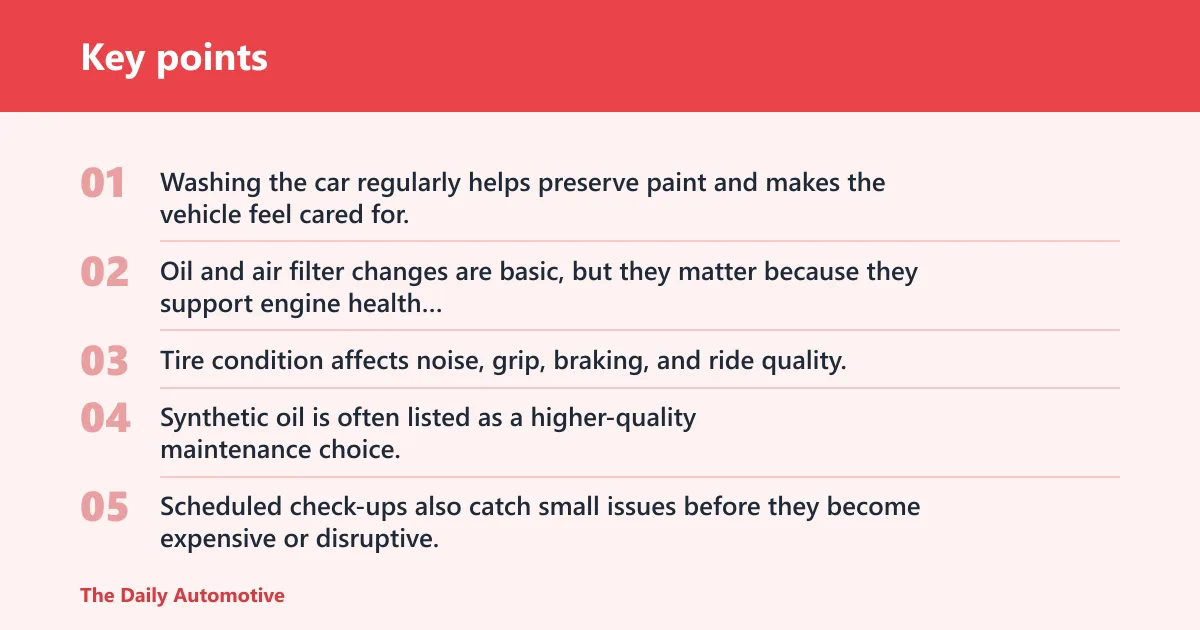
Washing the car regularly helps preserve paint and makes the vehicle feel cared for. Oil and air filter changes are basic, but they matter because they support engine health and smooth operation. Tire condition affects noise, grip, braking, and ride quality. Synthetic oil is often listed as a higher-quality maintenance choice, especially when a vehicle’s service schedule allows it.
Scheduled check-ups also catch small issues before they become expensive or disruptive. That matters because a dashboard warning light ignored for too long can turn a simple service visit into a repair bill and an inconvenient week.
Warning signs that a neglected car stops being fun
Uneven tire wear, noisy brakes, rough idling, and delayed maintenance lights are all signs that the ownership experience is slipping. A car can still move, but it no longer feels easy to live with. Comfort and enjoyment usually fall apart before the vehicle fully fails.
Why scheduled check-ups protect reliability and resale value
Well-timed service tends to support reliability, and reliability protects enjoyment because the car starts earning its keep every day. It can also help resale value, since documentation shows the car has been maintained rather than merely used. That matters whether you keep the car five years or fifteen.
Should you choose a hybrid or an EV for your lifestyle?
Hybrids and EVs can fit daily life well, but only when your routine supports them. Hybrids are often the easier green choice for drivers who want better fuel efficiency without changing habits much. EVs suit drivers who can charge at home, want a quiet driving experience, and do not need long-range flexibility every day.
Where hybrids fit best
Hybrids work well for mixed city and highway use, especially if you want lower fuel use without planning around chargers. They keep the familiar structure of conventional car ownership while reducing fuel demand and carbon footprint. They are a practical bridge for buyers who want sustainability with less adjustment.
Where EVs fit best
EVs fit best when daily driving is predictable and charging access is easy. Quiet operation and instant torque give them a modern driving feel, and many buyers enjoy the smoothness. The trade-off is range planning and charging time, which matter more on road trips and in households without reliable home charging.
Charging, range, and daily-use trade-offs
If most of your miles are local, an EV can be a strong match. If you regularly make long trips or live in an apartment without convenient charging, the EV equation becomes harder. Range and charging availability matter more than the badge on the tailgate. For some buyers, a hybrid gives most of the environmental benefit with fewer compromises.
What financing choice makes the most sense?
Financing should support the lifestyle you can afford, not stretch it. Leasing and financing solve different problems. Leasing can lower the monthly payment, but it also usually comes with mileage limits and return-condition rules. Financing usually costs more each month but leads to ownership and avoids lease-end restrictions. Total cost of ownership matters more than the sticker alone.
Leasing versus financing
Leasing can make sense if you want newer tech, predictable terms, and low commitment, especially if you drive fewer miles. Financing makes more sense if you plan to keep the car longer, drive a lot, or want to avoid mileage penalties. A lifestyle-driven buyer should compare the full term, not only the monthly payment.
How interest rates and repayment terms affect monthly cost
Lower interest rates and longer repayment terms can reduce the monthly bill, but they may increase the total paid over time. That trade-off matters if your budget is tight. A car that looks affordable on a long note may be less attractive once insurance, fuel, maintenance, and depreciation are included.
Why depreciation and mileage limits matter
Depreciation is especially important if you like changing cars often. Leasing can shield you from resale concerns, but mileage limits can become costly for commuters or road-trippers. Financing shifts depreciation risk to you, which is better if you keep the car long enough for the cost to spread out.
How much can tech and upgrades add to the driving experience?
Technology and well-chosen upgrades can make a car more enjoyable, but only if they support the way you drive. Driver-assistance features add comfort and convenience. Performance upgrades can sharpen steering, sound, or response, yet they can also reduce ride comfort, raise noise, hurt efficiency, or complicate warranty coverage.
Driver-assistance and convenience tech
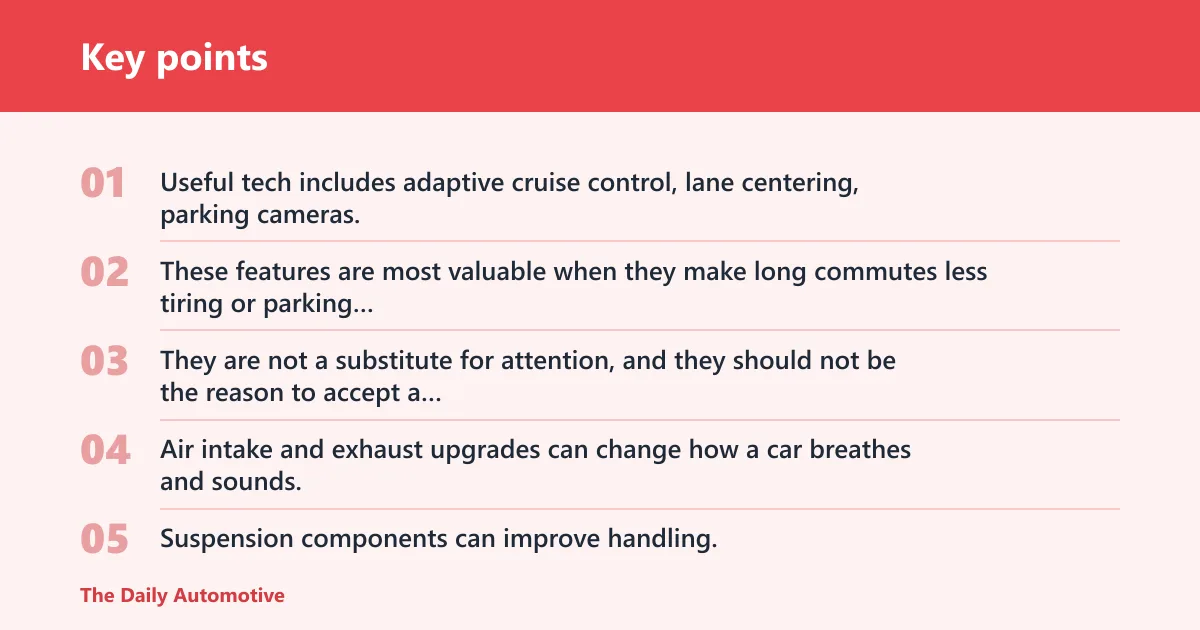
Useful tech includes adaptive cruise control, lane centering, parking cameras, and good phone integration. These features are most valuable when they make long commutes less tiring or parking less stressful. They are not a substitute for attention, and they should not be the reason to accept a poor vehicle fit.
Performance upgrades that help or hurt daily use
Air intake and exhaust upgrades can change how a car breathes and sounds, but they may also increase noise without delivering meaningful daily gains. Suspension components can improve handling, yet a stiffer setup may reduce ride comfort on rough roads. Efficiency, comfort, and reliability should all be considered before any modification.
A common first-timer mistake is adding a louder exhaust to a commuter car that already spends an hour a day in traffic. The result can be more cabin noise and less satisfaction, not more. Upgrades should solve a problem or improve a specific use case, not just add volume.
Cost, comfort, efficiency, and warranty trade-offs
Any modification should be judged against its cost and side effects. Higher-quality fluids and sensible maintenance can improve ownership more safely than aggressive changes. If the goal is daily enjoyment, a modest suspension refresh or fresh tires may deliver more real-world benefit than a long list of bolt-ons.
Which cars are fun but still practical for everyday life?
The best fun-but-practical cars are the ones that still work on ordinary Tuesday mornings. Sports sedans, manual hatchbacks, wagons, and some compact SUVs can give enough engagement without making errands miserable. Road-trip-friendly choices usually have supportive seats, decent cargo space, and a quiet enough cabin for long highway hours.
Common matches by enjoyment goal
- Fun daily driver: sports sedan, manual hatchback, or compact wagon with responsive steering and manageable ride quality.
- Road-trip-friendly model: midsize sedan, wagon, or SUV with stable highway behavior and useful cargo room.
- Family-friendly option: minivan or midsize SUV with easy access, flexible seating, and strong safety tech.
- Open-air enjoyment: convertible, if you accept the trade-offs in cargo space and noise.
Luxury sports cars may satisfy status and performance goals, but they only make sense when their cost and compromises fit the owner’s actual use. The car should match the life around it. That is the cleaner decision rule.
Frequently asked questions
Is it better to buy a car for image or actual use?
Actual use is the safer guide. Choosing based on image over use pattern increases regret risk, because you end up paying for features that do not solve your real problems. If the car fits your commute, parking, passengers, and weekend plans, the ownership experience is usually better.
How does maintenance affect long-term driving enjoyment?
Maintenance keeps a car smooth, quiet, and dependable. Oil changes, air filter replacement, tire checks, maintenance lights, and scheduled check-ups prevent small problems from becoming bigger ones. A neglected car often becomes noisy, less efficient, and less pleasant long before it fails completely.
Should I choose a hybrid or electric car for lifestyle fit?
Choose a hybrid if you want easier ownership with better efficiency and fewer changes to your routine. Choose an EV if you have reliable charging, predictable daily driving, and a preference for quiet operation and instant torque. The right answer depends on access, range needs, and trip length.
What financing choice makes sense for a lifestyle-driven car purchase?
Lease if you want lower commitment, newer tech, and predictable terms, but watch mileage limits and return-condition rules. Finance if you plan to keep the car longer or drive more. Compare total cost of ownership, interest rates, and repayment terms before you decide.
Products related to this article
Sponsored / affiliate links. As an Amazon Associate I earn from qualifying purchases. I may earn additional commission from eligible campaigns.