How Much Does a Hot Wheels Car Culture Ford Escort Cost?
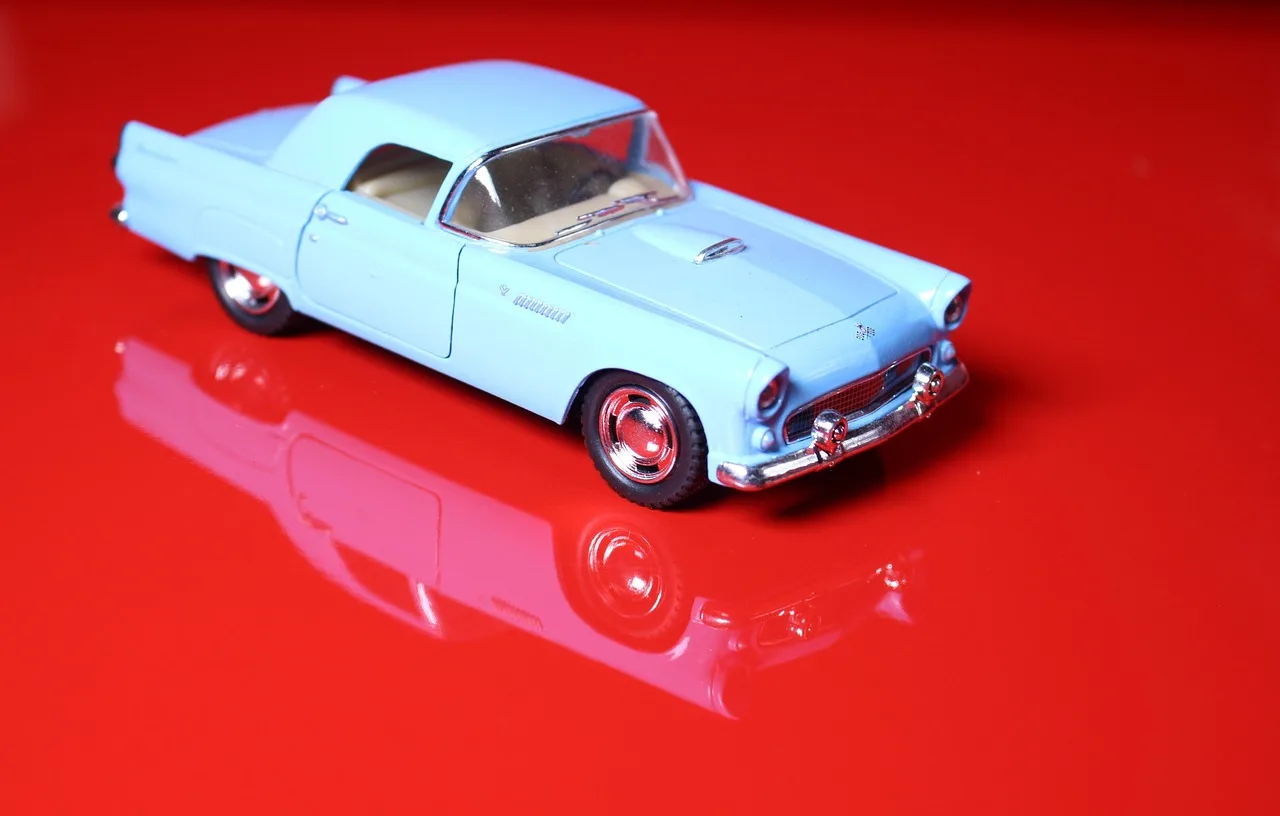
A Hot Wheels Car Culture Ford Escort usually sells for about $15 to $35 carded. Pay too much, and a common casting with soft corners or a damaged card can wipe out your margin fast. This guide breaks down fair prices by condition, variant, and landed cost so you can judge a listing in under a minute.
Retail, resale, and landed cost for carded releases


Hot Wheels Car Culture sits above basic mainline cars, so retail is only the starting point. For a common Ford Escort, the fair price depends on whether the car is still sealed on its blister card, loose, or damaged. The biggest mistake is mixing retail, resale, and shipped cost into one number.
What retail usually looks like
A typical Car Culture retail price is the cleanest anchor for a common release. If a Ford Escort is still on pegs or from a fresh case, that retail number is the baseline, not the ceiling. Once a seller adds shipping, card protection, and marketplace fees, the final number can move fast.
What resale usually looks like
On the secondary market, a common loose Ford Escort usually lands below a sealed example. A sealed carded car usually sells higher because collectors pay for display value and condition risk. If you are comparing listings, use sold prices and closed auctions, not active asking prices that may never sell.
What a fair landed cost includes
Fair landed cost means the car price plus shipping, tax if charged, and any platform fee that the buyer or seller passes along. For a carded premium car, a small shipping charge can be reasonable if the seller protects the blister and corners well. A cheap listing with poor packaging can end up more expensive than a cleaner one.
Why collectors want the Ford Escort
The Ford Escort has broad name recognition, and that matters in a hobby market. Mk1 and Mk2 Escorts, covered by model years 1967 to 1980, are collectable classics with rear-wheel-drive roots, and the model reached legendary status through road, rally, and racetrack success. Millions of Ford Escorts were sold worldwide, so the nameplate has both familiarity and motorsport weight.
Mk1 and Mk2 nameplate appeal
Collectors often pay for shapes they recognize instantly. Mk1 and Mk2 Escorts have a clear silhouette, compact proportions, and a long history in enthusiast circles. A reference book on the model says Escort values continue to rise, which helps explain why toy versions can get attention even when they are not chase pieces. That book is listed at 429 Kč with VAT in softcover format.
Rally and motorsport demand
Rally liveries, sponsor graphics, and racing colors matter because they connect the casting to the real car’s competition history. A Ford badge on a Car Culture Escort is not just decoration. It gives the toy a licensed tie to a real model that collectors already know from motorsport, street tuning, and period racing imagery.
Casting and livery differences that matter
Two Escort listings can look similar at a glance and still price differently. A special deco, a different wheel style, a color that matches a desirable real-car livery, or a release tied to a popular wave can all move demand. Buyers often pay more for the version that looks closest to a favorite real-world Escort spec.
Is this a fair listing price?
A fair listing price depends on whether the car is common, sealed, and clean, or whether it is loose, worn, or a special variant. For a standard Car Culture Ford Escort, a listing near the middle of the resale range is usually the safest bet. If the seller wants chase money for a common release, pass unless the comp history supports it.
Quick read on common resale
For a common loose car, a price near the low end of the range is often fair if the paint is clean and the wheels roll well. For a sealed carded example, a price near the middle of the range can still be fair if the card is sharp and the blister is clear. A premium card with shelf wear should not price like a mint one.
When the price is too high
A price is too high when the seller ignores condition or treats every Escort like a chase. Soft corners, edge wear, crushed blisters, and crease marks reduce display value. If the listing price is close to a strong sealed comp but the card shows wear, the buyer is paying for condition that is not there.
When the price is worth a look
If the listing is slightly above average but includes sharp card corners, good photos, and proof that it matches recent sold comps, it may still be worth buying. Say your local seller lists a carded Escort for $20 with free shipping, and the card is clean with a straight blister. That can beat a $15 listing plus $8 shipping and a bent corner.
Condition changes the price
Condition drives price more than most casual buyers expect. Sealed carded examples usually cost more than loose cars because collectors value the packaging. Damaged-card cars should usually sell for less than clean carded ones. The real question is how much less, and whether the seller’s photos prove the condition claim.
Sealed carded premium
A sealed premium blister card can command the highest price among common examples because it has display value and no handling wear on the car itself. Card corners matter. Creases, edge dings, and blister haze can all cut the fair price even if the car inside looks fine.
Loose car pricing
Loose cars usually price below sealed examples because they lose packaging value and collector presentation. A loose Ford Escort can still be desirable if the paint, wheels, and base are clean. Missing packaging is normal for some buyers, but it should not cost the same as a sharp carded release.
Damaged-card discount
Damaged-card examples usually belong at the bottom of the pricing stack unless the release is rare. A bent corner, a crease through the artwork, or edge wear can move a listing from fair to overpriced very quickly. Suppose a seller asks carded money for a blister with a split corner and a visible bend line. That is a red flag.
Ford Escort variants and chase signals
Not every Ford Escort listing is the same release. Release wave, assortment, regional availability, and special packaging can all change price. A rare variant can carry a premium, but only if the packaging, deco, and wheel details actually match a known short-run piece.
Packaging clues to check
Start with the blister card. Look for differences in case codes, assortment placement, and any markings that separate one wave from another. If the seller uses vague photos or hides the rear of the card, ask for clearer shots before paying chase money.
Deco and wheel changes
A chase or special variant often shows up through a different paint treatment, extra graphics, or a wheel change that is easy to miss in a dim photo. Wheel style matters because collectors compare it against known release variants. A small deco change can be enough to separate a common car from a pricier one.
Why a rare variant can cost more
Short-run availability creates scarcity, and scarcity raises price when demand is steady. That is especially true for a nameplate with strong collector recognition like the Escort. A rare release can command a premium multiplier, but only when the variant is real, documented by the packaging, and supported by sold comps.
How much hot wheels pricing checklist
Use this table to sort a listing fast. It separates retail, common resale, and rare or chase pricing, then shows how condition changes the fair price. If a seller’s number lands in the red flag column, you probably need stronger proof before buying.
| Listing type | Fair-price signal | Red flag |
|---|---|---|
| Retail common release | Near shelf price for a fresh, common Ford Escort from the current wave | Seller asks collector premium for an ordinary release still in current circulation |
| Common resale, loose | Below sealed carded comps; paint, wheels, and base are clean | Loose car priced like a mint carded example |
| Common resale, sealed carded | Higher than loose, justified by sharp corners, clean blister, and display value | Creases, edge wear, or a crushed corner priced as mint |
| Damaged-card example | Discounted versus clean carded comps, especially with visible bends or splits | Seller ignores card damage and uses mint pricing |
| Rare or chase variant | Premium supported by packaging clues, deco changes, and sold comps | “Rare” claim with no clear identifier, no matching photos, or no sold history |
| Buy / wait / pass rule | Buy if price matches condition and sold comps; wait if it is a little high but clean; pass if it is common, damaged, and priced like a chase | Any listing that forces you to guess at condition, variant status, or total cost |
Where to buy and what to add up
Marketplaces, collector forums, local shops, and toy shows can all work, but completed sales matter more than asking prices. Some regions see tighter supply than others, so the same Escort can cost more in one market than another. That is normal, and it is why comparison shopping matters.
Marketplace fees and shipping
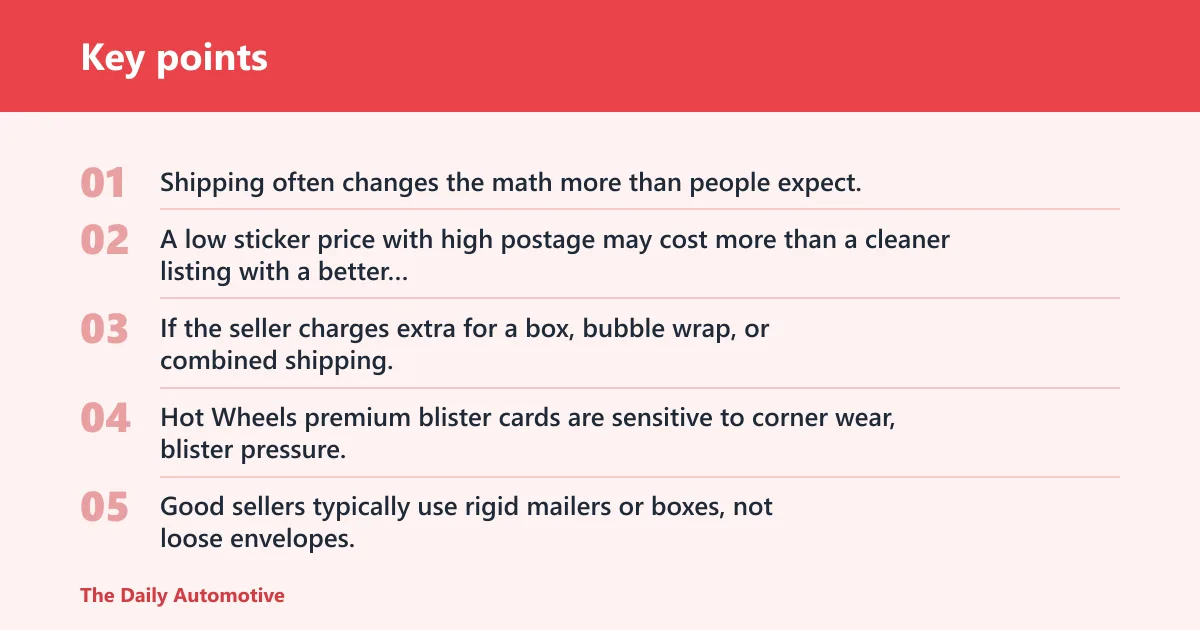
Shipping often changes the math more than people expect. A low sticker price with high postage may cost more than a cleaner listing with a better ship rate. If the seller charges extra for a box, bubble wrap, or combined shipping, include that in the final number before deciding.
Shipping and protection needs
Hot Wheels premium blister cards are sensitive to corner wear, blister pressure, crease damage, and edge dings. Good sellers typically use rigid mailers or boxes, not loose envelopes. If a seller cannot describe their packing method, the risk of a bad arrival is high enough to affect the price you should pay.
When completed sales matter most
Completed sales usually matter most when a listing claims a rare wave, a chase variant, or a mint card. If the same car has sold lower in the last few closed auctions, that is stronger evidence than a seller’s wish price. Completed sales also help you compare different regions and shipping setups without guessing.
A common first-timer mistake is comparing a $12 loose car to a $24 sealed card and calling the sealed one overpriced. The packaging has value, and so does the condition of the card. If the sealed example is clean and the loose one is worn, the gap can be fair.
Frequently asked questions
How much does a Hot Wheels Car Culture Ford Escort cost?
Most examples fall around about $8 to $15 loose and about $15 to $35 sealed carded. Rare or chase pieces can go higher if sold comps support the price. The cleanest way to judge it is by condition, variant, and total landed cost, not by asking price alone.
What is a fair price for a Hot Wheels Car Culture Ford Escort on the secondary market?
A fair secondary-market price is the recent sold price for the same release, adjusted for condition. Loose cars should sit below sealed examples. Damaged-card pieces should discount further. If a seller wants mint-card money for a bent card, the listing is overpriced.
Why do some Hot Wheels Ford Escort castings cost more than others?
Price moves with release wave, paint, wheel choice, packaging condition, and whether the listing is a common release or a special variant. The Ford Escort nameplate itself also helps, because collectors recognize the Mk1 and Mk2 shapes and associate them with rally and motorsport history.
Is a Hot Wheels Car Culture Ford Escort worth buying sealed or loose?
Buy sealed if display value matters and the card is sharp. Buy loose if you want the car itself and the price is meaningfully lower. A sealed premium only makes sense when the blister, corners, and card art are clean enough to justify the extra cost.
How can I tell if a Hot Wheels Ford Escort is a chase or special variant?
Check the packaging, compare deco and wheel details to known releases, and look for short-run identifiers in the card photos. A real chase or special variant should have clear visual differences and sold history that matches the seller’s claim. Vague wording alone is not enough.
How much should shipping and resale fees add to the total cost?
Shipping and fees can add a little or a lot, depending on the seller and platform. A fair landed-cost check includes postage, tax if charged, and any marketplace fee that affects the final buy or sell number. If those charges erase the price gap, the deal is not as good as it looks.
Products related to this article
Sponsored / affiliate links. As an Amazon Associate I earn from qualifying purchases. I may earn additional commission from eligible campaigns.