Car Trash Can vs Seatback Trash Bag
Choose a Car Trash Can if you need spill control and a steady bin for drinks, food, or wet trash; choose a Seatback Trash Bag if rear-seat access and fold-away storage matter more. Pick the wrong one, and trash ends up on the floor, in seat seams, or leaking during a turn or stop. This guide compares fit, spill control, access, and storage so you can choose the best in-car trash setup for commuting, family trips, rideshare work, or long drives.
| Decision factor | Car Trash Can | Seatback Trash Bag | Winner |
|---|---|---|---|
| Wet trash | Best when the listing includes a leak-proof lining and a wipe-clean interior for cups, napkins, and damp waste. | Works best for dry wrappers; wet waste depends on liner bag fit and how well the soft body keeps shape. | Car Trash Can |
| Rear-seat reach | Usually weaker unless mounted where passengers can reach it easily. | Strongest for back-seat passengers because it hangs at seatback height. | Seatback Trash Bag |
| Front-seat reach | Better if placed on the console, floor, or in a cup holder within the driver’s reach. | Usually poor from the driver’s seat, especially when mounted behind the front row. | Car Trash Can |
| Storage when empty | Rigid or framed bins keep shape, so they take more space when not in use. | Soft-sided construction folds flat and stores more easily. | Seatback Trash Bag |
| Anti-spill stability | Better when it has a hook-and-loop base, magnetic liner snaps, or another anchoring method. | Can swing or slump if the strap is loose or the bag is overfilled. | Car Trash Can |
Stability vs convenience for trash access
The real trade-off is stability and reach. A Car Trash Can is the better pick for wet waste, spills, and quick emptying from the front row, while a Seatback Trash Bag is easier for rear passengers and simpler to stash when empty. That difference matters more than color, odor claims, or brand styling.
Most purpose-built car bins cost about ten dollars, and the category includes soft hanging bags and rigid mini-bins. Some soft bins strap to headrests and consoles, while rigid options may sit on the floor or fit in a cup holder. The right choice depends on where trash appears and who needs to reach it.
Car trash solution
The table above is the decision matrix. Use it the way a buyer would in a parking lot: match trash type, passenger position, and storage needs before looking at extras like lids or exterior pockets. If the bin cannot stay put, people stop using it.
Say your back seat fills with drink cups and snack wrappers after school pickup. A seatback bag may be easy for passengers to reach, but a soft bag without enough structure can slouch and make the liner harder to keep open. In that case, a more rigid car bin with leak control tends to be the safer pick.
Which handles wet trash better?
A Car Trash Can is the better answer for wet trash because a leak-proof lining protects carpet and upholstery, and a wipe-clean interior makes damp waste less of a cleanup problem. A Seatback Trash Bag can handle dry litter well, but wet cups and drive-through spills raise the risk of seep-through and sagging.
Leak-proof lining and wipe-clean interiors
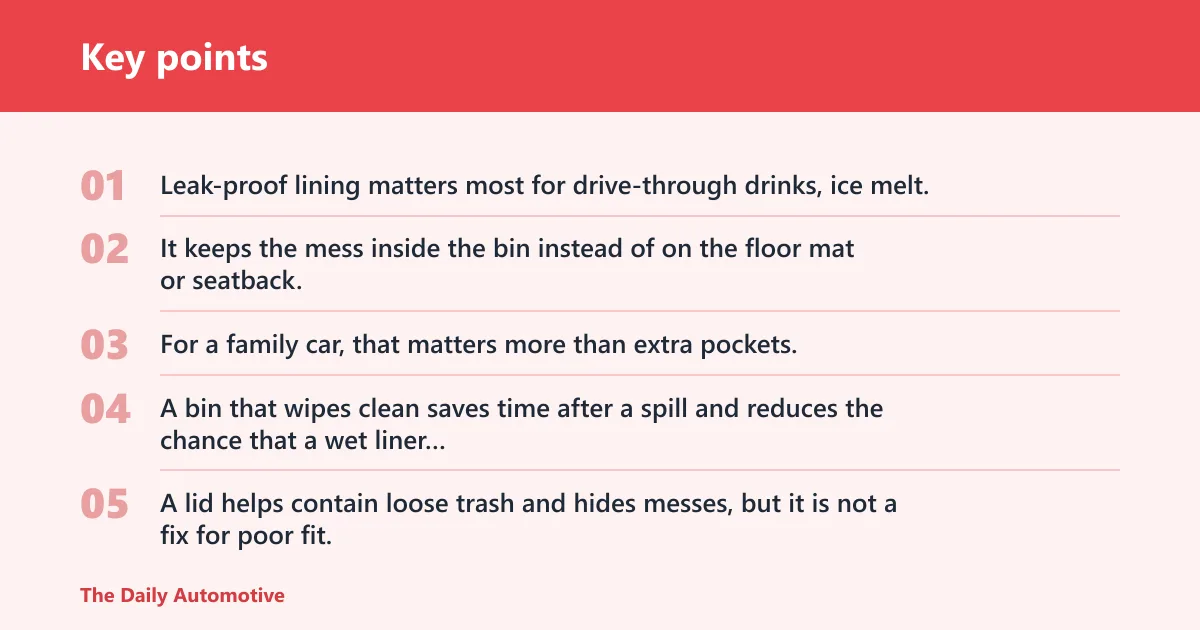
Leak-proof lining matters most for drive-through drinks, ice melt, and napkins soaked with coffee or soda. It keeps the mess inside the bin instead of on the floor mat or seatback.
For a family car, that matters more than extra pockets. A bin that wipes clean saves time after a spill and reduces the chance that a wet liner will cling to the sides.
Lid type and spill containment
A lid helps contain loose trash and hides messes, but it is not a fix for poor fit. A good lid works with a stable base and liner retention, not against them.
Some rigid bins use magnetic liner snaps to hold the disposable bag flat, which helps prevent bag slumping and speeds emptying. That detail is more useful than a decorative closure.
Why wet cups change the decision
Wet cups change the decision because they add weight, movement, and leak risk. A hanging bag can swing when the car turns or brakes, and that motion is what turns a small spill into a bigger one.
For dry wrappers alone, the seatback option is often enough. Once liquid enters the picture, the stable bin usually becomes the safer choice.
How do reach and placement change use?
Placement decides whether the bin gets used at all. A Seatback Trash Bag works best when rear passengers need to toss wrappers, tissues, or snack packs without leaning forward. A Car Trash Can works best when the driver or front passenger needs one-handed access from the console, floor, or cup holder.
Headrest strap placement
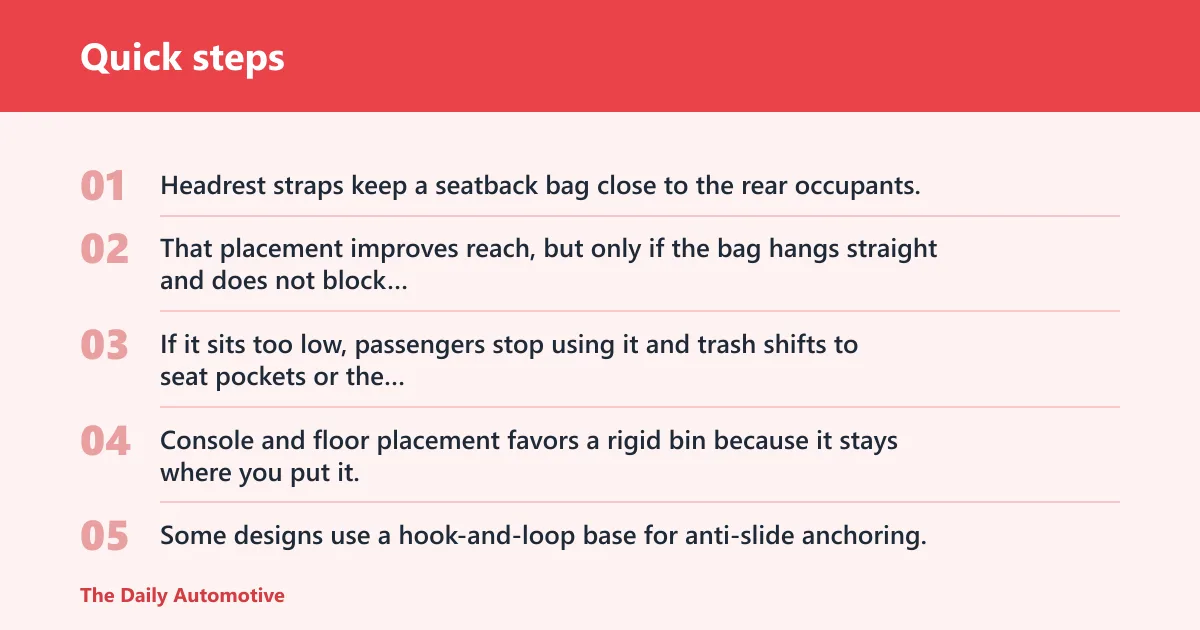
Headrest straps keep a seatback bag close to the rear occupants, which is the main reason this style exists. That placement improves reach, but only if the bag hangs straight and does not block knee room.
If the strap is loose, the bag can swing. If it sits too low, passengers stop using it and trash shifts to seat pockets or the floor.
Console and floor placement
Console and floor placement favors a rigid bin because it stays where you put it. Some designs use a hook-and-loop base for anti-slide anchoring, which helps keep the bin steady enough for one-handed use.
That stability matters in a rideshare or family car where the bin needs to survive stops, turns, and back-seat foot traffic. A bin that slides around becomes a nuisance fast.
Rear-seat versus front-seat access
Rear-seat access favors the hanging bag. Front-seat access favors the car bin, especially if the driver can drop trash into it without twisting or reaching behind a seat.
Suppose you drive a compact sedan with only one or two front-seat occupants. A cup-holder mini-bin may fit the workflow better than a hanging bag, because it stays in reach and does not crowd the rear bench.
What makes each option easier to live with?
The easier option is the one that matches your emptying rhythm. A Seatback Trash Bag folds flat and disappears when unused. A Car Trash Can is easier to live with when you need a rigid opening, liner retention, and quick cleanup after wet waste.
Soft-sided fold-flat storage
Soft-sided construction is the seatback bag’s main convenience advantage. It stores flat, takes less space when empty, and is simple to move between vehicles.
That convenience comes with a trade-off. Soft material can slouch if the bag is overfilled or the liner does not stay open.
Rigid shape and one-handed use
Rigid mini-bins keep their opening predictable. That makes one-handed use easier, especially when the driver is dropping in receipts, napkins, or an empty drink cup.
The trade-off is footprint. A rigid bin can steal a cup holder or crowd a footwell if the vehicle is already tight on space.
Liner retention and emptying speed
Liner retention matters more than many buyers expect. Magnetic liner snaps, built-in frames, and fitted bags all help keep the liner flat, reduce bag slumping, and make emptying faster.
The HOTOR main bin uses four magnetic snaps for liner retention and a leak-proof, wipe-clean lining. The cup-holder pair is made of rigid ABS and includes thirty fitted liner bags, which helps when you want a small, ready-to-go setup.
Car trash can details that matter
A good Car Trash Can needs three things: a lid that fits the job, a mounting position that stays put, and a size that matches how often you empty it. Bigger is not automatically better. A bin that is too large can become awkward in a compact cabin.
Lid type and odor control
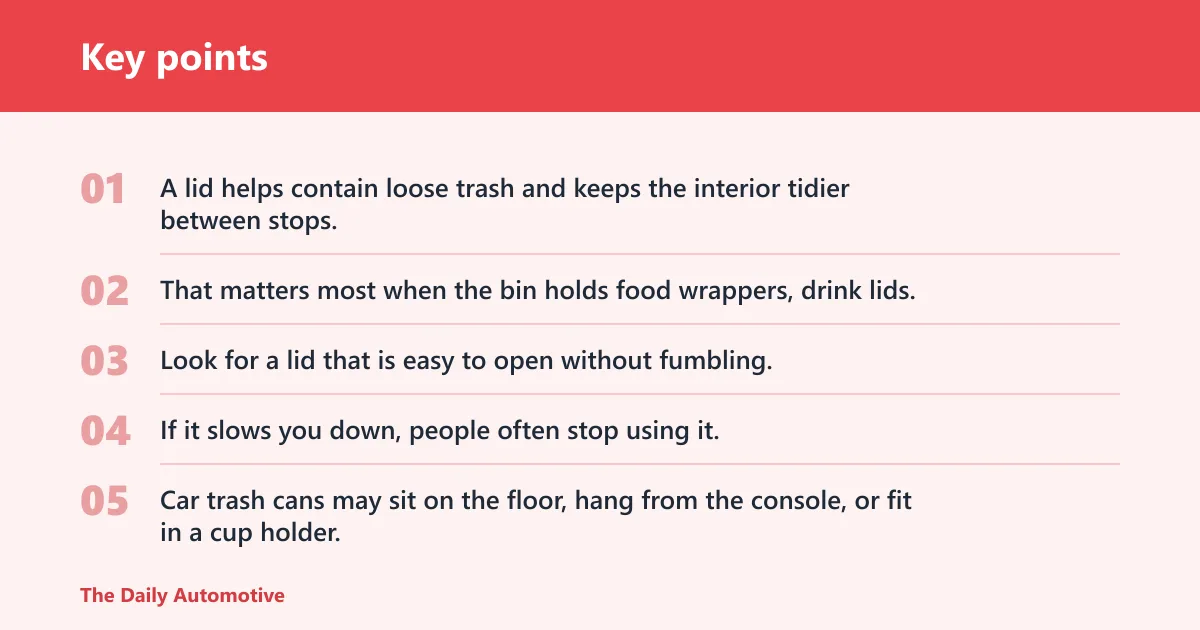
A lid helps contain loose trash and keeps the interior tidier between stops. That matters most when the bin holds food wrappers, drink lids, and damp napkins rather than only dry paper.
Look for a lid that is easy to open without fumbling. If it slows you down, people often stop using it.
Mounting positions and stability
Car trash cans may sit on the floor, hang from the console, or fit in a cup holder. The best mount is the one that does not move when the vehicle turns or brakes.
EPAuto’s bin uses hook-and-loop anchoring at the base, which is a useful example of how stability can matter more than size. A steady mount protects the footwell and makes the bin feel like part of the cabin instead of loose cargo.
Capacity and the 2.5-gallon versus 3.5-gallon question
A common recommended size range is about 2 to 2.5 gallons, and that range is often suitable for everyday school runs, compact cars, and many midsize cars. Larger households, longer trips, and more passenger trash can justify more volume, but only if the vehicle has room for it.
Lusso Gear’s smaller bin is 2.5 gallons and is recommended for compact or midsize cars. Its larger version is 3.5 gallons and is recommended for vans, SUVs, and work vehicles, where extra clearance is easier to spare.
Seatback trash bag details that matter
A Seatback Trash Bag works when the straps, pockets, and liner compatibility all support quick use. The bag should hang where rear passengers can reach it, stay open enough to accept trash, and fold away when the vehicle needs the space back.
Headrest straps and rear-seat reach
Headrest straps are the key mounting feature. They place the bag at rear-seat height, which improves reach for children, passengers, and anyone sitting behind the front row.
That same height can be a drawback if the bag swings into knees or is too far back for easy access. Fit depends on seat shape and strap length.
Exterior pockets and liner compatibility
Exterior pockets help a seatback bag act like more than a trash sack. They can hold spare liners, wipes, or napkins, which is useful on road trips.
Liner bag compatibility matters because a soft bag without the right liner can slouch and become hard to empty cleanly. The liner should sit flat and pull out without dragging trash across the car.
Soft-sided construction and fold-away storage
Soft-sided construction is one reason many buyers choose this style. It folds down when empty and is easy to move between cars or remove for cleaning.
That convenience works best for dry waste and rear passengers. If the cabin sees a lot of wet cups, the seatback bag usually needs more caution than a rigid bin.
Choose Car Trash Can if… / Choose Seatback Trash Bag if…
Choose a Car Trash Can if you carry drinks, wet napkins, or food containers; want a leak-proof lining and wipe-clean interior; or need a bin that stays steady on the floor, console, or cup holder. It is also the better choice when the driver needs quick, front-seat access.
Choose a Seatback Trash Bag if rear-seat passengers generate most of the trash, you want fold-flat storage, or you need a soft-sided option that disappears when the car is cleared out. It fits family back seats and quick cleanup of dry wrappers especially well.
Where a cup-holder mini-bin fits instead: if you drive a compact or midsize car, toss mostly small dry trash, and want something that stays within arm’s reach. The rigid ABS cup-holder style with fitted bags is the smallest, simplest answer, but it is not the best choice for wet messes or bulky trash.

Frequently asked questions
Which is better: a car trash can or a seatback trash bag?
A Car Trash Can is better for stability and wet trash, while a Seatback Trash Bag is better for rear-seat reach and fold-away storage. If your mess is mostly cups, wipes, and drink spill residue, start with the rigid option. If passengers in back make most of the trash, the hanging bag is easier to use.
Will a seatback trash bag fit better in a small car than a trash can?
Often yes, especially if rear passengers need the main access point and you do not want a bin in the footwell or cup holder. But a small car with mostly front-seat trash may still work better with a compact bin. Fit depends on where the trash appears, not only on cabin size.
Which option is easier to empty while driving or parked?
A Car Trash Can is usually easier to empty from the front seat because it sits in a stable, reachable spot. A Seatback Trash Bag can be easy to remove when parked, but it is less convenient for a quick one-handed empty if it hangs behind the driver or passenger.
Do I need leak-proof lining for wet trash in the car?
Yes, if the bin will see drink cups, melted ice, or food containers with moisture. Leak-proof lining protects carpet and upholstery and is especially useful for kids’ trash and drive-through drinks. If you only toss dry wrappers, the lining matters less, but it is still a good safeguard.
How big should a car trash container be for daily use?
The main recommended size range is 2 to 2.5 gallons for everyday use. That range suits school runs, compact or midsize cars, and frequent emptying. Go larger only if you have the space and the trash volume to justify it, because oversized bins can crowd the cabin.
What makes one car trash solution easier to actually use than another?
Placement and stability decide usage more than appearance. A bin that stays in reach, opens easily, and does not slide or slump is the one people keep using. Liner retention, lid design, and whether the shape fits the cabin all matter more than storage claims alone.
Products related to this article
Sponsored / affiliate links. As an Amazon Associate I earn from qualifying purchases. I may earn additional commission from eligible campaigns.