P0012 Code Ford F150: Diagnose Before You Replace (Save Hundreds)
Your check engine light is on. You scan it, and there it is: P0012. The code alone doesn’t tell you what’s broken. It just says the intake camshaft on bank 1 is retarded more than the computer allows. That could mean a $30 solenoid, a $50 oil change, or a $2,500 timing chain job. Most people guess wrong and throw parts at it.
This guide walks you through a real diagnostic sequence that separates a simple oil issue from a serious mechanical one. You’ll learn exactly what P0012 means on a Ford F150, how to test each component in order, and what each fix costs. No fluff, no guesswork.
ANCEL
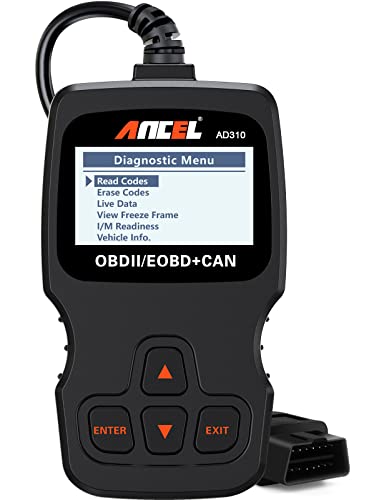
ANCEL AD310 Classic Enhanced Universal OBD II…
- CEL Doctor: The ANCEL AD310 is one of the best-selling OBD II scanners on the market and is recommended by Scotty Kilmer, a YouTub…
- Sturdy and Compact: Equipped with a 2.5 foot cable made of very thick, flexible insulation. It is important to have a sturdy scann…
- Accurate Fast and Easy to Use: The AD310 scanner can help you or your mechanic understand if your car is in good condition, provid…
Before you start digging, grab an OBDII scanner that can read live data. The ANCEL AD310 is a solid, inexpensive tool that reads and clears codes and shows live sensor data. It’s helped me confirm a stuck VCT solenoid in minutes instead of assuming the worst.
Quick Answer: P0012 in a Ford F150
P0012 means the powertrain control module (PCM) detected that the intake camshaft on bank 1 (driver’s side) is stuck retarded. The variable valve timing (VCT) system tried to advance the cam, but the actual position didn’t match the commanded position. The most common causes are low oil, old oil, a clogged VCT solenoid screen, or a stretched timing chain.
What Does P0012 Mean on a Ford F150?
Ford’s VCT system uses oil pressure to rotate the camshaft phaser. The PCM sends a signal to the VCT solenoid, which meters oil flow to the phaser. A camshaft position sensor tells the PCM where the cam actually is. When the commanded position and the actual position disagree by more than a few degrees for a set time, the PCM sets P0012.
Bank 1 is the side with cylinder #1. On the 3.5L EcoBoost and the 5.0L Coyote, that’s the passenger side in most F150s, but double-check your specific engine. The code specifically refers to the intake camshaft, not the exhaust. This matters because the intake phaser does more work and wears differently.
P0012 Symptoms on the Ford F150
Symptoms vary depending on how far the cam timing is off. Some trucks run fine with the code stored. Others run rough.
- Check engine light on, often with P0012 stored alone or with P0011 (bank 1 intake over-advanced)
- Rough idle, especially when warm
- Reduced fuel economy — you might see a 2-3 mpg drop
- Lack of low-end power, feeling sluggish off the line
- Engine hesitation or stumble during acceleration
- Hard start in some cases, but not common
If the truck runs fine and the light is on, you likely have an oil pressure or solenoid issue. If it runs rough and makes a rattling noise from the front of the engine, suspect the timing chain or phaser.
Root Causes of P0012 (Ranked by Likelihood)
Here’s what you’re actually dealing with, from most to least common.
Oil Pressure and Sludge Issues
This is the #1 cause. The VCT system runs on oil pressure. If the oil is old, low, or sludged, the phaser can’t move. Ford recommends 5W-30 for the 5.0L and 5W-30 for the 3.5L EcoBoost. Running 5W-20 in a 5.0L can cause this code in cold weather.
Sludge blocks the small oil passages in the VCT solenoid and the phaser. If you’ve stretched oil change intervals past 7,500 miles, this is very likely your problem.
Faulty VCT Solenoid or Phaser
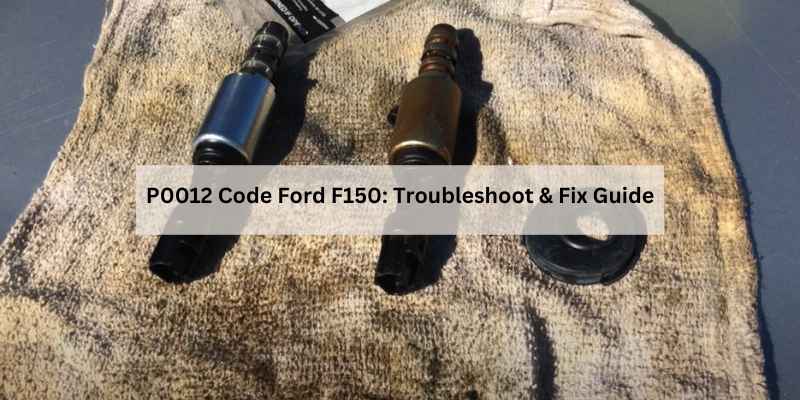
The solenoid is an electro-hydraulic valve. It can stick closed, stick open, or fail electrically. The phaser itself has internal vanes that can wear out or seize. A phaser that’s stuck retarded will set P0012 even with a new solenoid.
Wiring and Connector Problems
Less common but real. The VCT solenoid connector on the 5.0L is known for oil wicking up the wiring harness and damaging the PCM connector. Corroded pins or a broken wire will cause intermittent codes.
How to Diagnose P0012 (Step-by-Step)
Follow this order. It takes about an hour and saves you from buying parts you don’t need.
Check Oil Level and Condition
- Park on level ground, let the engine cool for 10 minutes.
- Pull the dipstick. Wipe it clean, reinsert, pull again.
- Oil should be between the MIN and MAX marks. Low oil is an instant cause of P0012.
- Rub a drop of oil between your fingers. If it feels gritty or smells burnt, change it before anything else.
- Check the oil fill cap for sludge or a milky residue.
Pro tip: If the oil is old, just change it with the correct grade and a new filter. Clear the code and drive 50 miles. Many P0012 codes never come back after an oil change.
Test the VCT Solenoid (Multimeter)
You need a digital multimeter. The solenoid is on the front of the engine, near the camshaft. On the 3.5L EcoBoost, it’s under the intake manifold. On the 5.0L, it’s on the valve cover, easy to reach.
- Disconnect the electrical connector.
- Set your multimeter to ohms (Ω).
- Measure resistance across the two solenoid terminals.
- Spec is typically 5-15 ohms. Anything outside that range means the coil is bad.
- Check for continuity between each terminal and the solenoid body. You should see infinite resistance (open). If you see continuity, the solenoid is shorted internally.
If the resistance is good, do a wiggle test. Grab the wiring harness near the connector and wiggle it while watching the live data on your scanner. If the camshaft position reading jumps, you have a wiring problem.
Mechanical Oil Pressure Test
This is the step most people skip, and it’s the one that catches real problems. You need a mechanical oil pressure gauge.
- Locate the oil pressure sending unit. On the 3.5L, it’s near the oil filter housing. On the 5.0L, it’s above the oil filter.
- Remove the sending unit and thread in the mechanical gauge.
- Warm the engine to operating temperature.
- Read the pressure at idle. Ford spec is a minimum of 15 psi at idle, and 45-60 psi at 2,000 rpm.
- If idle pressure is below 10 psi, you have a worn oil pump or excessive bearing clearance. Fix that before touching the VCT system.
Low oil pressure starves the phaser and makes it impossible for the VCT system to work. A new solenoid won’t help if there’s no pressure to push oil through it.
How to Fix P0012 on a Ford F150
Once you’ve confirmed the cause, here’s how to fix it.
Replacing the VCT Solenoid
This is the most common repair. Cost is $30-$80 for the part. Here’s the procedure for the 5.0L:
- Disconnect the negative battery cable.
- Remove the electrical connector from the solenoid.
- Remove the two 8mm bolts holding the solenoid in place.
- Pull the solenoid straight out. It has an O-ring seal.
- Clean the mounting bore with a rag. Check for sludge.
- Coat the new O-ring with clean engine oil.
- Install the new solenoid, torque the bolts to 89 lb-in (10 Nm).
- Reconnect the electrical connector and battery.
On the 3.5L EcoBoost, the solenoid sits on the front of the cylinder head, behind the timing cover. You may need to remove the air intake tube and the charge air cooler duct to reach it. Torque is the same: 89 lb-in.
Pro tip: Before installing the new solenoid, check the screen on the old one. If it’s clogged with sludge, your oil system needs a flush, not just a new part.
Replacing the VCT Phaser (Timing Chain Job)
If the phaser is the problem, you’re looking at a serious job. The phaser sits on the end of the camshaft, behind the timing cover. Replacing it requires removing the front of the engine.
On the 5.0L, this is a 6-8 hour job. On the 3.5L EcoBoost, it’s worse because the timing chains are on the back of the engine — the cab or engine has to come out. This is not a driveway job for most people.
If you’re doing it yourself on a 5.0L, here’s the short version:
- Drain coolant and oil.
- Remove the fan, belts, and accessories.
- Remove the timing cover.
- Remove the timing chain tensioner.
- Hold the crankshaft in place with a breaker bar on the crank bolt.
- Remove the camshaft sprocket bolt. Torque for the phaser bolt is 66 lb-ft plus 90 degrees (for the 5.0L).
- Slide the phaser off the camshaft. Note the position of the keyway.
- Install the new phaser, torque the bolt in the specified sequence.
- Reassemble everything, refill fluids.
This is a job where a mistake means bent valves. If you’re not confident, pay a professional.
P0012 Repair Cost Breakdown (DIY vs. Shop)
| Repair | DIY Parts Cost | Independent Shop | Dealership |
|---|---|---|---|
| Oil change (5W-30, filter) | $40-$60 | $60-$90 | $80-$110 |
| VCT solenoid (one side) | $30-$80 | $150-$250 | $250-$350 |
| Wiring harness repair | $20-$50 (parts) | $100-$200 | $200-$400 |
| VCT phaser + timing chain (5.0L) | $400-$600 | $1,200-$1,800 | $1,800-$2,500 |
| VCT phaser + timing chain (3.5L EcoBoost) | $600-$900 | $2,000-$2,800 | $3,000-$4,000 |
Prices vary by region. The 3.5L EcoBoost is more expensive because the engine has to be pulled or the cab lifted to access the rear timing chains.
Can You Drive with a P0012 Code?
Short answer: yes, but not for long. If the engine runs smooth and the code is stored, you can drive to get it diagnosed. If the engine is rough, misfiring, or makes a rattle at idle, stop driving.
A stuck retarded camshaft reduces power and fuel economy. More importantly, if the phaser is mechanically broken, metal shavings can get into the oil system and destroy the engine. That’s a $6,000 mistake. Drive only to the nearest shop.
Prevention: How to Avoid P0012 in the Future
- Change oil every 5,000 miles, not 7,500. The 3.5L EcoBoost is hard on oil. Turbo heat cooks it faster.
- Use the correct grade. 5W-30 for both the 3.5L and 5.0L. Don’t let a shop put 5W-20 in your 5.0L.
- Use a quality oil filter. A cheap filter with a weak anti-drainback valve lets oil drain out of the VCT system on startup.
- If you do mostly short trips, change oil more often. Moisture and fuel dilution build up faster.
- If your truck has over 100,000 miles, consider an engine flush before your next oil change if you see sludge.
Frequently Asked Questions (FAQs)
Is P0012 the same on the 3.5L EcoBoost and 5.0L Coyote?
The code means the same thing, but the repair is different. The 3.5L has the timing chains at the rear of the engine, making phaser replacement a major job. The 5.0L has chains at the front, which is more accessible. The 3.5L also has more oil-related VCT issues due to turbo heat.
Can a bad oil pressure sensor cause P0012?
No. The oil pressure sensor and the camshaft position sensor are separate systems. A bad oil pressure sensor will set a different code (P0520 series). However, a clogged oil pickup tube will cause low actual pressure and trigger P0012.
Will P0012 cause my F150 to fail emissions?
Yes. P0012 is an emissions-related code because it affects engine combustion efficiency. In most states, a stored code with the check engine light on will fail the OBDII portion of an emissions test.
How much does a VCT solenoid cost for a Ford F150?
Aftermarket solenoids run $30-$80. Ford OEM solenoids are $80-$120. For the 5.0L, you need two (one per bank). For the 3.5L, there are four total (intake and exhaust on each bank).
Can I clear the P0012 code and hope it doesn’t come back?
You can, but you’re treating the symptom. If the code comes back within 50 miles, the underlying issue is still there. If it comes back after 500 miles, it’s likely an intermittent wiring or solenoid issue. Clearing the code without fixing the cause just delays the repair.
Final Thoughts: Diagnose First, Replace Second
The biggest mistake I see is people replacing the VCT phaser when the real issue was a clogged oil control valve screen. That’s a $1,500 mistake. The diagnostic steps above take about an hour and cost nothing but your time.
- Start with the oil level and condition. A $50 oil change fixes a surprising number of P0012 cases.
- Test the solenoid with a multimeter before buying one. It takes five minutes.
- Do the wiggle test on the wiring harness — it catches intermittent issues a code reader can’t.
- Check mechanical oil pressure before pulling the timing cover. Low pressure makes phasers fail.
- If you need a phaser, budget for the timing chain and tensioner at the same time. They’re right there.
- Use 5W-30 and change it every 5,000 miles. That’s the cheapest insurance you can buy for your F150’s VCT system.
- If you’re unsure, pay a shop for a diagnostic hour before authorizing a big repair. It’s cheaper than a wrong guess.
For more context on your truck’s layout, check our F150 undercarriage diagram and the 5.0 oil capacity guide for your specific model year.
Products related to this article
Sponsored / affiliate links. As an Amazon Associate I earn from qualifying purchases. I may earn additional commission from eligible campaigns.