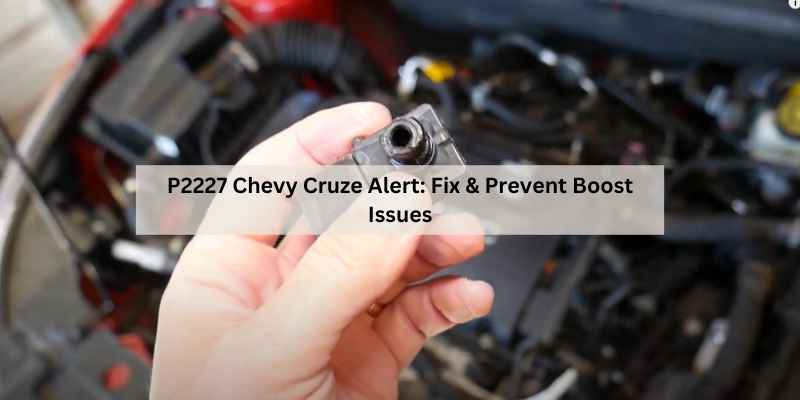
P2227 Chevy Cruze Fix: The Complete Diagnostic and Repair Guide
You’re driving your Cruze, the check engine light pops on, and the code reader says P2227. The car feels sluggish, maybe the fuel economy dropped, and you’re wondering if this is a quick fix or a trip to the dealership. The good news: this code is almost always a simple sensor replacement. The bad news: plenty of people waste money replacing the wrong parts first.
This guide walks you through the exact diagnostic steps, the precise location of the barometric pressure sensor on both the 1.4L turbo and 1.8L engines, the voltage readings you should see with a multimeter, and the repair path that actually works. You’ll leave with the confidence to fix this yourself and save a couple hundred bucks.
Baxzl
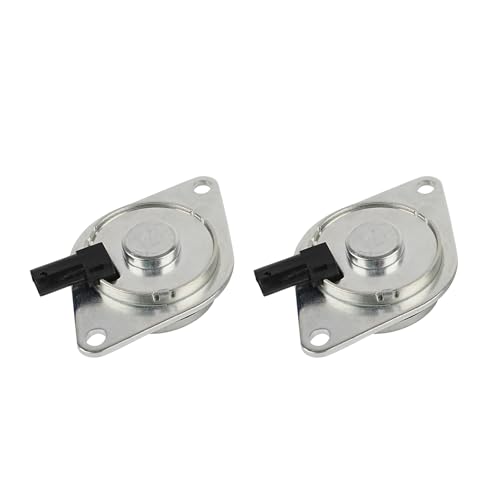
Baxzl VVT Solenoid Intake and Exhaust 2…
- 【Fitment Reference】VVT Solenoid Compatible With Buick Encore 2013 2014 2015 2016 2017 2018 2019 2020 2021 1.4L L4 GAS;Compatible W…
- 【Fitment Reference】VVT Variable Valve Timing Solenoid Compatible With Chevy Sonic 2012 2013 2014 2015 2016 2017 2018 2019 2020 1.4…
- 【Replaces Part Number】918-005,918005,55562223,25195245,205304,1235022,427001810,CD31,TS1016,F34751213,VVT183 *Note:The listed part…
If you need a replacement, the Baxzl VVT Solenoid Intake and Exhaust 2 PCs for Chevy Cruze is worth a look. It covers the 1.4L engines in the Cruze, Sonic, Trax, and Volt, and it’s a direct replacement for the factory part numbers. Keep it in mind if your diagnosis points to the variable valve timing system rather than the BAP sensor.
What Does P2227 Mean on a Chevy Cruze?
P2227 stands for “Barometric Pressure Sensor Performance.” The engine control module (ECM) uses the barometric pressure sensor (BAP) to measure atmospheric pressure. That reading helps the ECM calculate fuel trim, ignition timing, and boost pressure on turbocharged engines.
When the BAP sensor signal doesn’t match what the ECM expects based on altitude or other sensor inputs, it sets P2227. This is different from a MAP sensor code. The MAP sensor measures manifold pressure, while the BAP measures ambient air pressure. They work together, but they’re separate components.
On the Cruze, the BAP sensor is often integrated into the same housing as the MAP sensor, or it sits separately on the intake manifold. That confuses a lot of DIYers — they see one sensor and assume it’s the MAP sensor. It’s not always that simple.
Symptoms of a Failing Barometric Pressure Sensor
Not every P2227 comes with noticeable symptoms. Sometimes the check engine light is the only sign. But when the sensor starts failing, you might notice:
- Reduced fuel economy, usually a 2-3 mpg drop
- Rough idle, especially at higher altitudes
- Hesitation or stumbling during acceleration
- Hard starting after the car sits overnight
- Lack of power, particularly on turbocharged 1.4L engines
The symptoms overlap heavily with a vacuum leak or a bad MAF sensor. That’s why you need to test before you replace anything. A cheap OBD2 scanner with live data will save you from throwing parts at the problem.
Root Causes: Why P2227 Triggers on the Cruze
The most common cause is a failed BAP sensor itself. The sensor’s internal diaphragm gets contaminated or the electronics drift out of calibration. It’s a wear item, and on older Cruzes (2026-2026), it’s not unusual to see this code between 80,000 and 120,000 miles.
Other causes include:
- Corroded or loose electrical connector at the sensor
- Open or short circuit in the wiring harness between the sensor and ECM
- Damaged vacuum hose connected to the sensor or intake manifold
- Moisture ingress into the sensor housing
Rarely, the ECM itself has a software issue, but that’s a last-resort diagnosis. Check the simple stuff first.
Tools You Need Before Starting the Repair
Gather these before you pop the hood:
- OBD2 scanner with live data capability (a basic code reader won’t show sensor voltage)
- Digital multimeter with backprobe pins or a breakout lead
- 8mm socket and ratchet for the sensor bolt
- Torx T25 bit for the engine cover screws
- Dielectric grease for the connector
You don’t need a fancy scan tool. A $20 Bluetooth adapter paired with a phone app like Torque Pro works fine for live data.
Step-by-Step Diagnosis: Test the BAP Sensor Like a Pro
This is where most guides fall short. Let’s get specific.
Locate the Sensor (1.4L vs. 1.8L Engines)
On the 1.4L turbo engine, the BAP sensor sits on the intake manifold, right near the throttle body. It’s a small plastic sensor with a three-wire connector. You’ll see a Torx screw or an 8mm bolt holding it down. The connector has a red locking tab — press it inward, then pull the connector straight off. Don’t pry on the wires.
On the 1.8L naturally aspirated engine, the BAP sensor is also on the intake manifold, but positioned closer to the firewall. It’s harder to reach, so consider removing the engine cover and possibly the air intake tube for better access.
The bolt size is 8mm on both engines. Keep a magnet nearby — dropping that bolt into the engine bay is a classic Cruze owner mistake.
Multimeter Voltage Test (Reference, Ground, Signal)
With the ignition on (engine off), backprobe the three wires at the connector. You’re looking for three things:
- Reference voltage: Pin 1 should read 5.0 volts DC. Anything below 4.8 volts means a wiring problem or a failing ECM.
- Ground: Pin 2 should read 0.0 volts with the negative probe on battery ground. Any voltage here means a bad ground connection.
- Signal: Pin 3 is the signal wire. At sea level, it should read around 3.5-4.0 volts. At 5,000 feet elevation, expect 2.5-3.0 volts. The voltage should change slowly as you rev the engine or move to a different altitude.
If the signal voltage is stuck at 5.0 volts or reads 0.0 volts, the sensor is dead. If the reference and ground are good but the signal is erratic, the sensor is failing internally.
Check Wiring and Connector for Damage
Before condemning the sensor, inspect the wiring harness. Look for chafed wires, especially near the engine cover where the harness rubs against plastic edges. Check the connector pins for corrosion — green or white crust is a giveaway. Clean the pins with electrical contact cleaner and apply dielectric grease before reconnecting.
Also check the vacuum hose if your Cruze has one running from the intake manifold to the sensor. A cracked or disconnected hose will cause the same symptoms and can trigger P2227.
If everything checks out and the signal voltage is out of range, replace the sensor.
How to Fix P2227: Sensor Replacement Guide
Replacing the BAP sensor is a 20-minute job. Here’s the process.
Removing the Old Sensor
Disconnect the negative battery terminal first. Then remove the engine cover by unscrewing the two Torx T25 screws and pulling straight up. Unplug the electrical connector from the sensor. Remove the 8mm bolt holding the sensor to the intake manifold. Pull the sensor straight out — it might have a slight vacuum seal, so a gentle wiggle helps.
Don’t drop anything into the intake manifold. Cover the opening with a clean rag while you work.
Installing the New OEM Sensor
Apply a thin film of dielectric grease to the O-ring on the new sensor. Push it into the manifold until it seats fully. Install the bolt and tighten to 8 lb-ft — that’s snug, not gorilla-tight. Reconnect the electrical connector until it clicks. Reinstall the engine cover. Reconnect the battery.
The OEM part number for the BAP sensor on most Cruzes is ACDelco 12633751. It’s the same sensor used on several GM models, so aftermarket options are plentiful. For the VVT solenoid issue that sometimes accompanies P2227, the Baxzl VVT solenoid set covers both intake and exhaust sides and matches OEM specs.
Cost to Fix: DIY vs. Mechanic Pricing
Here’s what you’ll actually pay:
| Repair Path | Parts Cost | Labor Cost | Total Estimate |
|---|---|---|---|
| DIY with OEM sensor | $40-$70 | $0 | $40-$70 |
| DIY with aftermarket sensor | $20-$40 | $0 | $20-$40 |
| Independent mechanic | $40-$70 | $80-$120 | $120-$190 |
| Dealership | $60-$90 | $150-$200 | $210-$290 |
You do not need to remove the intake manifold to replace the BAP sensor on either engine. That’s a myth. The sensor is accessible from the top, just tight on the 1.8L. The dealership charges more because they add diagnostic time and use inflated parts prices.
Can You Drive with P2227? Risks and Limits
Short answer: yes, but you shouldn’t push it. The car will run in a reduced-performance mode. The ECM uses a default barometric pressure value, which messes with fuel trims and boost control. You’ll see worse fuel economy and sluggish acceleration.
On the 1.4L turbo, the bigger risk is drivability. The ECM may cut boost or run rich, which can foul spark plugs over time. If you need to drive to work for a day or two, it’s fine. Don’t take a long road trip with the code active.
Also, if the sensor fails completely, the car might stall at idle or refuse to start in extreme cases. That’s rare, but it happens.
How to Clear the Code and Pass Emissions
After replacing the sensor, clear the code with your OBD2 scanner. Then you need to complete a drive cycle so the ECM can verify the fix and set the readiness monitors.
Here’s the Cruze-specific drive cycle:
- Start the engine cold and let it idle for 2 minutes.
- Drive at a steady 40 mph for 5 minutes.
- Stop and let the car idle for 1 minute.
- Accelerate smoothly to 55 mph and hold for 5 minutes.
- Coast down to 20 mph without braking hard.
- Drive back and park. Let the engine idle for 2 minutes, then turn off.
After that, check the readiness monitors with your scanner. All should read “Ready.” If they don’t, drive another 10 minutes and recheck. Emissions testing requires at least two readiness monitors to be “Ready,” but most states want all of them.
Don’t clear the code and immediately drive to the emissions station. The monitors won’t be set and you’ll fail the test.
Frequently Asked Questions
What’s the difference between P2227 and P2228?
P2227 means the sensor signal is out of the expected performance range. P2228 means the signal voltage is too low (below about 0.1 volts). P2229 means the signal is too high (above 4.9 volts). They all point to the same sensor, but the specific code tells you whether it’s a wiring issue or a dead sensor.
Can a vacuum leak cause P2227?
Yes. A large vacuum leak changes the pressure readings the ECM sees, which can make the BAP sensor look faulty. That’s why you should inspect the vacuum hoses and intake manifold gaskets before replacing the sensor. A smoke test is the fastest way to find leaks.
Should I replace the MAP sensor instead?
No. That’s the number one misdiagnosis. The MAP sensor and BAP sensor are separate components. Replacing the MAP sensor won’t fix P2227. Save your money and test the BAP sensor first.
How long does the replacement take?
For a first-timer, about 45 minutes including the drive cycle. For someone who’s done it before, 15 minutes. The hardest part is reaching the sensor on the 1.8L engine.
Will P2227 cause my Cruze to fail emissions?
Yes. The check engine light on means the OBD2 system won’t pass the emissions test. Once you fix the sensor and complete the drive cycle, the light goes off and you’re good to go.
Final Verdict
P2227 on a Chevy Cruze is a straightforward fix that most owners can handle in an afternoon. The key is diagnosing it correctly — test the BAP sensor’s voltage before you buy anything. Replace the sensor with an OEM or quality aftermarket part, clear the code, and run the drive cycle.
Here’s what to remember:
- The BAP sensor is on the intake manifold, not the throttle body.
- Test reference (5V), ground (0V), and signal (3.5-4.0V at sea level) before replacing.
- Use ACDelco 12633751 for a direct OEM fit.
- Don’t replace the MAP sensor — it won’t fix this code.
- Check the wiring and connector for corrosion first.
- Complete a full drive cycle after the repair to set readiness monitors.
- Budget $20-$70 for DIY, or up to $290 at the dealership.
If your diagnosis points to the variable valve timing system instead, the Baxzl VVT solenoid pair is a solid replacement option. And for other Cruze issues, check out our P0299 Cruze guide or the P00B7 fix if you’re chasing related boost or sensor codes.
Products related to this article
Sponsored / affiliate links. As an Amazon Associate I earn from qualifying purchases. I may earn additional commission from eligible campaigns.