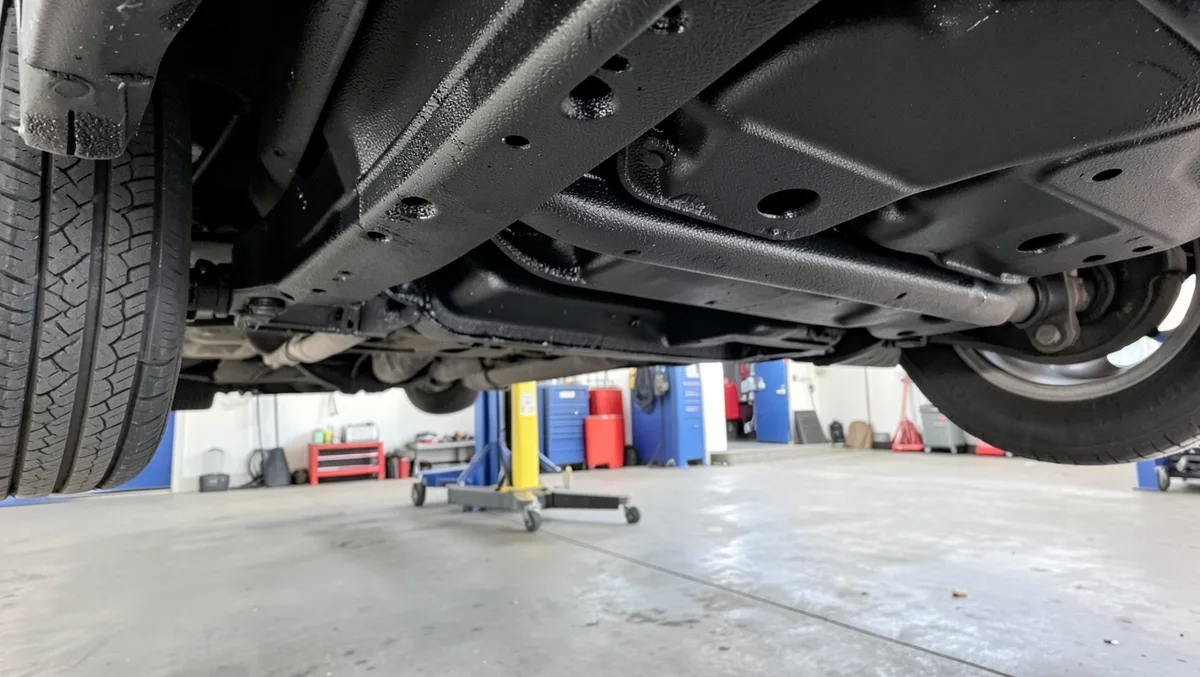
Rubberized Undercoating for Cars: 3 Top Picks Compared
Rubberized undercoating is a flexible, rubber-based spray that seals a vehicle’s underbody against rust-causing moisture, road salt, and gravel impacts while also cutting road noise.
A single 15-16 oz. aerosol can covers roughly 10-12 square feet, dries to the touch within about 30 minutes, and costs far less than a body-shop rustproofing job. We compared three of the most widely sold spray-on options, two from Rust-Oleum and one from 3M, on coverage, drying time, price, and how easy each one is to apply yourself in a driveway or home garage.
If your car already has active rust spreading along the frame or rocker panels, treat that first. Our guide on how to stop rust on a car from spreading covers removing scale and priming bare metal before any undercoating goes on.
Rubberized vs. Oil-Based Undercoating: Which Should You Choose?
Rubberized coatings dry into a thick, flexible rubber membrane that resists chipping and dampens road noise, making them a good fit for a car that’s already in decent shape and just needs ongoing protection. Oil-based undercoating stays slightly wet and self-healing, so it can creep into seams and crevices and keep working on metal that already has some surface rust, but it needs to be reapplied every year and can drip onto a garage floor or driveway for a few days after application.
Cost is the other deciding factor. A professional oil-based undercoating service typically runs $150 to $800 depending on the shop and vehicle size, plus another $150 to $200 for each annual reapplication. A DIY rubberized spray can, by comparison, costs roughly $10 to $45 and can last several years with proper prep, which is why it’s the more common choice for owners doing the work themselves.
How to Apply Rubberized Undercoating Without Trapping Rust
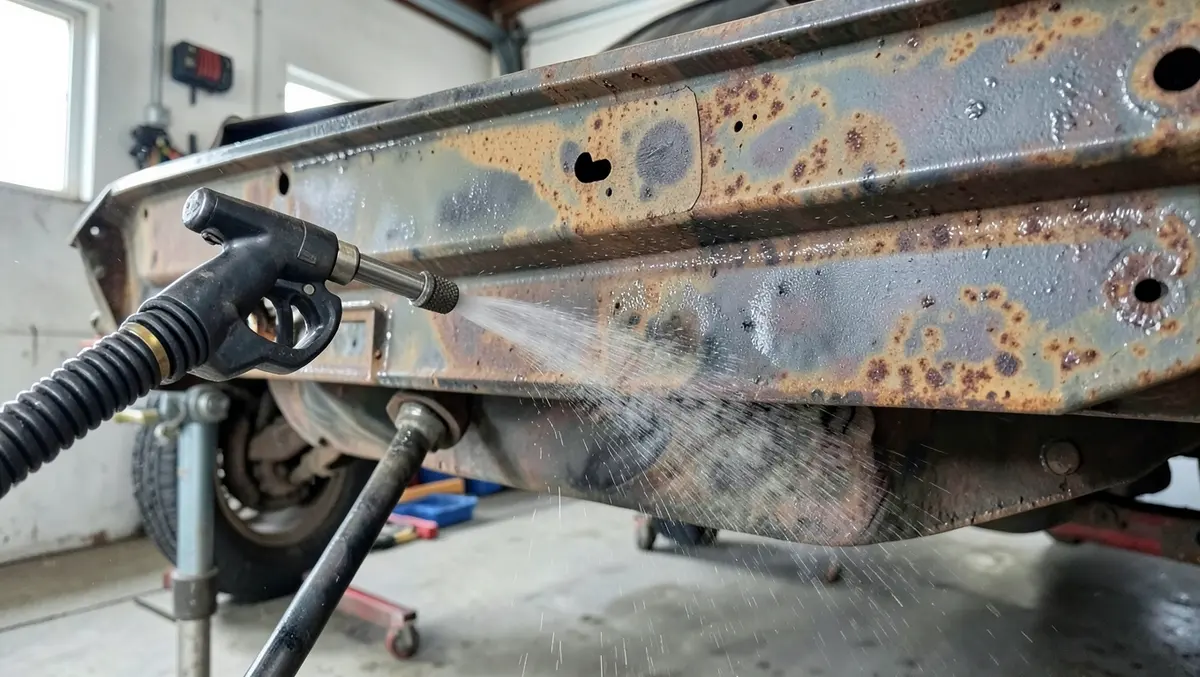
Rubberized undercoating is only as good as the surface it’s sprayed on. Sealing a rubber layer over dirt, grease, or active rust traps moisture underneath instead of keeping it out, which can make corrosion worse, not better. Before spraying, pressure wash the underbody, scrape or wire-brush off any loose rust and scale, and let the whole area dry for a full day so no moisture is sealed in.
Mask off the exhaust system, brake rotors and calipers, driveshaft, U-joints, and any other moving or heat-generating parts, since rubberized coating on a brake rotor or exhaust pipe can smoke, smell, or interfere with how those parts work. Apply two or three thin, even coats instead of one heavy pass. Thin coats dry faster and are far less likely to crack or peel than a single thick layer.
Rust-oleum Stops Rust Undercoating Spray (6-Pack)
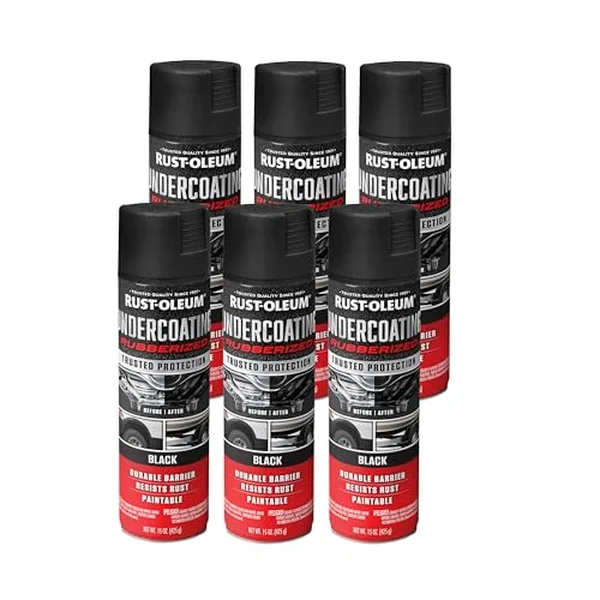
This 6-pack is the practical choice if you’re coating a whole vehicle rather than a single panel. Six 15 oz. cans give you enough material for the full underbody plus wheel wells, with extra left over for a touch-up coat next season. It’s aimed at owners in areas with harsh winters or heavy road salting who want to redo the job every year or two without buying more cans each time.
Pros:
- Six 15 oz. cans cover a full underbody with material left over for future touch-ups.
- Dries to the touch in about 30 minutes under normal conditions.
- Rubberized black finish resists chipping from gravel and road debris.
- Good value per ounce compared to buying single cans repeatedly.
Cons:
- Strong solvent odor during application, so spray in a well-ventilated area or outdoors.
- Drying time runs longer than 30 minutes in humid or cold conditions.
Because it comes as a 6-pack, this is the more economical option if you’re planning to maintain the coating year after year rather than doing a single one-time application. To buy this product, click here.
Rust-oleum Professional Grade Rubberized Undercoating Spray
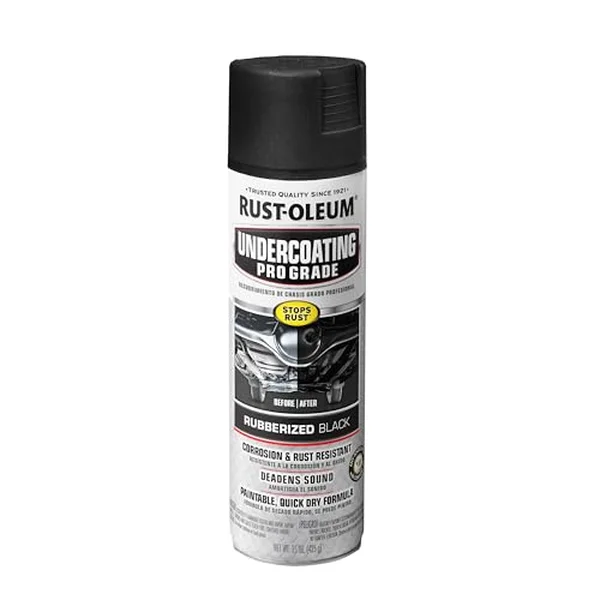
If you only need to redo one section, patch a spot where old undercoating has worn away, or cover a smaller car, a single can is the more sensible buy than a 6-pack. This Pro Grade version adheres to metal, wood, and concrete, and the rubberized texture doubles as light sound deadening for the cabin above it.
Pros:
- Flexible rubberized coating that stays intact through rough roads and weather swings.
- Simple aerosol application suited to first-time DIYers.
- Noticeably reduces road and gravel noise once cured.
- Works on metal, wood, and concrete, not just car frames.
Cons:
- Sold only in black, with no other color options.
- One can is not enough for a full underbody; expect to need two or three for a whole car.
Buy this one if you’re patching a specific spot or working on a smaller vehicle where a single can gets the job done. To buy this product, click here.
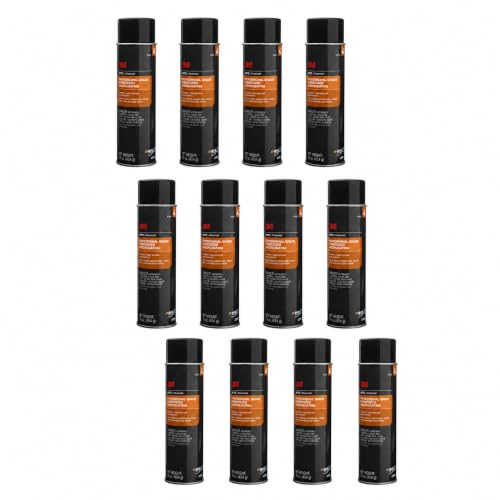
3m Professional Grade Rubberized Undercoating
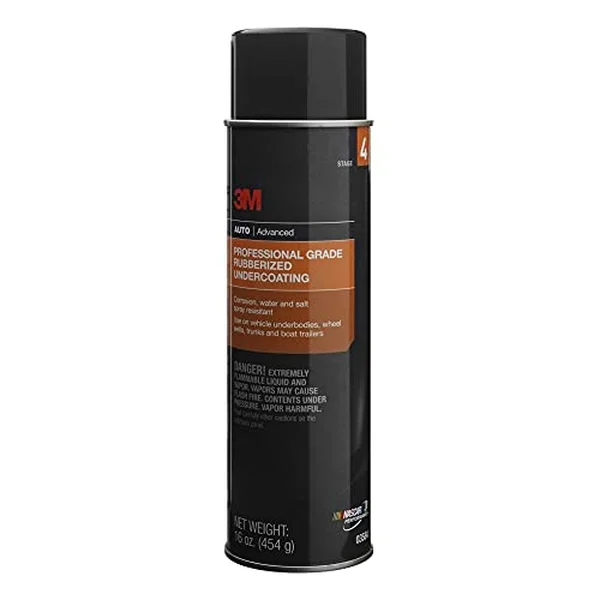
3M’s version is built around the same corrosion, water, and salt-spray resistance as the Rust-Oleum options, with a 16 oz. aerosol can that’s easy to control for owners who haven’t sprayed undercoating before. It’s explicitly labeled for wheel wells, trunks, and boat trailers as well as the underbody, so it doubles as a general-purpose rustproofing spray for parts of the vehicle beyond just the frame.
Pros:
- Resists corrosion, water, and salt spray, backed by 3M’s automotive product line.
- Also rated for wheel wells, trunks, and boat trailers, not just the underbody.
- Aerosol nozzle gives a controllable, even spray pattern.
- Comparable price to a single Rust-Oleum can.
Cons:
- Available only in black.
- A single 16 oz. can may fall short for larger trucks or SUVs.
Pick this one if you want a single product that covers the underbody, wheel wells, and trunk without switching between different sprays. To buy this product, click here.
Quick Comparison
| Product | Pack Size | Approx. Price | Best For |
|---|---|---|---|
| Rust-Oleum Stops Rust (6-Pack) | Six 15 oz. cans | ~$44 | Full underbody, yearly reapplication |
| Rust-Oleum Pro Grade (Single) | One 15 oz. can | ~$10 | Spot repairs, smaller vehicles |
| 3M Professional Grade | One 16 oz. can | ~$10 | Wheel wells, trunk, boat trailers |
Frequently Asked Questions
What Is Rubberized Undercoating Used For?
Rubberized undercoating protects a car’s underbody from rust and corrosion by acting as a barrier against moisture, road salt, and debris. It helps extend the vehicle’s lifespan, preserve resale value, and reduce road noise from the cabin above.
How Often Should I Apply Undercoating?
Rubberized undercoating typically holds up for two to three years with proper prep, so an annual check before winter, with reapplication as needed, keeps protection consistent. Owners in areas with heavy road salting often reapply yearly since salt exposure wears the coating down faster.
Can I Apply Undercoating Myself?
Yes. Clean and fully dry the underbody first, since spraying over dirt or moisture traps it underneath and can make rust worse. Mask off the exhaust, brakes, and driveshaft, apply two or three thin coats rather than one heavy coat, and work in a well-ventilated space or outdoors.
Are All Undercoating Sprays The Same?
No. Rubberized sprays dry into a flexible, chip-resistant coating and also dampen road noise, while oil-based undercoating stays slightly wet and self-healing, which lets it creep into existing rust but requires yearly reapplication. Pick the type that matches your car’s condition and how much upkeep you want to do.
Does Undercoating Reduce Road Noise?
Yes. The rubberized layer dampens vibration and road noise transmitted through the underbody, which results in a quieter cabin. This effect builds with each additional coat, though it’s a side benefit rather than the main reason to apply undercoating.
How Much Does Rubberized Undercoating Cost?
A DIY rubberized spray can costs roughly $10 to $45 depending on pack size, and one 15-16 oz. can covers about 10 to 12 square feet. A professional oil-based undercoating service, by comparison, runs $150 to $800 up front plus $150 to $200 for each annual reapplication, which is why most DIYers choose a rubberized spray instead.
Conclusion
Rubberized undercoating is a cheap, effective way to shield a car’s underbody from rust, road salt, and gravel damage while quieting the ride. All three products here use the same basic rubberized formula; the real decision is pack size and coverage. The 6-pack makes sense if you’re planning to maintain the coating every year, a single Rust-Oleum can suits a spot repair or smaller vehicle, and the 3M spray is the pick if you also want to coat wheel wells and the trunk.
Whichever one you choose, the prep work matters more than the product: a clean, dry surface and two or three thin coats will outperform any single product applied over dirt or rust.
Products related to this article
Sponsored / affiliate links. As an Amazon Associate I earn from qualifying purchases. I may earn additional commission from eligible campaigns.