Speedometer Jumps and Car Jerks: Diagnose and Fix the Problems
If you’re experiencing problems with your car, like a fluctuating speedometer or jerky movements, you’re not alone. Figuring out what’s causing these issues can feel tricky at first, especially if you’re new to car maintenance. But don’t worry! This guide will break down the common culprits behind Speedometer Jumps and Car Jerks: What’s Wrong, making it easy to spot the problem. We’ll explore simple, step-by-step solutions to help you get your car running smoothly again. Get ready to explore the common causes and how to fix them.
Common Causes Behind Speedometer Jumps
A jumping speedometer can be a real nuisance and a sign that something is amiss within your car’s systems. It can make it hard to get an accurate reading of your speed, which is both frustrating and potentially unsafe. There are several things that can cause this issue, from faulty sensors to problems with your car’s computer. It’s often related to the vehicle speed sensor (VSS), which is critical for measuring how fast your wheels are turning and providing that data to the speedometer and the car’s computer. The good news is, by exploring these potential causes, you’ll be one step closer to figuring out the root of the problem.
The Vehicle Speed Sensor (VSS) Gone Wrong
The vehicle speed sensor (VSS) is a critical part of your car, acting like the eyes and ears of your car’s speed. It sends information about how fast your wheels are spinning to both the speedometer and the car’s computer, which uses this information for all sorts of tasks, such as shifting gears and controlling the anti-lock braking system (ABS). If the VSS malfunctions, it can lead to erratic speedometer readings, including those unsettling jumps. It might even cause other issues such as poor shifting or problems with cruise control.
Sensor Failure: The VSS itself can fail due to age, wear, or damage. When it goes bad, the signal it sends becomes unreliable, causing the speedometer to jump around. It might read the speed too fast, too slow, or not at all.
If your car’s speedometer readings are erratic, the VSS is the first place you should investigate. Sometimes, replacing the sensor fixes the issue.
Wiring Issues: The wiring that connects the VSS to the car’s computer can become damaged or corroded. This can interrupt the signal from the sensor, leading to incorrect speedometer readings or a complete failure of the speedometer.
Inspect the wires and connectors for any signs of damage or corrosion. If the wiring is the problem, a simple repair or replacement could bring your speedometer back to normal.
Debris and Contamination: The sensor can get dirty. Road grime, dirt, or metal shavings can get into the sensor, affecting its ability to accurately read the wheel speed. This can cause intermittent speedometer problems.
You can try cleaning the sensor. This may require some technical skill depending on your car’s design, but it can sometimes resolve the problem.
Problems with the Speedometer Itself
It’s also possible that the speedometer itself is the source of the issue. While less common than VSS problems, the speedometer can malfunction due to internal component failures or electrical problems. In older cars with mechanical speedometers, issues like a worn-out cable or internal gears can cause the needle to jump. Digital speedometers, found in newer vehicles, can also fail due to circuit board problems or software glitches. Understanding these potential faults is important for getting an accurate diagnosis.
Mechanical Speedometer Cable: In older cars, the speedometer is connected to the transmission by a cable. The cable can become frayed, kinked, or broken over time, causing the needle to jump or give incorrect readings.
Check the cable for damage. Replacing the cable can often restore the speedometer’s functionality. This is a common problem in older vehicles.
Internal Speedometer Components: Inside the speedometer, gears and other components can wear down or fail. This can lead to the needle moving erratically or getting stuck.
Replacing the speedometer or having it professionally repaired is usually needed to fix this.
Digital Speedometer Malfunctions: In modern vehicles, digital speedometers rely on electronic components. These can fail due to problems such as circuit board damage or software glitches.
Diagnostic tools can sometimes pinpoint these issues, and a replacement speedometer or software update may be necessary.

Uncovering the Reasons for Car Jerks
Car jerks, those sudden, uneven movements, can be unsettling and could indicate several underlying problems. The issue might stem from the engine, transmission, or fuel system. Identifying the cause will allow you to address the problem correctly. From a sputtering engine to transmission issues, these jerks can lead to a less than comfortable ride and possibly more significant mechanical problems down the line. Let’s dig deeper to uncover the possible reasons behind these issues.
Issues with the Engine
The engine is the heart of your car, and when it’s not running correctly, you can feel it. Engine-related problems are often behind car jerks, leading to rough or uneven driving. Issues like misfires, caused by faulty spark plugs or ignition coils, can disrupt the engine’s normal rhythm. Fuel delivery problems, such as a clogged fuel filter or a failing fuel pump, may also cause the engine to hesitate or jerk. Engine problems are very common, and addressing them promptly will help keep your car running well.
Misfires: A misfire occurs when the fuel in one or more cylinders of the engine doesn’t burn correctly. This can be caused by problems with the spark plugs, ignition coils, or other components.
A misfire causes the engine to run unevenly, leading to jerking sensations. Replacing faulty spark plugs or ignition coils can often resolve this problem.
Fuel Delivery Problems: Insufficient or inconsistent fuel supply can lead to a jerky ride. This can result from a clogged fuel filter, a failing fuel pump, or issues with the fuel injectors.
Diagnosing fuel delivery problems involves checking fuel pressure and fuel injector operation. The filter, pump, or injectors may need replacing.
Vacuum Leaks: Vacuum leaks in the engine can affect the air-fuel mixture, causing the engine to run roughly. These leaks can happen in various places, like vacuum hoses or intake manifolds.
Vacuum leaks can cause engine hesitation and jerking. Inspecting for leaks and repairing or replacing damaged components are key steps in this process.
Problems in the Transmission
The transmission is responsible for transferring power from the engine to the wheels. Transmission issues are a common cause of car jerks, especially during gear changes. Whether it’s an automatic or manual transmission, problems such as slipping gears or internal malfunctions can disrupt smooth operation. For automatic transmissions, the torque converter plays a vital role in transferring power; a failure here can result in jerking sensations. Addressing these transmission issues will restore the smooth flow of power and overall driving experience.
Slipping Gears: Slipping gears in an automatic transmission mean that the gears fail to fully engage, causing the engine to rev without a corresponding increase in speed. In a manual transmission, this may involve difficulty shifting.
Slipping gears can cause a jerking sensation as the transmission struggles to engage. This often requires transmission repair or replacement.
Torque Converter Problems: The torque converter in an automatic transmission transfers power from the engine to the transmission. If the torque converter fails or has problems, it can cause the car to jerk or shudder, especially when accelerating from a stop.
Torque converter problems are typically noticeable during acceleration. Repair or replacement of the torque converter may be needed.
Transmission Fluid Issues: Low transmission fluid levels or contaminated fluid can lead to transmission problems. Dirty fluid can cause wear and tear on transmission components, leading to jerking and other symptoms.
Regular transmission fluid changes are important to maintaining transmission health. Check the fluid level and condition to see if servicing is required.
Diagnosing the Issue
When you encounter a jumping speedometer and car jerks, accurate diagnosis is the first step toward getting your car back to normal. The process begins with carefully observing the symptoms, as this provides key clues about what is happening. Use a diagnostic tool, such as an OBD-II scanner, as these are handy for retrieving trouble codes that will tell you what’s going on. A systematic approach, starting with the simple checks, can help you find the problem without having to do unnecessary repairs.
Taking Note of the Symptoms
The first step in diagnosing car problems is to note everything that’s happening. This means recording what is happening to the speedometer and any jerky motions the car is making. Pay close attention to when these symptoms occur, like when you’re accelerating, decelerating, or turning. Understanding these patterns provides essential clues to help you solve the problem. Documenting the specific conditions when the issues occur is a key step in identifying the root cause.
Speedometer Behavior: Note whether the speedometer jumps at specific speeds, or if the jumping is random. Record how far the needle moves when it jumps.
Observing the speedometer’s behavior helps narrow down possible causes. For example, consistent jumps may suggest a problem with the vehicle speed sensor.
Jerking Patterns: Document when the jerks happen. Do they occur when you accelerate, decelerate, or are driving at a constant speed?
Jerking at different times points to different potential problems. Jerking when accelerating could suggest a fuel delivery issue.
Other Indicators: Is the check engine light on? Are there any unusual noises or smells coming from the car?
Combining the above information helps you get a clearer picture of the car’s state, aiding the diagnosis process.
Using Diagnostic Tools
Diagnostic tools, such as an OBD-II scanner, are valuable for understanding car problems. These devices connect to your car’s computer and read the trouble codes that provide hints about the issues. These devices can also provide live data, letting you monitor the performance of different components in real-time. Using an OBD-II scanner will save time and money by helping you isolate the problem. These tools make the diagnostic process more efficient.
OBD-II Scanner: An OBD-II scanner reads the codes from the car’s computer, indicating which systems have problems. These codes offer valuable clues to help you identify the root cause of the issue.
Connect the scanner to the car’s OBD-II port. Record the codes you receive, which will provide you with a starting point for the diagnosis.
Live Data Monitoring: Many scanners can also show live data from your car’s sensors. This allows you to monitor the performance of components such as the VSS, fuel injectors, and others in real time.
Monitor the vehicle speed sensor readings as you drive. This can help you see if the sensor is malfunctioning and is a fast and easy way to identify the source of the problem.
Code Lookup: Once you have the diagnostic codes, you can look them up online to understand what the codes mean. This lets you identify potential areas of concern that you can then explore.
Use online resources to research the diagnostic codes. This information will provide context to the symptoms your car shows.
Making the Repairs
After you have figured out the cause of the problem, the next step is making repairs. Repairs will vary depending on the diagnosis. Some fixes, like replacing a faulty sensor or spark plug, can be done yourself with the correct tools and some basic skills. Others, such as those that involve the transmission or engine, may need professional assistance. It’s important to weigh your skills and your car’s needs before doing any work.
Replacing the Vehicle Speed Sensor (VSS)
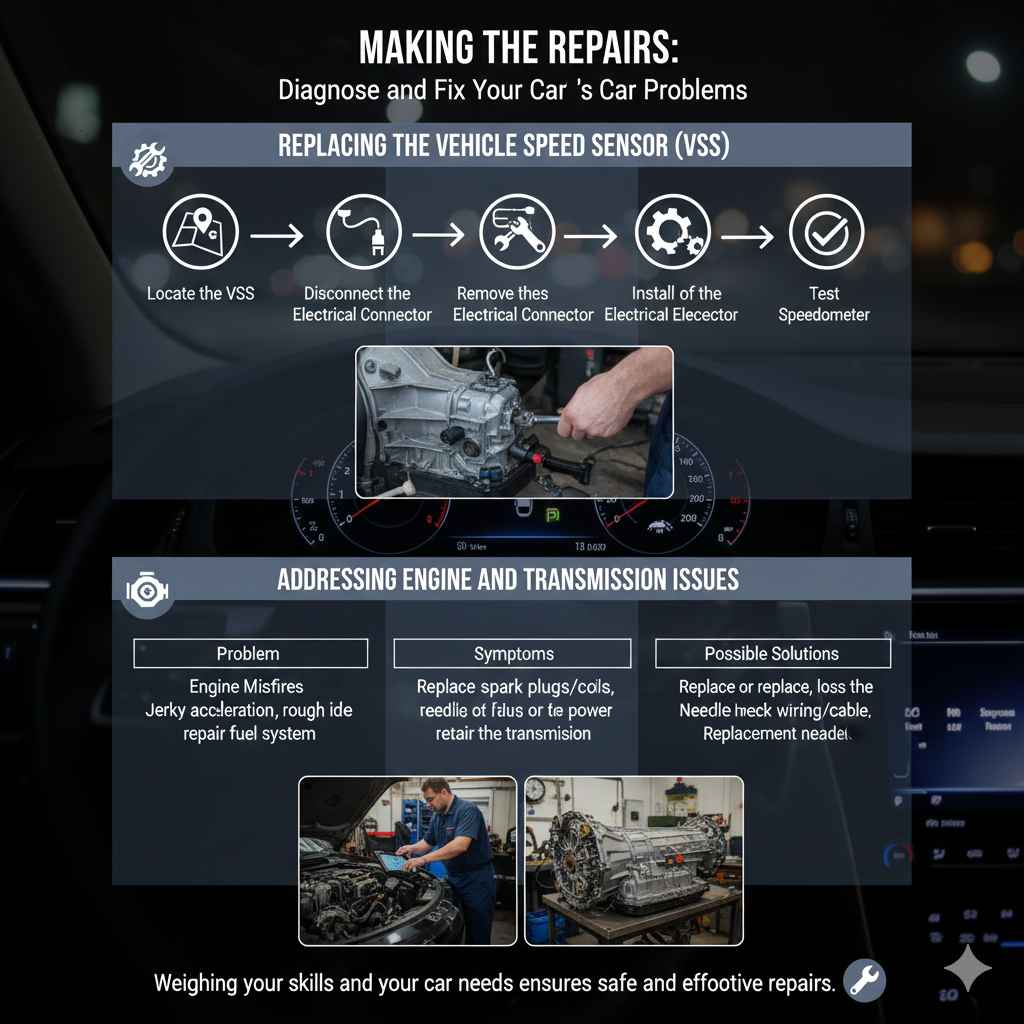
Replacing the VSS is a common fix for speedometer issues. The process can vary a bit depending on your car’s make and model, but the steps are generally straightforward. You’ll need to locate the VSS, which is commonly found on the transmission. Then, you’ll disconnect the electrical connector, remove the old sensor, and install a new one. After installing the new sensor, you should test it to make sure the speedometer is working properly. Here are the steps.
Locate the VSS: Consult your car’s manual or an online resource to find the VSS. It is typically found on the transmission.
You can usually identify the VSS by the electrical connector attached to it.
Disconnect the Electrical Connector: Carefully disconnect the electrical connector from the VSS. This often involves releasing a clip or tab.
Take care not to damage the wiring.
Remove the Old VSS: Unscrew or unclip the old VSS from the transmission.
The mounting mechanism will vary depending on the vehicle.
Install the New VSS: Insert the new VSS into the transmission and secure it using the appropriate clip or screws.
Make sure it is properly seated.
Reconnect the Electrical Connector: Reconnect the electrical connector to the new VSS, ensuring it is secure.
Confirm it is connected firmly.
Test the Speedometer: Start the car and test the speedometer. You can do this by driving the car to see if the readings are accurate.
The problem is likely fixed if the speedometer works correctly.
Addressing Engine and Transmission Issues
If you suspect engine or transmission problems, professional assistance might be necessary. Issues like misfires, fuel delivery failures, or transmission problems can require special tools and expertise. Repairing these problems often involves more complicated tasks, such as replacing parts or rebuilding components. Consulting a certified mechanic is the best way to ensure the repairs are done correctly. A skilled mechanic will have the tools and training required to diagnose and fix these problems.
Misfire Repair: The mechanic will diagnose the misfire by checking the spark plugs, ignition coils, and other components.
If the spark plugs are faulty, they will be replaced. If the coil is at fault, they will be replaced as well.
Fuel Delivery System Repairs: A mechanic will check the fuel pump, filter, and injectors.
Clogged fuel filters or failing fuel pumps will need to be replaced. Clogged injectors may be cleaned or replaced.
Transmission Repair: Transmission repairs often involve disassembling the transmission to replace worn or damaged parts.
Slipping gears or torque converter issues may be addressed by replacing the damaged components or rebuilding the transmission.
| Problem | Symptoms | Possible Solutions |
|---|---|---|
| Speedometer Jumps | Erratic Speed Readings | Replace VSS, Check wiring, replace speedometer cable (older cars) |
| Engine Misfires | Jerky acceleration, rough idle | Replace spark plugs, ignition coils, or repair fuel system |
| Transmission Slipping | Slipping gears, loss of power | Repair or replace the transmission |
Frequently Asked Questions
Question: Why is my speedometer jumping, even when I’m driving at a constant speed?
Answer: This likely means there’s a problem with the vehicle speed sensor (VSS) or its wiring. The VSS provides the speed reading to the speedometer. The sensor may be faulty or the wiring might be damaged, causing erratic readings.
Question: Can a faulty fuel pump make my car jerk?
Answer: Yes, a failing fuel pump can cause jerking. If the fuel pump can’t deliver enough fuel to the engine, it can lead to misfires and a jerky ride.
Question: How often should I change my transmission fluid?
Answer: The frequency of transmission fluid changes depends on your car’s make and model. Check your car’s manual for recommendations, but it is typically every 30,000 to 60,000 miles.
Question: What’s the difference between a misfire and a stall?
Answer: A misfire is when a cylinder in your engine doesn’t fire correctly. A stall is when the engine completely stops running. Both can cause problems, but a misfire is less severe than a stall.
Question: Should I try to fix my car myself, or should I take it to a mechanic?
Answer: It depends on your comfort level and the nature of the problem. Simple fixes like changing a VSS can be done yourself. But if you’re not comfortable with car repairs, or the issue involves the engine or transmission, it’s best to take it to a mechanic.
Final Thoughts
Dealing with Speedometer Jumps and Car Jerks: What’s Wrong can be frustrating, but the problems are usually caused by a few common culprits. The vehicle speed sensor is often the source of speedometer issues, while engine problems or transmission malfunctions are usually behind jerking. You can improve things by taking careful notes of symptoms, and using a diagnostic tool to pinpoint the issues. You can usually fix these issues by replacing faulty parts, or, if problems are more complex, with professional assistance.
By exploring the causes and solutions in this guide, you can improve the safety and reliability of your car. Remember to stay calm, be careful, and be patient during the troubleshooting process. With the correct approach, you’ll be driving smoothly in no time!