Do Manual Transmission Cars Have Cruise Control?
Yes, plenty of manual transmission cars have cruise control, including performance models like the Honda Civic Type R and Toyota GR Corolla that even offer adaptive cruise control (ACC). The catch is that pressing the clutch to shift gears interrupts the system in most cars, and ACC drops out entirely once traffic slows to a stop-and-go crawl, since it cannot work the clutch pedal for you. Here is how cruise control actually behaves in a stick-shift car, which models offer it, and what it costs to add if your car does not have it.
What Is Cruise Control, Anyway?
BEST FOR ADDING CRUISE CONTROL TO A MANUAL CAR
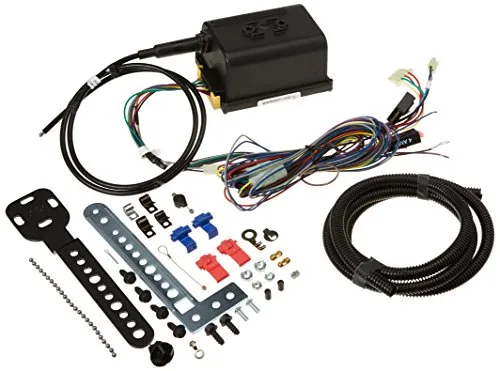 |
Rostra 250-1223 Universal Electronic Cruise Control – $361.14 A universal retrofit kit like this is how you add real cruise control to a manual car that never came with it from the factory.
|
Cruise control is a feature that holds your car at a steady speed without you keeping your foot on the gas pedal. It reduces fatigue on long highway drives and makes it easier to avoid creeping over the speed limit without noticing.
In automatic cars, cruise control is simple: you set a speed, and the transmission and throttle work together to hold it. In a manual car, you are still responsible for shifting gears yourself, which is exactly why people assume stick-shift cars cannot have cruise control at all. They can — it is just less universal, and the way it behaves is a little different. If you are still weighing the two setups in general, see how manual and automatic transmissions compare for everyday driving.
Can Manual Transmission Cars Have Cruise Control?
Yes, manual transmission cars can have cruise control. It is not as universal as it is in automatics, and not every manual car comes with it, but modern manuals are far more likely to include it than older ones were.
Whether a specific car has it depends on the make, model, and trim. Some manufacturers include cruise control as standard equipment across the lineup, while others only offer it on higher trims or as an optional package. High-performance manual cars and sport compacts tend to include it more often than the most basic, budget-trim manual cars, so it is always worth checking the specific trim’s feature list or window sticker rather than assuming.
How Does Cruise Control Work in a Manual Car?
Cruise control in a manual car still manages the throttle to hold your set speed, the same as it does in an automatic. The difference is that you are still responsible for the clutch and gear changes the entire time it is active.
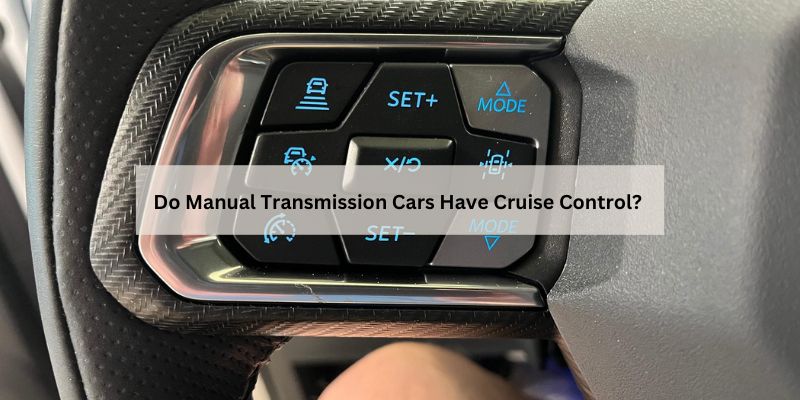
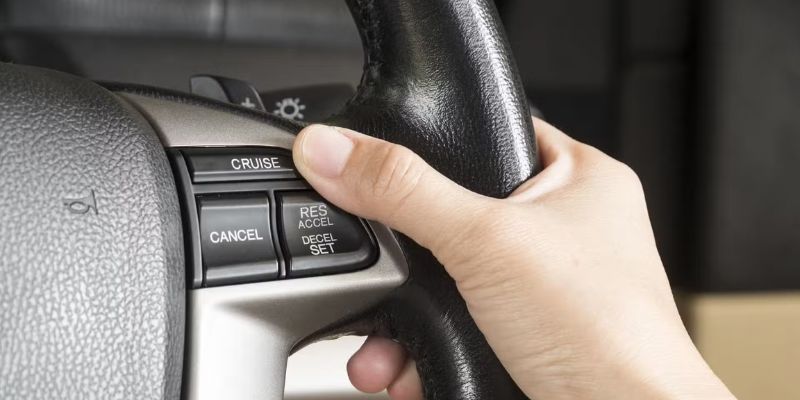
Here is how it plays out: you get up to your desired speed, then press a “Set” button, usually on the steering wheel or a stalk, to lock it in. The car’s computer then adjusts the throttle to hold that speed. On a flat highway in fifth or sixth gear, it holds smoothly. But when you need to shift — say, to climb a hill or pass another car — pressing the clutch disengages the system in most vehicles. Some cars let you resume the same speed with a “Resume” button after you are back up to speed; others require you to reset the target speed from scratch.
Challenges of Using Cruise Control with a Manual Transmission
Using cruise control in a manual car is not always seamless. A few specific challenges come up often enough that it is worth knowing about them before you rely on the feature.
Shifting gears is the main one. When you press the clutch, most cruise control systems shut off automatically to prevent the engine from over-revving while it is out of gear. That means downshifting to pass, or any gear change at all, generally means resetting the cruise control afterward.
Steep grades are another sticking point. In a high gear on a climbing road, cruise control can let the engine bog down instead of downshifting for you the way an automatic transmission would, so many drivers switch to picking gears manually on hills rather than leaning on cruise control there.
Finally, cruise control in a manual demands more active attention than in an automatic. You are still choosing gears and watching your speed after every shift, so it is not the true “set it and forget it” experience it can be with an automatic transmission.
Benefits of Cruise Control in Manual Cars
Despite those quirks, cruise control still brings real benefits to a manual car. It reduces leg fatigue on long highway stretches, since you are not holding steady throttle pressure with your foot for hours at a time. It can also help fuel efficiency, because holding a constant speed avoids the small, repeated accelerations that happen when a driver manages the pedal by hand.
It also adds convenience without taking away what makes a manual fun to drive. You can still shift and use the clutch whenever you want, and simply switch cruise control on for the flat, straight stretches where there is nothing to gain from doing it all yourself. It can also help you stay at a consistent, legal speed instead of drifting upward without noticing.
Which Manual Cars Have Cruise Control?
Not every manual car comes with cruise control, so it helps to know which ones commonly do. Many modern manual cars — especially from Honda, Subaru, Volkswagen, Mazda, Toyota, and Ford — offer it, at least as an option. Here is a quick look at some popular manual cars and their typical cruise control availability:
| Car Make/Model | Cruise Control Availability |
|---|---|
| Honda Civic Si | Included on most trims |
| Honda Civic Type R | Standard, including adaptive cruise control (ACC) |
| Subaru WRX | Standard on most trims |
| Volkswagen GTI | Standard or optional depending on trim |
| Mazda3 (manual) | Optional on many trims |
| Toyota GR Corolla | Standard, including adaptive cruise control (ACC) |
| Ford Mustang (manual) | Standard on most trims |
Older models, especially from the 1990s or early 2000s, are less likely to have it unless they were higher-end trims. If you are buying a used manual car, check the vehicle’s original feature sheet or confirm on a test drive — cruise control is easy to assume is included when it was actually an optional package on that specific trim.
Adaptive Cruise Control in Manual Cars
Adaptive cruise control (ACC) goes a step further than standard cruise control: instead of just holding a set speed, it uses radar or camera sensors to automatically slow down when the car ahead gets close, then speed back up once the road clears. For years this was treated as an automatic-only feature, since it is easier for a computer to manage both the throttle and the transmission at the same time.
That has changed. Several current manual-transmission performance cars now offer ACC as standard equipment, including the Honda Civic Type R and the Toyota GR Corolla. The tradeoff shows up at low speed: ACC in a manual car disengages as traffic slows toward a crawl or a full stop, because the system cannot operate the clutch for you. At that point, the driver has to take over, brake, and either downshift or come to a stop manually. In an automatic car with ACC, the system can bring the car to a complete stop and hold it there on its own, which is the one thing manual ACC still cannot fully replicate.
How to Use Cruise Control in a Manual Car
Using cruise control in a manual car takes a little practice, but the general process is the same across most vehicles:
- Get up to your desired speed in a high gear, typically fifth or sixth.
- Press the “Set” button on the steering wheel or stalk to lock in that speed.
- Take your foot off the gas — the car holds the speed on its own.
- When you need to shift, press the clutch gently. Cruise control will likely pause.
- After shifting, press “Resume” if your car supports it, or reset the speed if it does not.
Cruise control is not well suited to heavy traffic or winding roads. Constantly disengaging and resetting it every time you touch the clutch in stop-and-go conditions usually causes more hassle than it saves — it works best on open highway stretches.
Retrofitting Cruise Control in a Manual Car
If your manual car does not have cruise control, retrofitting it is possible in most cases, though it is not always simple. A universal cruise control kit typically costs $150 to $400, depending on the brand and how much of the wiring is plug-and-play versus splice-in.
Installation involves wiring the kit into the throttle and the brake and clutch switches, mounting a control switch (often on the dash, stalk, or steering wheel), and in some cases connecting to the car’s onboard computer. A shop installation typically takes a few hours. DIY installation is possible if you are comfortable with automotive wiring, but a mistake can affect how the throttle responds, which is why many owners choose to have it installed professionally instead.
Not every car supports an aftermarket kit equally well, so check compatibility with the kit manufacturer or a trusted auto shop for your specific make and model before buying.
Is Cruise Control Worth It for Manual Drivers?
Whether cruise control matters to you depends on how you actually drive. If you enjoy shifting gears yourself but also cover long highway distances regularly, cruise control is a genuine convenience that does not take anything away from the driving experience — you can still shift and use the clutch exactly as before, and simply switch cruise control on for the boring, straight stretches.
If most of your driving is around town, or you prefer being in full control of throttle input at all times, you may not miss it much. Cruise control and manual transmissions are not mutually exclusive; it really comes down to matching the feature to how and where you drive most.
Tips for Driving a Manual Car with Cruise Control
A few practical tips make cruise control work better in a manual car:
- Choose the right gear: Stick to higher gears (fifth or sixth) for smooth cruising. Lower gears can make the engine lug or cause the system to disengage.
- Be ready to shift: If you hit a hill or need to pass, be prepared to downshift and reset the cruise control afterward.
- Turn it off in traffic: Cruise control is not built for stop-and-go driving. Repeatedly engaging and disengaging the clutch to manage it in traffic usually causes more hassle than it saves.
- Check your speed: Some manual cars do not resume the exact same speed after a shift, so keep an eye on the speedometer for the first few seconds after resuming.
These small habits make a real difference in getting the most out of the feature.
Conclusion
Manual transmission cars increasingly do offer cruise control, and a growing number of performance models now add full adaptive cruise control on top of it. The main thing to remember is that shifting gears and cruise control do not always mix smoothly — expect the system to pause when you press the clutch, and expect adaptive systems to hand control back to you in slow traffic. If your current manual car does not have cruise control at all, a universal retrofit kit is a realistic option, though it is worth weighing the $150-$400 cost against how often you actually drive long highway stretches.
FAQs
Do all manual transmission cars have cruise control?
No, not all manual cars have cruise control. It depends on the make, model, and year. Many modern manuals, especially higher-end or performance models, include it as standard or optional equipment, but older or budget models might not.
Does cruise control work the same in manuals as in automatics?
Mostly, but not exactly. In a manual, cruise control maintains speed, but shifting gears or pressing the clutch can disengage it. You will need to reset or resume it after shifting, unlike automatics, which handle everything without driver input.
Can I add cruise control to my manual car if it does not have it?
Yes, you can retrofit cruise control with a compatible universal kit, though it is not always a simple job. It involves wiring the kit into the throttle and switches, and sometimes connecting to the car’s onboard computer. Expect to spend $150-$400 on the kit itself, and consider professional installation.
Is adaptive cruise control available for manual cars?
Yes, though it is limited to certain models. A number of current performance manuals, including the Honda Civic Type R and Toyota GR Corolla, offer adaptive cruise control. Some German models, including certain BMW and Volkswagen vehicles, offer it as well. Check a specific car’s spec sheet, since it is far from universal in manuals.
Does adaptive cruise control work in stop-and-go traffic in a manual car?
No. Adaptive cruise control in a manual transmission car disengages as the vehicle slows toward a stop, since the system cannot operate the clutch for you. The driver has to brake and control the car manually at low speed, unlike in an automatic, where adaptive cruise control can bring the car to a full stop and hold it there on its own.
Does cruise control save fuel in a manual car?
Yes, it can. By maintaining a steady speed, cruise control reduces the small, repeated accelerations that come from manually managing the throttle, which improves fuel efficiency. Just use it in the right gear so it does not strain the engine.
Products related to this article
Sponsored / affiliate links. As an Amazon Associate I earn from qualifying purchases. I may earn additional commission from eligible campaigns.