Speedometer Jumps and Car Jerks: Troubleshooting Your Ride
If you’re noticing that your Speedometer Jumps and Car Jerks: What’s Wrong?, don’t worry, you’re not alone! This can be a bit confusing, especially if you’re new to car maintenance. It can seem a little complicated at first, but figuring out what’s causing these issues is totally manageable.
We’re going to break down the most common reasons why your car might be acting up, making it super easy to understand. We’ll explore the main causes and provide simple steps to troubleshoot the issue, helping you get back on the road smoothly. Let’s start with a look at why your speedometer might be acting strangely.
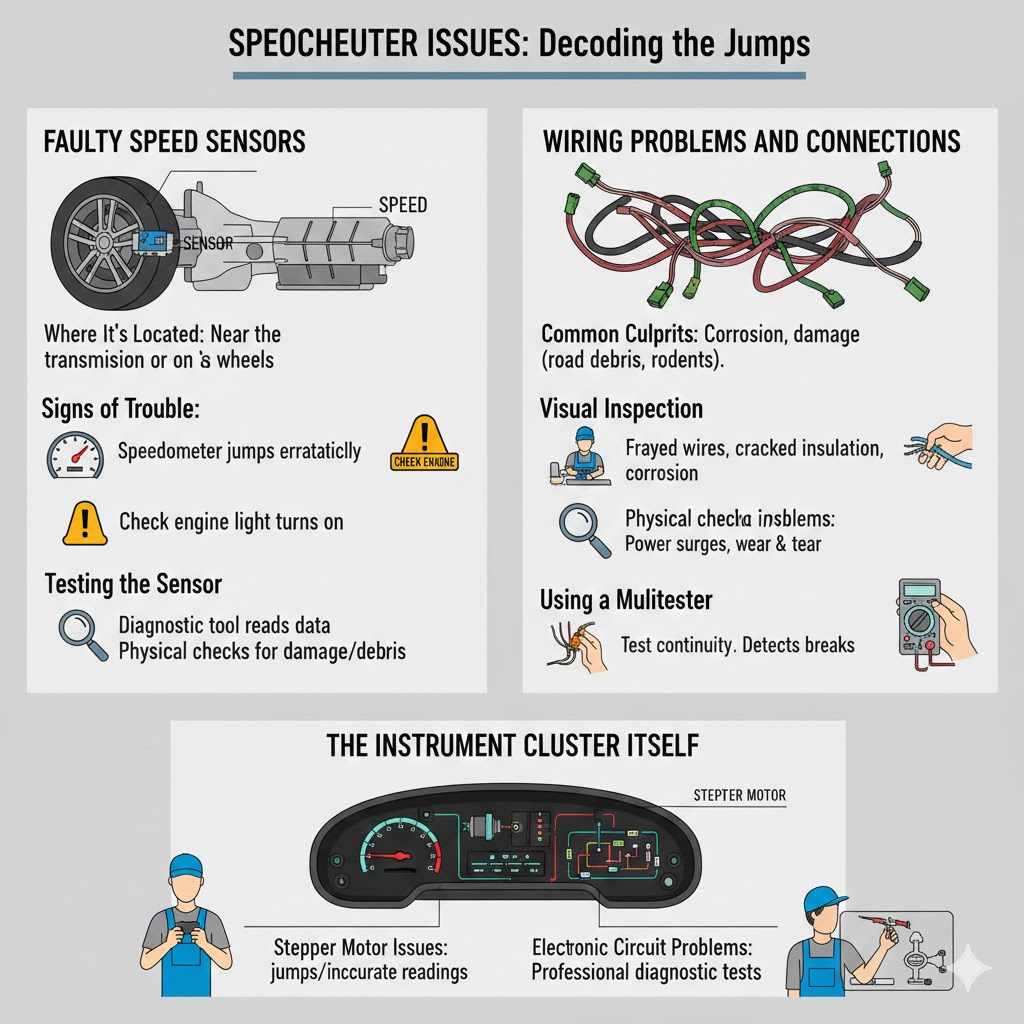
Speedometer Issues: Decoding the Jumps
A speedometer that isn’t working correctly can be a real headache. When the needle jumps around, it’s tough to know how fast you’re actually going, which can make driving stressful and even unsafe. The causes can range from simple glitches to more serious problems with your car’s sensors or wiring. It’s often the first indicator that something needs attention, so it’s essential to investigate the source of the issue right away. We will explore several components that can cause speedometer malfunctions.
Faulty Speed Sensors
The speed sensor is like your car’s brain for measuring speed. It sends information to the speedometer, letting it know how fast you are traveling. When the speed sensor has issues, such as dirt, damage, or even a loose connection, it can make the speedometer act erratically. This is one of the more common causes of a jumping speedometer, and luckily, it’s often a relatively simple fix.
-
Where It’s Located: The speed sensor is typically found near the transmission or on the wheels. It’s usually a small, electronic device that monitors how fast the wheels are turning.
Understanding its location is the first step in diagnosing the problem. Its proximity to the wheels or transmission means it’s exposed to the elements, making it susceptible to wear and tear.
-
Signs of Trouble: If the speedometer jumps erratically, or the cruise control does not function at all, it’s possible the speed sensor is faulty. Other indicators include the check engine light turning on, as a faulty sensor can trigger this warning.
These symptoms are clear signals that the speed sensor needs to be checked. Addressing the problem early can prevent further issues down the line.
-
Testing the Sensor: A mechanic can use a diagnostic tool to read the sensor’s data and see if it is sending the correct signals. They can also perform physical checks, looking for damage or debris.
Professional diagnostics can accurately pinpoint whether the sensor is the issue. Physical inspection can reveal simple problems like loose connections, which can be easily fixed.
Wiring Problems and Connections
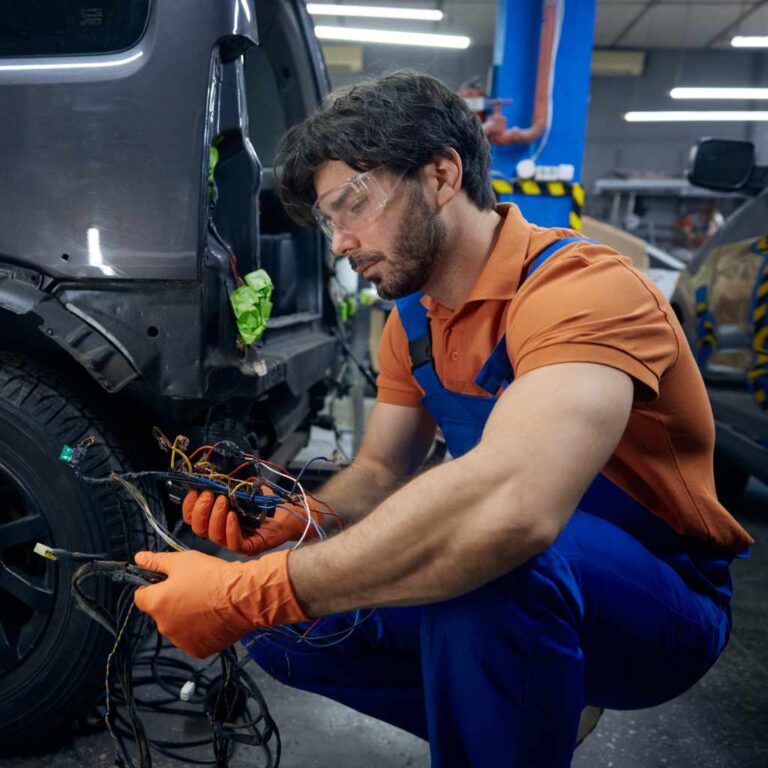
Your car’s electrical system is a network of wires and connectors. Issues within this network can have a ripple effect, causing various problems, including speedometer malfunctions. Wires can corrode, break, or become loose over time, especially in areas exposed to weather or road salt. Faulty connections can interrupt the signals sent from the speed sensor to the speedometer, resulting in erratic readings.
-
Common Culprits: Corrosion in the wiring harness, particularly near the speed sensor and the instrument cluster, is a typical cause. Damage from road debris or even rodents chewing on wires can also be problems.
Identifying the locations prone to damage can help focus troubleshooting efforts. These points are often the weakest links in the system.
-
Visual Inspection: Checking the wires for any visible damage is the first step. Look for frayed wires, cracked insulation, or signs of corrosion on the connectors.
A visual check can often reveal the source of the problem. Simple fixes like replacing a damaged wire or cleaning corroded connectors can resolve the issue.
-
Using a Multimeter: A multimeter can test the continuity of the wires, making sure that electricity can flow through them properly. This tool can detect breaks in the circuit that might not be visible.
Knowing how to use a multimeter is a valuable skill in car troubleshooting. This helps confirm whether there are problems in the electrical system.
The Instrument Cluster Itself
Sometimes the problem lies within the speedometer itself, which is part of the instrument cluster. The internal components of the speedometer, such as the stepper motor or electronic circuits, can fail over time. When these components break, they can cause the speedometer needle to jump or give incorrect readings. This can happen independently of the speed sensor or the wiring.
-
Stepper Motor Issues: Many modern speedometers use a stepper motor to move the needle. This motor can become faulty, causing the needle to stick, jump, or give inaccurate readings.
Understanding the role of the stepper motor can help pinpoint the root of the problem. Its failure can lead to many speedometer-related issues.
-
Electronic Circuit Problems: The electronic circuits in the instrument cluster can be affected by power surges, temperature changes, or general wear and tear. This can disrupt the signal processing and cause the speedometer to malfunction.
Electronic circuit issues can be complex to diagnose, and require specialized tools and expertise. Correctly identifying electronic circuit problems is crucial to determine if a replacement cluster is needed.
-
Diagnosing the Cluster: A mechanic can test the instrument cluster to determine whether the problem is the cause. This often involves running diagnostic tests and checking the signal from the speed sensor directly to the cluster.
Professional diagnostics are helpful to determine if the issue is in the instrument cluster. Knowing if this component is faulty is important to prevent unnecessary repairs.
Car Jerks: Unmasking the Underlying Causes
When your car jerks or hesitates, especially when accelerating, it’s a sign that something is amiss. This can range from minor issues to more serious mechanical problems. The good news is that these jerking sensations often point to specific areas of your car that can be investigated. Let’s look at several of the typical causes.
Fuel System Troubles
The fuel system is the lifeline of your car’s engine. Problems in this system can cause jerking, stalling, or hesitation. Issues can involve the fuel pump, fuel injectors, fuel filter, or even the fuel itself. Understanding how the fuel system works is key to finding the problem.
-
Fuel Pump Issues: A failing fuel pump may not deliver enough fuel to the engine, especially when accelerating. This lack of fuel can lead to jerking or a feeling of power loss.
A weak fuel pump can cause issues even at low speeds. Knowing the signs of a failing pump is essential to prevent more serious damage.
-
Fuel Injector Problems: Clogged or faulty fuel injectors can disrupt the proper fuel supply to the cylinders. This can lead to uneven combustion, causing the car to jerk or stumble.
Problems with the fuel injectors can greatly reduce engine efficiency. Keeping the injectors clean and functioning at their best can help prevent jerking.
-
Fuel Filter Clogging: A clogged fuel filter restricts fuel flow, which can cause the engine to starve for fuel, leading to jerking. This is a common issue, and regular filter changes can prevent it.
Fuel filters should be changed according to the car’s service schedule. It’s an inexpensive fix that will keep your car running smoothly.
Ignition System Problems
The ignition system is responsible for igniting the fuel in the engine’s cylinders. Problems in this system, such as faulty spark plugs, coils, or wires, can lead to misfires and cause the car to jerk. The ignition system plays a key role in smooth engine operation, and any issue with its components can easily disrupt performance. The spark plugs generate the spark that ignites the air-fuel mixture in the engine cylinders, causing the pistons to move up and down. If the spark plugs aren’t firing correctly, the engine can misfire, resulting in the car jerking or stalling.
-
Spark Plug Issues: Worn or fouled spark plugs can misfire, especially under load when accelerating. This can cause the engine to run rough and jerk.
Spark plugs should be replaced according to the manufacturer’s schedule. Using the proper spark plug for your car can greatly help prevent issues.
-
Coil Pack Failure: The ignition coil provides the high voltage needed to fire the spark plugs. A failing coil can cause misfires and jerking.
An easy way to diagnose a bad coil is to swap it with another coil from a different cylinder. If the problem moves with the coil, then the coil is the problem.
-
Spark Plug Wires (if applicable): Damaged or worn spark plug wires can leak voltage, causing misfires. Inspecting the wires for damage or corrosion can help.
A visual inspection can often pinpoint wire problems. Replacing damaged wires can help resolve jerking issues.
Transmission Issues
The transmission transfers power from the engine to the wheels. Problems with either an automatic or manual transmission can cause jerking or hesitation, especially during gear changes. These problems can range from a simple fluid issue to serious mechanical failure. Let’s find out more about the transmission issues.
-
Automatic Transmission Problems: Low transmission fluid levels, or old, contaminated fluid, can cause erratic shifting and jerking. Internal problems within the transmission can also cause these symptoms.
Regular transmission fluid checks and changes are key to avoiding transmission problems. This is especially important for cars with high mileage.
-
Manual Transmission Issues: A worn clutch can slip, causing the engine to rev without a corresponding increase in speed, which can feel like jerking. Other problems, such as a worn or damaged flywheel, can also cause jerking sensations.
Knowing how the clutch and flywheel work can help diagnose the issues of a manual transmission. Being sure to maintain the clutch and flywheel can prevent transmission problems.
-
Checking the Fluid: Regularly checking the transmission fluid level and condition is important. A mechanic can also diagnose transmission problems by checking for codes and doing a road test.
These simple checks can help catch problems early on. Addressing the problem can help prevent expensive repairs.
Combining the Clues: Diagnosing the Problems
Sometimes, both the speedometer jumping and the car jerking can stem from the same underlying issue. This often leads to confusion, so it is important to check the main factors. By carefully observing the symptoms and systematically checking different parts of your car, you can narrow down the potential causes and make informed decisions about repairs. To get started, you can consider how you drive your car. The way you drive will help you identify the main cause of the issue.
A Case of Two Problems?
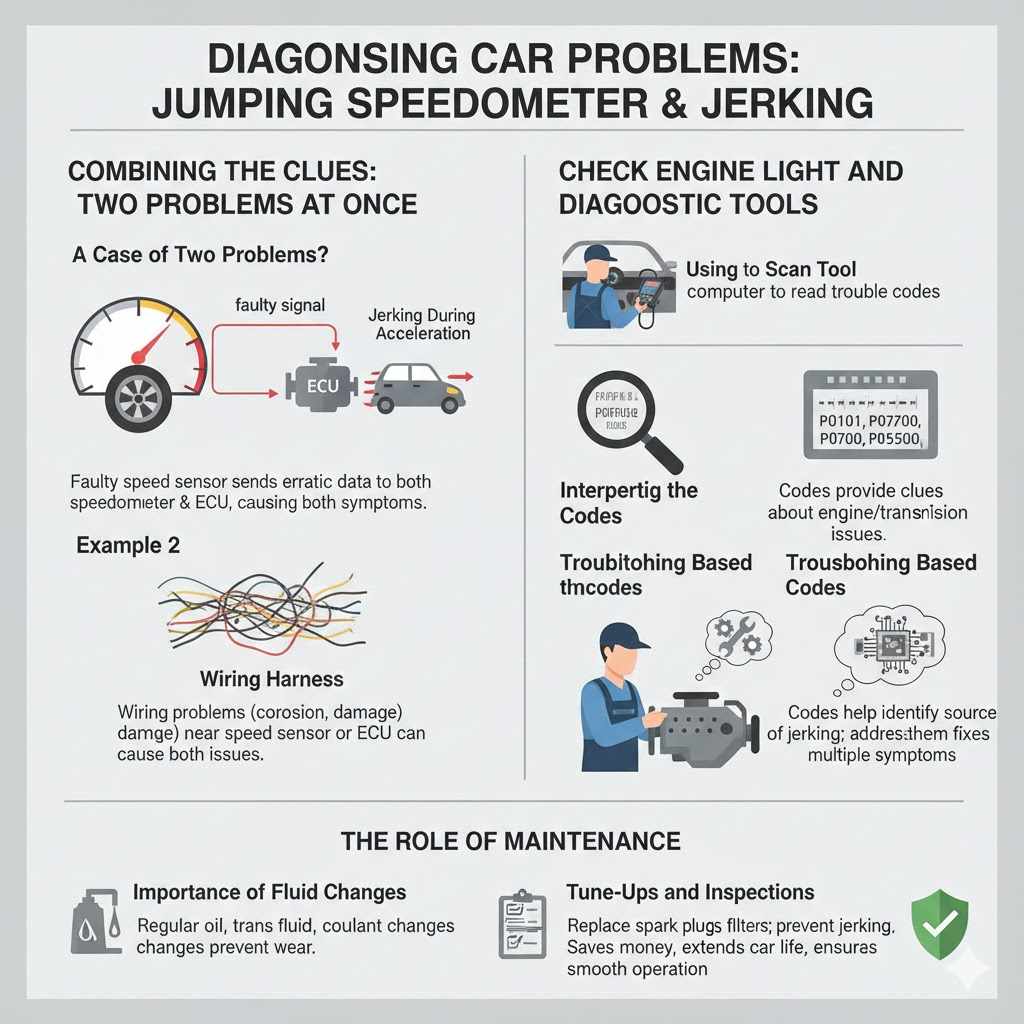
The speed sensor, as we explored, is one possible source of both problems. If the speed sensor is faulty, it can cause the speedometer to jump and the car to jerk, especially when shifting gears or accelerating. In these cases, the signal that the engine control unit (ECU) receives from the speed sensor is incorrect. This can affect the way the ECU controls the engine and transmission. Other factors may influence these problems, too.
-
Example 1: A car with a faulty speed sensor experiences a jumping speedometer and jerking during acceleration. This happens because the speed sensor sends erratic data to both the speedometer and the engine control unit (ECU). The ECU adjusts the engine’s performance based on this incorrect data, causing the car to jerk.
This scenario demonstrates how a single component can influence the performance of several systems. This helps connect multiple symptoms to the same root cause.
-
Example 2: You are driving on the highway. Your speedometer jumps erratically. Then the car jerks when you apply the gas pedal. This may point to a problem with your vehicle’s wiring harness. It can be found near your speed sensor or your engine’s control unit (ECU).
This situation shows that the specific location of the problem may cause the vehicle to show multiple symptoms.
Check Engine Light and Diagnostic Tools
The check engine light (CEL) is a helpful indicator that something is wrong. When it comes on, it often signals an issue in one of the car’s systems. A diagnostic tool can be used to scan the car’s computer for trouble codes. These codes provide valuable clues about the source of the problem. If both the speedometer is jumping and the car is jerking, a scan with a diagnostic tool might reveal multiple codes related to engine or transmission issues.
-
Using a Scan Tool: A scan tool connects to the car’s diagnostic port (usually under the dashboard). It reads the codes stored in the car’s computer.
Using a scan tool is a simple way to get more information about the problem. It is the first step in diagnosing many car problems.
-
Interpreting the Codes: Each code corresponds to a specific problem or system. A mechanic can interpret the codes and determine the likely cause of the problem.
Learning to interpret codes is useful for basic car diagnostics. Knowing the codes can help identify the general problems.
-
Troubleshooting Based on Codes: If the codes point to issues in the engine and transmission systems, it can help the mechanic find the source of the jerking. Addressing these issues can resolve multiple symptoms.
The codes make it possible to troubleshoot different areas of the car. The codes give helpful clues to help narrow down the problem.
The Role of Maintenance
Keeping up with regular car maintenance is the best way to prevent issues like Speedometer Jumps and Car Jerks: What’s Wrong?. Routine maintenance ensures that all of your car’s systems are functioning well. The main components need regular maintenance to function, and this can prevent problems down the line. Consistent maintenance may save time, money, and hassle in the future.
-
Importance of Fluid Changes: Regularly changing the oil, transmission fluid, and coolant keeps your car’s components running smoothly. This will keep the engine and transmission running well.
Following the manufacturer’s recommendations for fluid changes is essential. This can help prevent wear and tear.
-
Tune-Ups and Inspections: Regular tune-ups, including replacing spark plugs, filters, and other components, are helpful to prevent jerking and ensure smooth operation. Regular inspections can identify problems before they turn into bigger issues.
Having a trained mechanic inspect your car can help you prevent possible damage. These inspections can help catch potential issues before they become serious.
-
Benefits of Preventive Measures: Proper maintenance can often prevent problems from occurring. It extends the life of your car and helps it run more efficiently.
Keeping up with basic maintenance is a good investment for your car. It helps to keep it running smoothly and reduces the likelihood of costly repairs.
Frequently Asked Questions
Question: Why is my speedometer jumping, but the car seems to be running fine?
Answer: It could be a faulty speed sensor, a problem with the wiring, or an issue within the instrument cluster itself. While the car might feel okay initially, it’s best to get it checked, as the problem could worsen.
Question: Can a bad fuel filter cause my car to jerk?
Answer: Yes, a clogged fuel filter can restrict fuel flow, leading to hesitation and jerking, especially under acceleration. It is an inexpensive fix.
Question: How often should I change my spark plugs?
Answer: The frequency of spark plug changes depends on your car’s make and model. Check your owner’s manual for specific recommendations. As a general rule, spark plugs should be changed every 30,000 to 100,000 miles.
Question: Can transmission problems cause the speedometer to jump?
Answer: Not directly, but transmission issues can sometimes indirectly cause the speedometer to show incorrect readings. This happens if the transmission affects the wheel speed data used by the speedometer.
Question: How can I tell if the check engine light is related to the speedometer or jerking problem?
Answer: Use a diagnostic scan tool to read the trouble codes. These codes will provide clues to what is going on. Then, they will pinpoint the system causing the problem. These codes are very helpful.
Final Thoughts
Dealing with Speedometer Jumps and Car Jerks: What’s Wrong? might seem stressful, but armed with the right information, you can get it sorted. By looking at things like speed sensors, wiring, and your car’s instrument cluster, you can figure out what is going on with the speedometer. For the jerking issue, fuel and ignition systems are usually the prime suspects.
Don’t forget that transmission problems can also be involved. Remember, regular maintenance is key! If you’re comfortable, you can inspect some components yourself, but don’t hesitate to take your car to a mechanic if things get too tricky. With a little patience and a methodical approach, you’ll have your car running smoothly in no time.