What Happens If You Put E85 Fuel in a Regular Car Engine
Putting the wrong fuel in your car can be a real worry. Let’s be honest, it’s something that can happen to anyone! Especially when you’re in a hurry or the pumps look similar. The good news is, if you’re wondering what Happens If You Put E85 in a Car by Mistake?, you’re in the right place. This post will break down exactly what E85 is, what it does to your car, and what you should do to fix it. We’ll explore everything you need to know, step-by-step, so you can feel prepared.
What Exactly Is E85 Fuel?
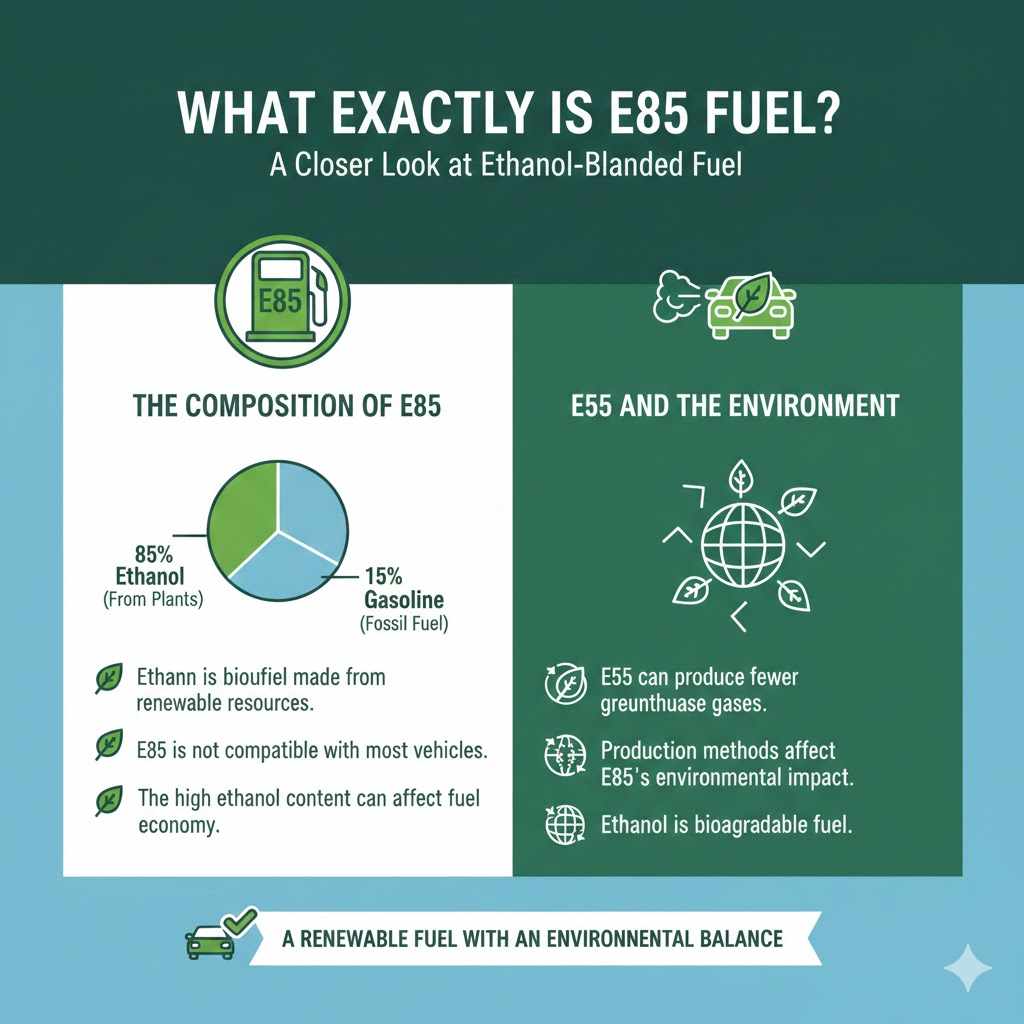
E85 is a type of fuel made mostly from ethanol, a plant-based alcohol. The “E” in E85 stands for ethanol, and the “85” means it contains 85% ethanol and 15% gasoline. Regular gasoline, in contrast, usually has about 10% ethanol. Ethanol is made from crops like corn. It’s often promoted as a more eco-friendly choice. It can reduce greenhouse gas emissions compared to regular gasoline in some cases, although that depends on factors like how the crops are grown and transported.
This fuel type isn’t for every car. You’ll typically only see it at gas stations in regions where ethanol production is prevalent or where there are environmental regulations promoting its usage. The price of E85 can sometimes be lower than regular gasoline. This is because of government incentives that encourage its production.
However, it’s important to remember that E85 has less energy per gallon than regular gasoline. This can lead to your car using slightly more fuel to go the same distance. The use of E85 fuels can significantly vary depending on local gasoline availability and its pricing, impacting consumer choices and fuel consumption patterns.
The Composition of E85
The main ingredient is ethanol, which is produced from fermented plant starches. It is typically derived from corn in the United States. E85 contains a significant amount of ethanol, usually 85%, and the rest is gasoline. This is different from the standard gasoline you may be used to. Gasoline blends typically contain around 10% ethanol. The high ethanol content in E85 affects how it burns in your engine and what materials it’s compatible with.
- Ethanol is a biofuel made from renewable resources.
- E85 is not compatible with most vehicles.
- The high ethanol content can affect fuel economy.
E85 and the Environment
Compared to gasoline, E85 can reduce emissions, like carbon monoxide and some hydrocarbons. However, the environmental impact of E85 depends on how the crops used to make ethanol are grown. The overall carbon footprint of ethanol production can change based on the farming methods, fertilizer use, and transportation involved. Ethanol is also biodegradable, which means it breaks down more quickly if spilled, posing less risk to the environment compared to regular gasoline.
- E85 can produce fewer greenhouse gases.
- Production methods affect E85’s environmental impact.
- Ethanol is a biodegradable fuel.
What Happens If You Accidentally Fill Up?
If you put E85 in a car not designed for it, it can cause problems. It’s crucial to know what to look out for. The ethanol in E85 can damage parts in your car that aren’t built to handle it. You might notice your car running rough or even not starting. Don’t worry, it’s usually fixable if caught early. The important thing is to understand the risks and how to deal with them. We’ll explore each of the immediate and potential problems in the following sections. It is a common mistake and not always a disaster.
Ethanol has properties that differ from gasoline. It can corrode rubber and plastic components that aren’t ethanol-resistant. This can lead to fuel leaks or engine malfunctions. The higher ethanol content also requires more fuel to be injected into the engine to achieve the right air-fuel mixture. This is because ethanol contains less energy than gasoline. The engine management system in a non-flex-fuel vehicle may not be able to adapt to this change, potentially leading to performance issues.
Immediate Signs of E85 Use
One of the first signs can be the engine running poorly. It might misfire, hesitate, or stall. You may notice a decrease in power or acceleration. You could also see the check engine light turn on. If you drive a short distance, you might notice nothing wrong. However, it’s best to address it right away. The sooner you correct the situation, the less likely it is that there will be damage to the car. Don’t panic if these things happen. It is often a fixable situation.
- Rough engine idling
- Loss of power
- Check engine light
Potential Long-Term Problems
Over time, E85 can cause more severe issues. Ethanol can corrode rubber fuel lines, fuel pumps, and other components not designed for it. This can lead to fuel leaks or engine failure. The ethanol can also dissolve deposits in the fuel tank and lines, which can clog fuel filters and injectors. The catalytic converter could also be damaged. The car’s computer might struggle to regulate fuel delivery effectively, affecting engine performance. These issues can be expensive to fix.
- Fuel system corrosion
- Clogged fuel filter
- Damage to the catalytic converter
How to Deal with the Mistake: Step by Step
If you’ve put E85 in your car by mistake, don’t panic. Here’s what to do: First, don’t start the engine if you haven’t yet. If you have started the engine, try to stop driving as soon as possible. The longer you drive, the more risk there is of damage. The next step is to get the fuel out of your car. It’s best to have a professional handle it. We will cover the steps to take to resolve this.
The priority is to get the E85 out of the fuel tank. This is usually done by draining the tank. You’ll then need to flush the fuel system and consider replacing parts that may have been damaged. The cost and procedures depend on how much E85 was used and how far you drove. It is important to act fast and follow the correct steps to prevent further damage. Addressing the issue immediately can save you money and headaches down the road. It helps to be proactive.
Step 1: Don’t Start the Engine
This is the most crucial step. If you haven’t turned on the car yet, do not do it. Starting the engine will push the E85 through the fuel lines and into the engine. This will increase the chances of damage. Take a moment, and double-check your receipt to confirm what fuel you used. If you suspect you’ve put in the wrong fuel, stopping immediately is the right move. The less the E85 circulates, the better.
Step 2: Have the Fuel Tank Drained
The best solution is to have a professional drain the fuel tank. A mechanic will use specialized equipment to safely remove all the E85. It’s also possible to siphon the fuel yourself. However, it’s often safer and more effective to seek professional help. The mechanic can also inspect the fuel system for any damage or contamination after draining the tank. This step helps ensure that all the incorrect fuel is removed. Make sure to choose a reputable repair shop.
Step 3: Flush the Fuel System
Once the tank is drained, the fuel system needs a thorough flush. This removes any E85 that might have gotten into the fuel lines or injectors. The mechanic will typically use a special cleaning solution designed to remove any residue. This helps ensure that the fuel system is completely clean and ready for the right fuel. The mechanic will also assess if any components have been harmed. Cleaning the fuel system removes any lingering ethanol. This is a very important step.
Step 4: Refuel with the Correct Fuel
After the system is clean, fill the tank with the right fuel for your car. Use the fuel type recommended in your car’s owner’s manual. This is usually gasoline, but some cars are designed to use E85. Fill the tank completely to dilute any remaining traces of ethanol. This ensures the car runs correctly. Filling with the right fuel restores your car to its normal operation. This final step sets you up to drive without concern.
Vehicle Compatibility and E85
Not every vehicle can use E85. It is usually designed for “flex-fuel” vehicles. These vehicles can run on either gasoline, E85, or a mix of both. These cars have specific fuel system components designed to handle the higher ethanol content. Regular cars, on the other hand, have fuel systems that can’t handle E85. Using E85 in the wrong car can damage fuel lines, fuel pumps, and engine components. It is very important to use the correct fuel.
Flex-fuel vehicles often have features that allow them to adapt to different fuel types. These include sensors that detect the amount of ethanol in the fuel. The car’s computer then adjusts the engine’s fuel delivery and timing to match. Owners can typically recognize flex-fuel cars by the yellow gas cap. Some cars may also have a flex-fuel badge. Knowing the right fuel for your car is key. Make sure to check the car’s manual or the fuel door to confirm which fuel is correct.
Identifying Flex-Fuel Vehicles
Look for the yellow gas cap, which is a key indicator. Many flex-fuel vehicles have this distinctive feature. It is a visual cue to remind owners that the vehicle can use E85. This helps drivers quickly identify the vehicle’s fuel requirements. This is a simple but important feature. Some cars may have a “Flex Fuel” badge on the back or side. The vehicle’s manual is also the best source for information. Check the owner’s manual to confirm fuel type recommendations.
The Risks of Using E85 in Non-Flex-Fuel Vehicles
E85 will cause problems in cars not designed to use it. These problems can include damage to the fuel system components. Ethanol can corrode rubber and plastic parts. This can lead to fuel leaks or engine malfunctions. It can also cause engine problems, like misfires and reduced performance. The car’s computer may not be able to adapt. This can lead to poor fuel economy and potentially engine damage. It is important to use the correct fuel.
Real-Life Examples and Scenarios
Understanding what can happen is easier with real examples. Consider these scenarios and how they could play out. They show how important it is to be careful at the pump. These situations should give you a better idea of what to expect.
- Scenario 1: Sarah mistakenly fills her regular gasoline car with E85. She drives a few miles before noticing the engine running rough. After taking it to a mechanic, the fuel tank is drained, and the fuel system is flushed. Luckily, no major damage occurred, and the car was fine after refilling it with gasoline.
- Scenario 2: John, unaware, fills his car with E85 over a week, noticing the engine light turn on and reduced power. He delayed getting it fixed. The mechanic found the fuel pump and lines were damaged from corrosion. This was an expensive repair, highlighting the importance of early detection.
- Scenario 3: Maria, driving a flex-fuel vehicle, accidentally fills her car with regular gasoline. The car ran normally, but the vehicle’s performance did not feel quite right. She eventually refueled with E85. No major issues happened, but she missed the advantages of E85.
These examples stress the need to be cautious at the gas pump and quickly resolve any issues that may occur.
Common Questions
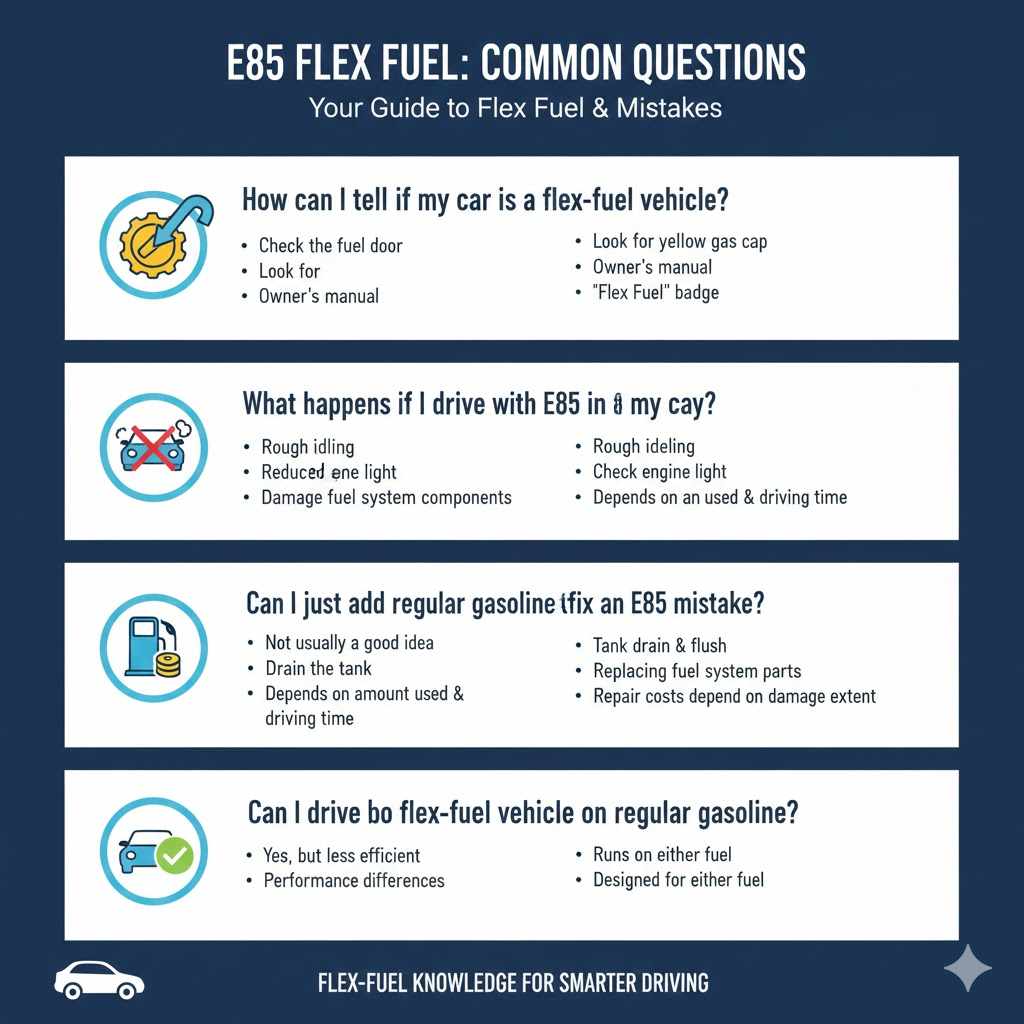
How can I tell if my car is a flex-fuel vehicle?
Check the fuel door or look for a yellow gas cap. The owner’s manual is another good source. You might also find a “Flex Fuel” badge. Checking these places will give you the answer.
What happens if I drive with E85 in my car?
You may experience rough idling, reduced power, or the check engine light turning on. Over time, it can damage fuel system components. The faster you act, the less damage is likely to occur.
Can I just add regular gasoline to the E85 and be okay?
It’s not usually a good idea. You should still drain the tank and flush the system. This ensures that the system is properly cleaned. This depends on how much E85 you used and how long you drove.
How much does it cost to fix an E85 mistake?
The cost varies based on the amount of E85 used and the damage. It can range from a tank drain and fuel system flush to more expensive repairs, like replacing fuel system parts. Repair costs depend on the extent of damage.
Can I drive a flex-fuel vehicle on regular gasoline?
Yes, but you will not get the full benefits of using E85. Flex-fuel vehicles can run on either fuel. However, if the car is built to use E85, you may see some differences in performance and fuel economy when using regular gasoline. Flex-fuel vehicles are designed for either fuel.
Frequently Asked Questions
Question: How do I know if the gas I’m putting in is E85?
Answer: Look for the E85 label on the pump. It should be clearly marked. Also, check the fuel door or owner’s manual for your vehicle’s correct fuel type.
Question: Can I mix E85 with regular gasoline in my car?
Answer: It is not recommended unless your car is designed for E85, which is called flex-fuel. For non-flex-fuel cars, you should not mix the fuels as this can cause damage.
Question: What’s the main difference between E85 and regular gasoline?
Answer: The primary difference is the ethanol content. E85 has about 85% ethanol, while regular gasoline typically has about 10% or less. This high ethanol content is what causes issues for vehicles not built to use it.
Question: Will a fuel system cleaner help if I put E85 in the wrong car?
Answer: Fuel system cleaners can help remove deposits, but they cannot fix the core problem of incompatibility with E85. It’s best to drain the tank and flush the system for a thorough solution.
Question: What if my car starts running poorly after using E85?
Answer: Stop driving and get the car checked by a mechanic right away. This will help prevent further damage. The mechanic can assess the situation and recommend the best steps to fix it.
Final Thoughts
Accidentally putting E85 in a car not designed for it is a stressful situation. Remember, it’s a common mistake, and there are steps you can take to fix it. The key is to act quickly. If you make the error, don’t start the engine. If you have already started it, try to stop driving as soon as possible. Get the fuel tank drained, flush the fuel system, and refill with the right fuel for your vehicle.
By knowing what to do, you can minimize the risk of damage and get back on the road safely. Don’t worry, even if this happens, most problems can be fixed. Always double-check at the pump next time. It is a good practice.
Products related to this article
Sponsored / affiliate links. As an Amazon Associate I earn from qualifying purchases. I may earn additional commission from eligible campaigns.