Sustainability Practices in the Car Enthusiast Community
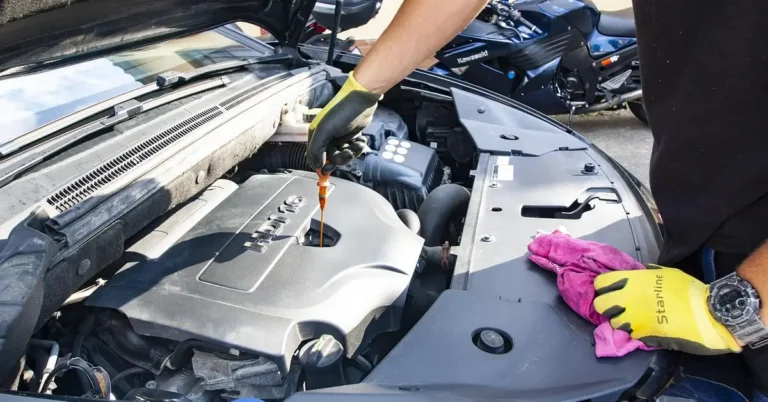
The best sustainability upgrades cut fuel use, tire wear, and parts waste first: keep maintenance current, fix leaks, keep tire pressures right, and choose reversible mods that do not hurt factory efficiency. Badly chosen “green” parts can waste money, weaken reliability, and raise emissions. This guide ranks practical sustainability practices by build type, with the best tradeoffs for daily drivers, track cars, classics, and project builds.
What sustainability means for car enthusiasts
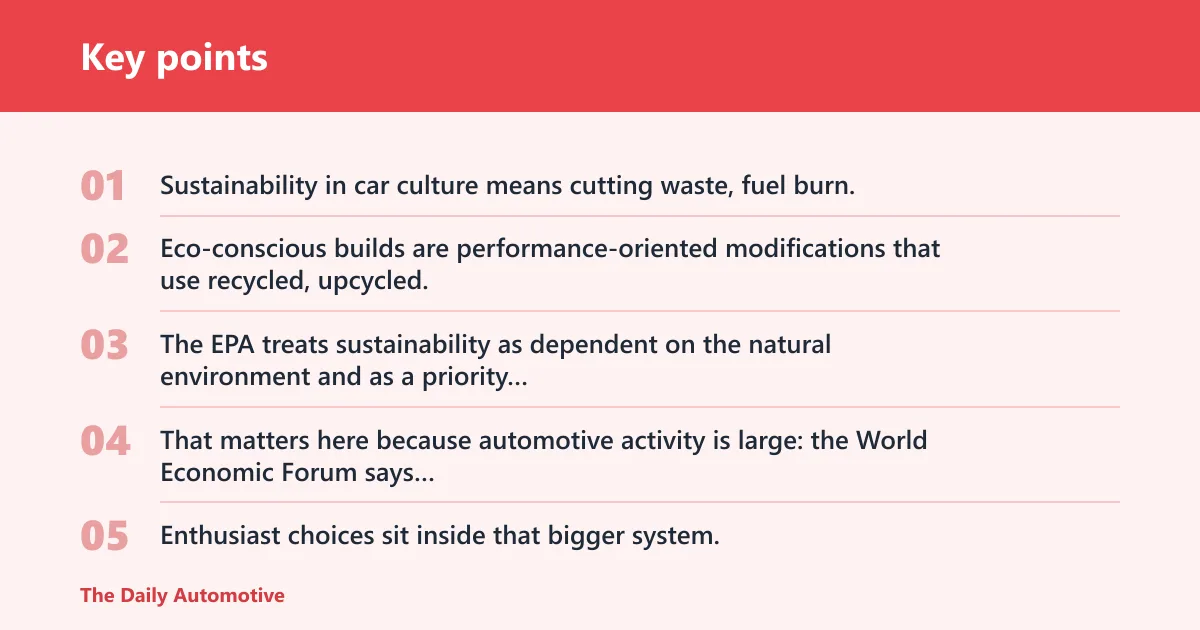



Sustainability in car culture means cutting waste, fuel burn, and shop impact without stripping away what people like about modifying cars. Eco-conscious builds are performance-oriented modifications that use recycled, upcycled, remanufactured, or lower-impact parts where practical, so the car still feels like a car people want to own and drive.
The EPA treats sustainability as dependent on the natural environment and as a priority interest for many organizations. That matters here because automotive activity is large: the World Economic Forum says the industry produces about 80 million vehicles a year and contributes to over 10% of global CO2 emissions. Enthusiast choices sit inside that bigger system.
Why reduce, reuse, recycle matters in parts, maintenance, and project planning
Reduce, reuse, recycle is the simplest framework for enthusiasts because it applies to the whole build, not only to one part choice. Reduce means buying fewer disposable upgrades and wasting less fuel. Reuse means choosing serviceable used or remanufactured parts when condition supports it. Recycle means sorting metals, fluids, packaging, and worn consumables correctly.
That approach fits enthusiast culture. It does not replace performance goals; it filters them. A well-chosen remanufactured alternator, a set of lighter rims, or a reversible intake on a daily driver can cut waste without turning the car into a compromise machine.
What a practical sustainability upgrade looks like in enthusiast terms
A practical upgrade often has three traits: it saves resources in normal use, it does not create a safety problem, and it can usually be reversed or maintained without special disposal. That is why basic maintenance, sensible tire choice, and clean repair decisions beat gimmicks that promise huge savings but add complexity or risk.
Say your commuter idles for ten minutes twice a day, runs underinflated tires, and needs a brake job. Fix the tires, replace worn pads and rotors with quality parts, and cut idle time. That will matter more than a decorative “eco” badge or an expensive boutique fluid with no clear need.
Which sustainability upgrades should you do first?

Start with the changes that, in most cases, cut waste whenever the car is driven or serviced. The usual order is maintenance first, then driving habits, then parts sourcing, then materials and fabrication choices. That sequence protects reliability and makes it easier to tell whether a sustainability change is actually helping.
A simple decision order based on cost, waste reduction, and performance impact
- Fix maintenance losses. Address leaks, misfires, draggy brakes, bad alignment, and low tire pressure before buying upgrades.
- Cut fuel waste in use. Use steady speeds, fewer hard launches, and less idling.
- Choose serviceable parts. Buy remanufactured or high-quality used parts when fit and wear state are documented.
- Upgrade only where the car benefits. Lightweight rims, reversible aero, and efficient cooling parts can help when they solve a real need.
- Plan disposal early. Recycle metals, packaging, and fluids rather than treating them as afterthoughts.
When a remanufactured part makes more sense than a new one
Remanufactured parts reuse core components restored for service. They often cost less than new parts and create less solid waste because the housing or core stays in circulation. They make the most sense for alternators, starters, calipers, steering racks, and other parts where wear items can be renewed to spec.
They are not automatically the right answer. A low-quality used turbo, a remanufactured brake caliper with weak seals, or a bargain fuel pump with poor documentation can create a second repair bill. The rule is simple: buy remanufactured parts only when the seller can document what was replaced, tested, and warranted.
How to avoid buying the wrong “green” part twice
Watch for false green claims. A part is not sustainable just because it uses recycled packaging or a marketing label. Check whether it cuts waste in service, whether it affects safety systems, and whether it changes factory efficiency in normal use. If it needs more fuel, more maintenance, or more replacements, it is not a win.
A common first-timer mistake is buying cheap used suspension arms because they seem “reused,” then paying to replace them again after worn bushings and ball joints show up. The better choice is the part that lasts, fits correctly, and avoids repeat labor.
| Build type | Best first upgrade | Likely waste reduction | Tradeoff | Common failure mode to avoid |
|---|---|---|---|---|
| Daily driver | Alignment, tire pressure checks, and a low-rolling-resistance tire when replacement is due | Less fuel use and slower tire wear | May reduce ultimate grip a little | Chasing cheap “eco” tires that wear fast or hurt wet braking |
| Weekend track car | Serviceable brake and cooling refresh with remanufactured or quality replacement parts where safe | Fewer failed parts and less repeated teardown waste | Higher upfront cost than bargain parts | Using used wear items with unknown heat history |
| Show or project car | Reversible parts plan with salvageable OEM components and recycled trim where visible fit matters | Less scrap from abandoned mock-ups and rework | Slower build pace | Buying trendy parts before confirming fit, finish, and function |
What eco-driving habits actually matter?
Eco-driving means using the throttle, brake, and idle time in a way that cuts fuel burn without making the car hard to live with. The habits that matter most are steady speeds, smoother acceleration, less idling, and fewer abrupt braking events. They are simple, and they work best in city and commuter driving.
Steady speeds and smoother throttle use
A steadier throttle keeps fuel use predictable and reduces heat, tire scrub, and repeated gear changes. That matters more in stop-and-go traffic than on an open highway, where the car spends less time changing speed. A fuel-efficient car makes those gains easier to see, but any car benefits.
Less idling and fewer hard acceleration or braking events
Idling burns fuel with zero distance covered. Hard acceleration asks for more fuel in a short burst, and harsh braking converts that fuel into heat. If the route includes school pickup, errands, or commuting, cutting idle time and avoiding needless full-throttle starts usually produces the biggest day-to-day effect.
Why these habits matter most in city driving and commuter use
City use magnifies waste because the car is constantly moving between rest and motion. That is where smoother driving gives back the most. On track days, hard use is part of the point, so the sustainability goal shifts toward fewer failed parts, cleaner maintenance, and smarter replacement intervals.
How do you make maintenance and shop work less wasteful?
Maintenance becomes more sustainable when you avoid repeat work, route worn parts into reuse or recycling, and cut water and energy use in the shop. The biggest gains usually come from fixing leaks early, choosing remanufactured parts when appropriate, and keeping fluids, metals, and packaging out of the trash.
Remanufactured parts, fluids, and repair choices that reduce solid waste
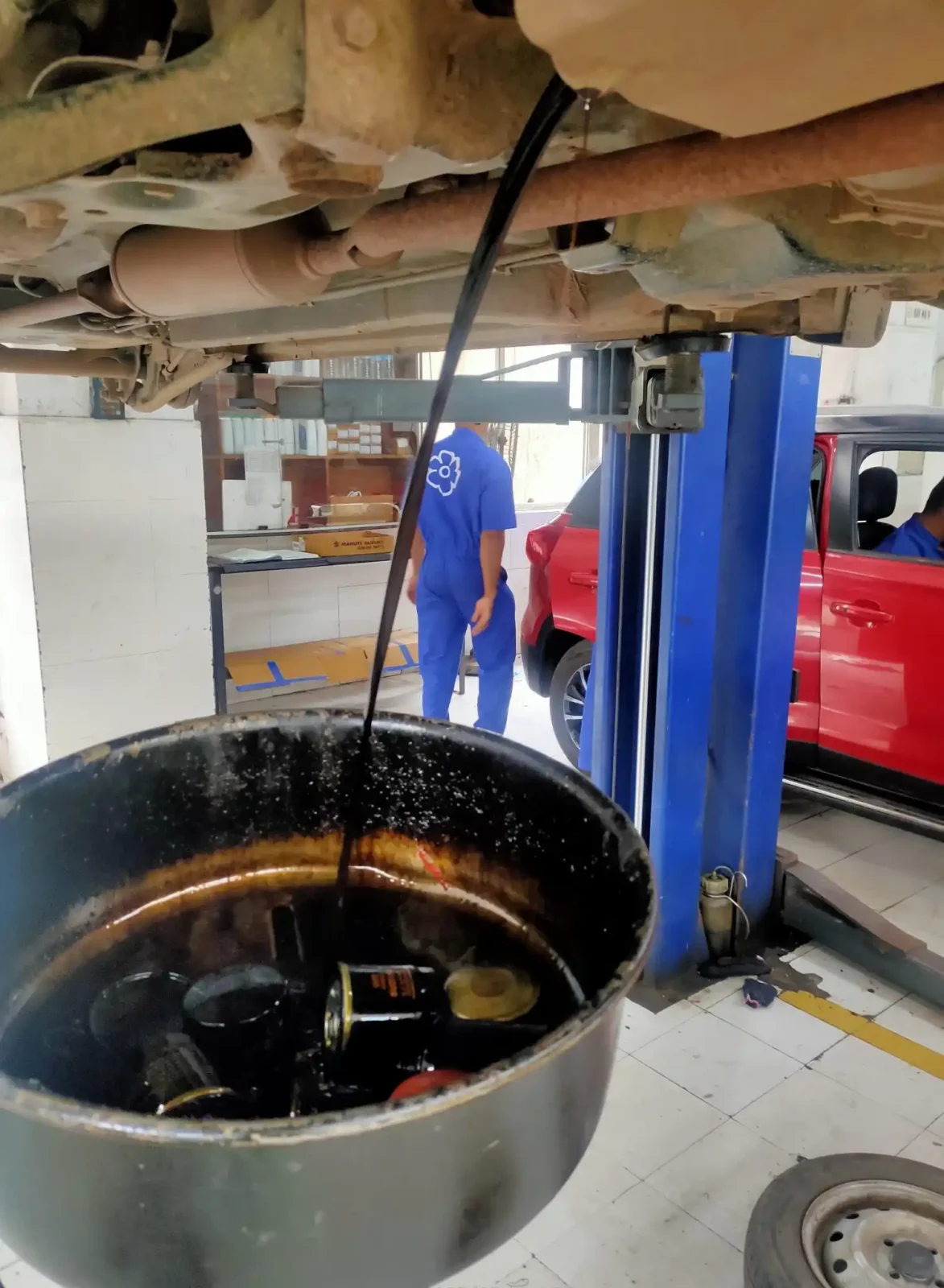
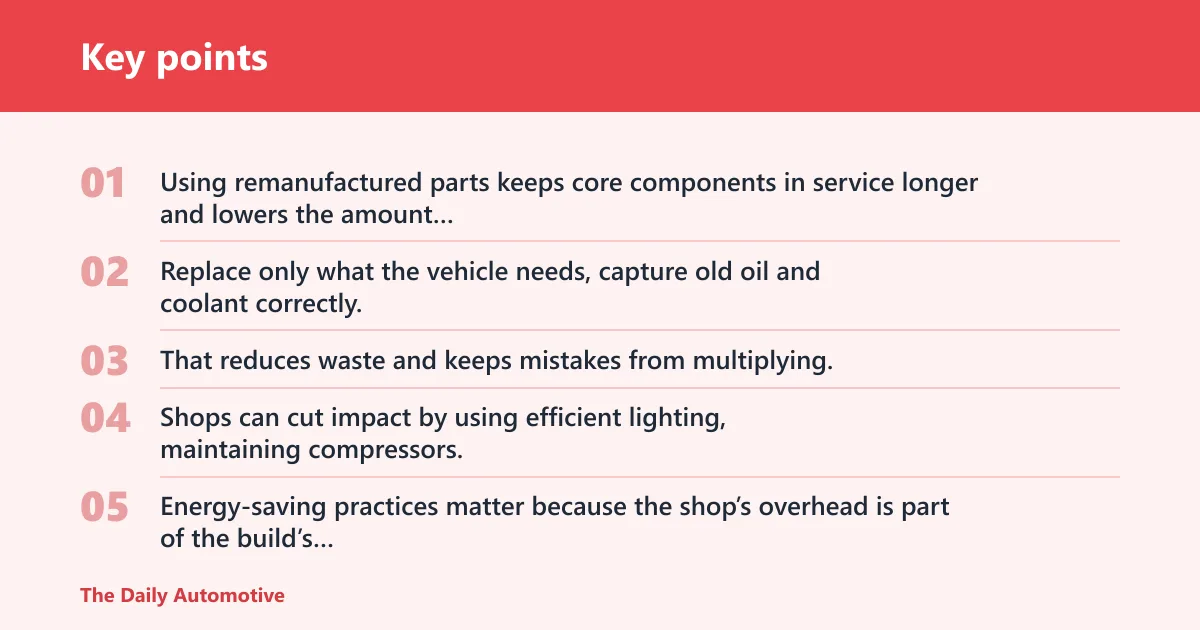
Using remanufactured parts keeps core components in service longer and lowers the amount of material sent to disposal. Fluid service matters too. Replace only what the vehicle needs, capture old oil and coolant correctly, and avoid opening systems more than necessary. That reduces waste and keeps mistakes from multiplying.
Energy- and water-saving practices in auto shops
Shops can cut impact by using efficient lighting, maintaining compressors, fixing air leaks, batching wash work, and using water only where required. Energy-saving practices matter because the shop’s overhead is part of the build’s footprint. Cleaner work habits also reduce rework, which saves labor and materials.
Sorting scrap, packaging, and consumables to cut disposal waste
Sort steel, aluminum, wheels, and packaging instead of mixing them into general trash. Keep absorbents, filters, and used fluids in the proper waste stream. This is the practical side of reduce, reuse, recycle: less contamination means more material can be recovered and fewer consumables are discarded as mixed waste.
Picture a brake refresh on a daily driver. If the old calipers can be remanufactured, the rotors are still serviceable after measurement, and the pads are the correct compound for street use, the job creates less scrap and avoids buying parts twice because of guesswork.
What materials and manufacturing choices are worth knowing?
Material choice matters because it affects weight, durability, repairability, and waste upstream. Eco-friendly materials in automotive manufacturing and modifications usually mean lower-impact inputs, recycled content where appropriate, or designs that need fewer resources across the part’s life. The right choice depends on the build, not the label.
Lightweight rims: aluminum and magnesium tradeoffs
Lightweight rims can support fuel efficiency and reduce unsprung mass, which helps ride and response. Aluminum is the more common choice and balances cost, strength, and availability. Magnesium is lighter still, but it can cost more and needs careful use. Both are worth considering when the goal is efficiency without sacrificing fit.
Eco-friendly materials used in automotive manufacturing and modifications
Eco-friendly materials include recycled plastics, lower-impact composites, recycled metals, and trim materials that reduce reliance on traditional high-waste manufacturing methods. For enthusiasts, that often means choosing parts with known sourcing, avoiding disposable cosmetic add-ons, and preferring reusable hardware over one-time clips and fasteners.
What is additive manufacturing in automotive sustainability?
Additive manufacturing means building a part layer by layer rather than cutting much of it away from a larger blank. The sustainability value is lower material waste and, in some cases, more efficient production. It is useful for brackets, ducts, and prototypes, but not every printed part belongs in a safety-critical role.
Are fuel-efficient cars and electric vehicles part of enthusiast culture?
Yes. Fuel-efficient cars and electric vehicles can fit enthusiast priorities because they lower fuel use or tailpipe emissions while still leaving room for tuning, handling, braking, and styling choices. They are not the only path, but they are part of modern car culture now, especially when the goal is lower operating impact.
How lower-fuel and lower-tailpipe-emission vehicles fit enthusiast priorities
A fuel-efficient car reduces running cost and fuel consumption, which makes more room for tires, track fees, or maintenance. Electric vehicles reduce tailpipe emissions and often deliver strong low-speed response. For some enthusiasts, that combination is the point: lower emissions without giving up modern performance.
Why EVs can still be modified, tracked, or customized within limits
EVs still accept suspension changes, wheel and tire choices, brake upgrades, cooling improvements, interior changes, and software-tuned behavior in many cases. The limits are battery thermal management, range loss, and charging access. That means EV modification looks different, not impossible.
Where performance goals and sustainability goals align, and where they do not
They align when a change improves efficiency, durability, or usable performance at the same time. They conflict when a mod adds weight, raises fuel use, or shortens part life for little gain. Enthusiast culture does not need a purity test. It needs better choices, made in the right order.
How do enthusiasts balance car culture with environmental responsibility?
They balance it by treating every build as a series of tradeoffs, not a moral identity test. Keep the car maintained, choose parts that last, buy used or remanufactured parts where safe, and plan for disposal before the wrench turns. That is how passion and responsibility can sit in the same garage.
The cleanest builds are often the ones that avoid unnecessary replacements, preserve factory systems when they still work, and use the fewest resources to reach the same driving result. That is true for daily drivers, weekend track cars, and project cars that may take years to finish.
Frequently asked questions
What are the most practical sustainability practices in the car enthusiast community?
The most practical practices are maintenance, reduce-reuse-recycle sourcing, better driving habits, and smarter disposal. Keep tires inflated, fix leaks, choose remanufactured parts when safe, and avoid decorative upgrades that add weight or waste without improving the car’s use.
How can car enthusiasts be more eco-friendly without giving up performance?
Start with changes that support both goals: lighter rims, efficient tires, clean alignment, reversible aero, and repairs that restore rather than replace. Eco-conscious builds work best when the part choice preserves handling, braking, or reliability instead of treating sustainability as a sticker.
What are recycled or remanufactured parts in car builds?
Recycled parts are materials recovered for reuse, while remanufactured parts are core components restored to service with worn pieces replaced and the assembly tested. They can cut solid waste and often lower cost, but only when the seller can document condition and process.
What eco-friendly driving habits actually make a difference?
Steady speeds, smoother throttle use, less idling, and fewer hard acceleration or braking events make the biggest day-to-day difference. Those habits cut fuel use and reduce wear, especially in city driving where stop-start traffic magnifies waste.
How do sustainable car maintenance practices reduce waste and water use?
They reduce waste by keeping service intervals appropriate, choosing remanufactured parts when suitable, sorting scrap correctly, and disposing of fluids properly. They reduce water use by limiting unnecessary washing and by using efficient shop processes that avoid repeat work and cleanup.
Are electric vehicles part of car enthusiast culture now?
Yes. EVs now fit enthusiast culture because they can be tuned for handling, braking, and response, while also reducing tailpipe emissions. They are not the only enthusiast platform, but they are a real one, and they bring different limits that builders need to respect.
Products related to this article
Sponsored / affiliate links. As an Amazon Associate I earn from qualifying purchases. I may earn additional commission from eligible campaigns.