T-Bone Car Crash Physics: Why Side Impacts Cause 22% of Deaths
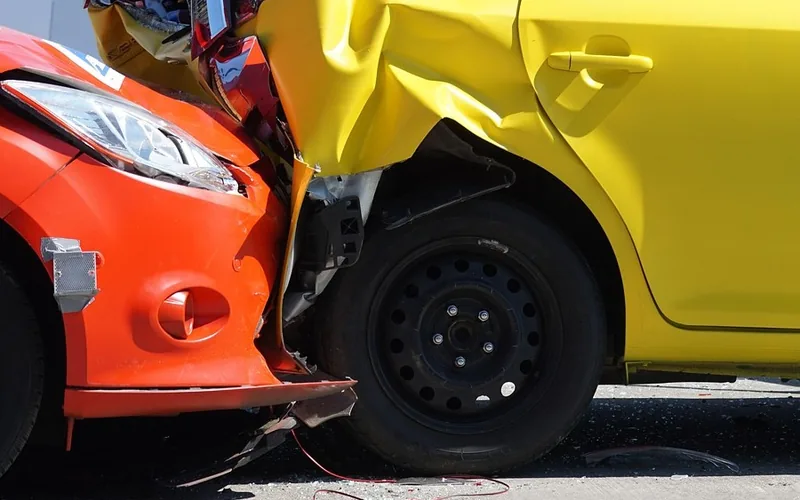
A T-bone crash is a side-impact collision, and the physics make it uniquely dangerous: doors and side panels give occupants only 6 to 12 inches of crush space, versus 2 to 3 feet at the front bumper. That gap is why IIHS data ties 22% of all passenger vehicle deaths to side impacts, second only to frontal crashes. This guide covers crush-zone physics, speed, mass, impact angle, and which safety features cut real-world death risk.
Quick Answer
A T-bone crash puts occupants only 6 to 12 inches from the point of impact, compared with 2 to 3 feet of crumple zone at the front bumper. That’s why IIHS data attributes 22% of passenger vehicle occupant deaths to side impacts. Reinforced B-pillars, side-guard door beams, and side curtain airbags are the features that cut this risk the most.
What Exactly is a T-Bone Car Crash? Physics Made Simple
In the automotive world, we often use shorthand terms. A “T-bone crash” is the common name for a side-impact collision. Think about the letter “T.” One car is the vertical line, and the other car is the horizontal line hitting it squarely in the middle.
Why is this shape so dangerous? It all comes down to basic physics, specifically how vehicles are built to protect us. Cars are designed with “crumple zones” at the front and rear. These zones are meant to absorb the impact energy during a crash, slowing down the occupants gradually. When a crash happens from the side, these protective zones are almost completely missing.
The Role of Side Structures vs. Front Structures
To understand the danger, let’s look at what happens when a car gets hit from the front versus the side.
- Front/Rear Impact: Modern cars have long frames, engines, and crumple zones designed to absorb massive amounts of kinetic energy. This absorption process takes time—a few milliseconds, but that’s crucial for occupant survival.
- Side Impact (T-Bone): The side of the car has much less space between the outside panel and the passengers. There isn’t much structure to absorb that sudden impact energy. The force travels much more directly into the doors, seats, and occupants.
This lack of structure means the transfer of energy is much faster and more severe for the people inside. This rapid deceleration is what leads to serious injuries.
📊 Frontal impacts accounted for 59% of passenger vehicle occupant deaths in 2024; side impacts accounted for another 22% — out of 22,713 total occupant deaths that year. — Source: IIHS Fatality Facts, 2024
Understanding Kinetic Energy Transfer in Side Crashes
Every moving object has kinetic energy—the energy of motion. In a crash, this energy has to go somewhere. Cars are engineered to dissipate this energy safely.
Newton’s Laws in Action
The physics of crashes is governed by Newton’s laws of motion. The most relevant here is the law of inertia, which states that an object in motion stays in motion unless acted upon by an outside force. In a T-bone crash, the car being hit wants to keep moving forward, but the striking car exerts a massive, sudden force inward.
The force (F) required to stop or change the direction of an object is directly related to the time (Δt, or “delta t”) over which the change happens — this is the Impulse-Momentum Theorem. In a side impact, the time it takes for the car to crush inward is very short, often in the range of 100 to 150 milliseconds. Since that time is so small, the force exerted on the occupants must be huge to achieve the necessary change in momentum. This high force is what causes injury.
The Crush Zone Difference
The concept of the “crush zone” is vital. Let’s compare the distance over which the car collapses in different impacts:
| Impact Type | Typical Crush Distance (Approximate) | Energy Absorption Efficiency |
|---|---|---|
| Frontal (Head-on) | 2 to 3 feet | High |
| Rear Impact (Rear-Ended) | 1 to 2 feet | Moderate |
| Side Impact (T-Bone) | 6 to 12 inches | Low |
Notice how little distance the side of the car has to absorb energy compared to the front. This is the core physical danger of a T-bone crash.
The Critical Role of Vehicle Structure and Safety Systems
Because the physics dictates that side impacts are inherently more dangerous due to limited crush space, engineers focus heavily on strengthening the sides. These systems are designed to counteract the poor energy absorption characteristics.
Side Guard Beams and Reinforcements
If you look at a car’s frame (or sometimes just peek inside a door panel), you’ll see strong metal beams running horizontally. These are designed to transfer the impact load across the frame of the vehicle rather than letting the entire force crush one single point.
These beams help distribute the energy:
- Preventing the door from collapsing entirely into the passenger compartment.
- Keeping the occupant cell—the area where people sit—more rigid and intact.
- Allowing the safety systems (like airbags) a fraction longer to deploy.
The Lifesaver: Side Curtain Airbags
Side airbags, especially curtain airbags that deploy from the roofline, are specifically engineered for T-bone situations. They are crucial because they address the physics of the open side of the car.
Here is what they do:
- Head Protection: They cushion the head from striking the intruding door, window glass, or the vehicle structure itself.
- Containment: They help keep occupants inside the vehicle during severe side impacts.
- Secondary Impact Dampening: They absorb the final moments of impact energy as the occupant moves toward the side of the car.
IIHS research (McCartt & Kyrychenko, 2007) found that head-protecting side curtain airbags reduce a car driver’s risk of death in driver-side crashes by 37%, and an SUV driver’s risk by 52% — making them one of the single most effective countermeasures against T-bone physics.
For more on how modern vehicles are tested and rated for side impacts, IIHS side-impact ratings often detail the specific structural improvements made to pass modern side crash tests.
Speed, Mass, and Impact Angle: The Variables in T-Bone Crashes
While the structure is fixed, the severity of a T-bone crash is heavily influenced by three factors present at the moment of impact: speed, mass, and angle.
Speed of the Striking Vehicle
Kinetic energy increases with the square of the velocity (KE = ½mv²). This is a powerful concept! It means if a car doubles its speed, its destructive energy doesn’t just double—it quadruples. A small increase in speed makes a huge difference in a side impact where structure is weak.
For example, a car hitting a stationary vehicle at 30 mph carries four times the energy of a car hitting at 15 mph. This extra energy must be absorbed instantly, leading to faster intrusion into the cabin.
Mass and Momentum
The heavier the vehicle (greater mass), the more momentum it carries. When a large SUV hits a small sedan in a T-bone crash, the physics dictates that the smaller, lighter car will suffer more severe intrusion and rapid deceleration because it has less mass to resist the incoming force.
This is also why IIHS updated its side-impact test in 2021 to use a heavier, 1,900-kg barrier that strikes at 37 mph — up from the original 1,500-kg barrier at 31 mph. As IIHS explains it, the newer test “represents a T-bone crash in which a typical modern SUV smashes into the driver side of another vehicle,” reflecting how many more SUVs and trucks now share the road with smaller sedans than when the original test was designed in 2003.
Impact Angle Matters
A perfect 90-degree (true T-bone) impact is often the most damaging because it maximizes the force directly into the weakest structural area. However, oblique impacts (where the angle is closer to 45 or 60 degrees) can still be devastating.
An angled impact might:
- Cause the striking car to “ride up” or “underride” the other car, depending on bumper heights.
- Cause rotational forces, potentially spinning the struck vehicle, which adds complexity to occupant movement.
- Increase rollover risk, especially when a taller vehicle’s bumper overrides the door sill of a lower car — one reason vehicles with a strong roll cage structure or standard roof-strength ratings fare better in a T-bone-triggered rollover.
Real-World Scenarios: Where T-Bones Happen Most
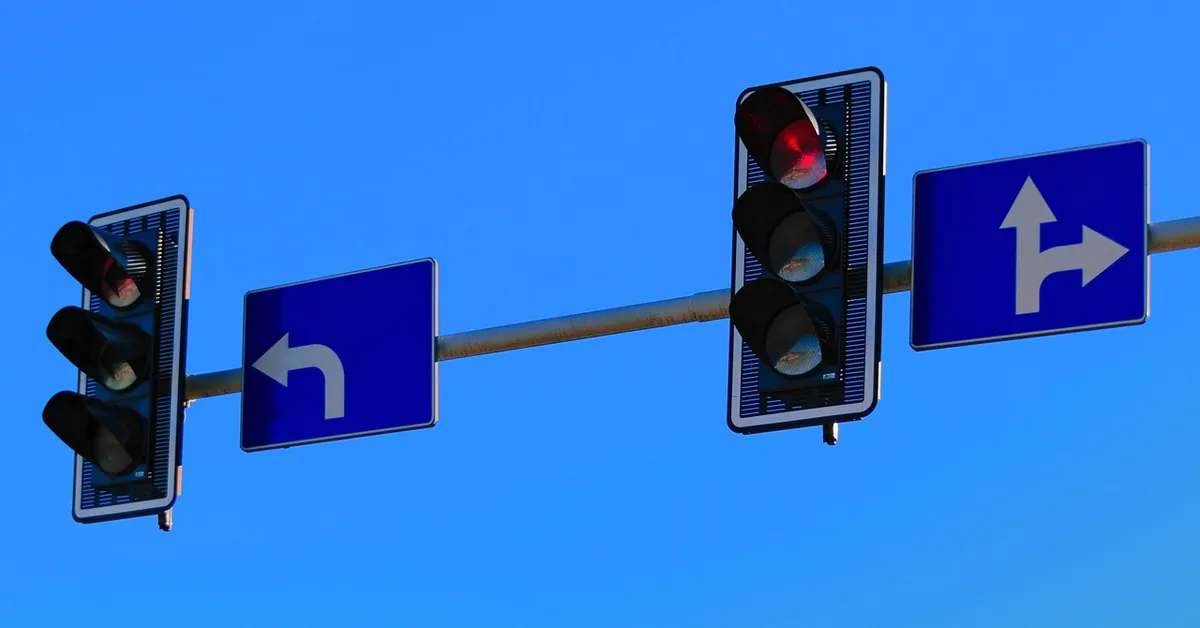
Understanding the physics is one thing; knowing where these crashes are common helps us drive smarter. T-bone crashes most frequently happen at intersections.
The Common Intersection Danger Spots
Intersections are high-risk areas because they involve crossing traffic streams, which inherently creates opportunities for perpendicular crashes. Safety improvements here often rely on driver behavior and traffic control design.
Here are typical scenarios:
- Running Red Lights: The most classic cause. A driver fails to stop for a red light and proceeds directly into the side of a cross-street vehicle.
- Failure to Yield (Stop Signs): A driver stops, but fails to properly check for cross-traffic before entering the intersection.
- Left Turn Errors: A driver turning left often misjudges the speed of oncoming traffic, leading to a collision with a vehicle going straight.
For official data on intersection safety and common accident types in the US, resources from the National Highway Traffic Safety Administration (NHTSA) provide detailed statistics and analysis on crash types (NHTSA Official Website).
How Driver Behavior Overrides Physics (Prevention)
While the physics of a collision are fixed once it happens, driver behavior determines if the collision even occurs. By being predictable and attentive, we reduce the chance of forcing physics into action.
Simple preventative measures based on avoiding the scenario include:
- Maintaining Distance: Never follow the car ahead too closely, especially through intersections, in case they stop suddenly.
- Looking Beyond: Don’t just look at the light; look down the cross-street to see if approaching cars are slowing down.
- Defensive Driving: Assume other drivers might run their red light and pause slightly before entering the intersection, even when you have the green light.
Protecting Yourself: Features That Counteract T-Bone Physics
Since we established that the side structure is weaker, modern safety engineering focuses on stiffening that area and adding protective cushions. Knowing these features helps you choose safer vehicles.
Structural Stiffening vs. Energy Absorption
Automotive engineers fight the poor side-impact physics in two main ways:
- Stiffening: Using stronger materials (like high-strength steel) in the door pillars (A, B, and C pillars) and the rocker panels (the area beneath the doors). This resists the initial intrusion.
- Cushioning: Deploying airbags to manage the movement of the occupant after the initial structure has begun to absorb energy.
Side Impact Protection Ratings
When shopping for a used or new car, look at the safety reports. These reports use physical dummies (crash test surrogates) to measure the force exerted on different body regions during a simulated T-bone crash. Pay close attention to:
- Torso/Rib Cage Readings: These indicate how much the door structure crushed inward toward the driver or passenger. Lower readings are better.
- Head Injury Criteria (HIC): This measures the risk of severe head injury, which the side curtain airbags are designed to minimize.
A car that scores well in side impact tests has successfully engineered systems to overcome the inherent physics disadvantages of a side collision. The ratings aren’t just a marketing label, either — a driver of a vehicle rated “good” for side-impact protection is 70% less likely to die in a left-side crash than a driver of a vehicle rated “poor.”
“This was our first look at how our ratings correlate with actual crash data since we started side tests in 2003, and the numbers confirm that these are meaningful ratings.”
Understanding Occupant Kinematics in Side Impacts
When a crash occurs, you, the occupant, don’t just stop moving with the car. Your body continues to move based on inertia until something stops it. In a T-bone crash, this movement is complex. Understanding what happens to your body after a car accident starts with what happens in the milliseconds during it.
The Three Stages of Impact
For a side impact, the events happen incredibly fast, often in under 150 milliseconds:
- Vehicle Contact: The striking vehicle hits the door. The door structure immediately begins to deform inward.
- Occupant Intrusion and Contact: The passenger’s body, still moving toward the impact point, collides with the deforming door panel and/or deploys airbags. This is where most localized injury occurs.
- Secondary Impact: After the initial crush, the occupant might swing across the cabin and strike the opposite side interior structure or the steering wheel/dashboard, depending on seatbelt effectiveness and cabin intrusion.
Seatbelts are still vital in T-bone crashes because they lock up immediately, restraining the occupant from sliding too far toward the point of impact and minimizing the secondary collision with the opposite interior.
Summary of Key Physics Dangers
Let’s put the core dangers into a quick, scannable format. These are the direct physical consequences of hitting a car from the side:
| Physical Factor | Resulting Danger | Why It Happens |
|---|---|---|
| Limited Crush Zone | Rapid Deceleration | Very little structure exists between the impact and the occupant. |
| Direct Force Application | Localized Trauma (Ribs, Hips) | Force is delivered directly through the door frame into the occupant’s side. |
| Speed Squared Relationship | Exponential Energy Increase | Small speed increases lead to massive increases in destructive energy transmitted. |
| Lack of Structure | High Risk of Intrusion | The door itself can be pushed into the cabin, directly hitting the person. |
Maintaining Confidence in Vehicle Safety
Automotive safety has improved dramatically because engineers understand this physics. Your car is far safer than cars from even 15 years ago because of mandatory structural reinforcements and the wider adoption of side curtain airbags.
As a driver, your best defense against dangerous physics is proactive avoidance. Stay alert, especially at intersections, and always maintain your vehicle so that safety systems (like ensuring your tires are properly inflated for maximum control) are working correctly.
Frequently Asked Questions (FAQ) About T-Bone Crashes
Are T-bone crashes always more dangerous than head-on crashes?
Not always. A low-speed head-on crash might be safer than a high-speed T-bone crash into a fixed object. However, pound for pound, T-bones pose a greater risk of severe injury because the side lacks protective crumple zones.
What vehicle feature helps the most in a T-bone crash?
Side curtain airbags are the most visible feature helping occupants by protecting the head and upper body from striking the intruding door or window. IIHS research found they cut a car driver’s death risk by 37% in driver-side crashes.
Does the weight of my car matter in a side impact?
Yes, significantly. Physics shows that momentum (p = mv) plays a huge role. A heavier car carries more momentum and will cause greater intrusion and a more violent stop for the lighter vehicle it hits.
What is the B-Pillar, and why is it important in a T-bone?
The B-pillar is the vertical support structure located between the front and rear doors. It is critically important because it is the primary structure designed to resist the crushing force in a side impact and transfer that force to the rest of the frame.
Can I feel the difference between physics affecting a front crash versus a side crash?
Yes. In a front crash, you feel yourself being pushed forward into the seatbelt. In a side crash, you feel a sudden, sharp force pushing your body sideways directly into the door area.
Are trucks safer in T-bone crashes than small cars?
Generally, yes, due to their greater mass and inherent ride height, which can sometimes cause them to ride over the lower structure of a smaller car. However, this “ride over” effect can cause forces to be directed differently, sometimes leading to intrusion into areas not protected by side airbags.
Can a T-bone crash cause a rollover?
Yes. When a taller vehicle like an SUV or pickup T-bones a lower sedan, its higher bumper can override the sedan’s door sill and drive force higher into the occupant cell, or the sideways force can trip the struck vehicle’s tires against a curb and flip it. Rollover risk is highest in high-speed, high-angle T-bone crashes with a large mismatch in vehicle height.
Conclusion: Translating Physics into Safer Driving
The primary enemy in a T-bone crash is the lack of space for energy absorption: doors and side panels give occupants just 6 to 12 inches of crush distance, versus 2 to 3 feet at the front bumper, forcing high forces directly onto occupants in well under a fifth of a second. That’s the physical reason side impacts are historically more injurious than head-on crashes.
Automotive safety science is fighting these forces directly: reinforced B-pillars, side-guard beams, and curtain airbags together cut real-world death risk by wide, measured margins. Knowing what to look for in side-impact ratings, and why defensive driving at intersections matters, is a direct countermeasure against physics you can’t otherwise change.
Products related to this article
Sponsored / affiliate links. As an Amazon Associate I earn from qualifying purchases. I may earn additional commission from eligible campaigns.