
Delphi MAP Sensor Review: Is It Worth It?
Delphi MAP sensors are worth it when the exact OE cross-reference matches your engine. That rule usually gives better fitment confidence and fewer false diagnostic headaches than generic low-cost replacements. Choose wrong, and you can waste time chasing the same drivability codes, idle issues, or fuel-trim problems. This guide judges Delphi on fitment, signal reliability, and whether it saves more troubleshooting time than cheaper alternatives.
Delphi MAP sensor verdict


Delphi makes sense as an OE-style replacement when the listing matches your vehicle application, connector, and mounting style exactly. That is where the value sits: fewer guesswork returns, cleaner live-data behavior, and less time spent sorting out whether the sensor or the car is at fault.
It is a weaker buy when the engine already has wiring damage, intake leaks, or an uncertain part number. A better sensor cannot fix a cracked hose, a bad ground, or an intake gasket leak. For turbocharged engines, the margin for error shrinks further because small signal mistakes can distort load calculation and fuel control.
Pros and cons
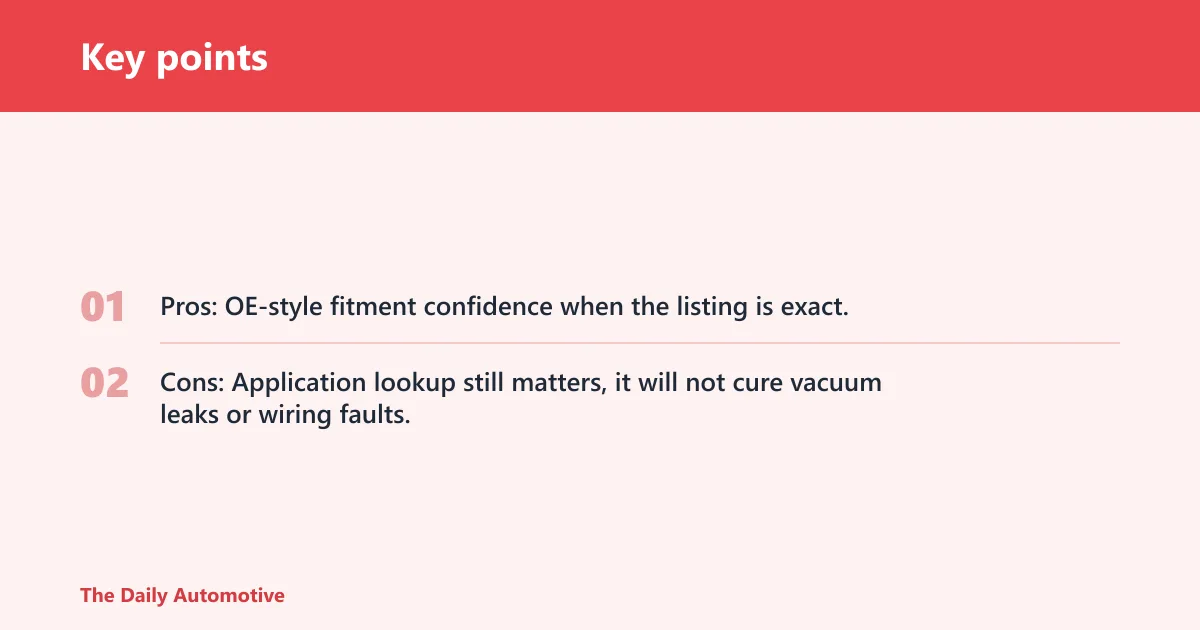
- Pros: OE-style fitment confidence when the listing is exact, connector and mounting details that often mirror factory hardware, and a practical value case for drivers who want less diagnostic churn.
- Cons: Application lookup still matters, it will not cure vacuum leaks or wiring faults, and a cheap generic part may look tempting if you are only judging purchase price.
Best-use scenarios
Delphi fits best when the old sensor has a clear fault, the vehicle uses a common MAP setup, and you want a replacement that is close to OE behavior without paying dealer pricing. It is also a sensible choice when the current code set points toward sensor plausibility rather than a hard wiring failure.
Suppose a turbocharged four-cylinder sets a P0107 code after a boost leak repair. If the scan tool still shows implausible MAP values at key-on engine-off, a Delphi unit with the exact OE listing can be a smarter bet than a no-name part that adds more diagnosis time.
Is a Delphi MAP sensor worth it?
Yes, if the part number and vehicle application line up exactly, because that is where Delphi can save you time. The benefit is not magic; it is fewer fitment mistakes, more predictable signal behavior, and less back-and-forth if you are trying to clear a MAP-related fault cleanly.
When OE-style fit and signal stability matter most
That matters most on engines where MAP data drives fuel and ignition timing closely, especially turbocharged setups and engines with limited diagnostic tolerance. A sensor that matches the OE-style connector and mounting layout is less likely to create a poor seal, pin fit issue, or misleading scan data.
When a budget part is the better gamble
A budget part can be the better gamble only when the vehicle is older, the fault is low-stakes, and you are prepared for possible repeat diagnostics. If the car is a daily driver with no room for comebacks, the lower sticker price can disappear fast if the part causes another round of checks.
Turbocharged engines and higher diagnostic sensitivity
Turbo engines rely on MAP readings for load calculations under boost, so small errors matter more than they do on many naturally aspirated engines. On those cars, a sensor that tracks pressure cleanly at idle, cruise, and under load can save you from chasing fuel trim swings that are really sensor noise.
How do you know the sensor is bad?
A bad MAP sensor usually shows up as a plausibility problem, not a single obvious symptom. Rough idle, poor fuel economy, stumble, or stalling can point there, but the same complaints can come from a vacuum leak, dirty connector, intake gasket leak, or BARO mismatch.
Symptoms that point toward MAP failure
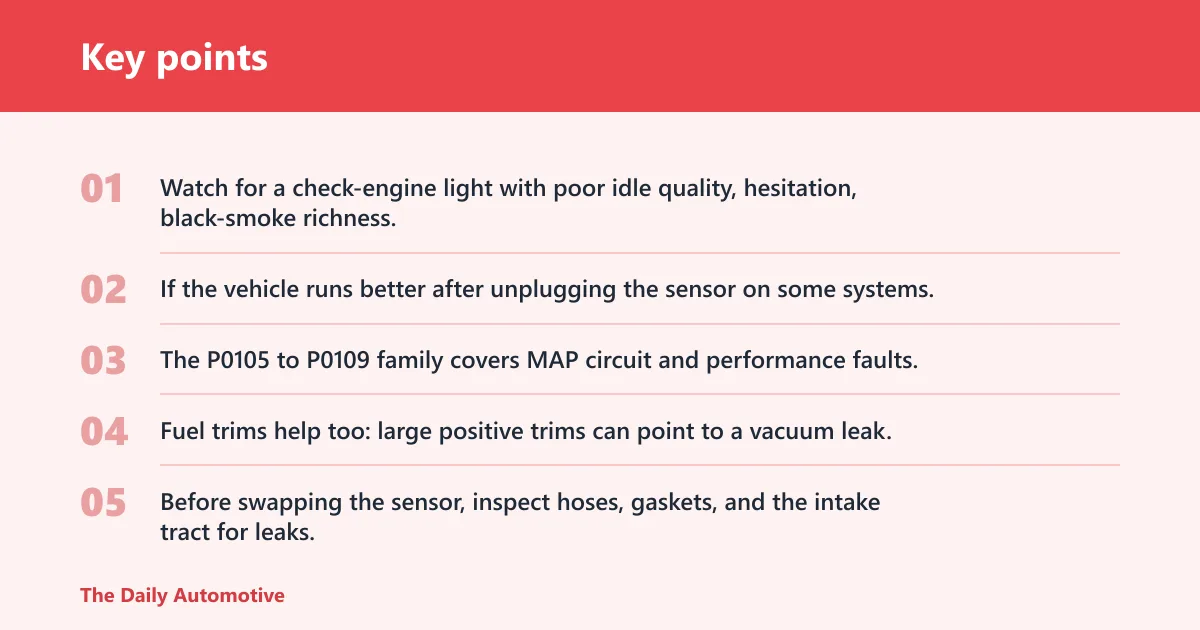
Watch for a check-engine light with poor idle quality, hesitation, black-smoke richness, or a lean surge that changes with throttle. If the vehicle runs better after unplugging the sensor on some systems, that can be a clue, but it is not proof by itself.
P0105 to P0109 code family and fuel trim clues
The P0105 to P0109 family covers MAP circuit and performance faults, so the code tells you where to look, not what part to replace blindly. Stored and pending codes both matter. Fuel trims help too: large positive trims can point to a vacuum leak, while an implausible MAP signal may push trims rich or lean in ways that do not match engine load.
Vacuum leak, wiring, and BARO checks before replacement
Before swapping the sensor, inspect hoses, gaskets, and the intake tract for leaks. A smoke test is the cleanest way to find hidden leaks, but a careful hose and gasket inspection can catch obvious cracks, loose clamps, and split vacuum lines. Also check the connector for corrosion, bent pins, and ground issues.
Say your scan tool shows a MAP reading that stays high at idle, but the engine also has a loose intake duct and fuel trims are strongly positive. In that case, the intake leak deserves attention first, because it can create the same drivability pattern a bad sensor would.
MAP sensor decision matrix
This matrix uses the practical questions that matter in the bay: will it fit, will it read like OE, and will it save diagnosis time. Higher confidence here usually beats the cheapest sticker price when the code set is already muddy.
| Decision factor | What to check | What Delphi usually offers when the listing matches | When it is a strong buy | One caution |
|---|---|---|---|---|
| Fitment certainty | Exact vehicle application, engine code, connector shape, and mounting style | OE-style application coverage with part-specific fitment details | When the listing matches your VIN-based application and connector | Do not assume close enough is good enough |
| OE-level signal stability | Key-on engine-off barometric reading, idle response, and smooth load change | Designed as an OE-equivalent replacement, so signal behavior should be close to factory expectations | When the old sensor failed plausibility checks rather than showing hard wiring damage | Signal issues can also come from vacuum leaks or grounds |
| Connector quality | Latch fit, terminal alignment, and positive lock on the wiring loom side | Typically built for factory-style connector engagement | When the old connector is intact and the terminals are in good shape | A worn connector plug can still cause intermittent faults |
| Value for money | Part price versus time saved on diagnosis and repeat labor | Often priced above budget generic parts but below dealer OE pricing | When you want a replacement that reduces the chance of a second repair round | Cheaper parts may cost more if they create more troubleshooting |
How do you check fitment and live data?
Start with the manufacturer listing. Match the connector style, mounting method, engine application, and any listed OE cross-reference before buying. Then use live data to confirm the sensor behaves like a MAP sensor should: pressure should make sense key on, at idle, and under throttle.
Manufacturer listing checks for connector, mount, and application
Look for the exact application, not a broad vehicle family. A MAP sensor may mount directly to the intake manifold on one engine and connect by hose on another, and the connector shape can vary. If the listing does not clearly match your engine, keep looking.
Key-on engine-off and idle voltage or kPa checks
At key-on engine-off, MAP should read about barometric pressure. On a scan tool, that often means roughly atmospheric pressure in kPa or inHg, depending on the display. At idle, manifold vacuum lowers the pressure reading, so the number should drop from the key-on value. A multimeter can help verify the signal voltage, but it cannot replace live data because wiring, reference voltage, and sensor output all need context.
How to sanity-check BARO and WOT readings
Compare the MAP reading to barometric pressure with the engine off. If they differ badly, suspect the sensor, the BARO input on the vehicle, or wiring. Under wide-open throttle, MAP should climb toward barometric pressure on a naturally aspirated engine, while a turbocharged engine may exceed atmospheric pressure under boost. If the numbers do not move in a believable way, keep diagnosing before you replace anything else.
A common first-timer mistake is replacing the sensor because the idle looks rough, then finding a cracked intake gasket later. The gasket leak was the real fault, and the new sensor only changed the symptoms enough to confuse the diagnosis.
Replacement installation basics
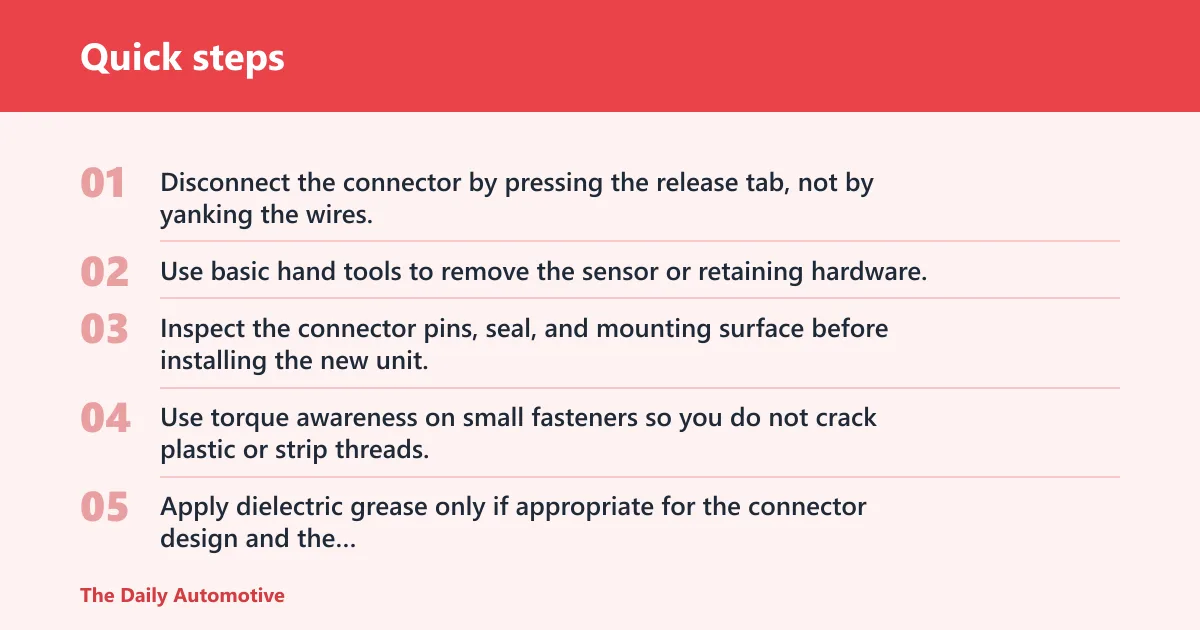
- Disconnect the connector by pressing the release tab, not by yanking the wires.
- Use basic hand tools to remove the sensor or retaining hardware.
- Inspect the connector pins, seal, and mounting surface before installing the new unit.
- Use torque awareness on small fasteners so you do not crack plastic or strip threads.
- Apply dielectric grease only if appropriate for the connector design and the manufacturer instructions.
- Clear codes after the repair and confirm live data returns to normal.
Who it’s for
Delphi is a good fit for DIY drivers chasing a verified MAP fault, especially when the vehicle is naturally aspirated or turbocharged and the listing matches the OE application closely. It also suits owners who want a replacement that is more likely to reduce diagnostic backtracking than a no-name sensor.
It is less appealing if the car still has unresolved intake leaks, connector damage, or a vague part number search. In those cases, paying more for a MAP sensor does not solve the real problem.
Frequently asked questions
Are Delphi MAP sensors any good?
They can be a good choice when the part number matches the engine exactly and you want OE-style fitment rather than the cheapest possible replacement. Their main appeal is practical: cleaner installation, fewer fitment surprises, and a lower chance of chasing avoidable diagnostics after the swap.
How do I know if a Delphi MAP sensor will fit my car?
Check the manufacturer listing against your exact vehicle, engine, connector shape, and mounting style. Do not rely on a similar model year or a general engine family. If the listing includes an OE cross-reference, match that number to the factory part number for your application.
What symptoms point to a bad MAP sensor?
Common signs include rough idle, hesitation, poor fuel economy, stalling, and a check-engine light with a P0105 to P0109 code. Those symptoms are not proof on their own. Vacuum leaks, bad grounds, wiring faults, and intake leaks can create the same complaints.
Should I buy Delphi or OE for a MAP sensor replacement?
Choose OE if you want the highest confidence and the car is especially sensitive to sensor accuracy. Choose Delphi when the OE cross-reference matches and you want a lower-cost part that still aims for factory-style fit, connector layout, and signal behavior. The better choice depends on application sensitivity, not brand alone.
How long do MAP sensors last?
There is no single service interval. MAP sensors often last a long time, but heat, oil vapor, moisture, connector corrosion, and intake contamination can shorten life. On turbocharged engines and engines with heavy blow-by or oil vapor exposure, the sensor can need attention sooner.
Do I need to clear codes after replacing a MAP sensor?
Yes. Clearing codes after the repair helps the engine computer relearn from a clean slate and shows whether the fault returns. If the code comes back quickly, look again at live data, vacuum leaks, wiring, grounds, and BARO input before assuming the new sensor failed.
Products related to this article
Sponsored / affiliate links. As an Amazon Associate I earn from qualifying purchases. I may earn additional commission from eligible campaigns.