Do Different Cars Use Different Jacks? What You Should Know
You’re probably here because you’ve either been in a sticky situation with a flat tire and your jack seemed off, or you’re just curious about car maintenance. Maybe you’ve seen different types of jacks at the auto parts store and felt a bit lost. You want clear answers, not confusing jargon.
That’s exactly what we’re going to dive into. We’ll break down why not all car jacks are the same and what that means for you and your vehicle.
It’s a common misconception that all cars use the same type of jack. While many might look similar, different vehicles have unique lifting points and weight requirements. This means you often need a specific jack, or at least a compatible one, for your car’s make and model to ensure safety and proper function.
Understanding Different Car Jacks
So, do different cars use different jacks? Yes, they often do. The main reason comes down to how a car is built and how much it weighs.
Each car has specific spots where it’s safe to lift. These spots are called jack points. They are usually reinforced parts of the car’s frame.
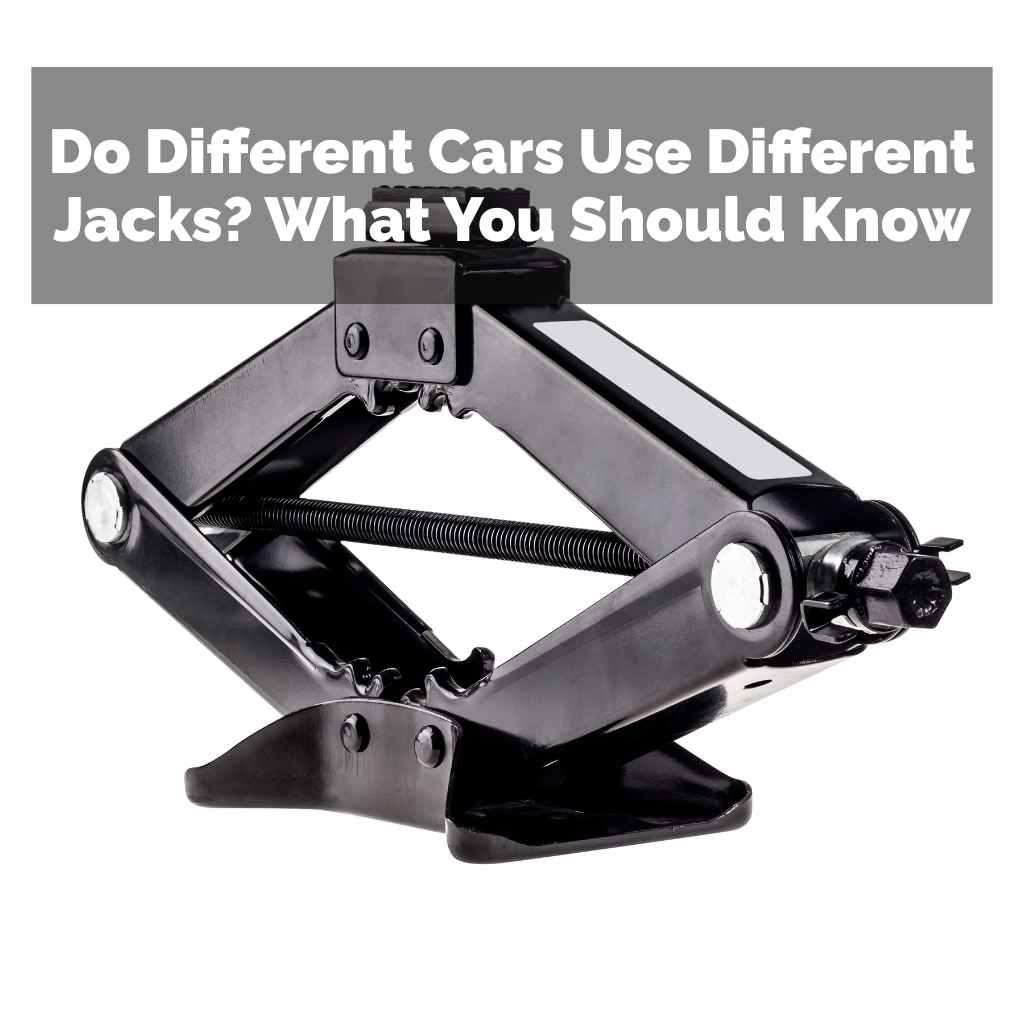
The type of jack that comes with your car is usually a scissor jack. These are designed to be small and fit in your trunk. They work by turning a screw.
This screw makes the jack get taller. It’s like using a screw to push something up. Scissor jacks are meant for emergencies, like changing a flat tire.
They are not meant for long-term repairs.
Other types of jacks exist too. Floor jacks are more common in garages. They are bigger and sturdier.
Bottle jacks are like small cylinders. They use hydraulic fluid to lift heavy things. The best jack for you depends on your car and what you plan to do with it.
Weight is a big factor. A small compact car doesn’t weigh as much as a large SUV or truck. Jacks have weight limits.
You must use a jack that can handle your car’s weight. Using a jack that’s too weak is very dangerous. It could break and cause serious injury or damage.
The design of the car’s underside also matters. Some cars have a smooth underbody. Others have more complex frames.
The jack needs to fit securely against the correct jack point. It should not slip off.
My Own “Oh No!” Jack Moment
I remember one sweltering summer day, I was helping a friend change a tire on her older sedan. She had a flat, and we were on the side of a busy road. She pulled out the jack that came with the car, a trusty-looking scissor jack.
We found the designated jack point on the car’s frame, just like the owner’s manual said.
As I started to turn the handle, I felt something wasn’t right. The jack felt wobbly. It didn’t sit flat against the frame.
It seemed to be digging into a softer part of the undercarriage instead of the strong metal frame. My gut told me this wasn’t right. I pictured the whole car suddenly dropping.
My stomach did a little flip of worry. I stopped turning immediately. We ended up having to call for roadside assistance because we weren’t sure we could safely lift the car with that jack.
It was a simple task that became stressful because the right tool wasn’t quite working correctly for that specific car.
That experience taught me that even if a jack looks like it should work, you have to be sure it’s the right jack. It’s not just about lifting the car. It’s about doing it safely and without damaging the car itself.
Common Car Jack Types Explained
Scissor Jacks
These are the most common jacks found in new cars. They are compact and easy to store. You turn a crank to make them lift.
They are best for quick tire changes on a flat surface. They are not very stable for heavy work.
Bottle Jacks
These look like a bottle and use hydraulic fluid to lift. They can lift very heavy loads. They are often used for trucks and larger vehicles.
They need a flat, hard surface to work well.
Floor Jacks
These are popular in repair shops. They have wheels and a long handle. They roll under the car easily.
They offer good stability and lifting height. They are heavier and take up more space.
Tire Changing Jacks
This is a general term. It often refers to the scissor jack that comes with your car for emergencies.
Why Jack Points Matter So Much
Think of the frame of your car like its bones. The jack points are like the strongest, most stable joints in those bones. They are specifically designed to handle the force of lifting the entire weight of your vehicle.
If you try to lift your car anywhere else, you risk causing damage. You could bend or break parts of the car’s body. You might also damage important components like fuel lines or brake lines.
This can lead to very expensive repairs. More importantly, it creates a serious safety hazard.
The shape of the jack head needs to match the jack point. Some jack points are a flat raised edge. Others might have a notch or a specific shape.
A jack with the wrong head can slip. It can slide off the jack point. This is when accidents happen.
Your car’s owner’s manual is your best friend here. It will show you exactly where the jack points are for your specific model. It will also tell you which type of jack to use.
Always check this before you try to lift your car.
Weight Ratings: Don’t Guess, Know!
Every jack has a weight rating. This is how much weight it is designed to lift safely. It’s usually listed in tons or pounds.
You need to know the weight of your car. Then, choose a jack that can handle at least that much weight. It’s always better to have a jack with a higher weight rating than you need.
For example, a small compact car might weigh around 2,500 to 3,000 pounds. A mid-size sedan could be 3,000 to 4,000 pounds. An SUV or truck can weigh much more, sometimes 5,000 pounds or even over 8,000 pounds.
If you have a 4,000-pound car, a jack rated for 2 tons (4,000 pounds) might seem okay. But it’s cutting it close. A 3-ton jack (6,000 pounds) would be much safer.
This gives you a good margin of error.
A jack that is overloaded can fail suddenly. This can cause the car to fall. It can lead to severe injury.
It can also cause major damage to your car and the ground beneath it.
Quick Guide: Jack Weight vs. Car Weight
Compact Car (e.g., Honda Civic)
Weight: ~2,800 lbs (1.4 tons)
Recommended Jack Rating: 2 tons (4,000 lbs)
Mid-Size Sedan (e.g., Toyota Camry)
Weight: ~3,500 lbs (1.75 tons)
Recommended Jack Rating: 2.5 – 3 tons (5,000 – 6,000 lbs)
SUV (e.g., Ford Explorer)
Weight: ~4,500 lbs (2.25 tons)
Recommended Jack Rating: 3 – 4 tons (6,000 – 8,000 lbs)
Truck (e.g., Ford F-150)
Weight: ~5,000+ lbs (2.5+ tons)
Recommended Jack Rating: 4+ tons (8,000+ lbs)
Specific Car Brands and Their Jacks
While there isn’t a strict rule saying “Brand X ONLY uses Jack Type Y,” there are trends. Many car manufacturers, especially for mainstream models, equip their vehicles with a standard scissor jack. This is for cost-effectiveness and space-saving.
Luxury car brands might sometimes offer a slightly more robust emergency jack. Or, they might recommend a specific type of jack for their unique chassis designs. Some performance cars might even come with specialized lifting points that require a particular jack adapter.
For example, electric vehicles (EVs) often have different weight distributions and undercarriage designs due to their large battery packs. This means their recommended jack points and the type of jack needed might differ from gasoline-powered cars. Some EVs have specific reinforced areas designed for lifting.
It’s also worth noting that aftermarket jacks can be purchased for almost any vehicle. If you plan to do more work on your car than just a tire change, investing in a good quality floor jack or bottle jack is wise. These often come with various attachments or adapters to fit different jack points securely.
Always refer to your car’s manual. It is the most accurate source for information about your specific vehicle’s requirements. Don’t rely on general assumptions about brands.
The Problem with “One Size Fits All”
You might be tempted to think that if a jack looks like it fits, it’s okay. This is a dangerous assumption. Here’s why a “one size fits all” approach to car jacks is a bad idea:
Damage to the Car: As mentioned, lifting in the wrong spot can bend metal, crack plastic, or damage vital car parts. This is more than just cosmetic; it can affect your car’s safety and performance.
Unstable Lift: A jack that doesn’t fit the jack point properly won’t sit level. This makes the lift unstable. The car could rock or slide off the jack.
Jack Failure: If the jack itself isn’t rated for the car’s weight, it could buckle or break. This is a catastrophic failure that can be deadly.
Difficulty in Use: The right jack should be easy to position and operate. If you’re struggling to get the jack to fit or to turn the handle, it’s a sign something is wrong.
The jack that comes with your car is a tool for a specific purpose: to get you to a safe place to change a tire. For anything more, you often need a different, more suitable tool.
Jack Point vs. Other Undercarriage Parts
Jack Points:
– Strong metal pinch welds, reinforced frame rails, or specific metal tabs.
– Designed to bear the full weight of the car.
– Usually marked in the owner’s manual.
Other Undercarriage Parts:
– Plastic splash guards, engine oil pans, fuel tanks, exhaust pipes, body panels.
– These are NOT designed to support vehicle weight.
– Lifting here can cause severe, costly damage.
When the Emergency Jack Isn’t Enough
Those scissor jacks are handy for emergencies, but they have limits. If you’re dealing with anything more than a simple flat tire change, you might need to rethink your lifting strategy.
Frequent Tire Changes: If you get a lot of flats or live in an area where they’re common, a sturdier floor jack will be much easier and safer to use. You can get them set up faster and they provide a much more stable lift.
Working Under the Car: If you need to do more than just swap a tire – like changing oil, brakes, or suspension parts – you MUST use jack stands. A jack alone is not safe for supporting a car while you are under it. Jack stands are separate safety devices.
They hold the car up after you’ve lifted it with the jack.
Uneven Surfaces: Scissor jacks are notoriously unstable on anything but perfectly flat, hard ground. If you’re on a gravel shoulder or a slightly sloped surface, they can easily shift or sink. A portable air jack is a more stable option for uneven or off-road terrain.
Larger or Heavier Vehicles: As we discussed, if your car is heavier than what a basic scissor jack can safely handle, you need a more powerful jack.
Investing in a good quality jack and a set of jack stands is one of the smartest moves a car owner can make. It improves safety and makes maintenance tasks much more manageable.
My Experience with Jack Stands
I learned the hard way about jack stands too. Years ago, I was trying to replace the brake pads on my old pickup truck. I had a decent floor jack, so I figured I was all set.
I lifted one side of the truck, removed the wheel, and started working on the brakes.
Then, I heard a faint creak. I looked up, and the truck seemed to be settling slightly on the jack. My blood ran cold.
I had been so focused on the brakes, I completely forgot to put the jack stands in place. The thought of the truck dropping on me while I had my hands deep in the wheel well sent a jolt of pure panic through me. I quickly lowered the truck, got out, and immediately went to buy a set of jack stands.
Now, I never lift a car for anything more than a quick tire change without placing jack stands under the frame. That moment of fear was a stark reminder that safety equipment isn’t optional; it’s essential.
Real-World Scenarios: Where Jacks Are Used
You’ll find car jacks being used in many different places and situations. Each has its own set of considerations.
On the Roadside: This is the most common place people see or use a car jack. A flat tire is never convenient. Drivers often use the jack that came with their car.
The ground might be uneven, and there’s the stress of traffic nearby.
In Driveways and Garages: Home mechanics use jacks for regular maintenance. This might be for oil changes, tire rotations, or more involved repairs. Here, a flat driveway or garage floor provides a stable surface.
People might use floor jacks or bottle jacks with jack stands.
Auto Repair Shops: Professional mechanics rely heavily on heavy-duty hydraulic lifts and floor jacks. These are powerful and efficient. They need to lift cars quickly and safely all day long.
They have specialized equipment to handle various vehicle types.
Towing Companies: When a car needs to be towed, sometimes a jack is used to lift a wheel or to position the vehicle onto a tow truck bed, especially if a tire is completely ruined or stuck.
Emergency Services: Firefighters and police might use jacks in accident rescue situations to lift vehicles off trapped individuals, though they often have specialized hydraulic rescue tools.
Quick-Scan Table: Jacking Scenarios
| Scenario | Typical Jack Type | Surface Needed | Safety Gear Needed |
| Roadside Flat Tire | Scissor Jack (Included) | Flat, Hard Ground | Reflective Triangles, Gloves |
| Driveway Oil Change | Floor Jack / Bottle Jack | Flat, Hard Concrete/Asphalt | Jack Stands, Wheel Chocks |
| Auto Shop Repair | Heavy-Duty Lift / Floor Jack | Level Concrete Floor | Jack Stands, Safety Blocks |
Understanding Different Lifting Heights
Cars sit at different heights off the ground. This is called ground clearance. It affects the type of jack you need and how high you need to lift it.
Low-Profile Cars: Sports cars and some sedans have very little ground clearance. You might need a low-profile jack. This type of jack is shorter and designed to slide under very low vehicles.
Standard Cars and SUVs: Most sedans, crossovers, and SUVs have enough clearance for a standard scissor jack or a common floor jack. You usually need to lift them high enough to get a spare tire off and a new one on.
Trucks and Vans: These vehicles often have much higher ground clearance. You’ll need a jack that can extend high enough to reach the jack point and lift the wheel sufficiently. Some high-lift jacks are designed for this purpose.
When you buy a jack, check its maximum lifting height. Make sure it’s enough for your vehicle. Also, consider the minimum height.
If you have a very low car, you need a jack that can get under it in the first place.
What This Means for You: When to Worry
Most of the time, the jack that came with your car will work for changing a flat tire. However, there are times when you should pay close attention or seek help.
When it’s Normal to Use Your Car’s Jack:
- You have a flat tire on a flat, stable surface.
- You have the car’s owner’s manual to identify the correct jack points.
- You are only lifting the car enough to remove and replace a tire.
- You are not going to be working under the car.
When to Worry or Get Help:
- The jack doesn’t seem to fit the jack point snugly.
- The jack is wobbling or feels unstable as you lift.
- The car is on an uneven or soft surface (like dirt or gravel).
- You need to lift the car very high, more than the jack seems capable of.
- You plan to work on the car while it’s lifted, even for a short time.
- Your car is an electric vehicle or has a very unique undercarriage design.
- The jack itself looks damaged or rusty.
Simple Checks Before Lifting:
- Manual Check: Always consult your owner’s manual for jack point locations.
- Surface Check: Ensure the ground is flat, hard, and stable.
- Jack Condition: Inspect the jack for any cracks, rust, or signs of damage.
- Weight Rating: Confirm the jack’s weight capacity exceeds your vehicle’s weight.
- Fitment: Does the jack head cup the jack point securely?
Quick Fixes & Tips for Jacking
While we aren’t giving step-by-step repair guides, here are some tips for safer jacking:
- Use Wheel Chocks: Place chocks (wedges) behind the wheels that are staying on the ground. This prevents the car from rolling.
- Lower the Car Slowly: When you’re done, lower the car gently. Don’t let it drop.
- Never Get Under a Jacked-Up Car Without Stands: This is the golden rule of car safety. A jack can fail. Jack stands are your backup.
- Keep Hands Clear: Always keep your hands and fingers away from pinch points where the jack meets the car and where the car is lifting.
- Practice in Your Driveway: If you’re unsure, practice changing a tire or lifting your car in a safe environment like your driveway. This builds confidence.
Myth vs. Reality: Car Jacking
Myth: Any jack will work if it fits the car.
Reality: Jacks must match the vehicle’s weight and designed jack points to be safe and prevent damage.
Myth: Jacks are for working under a car.
Reality: Jacks are for lifting. Jack stands are for supporting a car while someone is working underneath it.
Myth: The jack that came with my car is all I’ll ever need.
Reality: The factory jack is for emergencies. For frequent maintenance or heavier work, a better jack and jack stands are recommended.
Frequently Asked Questions
Can I use a floor jack on any car?
Most floor jacks are versatile, but you still need to use them correctly. Always identify the correct jack points for your specific car. Make sure the jack’s weight rating is sufficient for your vehicle.
Low-profile cars may require a low-profile floor jack.
How do I know where the jack points are?
Your car’s owner’s manual is the best source. It will have diagrams showing the exact locations of the designated jack points. They are usually reinforced areas on the frame or pinch welds.
Is it safe to use a jack that came with a different car?
It’s risky. The jack might not have the correct weight rating for your car, or its design might not match your car’s jack points. This could lead to damage or a dangerous failure.
What happens if I use the wrong jack point?
You risk bending or breaking your car’s frame or undercarriage components. This can cause expensive damage and compromise the car’s structural integrity. It also makes the lift unstable and unsafe.
Can I use a car jack on soft ground?
No, it’s not recommended. Soft ground can shift or sink under the weight of the jack and car, leading to instability and potential collapse. Always use a jack on a hard, flat, and stable surface like concrete or asphalt.
What’s the difference between a jack and jack stands?
A jack is used to lift the vehicle. Jack stands are used to support the vehicle’s weight once it’s lifted. For any work under the car, you must use jack stands in addition to a jack.
A jack alone is not a safe support system.
How often should I inspect my car jack?
Inspect your jack before each use. Look for any signs of rust, cracks, bends, or leaks (for hydraulic jacks). If you see any damage, it’s time to replace it.
Final Thoughts on Car Jacks
So, to sum it up, yes, different cars often need different considerations when it comes to jacks. It’s not just about having a tool that lifts; it’s about having the right tool for the job.
Always prioritize safety. Consult your manual, understand your car’s weight, and use the correct jack points. Investing in quality safety equipment like jack stands is crucial for any DIY car work.
Stay safe out there!
Products related to this article
Sponsored / affiliate links. As an Amazon Associate I earn from qualifying purchases. I may earn additional commission from eligible campaigns.